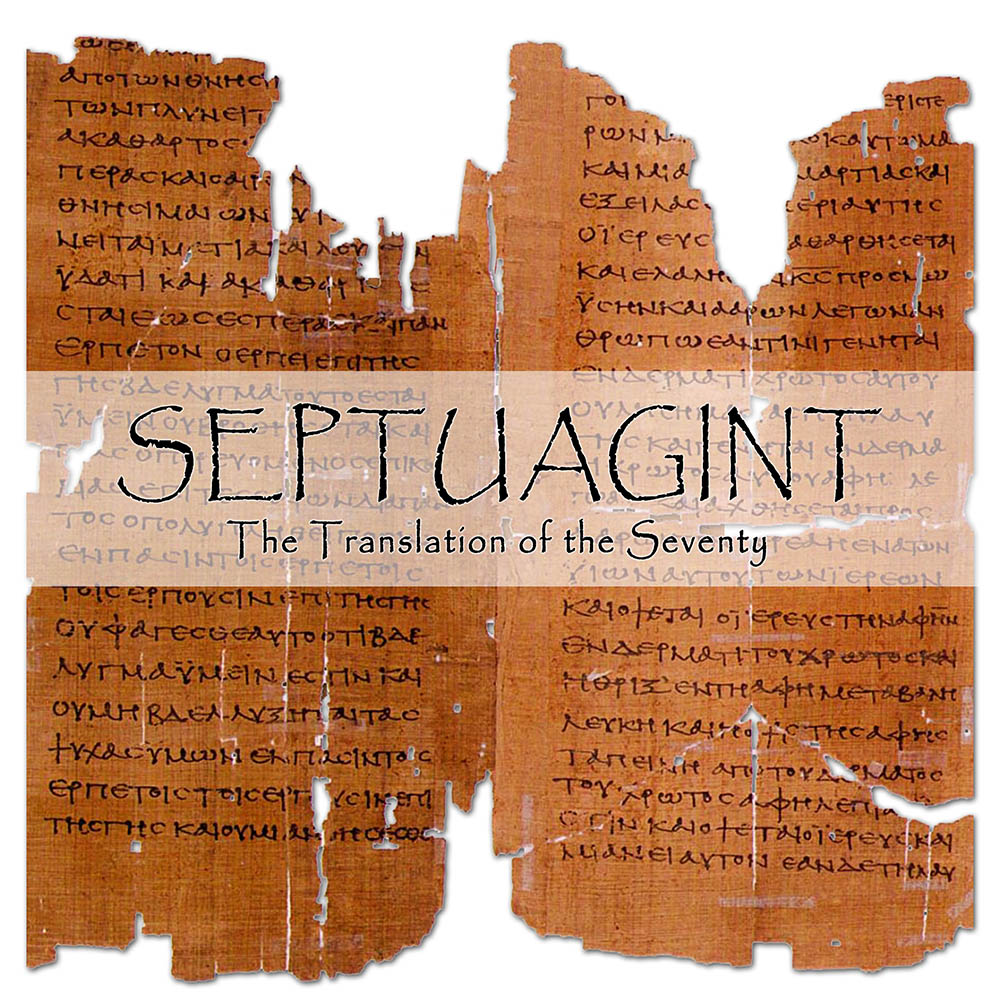
Here is a direct side-by-side comparison of the Masoretic Text with the LXX. I have concluded that the LXX is much to be preferred over the Masoretic Text, a position from which the Eastern Orthodox Church never deviated. Perhaps, if you take the time to read my comparisons and other articles, you will arrive at the same conclusion.
The Septuagint version I am using is the Lexham English Septuagint 2nd Edition, which is available in print or as part of Logos Bible Software. Occasionally I also use the Brenton translation of the LXX for insight into difficult passages.
If you want to know more, click on the following links.
- Why Christians Should Prefer the Septuagint over the Masoretic Text.
- Some Insights Gained through Comparing the Masoretic Text to the Septuagint
- More side by side comparisons of the Masoretic Text (MT) to the Septuagint (LXX).
| Masoretic Text | Septuagint | Significance |
|
6 Sacrifice and offering You did not desire; My ears You have opened. Burnt offering and sin offering You did not require. 7 Then I said, “Behold, I come; In the scroll of the book it is written of me. 8 I delight to do Your will, O my God, And Your law is within my heart.” Psalm 40:6–8 (NKJV) |
7 You did not want sacrifice and offering, but you restored a body to me. You did not ask for whole burnt offering and an offering concerning sin. 8 Then I said, “Look, I have arrived. In the scroll of the document it has been written concerning me. 9 I wish to do your will, O my God, and your law is in the middle of my heart.” Psalm 39:7–9 (LES2) |
This is a notable example of the MT’s removing a clear reference to Christ that is quoted from the LXX in the New Testament. As with many of the Psalms, the numbering of the LXX differs from the MT. The LXX says in verse 7 that God restored (Greek: katartidzo, which can mean established or furnished) a body to me. This is a reference to the Incarnation of Christ, if “furnished” is used, and, quite possibly, to his resurrection, if “restore” is used. The author of Hebrews quotes this text in his argument for Christ’s supremacy. 5 Therefore, when He came into the world, He said: “Sacrifice and offering You did not desire, But a body You have prepared for Me. 6 In burnt offerings and sacrifices for sin You had no pleasure. 7 Then I said, ‘Behold, I have come— In the volume of the book it is written of Me— To do Your will, O God.’ ” 8 Previously saying, “Sacrifice and offering, burnt offerings, and offerings for sin You did not desire, nor had pleasure in them” (which are offered according to the law), 9 then He said, “Behold, I have come to do Your will, O God.” He takes away the first that He may establish the second. 10 By that will we have been sanctified through the offering of the body of Jesus Christ once for all. Hebrews 10:5–10 (NKJV) |
Summary: The Masoretes knew this passage in the LXX was used by Christians to prove that Jesus is the Messiah. By changing the text to “My ears have you opened,” they sought to discredit the reference quoted in the New Testament and remove the foundation of the argument. As I have previously written, the Masoretic translation was finalized centuries after Christ’s resurrection when anti-Christian sentiment among the rabbis ran high. Jesus condemned the Jews for altering God’s Word to support their traditions. (Mark 7:13) We should not be surprised that they would do such a thing.