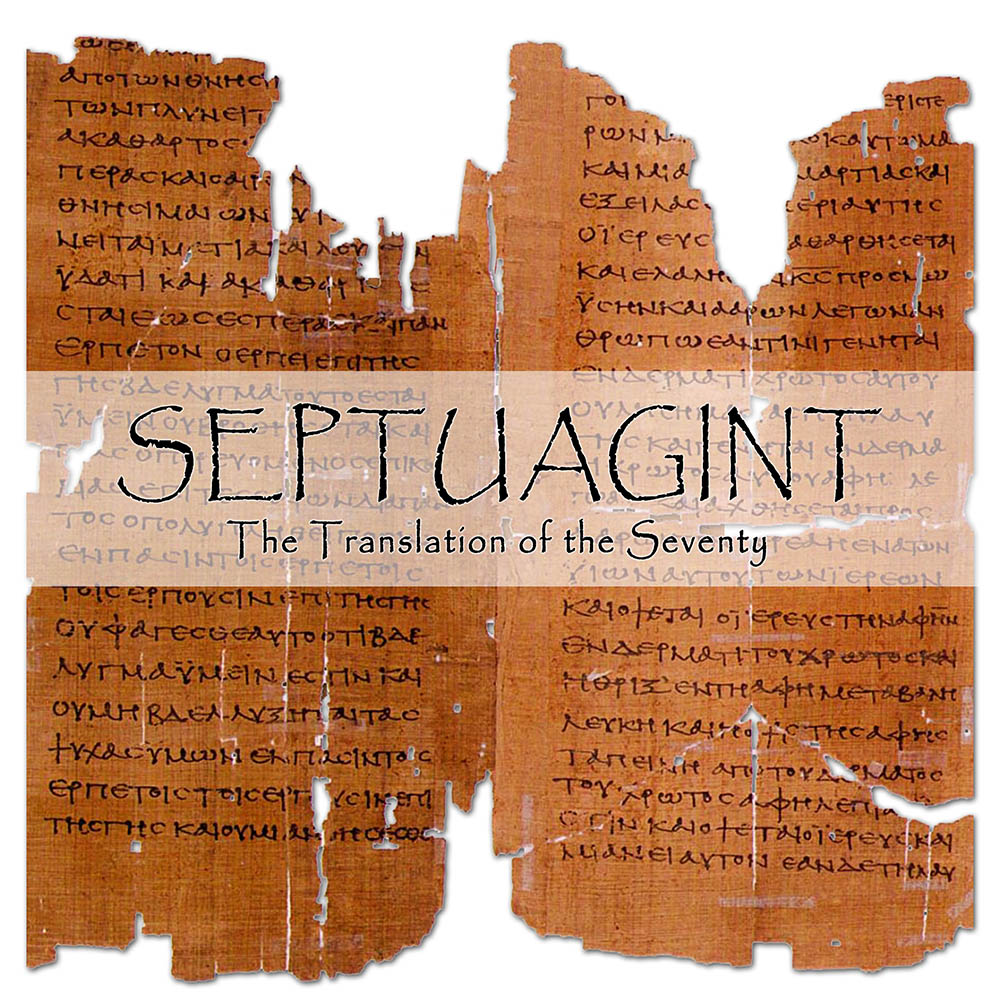
Here is a direct side-by-side comparison of the Masoretic Text with the LXX. I have concluded that the LXX is much to be preferred over the Masoretic Text, a position from which the Eastern Orthodox Church never deviated. Perhaps, if you take the time to read my comparisons and other articles, you will arrive at the same conclusion.
The Septuagint version I am using is the Lexham English Septuagint 2nd Edition, which is available in print or as part of Logos Bible Software. Occasionally I also use the Brenton translation of the LXX for insight into difficult passages.
If you want to know more, click on the following links.
- Why Christians Should Prefer the Septuagint over the Masoretic Text.
- Some Insights Gained through Comparing the Masoretic Text to the Septuagint
- More side by side comparisons of the Masoretic Text (MT) to the Septuagint (LXX).
| Masoretic Text | Septuagint | Significance |
|
1 “Comfort, yes, comfort My people!” Says your God. 2 “Speak comfort to Jerusalem, and cry out to her, That her warfare is ended, That her iniquity is pardoned; For she has received from the LORD’s hand Double for all her sins.” Isaiah 40:1–2 (NKJV) |
1 “Comfort, comfort my people,” says God. 2 Priests, speak to the heart of Jerusalem; comfort her, because her lowliness has been satisfied; her sin has been forgiven, because she has received from the hand of the Lord double for her sins. Isaiah 40:1–2 (LES2) |
The main difference between the MT and LXX in this passage is that the LXX addresses the priests who are to speak comfort to the heart of Jerusalem because her humility has been satisfied rather than the MT’s saying that her warfare is ended. |
|
3 The voice of one crying in the wilderness: “Prepare the way of the LORD; Make straight in the desert A highway for our God. 4 Every valley shall be exalted And every mountain and hill brought low; The crooked places shall be made straight And the rough places smooth; 5 The glory of the LORD shall be revealed, And all flesh shall see it together; For the mouth of the LORD has spoken.” Isaiah 40:3–5 (NKJV) |
3 The voice of one calling in the desert, “Prepare the way of the Lord! Make the paths of our God straight!” 4 Every ravine will be filled, and every mountain and hill will be made low, and all the crooked ways will be made straight, and every rough spot a plain; 5 and the glory of the Lord will be seen, and all flesh will see the salvation of God, for the Lord has spoken. Isaiah 40:3–5 (LES2) |
There is little difference between these passages. The LXX uses the Greek word tribos for path, which the MT uses the Hebrew word for highway. The MT adds “in the desert,” but this is not significant to me. However, the NT quotes this passage in Matthew 3:3 and Mark 1:3. 3 For this is he who was spoken of by the prophet Isaiah, saying: “The voice of one crying in the wilderness: ‘Prepare the way of the LORD; Make His paths straight.’ ” Matthew 3:3 (NKJV) 3 “The voice of one crying in the wilderness: ‘Prepare the way of the LORD; Make His paths straight.’ ” Mark 1:3 (NKJV) The Greek in the Matthew and Mark verses agrees with the Greek in the LXX, even though some English words are different. Luke quotes a longer portion of Isaiah 40. 4 as it is written in the book of the words of Isaiah the prophet, saying: “The voice of one crying in the wilderness: ‘Prepare the way of the LORD; Make His paths straight. 5 Every valley shall be filled And every mountain and hill brought low; The crooked places shall be made straight And the rough ways smooth; 6 And all flesh shall see the salvation of God.’ ” Luke 3:4–6 (NKJV) The English word valley is a translation of the same Greek word that the LXX translates as ravine. The other words are the same in Greek, except for Luke’s use of the word “smooth” (Greek – leios) in place of the LXX’s “plain” (Greek – pedinos). This shows that the three gospel writers used the LXX as their source for Old Testament scriptures. |