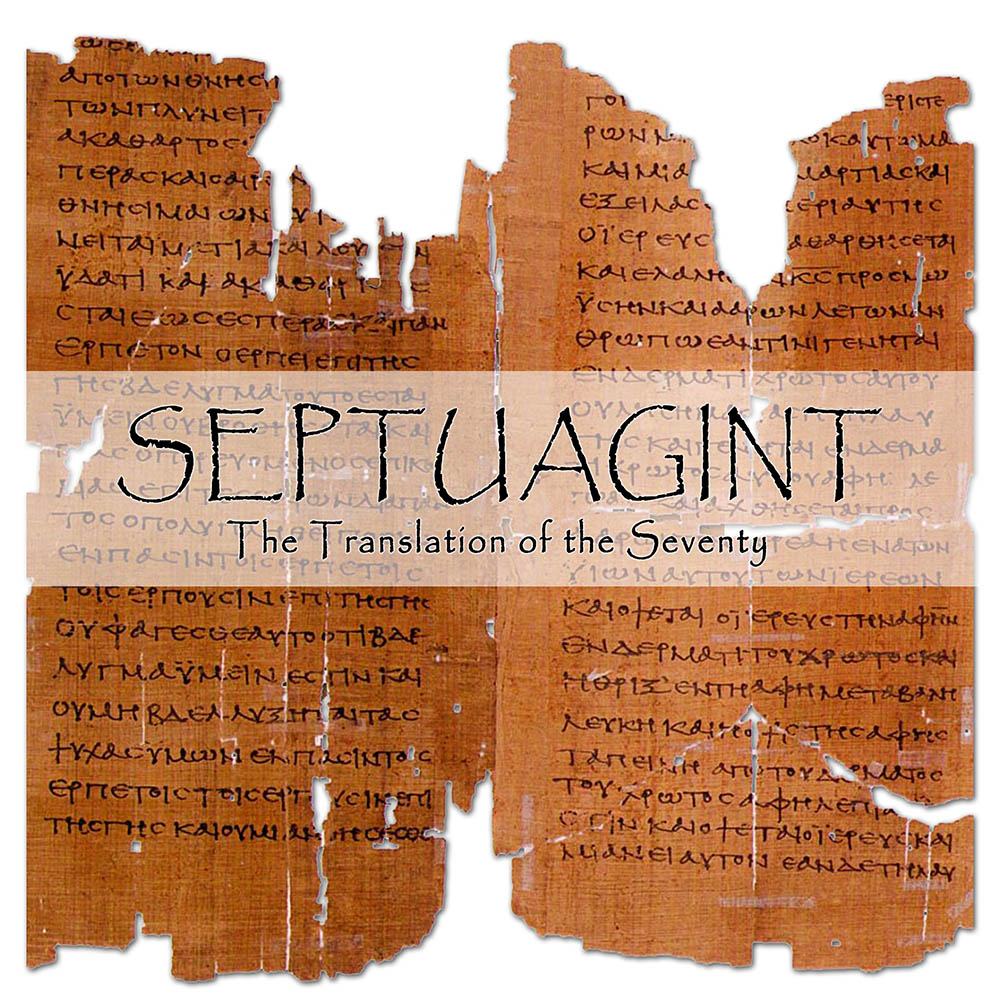
Here is a direct side-by-side comparison of the Masoretic Text with the LXX. I have concluded that the LXX is much to be preferred over the Masoretic Text, a position from which the Eastern Orthodox Church never deviated. Perhaps, if you take the time to read my comparisons and other articles, you will arrive at the same conclusion.
The Septuagint version I am using is the Lexham English Septuagint 2nd Edition, which is available in print or as part of Logos Bible Software. Occasionally I also use the Brenton translation of the LXX for insight into difficult passages.
If you want to know more, click on the following links.
- Why Christians Should Prefer the Septuagint over the Masoretic Text.
- Some Insights Gained through Comparing the Masoretic Text to the Septuagint
- More side by side comparisons of the Masoretic Text (MT) to the Septuagint (LXX).
| Septuagint | MT | Significance |
|
1 Now Sarai, Abram’s wife had borne him no children, and she had an Egyptian maid whose name was Hagar. 2 So Sarai said to Abram, “Now behold, the LORD has prevented me from bearing children. Please go in to my maid; perhaps I will obtain children through her.” And Abram listened to the voice of Sarai. 3 After Abram had lived ten years in the land of Canaan, Abram’s wife Sarai took Hagar the Egyptian, her maid, and gave her to her husband Abram as his wife. 4 He went in to Hagar, and she conceived; and when she saw that she had conceived, her mistress was despised in her sight. Genesis 16:1–4 (NASB95) |
1 Sarai, the wife of Abram, had not borne children for him. She had an Egyptian maid whose name was Hagar. 2 Sarai said to Abram, “Look, the Lord has prevented me from bearing children. Go in, therefore, to my maid, so you may have children from her.” Abram listened to her voice. 3 And Sarai, the wife of Abram, took Hagar, the Egyptian, her maid, after Abram had dwelt ten years in the land of Canaan. She gave her to Abram, her husband, as a wife for him. 4 And he went in to Hagar, and she conceived, and she saw that she was pregnant, and her mistress was dishonored before her. Genesis 16:1–4 (LES2) |
These passages agree. |
|
5 And Sarai said to Abram, “May the wrong done me be upon you. I gave my maid into your arms, but when she saw that she had conceived, I was despised in her sight. May the LORD judge between you and me.” 6 But Abram said to Sarai, “Behold, your maid is in your power; do to her what is good in your sight.” So Sarai treated her harshly, and she fled from her presence. Genesis 16:5–6 (NASB95) |
5 Sarai said to Abram, “I am being wronged by you. I have given my maid into your bosom, but when she saw that she was pregnant, I was dishonored before her. May God judge between me and you.” 6 Abram said to Sarai, “Look, your maid is before you; you may use her however is pleasing to you.” And Sarai mistreated her, and she fled from her presence. Genesis 16:5–6 (LES2) |
These passages essentially agree. |
|
7 Now the angel of the LORD found her by a spring of water in the wilderness, by the spring on the way to Shur. 8 He said, “Hagar, Sarai’s maid, where have you come from and where are you going?” And she said, “I am fleeing from the presence of my mistress Sarai.” 9 Then the angel of the LORD said to her, “Return to your mistress, and submit yourself to her authority.” 10 Moreover, the angel of the LORD said to her, “I will greatly multiply your descendants so that they will be too many to count.” 11 The angel of the LORD said to her further, “Behold, you are with child, And you will bear a son; And you shall call his name Ishmael, Because the LORD has given heed to your affliction. 12 “He will be a wild donkey of a man, His hand will be against everyone, And everyone’s hand will be against him; And he will live to the east of all his brothers.” Genesis 16:7–12 (NASB95) |
7 And an angel of the Lord God found her at the spring of water in the wilderness, at the spring on the way to Shur. 8 And the angel of the Lord said to her, “Hagar, maid of Sarai, where are you coming from, and where are you going?” And she said, “I am escaping from the presence of Sarai, my mistress.” 9 And the angel of the Lord said to her, “Return to your mistress and humble yourself under her hands.” 10 And the angel of the Lord said to her, “Increasing, I will increase your offspring, and it will not be countable because of the great number.” 11 And the angel of the Lord said to her, “Look, you are pregnant, and you will bear a son and call his name Ishmael, because the Lord has noticed your humiliation. 12 He will be a rustic person. His hands will be against all, and the hands of all will be against him, and he will dwell in opposition to all his brothers.” Genesis 16:7–12 (LES2) |
Here we see some differences beginning in verse 9. The MT has the angel instructing Hagar to “submit yourself to her (Sarai’s) authority.” The LXX says, “humble yourself under her hands.” It takes humility to willingly submit to authority, but it can be done without humility, too. In verse 11, the MT says that God has “given heed to your affliction,” meaning pain, misery, or frustration. The LXX says that God “has noticed your humiliation” or lowliness. A humble heart is of great value to the Lord. Ishmael’s name means “God hears.” In verse 12, the MT says Ishmael will be “a wild donkey of a man.” The LXX says that he will be a “rustic person,” which means rough or rude. The MT says he will “live to the east” of his brothers, but the LXX says he will dwell literally facing them. |
|
13 Then she called the name of the LORD who spoke to her, “You are a God who sees”; for she said, “Have I even remained alive here after seeing Him?” 14 Therefore the well was called Beer-lahai-roi; behold, it is between Kadesh and Bered. 15 So Hagar bore Abram a son; and Abram called the name of his son, whom Hagar bore, Ishmael. 16 Abram was eighty-six years old when Hagar bore Ishmael to him. Genesis 16:13–16 (NASB95) |
13 And Hagar called the name of the Lord who was speaking to her, “You are the God who watches over me”; because she said, “Because I even saw in person the one who appeared to me.” 14 On this account she called the well “Well where I saw in person.” Look, it is between Kadesh and Bered. 15 And Hagar brought forth a son for Abram, and Abram called the name of his son whom Hagar brought forth for him Ishmael. 16 Abram was eighty-six years old when Hagar bore Ishmael for Abram. Genesis 16:13–16 (LES2) |
The MT says God “sees,” but the LXX says he “watches over.” The question Hagar asks in verse 13 in the MT seems out of place with the name of God. The question in the LXX makes perfect sense. The LXX translates the meaning of the Hebrew name of the well for the sake of non-Hebrew speaking readers. The rest of the passage agrees. |
Summary: We get into some prophetic words in this chapter; so, it is not surprising that we see some differences between the MT and LXX. The MT casts Ishmael in a worse light than does the LXX. The MT often does this sort of thing to Israel’s enemies.