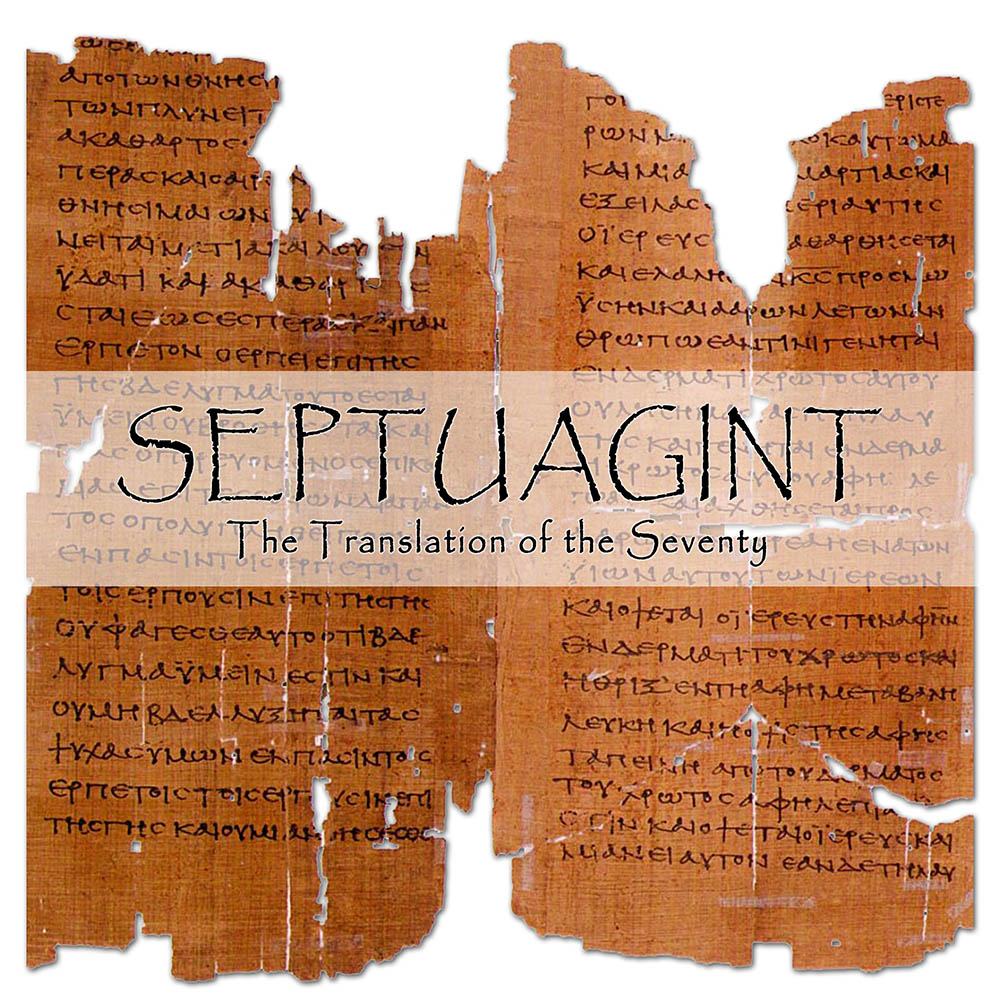
Here is a direct side-by-side comparison of the Masoretic Text with the LXX. I have concluded that the LXX is much to be preferred over the Masoretic Text, a position from which the Eastern Orthodox Church never deviated. Perhaps, if you take the time to read my comparisons and other articles, you will arrive at the same conclusion.
The Septuagint version I am using is the Lexham English Septuagint 2nd Edition, which is available in print or as part of Logos Bible Software. Occasionally I also use the Brenton translation of the LXX for insight into difficult passages.
If you want to know more, click on the following links.
- Why Christians Should Prefer the Septuagint over the Masoretic Text.
- Some Insights Gained through Comparing the Masoretic Text to the Septuagint
- More side by side comparisons of the Masoretic Text (MT) to the Septuagint (LXX).
| Masoretic Text | Septuagint | Significance |
|
1 The LORD is my light and my salvation; Whom shall I fear? The LORD is the defense of my life; Whom shall I dread? Psalm 27:1 (NASB95) |
1 The Lord is my light and my savior. Whom shall I fear? The Lord is the protector of my life. From whom shall I fear? Psalm 26:1 (LES2) |
The difference here is that the MT depersonalizes God a bit by calling him salvation and defense; whereas, the LXX calls him Savior and Protector. David knew God personally, which is our privilege in the New Covenant. It seems that David was allowed to participate in New Covenant blessings as a forerunner of Christ. |
|
2 When evildoers came upon me to devour my flesh, My adversaries and my enemies, they stumbled and fell. 3 Though a host encamp against me, My heart will not fear; Though war arise against me, In spite of this I shall be confident. Psalm 27:2–3 (NASB95) |
2 When evildoers came up to me to eat my flesh, the ones afflicting me and my enemies, they were weak and fell. 3 If an army is set up against me, my heart will not fear. If a battle rises up against me, in this circumstance I hope in God. Psalm 26:2–3 (LES2) |
There is a difference between the MT’s “maintaining confidence”, and the LXX’s “hoping in God.” |
|
4 One thing I have asked from the LORD, that I shall seek: That I may dwell in the house of the LORD all the days of my life, To behold the beauty of the LORD And to meditate in His temple. 5 For in the day of trouble He will conceal me in His tabernacle; In the secret place of His tent He will hide me; He will lift me up on a rock. 6 And now my head will be lifted up above my enemies around me, And I will offer in His tent sacrifices with shouts of joy; I will sing, yes, I will sing praises to the LORD. Psalm 27:4–6 (NASB95) |
4 One thing I asked from the Lord, this I will seek out: that I dwell in the house of the Lord all the days of my life; that I behold the pleasantness of the Lord and visit his temple. 5 For he hid me in a tent in the day of my evils. He sheltered me in the concealment of his tent. On a rock he lifted me. 6 And now look, he lifted my head over my enemies. I came around and sacrificed in his tent a sacrifice of shouting. I will sing, and I will sing psalms to the Lord. Psalm 26:4–6 (LES2) |
The MT says David asked to “meditate” in God’s temple. The LXX say “visit.” The remainder of the passage maintains essential agreement except for verb tenses not matching. |
|
7 Hear, O LORD, when I cry with my voice, And be gracious to me and answer me. 8 When You said, “Seek My face,” my heart said to You, “Your face, O LORD, I shall seek.” 9 Do not hide Your face from me, Do not turn Your servant away in anger; You have been my help; Do not abandon me nor forsake me, O God of my salvation! 10 For my father and my mother have forsaken me, But the LORD will take me up. Psalm 27:7–10 (NASB95) |
7 Give ear, O Lord, to my voice with which I cried out. Have mercy upon me, and give ear to me. 8 My heart said to you, “I sought out your face.” Your face, O Lord, I will seek. 9 Do not turn back your face from me. Do not turn around in wrath from your servant. Become my help. Do not abandon me, and do not disregard me, O God, my savior. 10 For my father and my mother abandoned me. But the Lord received me. Psalm 26:7–10 (LES2) |
The MT changes verse 8 to God’s asking David to seek his face instead of the LXX’s having David take the initiative. In verse 9, the MT says God has been David’s help, which is accurate, but the LXX uses the imperative and is a prayer from David – “Become my help.” Rather than repeat the same idea by using “abandon” and “forsake,” the LXX uses “abandon” and “disregard.” The MT’s “O God of my salvation” is personalized in the LXX to “God my Savior.” The MT says the Lord “will take me up,” but the LXX uses the aorist tense to indicate it already happened. God had already received David. This is an important distinction that carries over into the New Testament. We put our faith in the already completed work of Christ and live in the present based on what God has already done. In addition, our future hope in the resurrection is based on what God did for us in the past. |
|
11 Teach me Your way, O LORD, And lead me in a level path Because of my foes. 12 Do not deliver me over to the desire of my adversaries, For false witnesses have risen against me, And such as breathe out violence. 13 I would have despaired unless I had believed that I would see the goodness of the LORD In the land of the living. 14 Wait for the LORD; Be strong and let your heart take courage; Yes, wait for the LORD. Psalm 27:11–14 (NASB95) |
11 Instruct me, O Lord, with respect to your way, and lead me in a straight path on account of my enemies. 12 Do not give me over to the souls of those afflicting me, because unrighteous witnesses rose up against me, and the injustice lied within itself. 13 I will trust that I will see the good things of the Lord in the land of the living. 14 Wait upon the Lord. Be brave, and let your heart be strengthened, and wait upon the Lord. Psalm 26:11–14 (LES2) |
The MT says that unrighteous witnesses breathe out violence, but the LXX says that the injustice lied within itself, a literal rendering, no doubt, that I suspect the Masoretes converted into something more palatable. Verse 13 is quite different. The MT speaks of the possibility of despair, but that is not mentioned in the LXX. Instead, we see David firm in his faith that he will see good things from God in this life. Lastly, the MT says, “let your heart take courage,” as opposed to the LXX’s command to “be strengthened” by waiting on the Lord. It’s a nuance, to be sure, but perhaps it is meaningful. In John 14:1, Jesus said, “Let not your heart be troubled. Believe in God. Believe also in me.” This dovetails with David’s words. We can choose to repel worry and trust in God, but the strength to follow through comes from the Lord. It is called “grace.” The secret to enjoying grace fully is found in the invitation to wait upon the Lord. |
Summary: There is essential agreement between the MT and LXX in most of this psalm, except for a few places where I find the LXX to be more exact theologically and faith inspiring. I hold to my conviction that the LXX is to be preferred over the MT by Christians who want the same Old Testament scriptures that were used by the early church and are most often quoted in the New Testament.