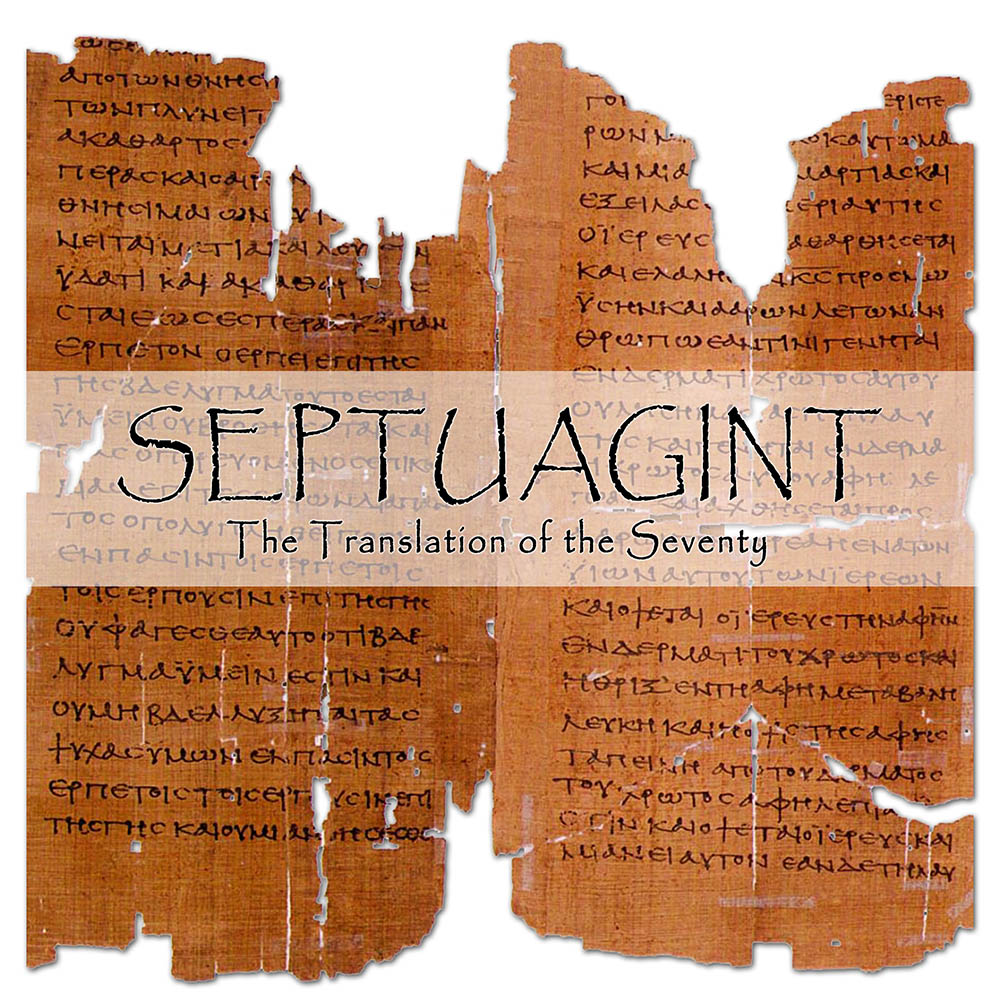
Here is a direct side-by-side comparison of the Masoretic Text with the LXX. I have concluded that the LXX is much to be preferred over the Masoretic Text, a position from which the Eastern Orthodox Church never deviated. Perhaps, if you take the time to read my comparisons and other articles, you will arrive at the same conclusion.
The Septuagint version I am using is the Lexham English Septuagint 2nd Edition, which is available in print or as part of Logos Bible Software. Occasionally I also use the Brenton translation of the LXX for insight into difficult passages.
If you want to know more, click on the following links.
- Why Christians Should Prefer the Septuagint over the Masoretic Text.
- Some Insights Gained through Comparing the Masoretic Text to the Septuagint
- More side by side comparisons of the Masoretic Text (MT) to the Septuagint (LXX).
| Masoretic Text | Septuagint | Significance |
|
10 Yet it pleased the LORD to bruise Him; He has put Him to grief. When You make His soul an offering for sin, He shall see His seed, He shall prolong His days, And the pleasure of the LORD shall prosper in His hand. 11 He shall see the labor of His soul, and be satisfied. By His knowledge My righteous Servant shall justify many, For He shall bear their iniquities. Isaiah 53:10–11 (NKJV) |
10 The Lord is willing to cleanse him of the injury. If you give concerning sin, our soul will see long-lived seed, and the Lord wishes to remove him from the difficulty of his soul, 11 to show him the light, and to form him with understanding, to justify the righteous who serves many well; and he himself will bear their sins. Isaiah 53:10–11 (LES2) The Lord also is pleased to purge him from his stroke. If ye can give an offering for sin, your soul shall see a long-lived seed: 11 the Lord also is pleased to take away from the travail of his soul, to shew him light, and to form him with understanding; to justify the just one who serves many well; and he shall bear their sins. (Brenton, Sir Lancelot C. L.. English Translation of the Greek Septuagint, Including the Apocrypha . E.C. Marsh. Kindle Edition. ) |
This is a challenging passage to translate and understand. Interestingly, the great Isaiah scroll found at Qumran agrees with the LXX in verse 11. In verse 10, the MT says that “it pleased the Lord to bruise him; He has put him to grief.” The LXX words it thusly, “The Lord is willing to cleanse [or purge] him of the injury” or “blow.” The interpretation of the MT would likely be that Abba Father allowed Jesus to suffer the penalty for our sin. The understanding of the LXX is that Abba was willing or pleased to deliver him from death via the resurrection. As with a good bit of Isaiah 53, both the MT and LXX seem to be true and give insight. The next part in the MT clearly refers to the justification and eternal life provided to those who trust in Jesus and his atoning work in the cross. It goes on to remark that God’s will will prosper under Jesus’ rule. The LXX veers away from the MT here, and as mentioned above, the Dead Sea Scroll of Isaiah agrees with the LXX here. It says that “the Lord wishes to remove (take away) him from the difficulty (great trouble or travail) of his soul, to show him the light, and to form him with understanding, to justify the righteous who serves many well; and he himself will bear their sins.” Both speak of God delivering Christ from the throes of death and using his finished work on the cross and through the resurrection to justify those who put their faith in him. |
|
12 Therefore I will divide Him a portion with the great, And He shall divide the spoil with the strong, Because He poured out His soul unto death, And He was numbered with the transgressors, And He bore the sin of many, And made intercession for the transgressors. Isaiah 53:12 (NKJV) |
12 Because of this he will cause many to inherit, and he will apportion the spoils of the mighty, because his soul was given over to death, and he was reckoned among the lawless, and he himself bore the sins of many, and he was handed over because of their lawlessness. Isaiah 53:12 (LES2) |
Here the MT speaks of Christ being rewarded with “the great” and “divide spoil with the strong.” This seems to put Christ on the same level as other mighty ones. The LXX, however, magnifies Christ by saying “he will will cause many to inherit,” meaning his people, and give us that which formerly belonged to the mighty who have been defeated, meaning Satan and his minions. I much prefer the LXX here. The MT and LXX agree in remainder of the verse |
| This concludes Isaiah 53. I believe it reveals how the MT tries to put difficult passages in more easily understood words, much as the New Living Translation does. Just as the NLT sometimes hits a “home run,” so does the MT. At other times, however, the NLT misses the mark, requiring us to examine more literal translations to find the true meaning. I believe the LXX is the more literal translation and, therefore, sometimes is more difficult to understand. It is worth the effort to try, however. |