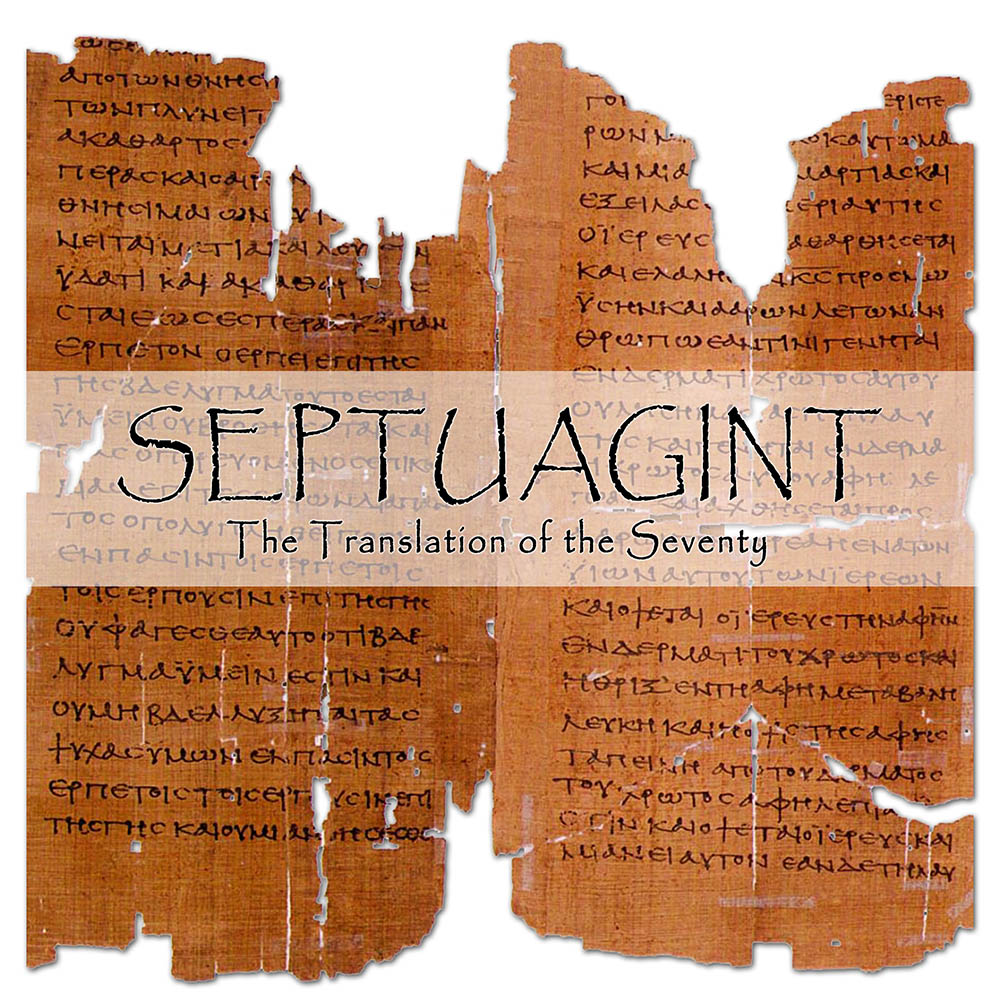
Here is a direct side-by-side comparison of the Masoretic Text with the LXX. I have concluded that the LXX is much to be preferred over the Masoretic Text, a position from which the Eastern Orthodox Church never deviated. Perhaps, if you take the time to read my comparisons and other articles, you will arrive at the same conclusion.
The Septuagint version I am using is the Lexham English Septuagint 2nd Edition, which is available in print or as part of Logos Bible Software. Occasionally I also use the Brenton translation of the LXX for insight into difficult passages.
If you want to know more, click on the following links.
- Why Christians Should Prefer the Septuagint over the Masoretic Text.
- Some Insights Gained through Comparing the Masoretic Text to the Septuagint
- More side by side comparisons of the Masoretic Text (MT) to the Septuagint (LXX).
| Masoretic Text | Septuagint | Significance |
|
1 In the third month after the children of Israel had gone out of the land of Egypt, on the same day, they came to the Wilderness of Sinai. 2 For they had departed from Rephidim, had come to the Wilderness of Sinai, and camped in the wilderness. So Israel camped there before the mountain. Exodus 19:1–2 (NKJV) |
1 And in the third month after the exit of the sons of Israel from the land of Egypt, on this day they arrived in the wilderness of Sinai. 2 They departed from Rephidim, and they came into the wilderness of Sinai, and Israel encamped there, right before the mountain. Exodus 19:1–2 (LES2) |
The Greek word for “exit” is exodus. These two passages are the same. |
|
3 And Moses went up to God, and the LORD called to him from the mountain, saying, “Thus you shall say to the house of Jacob, and tell the children of Israel: 4 ‘You have seen what I did to the Egyptians, and how I bore you on eagles’ wings and brought you to Myself. Exodus 19:3–4 (NKJV) |
3 Now Moses went up the mountain of God, and God summoned him from the heavens, saying, “This is what you shall say to the house of Jacob and report to the sons of Israel. 4 You yourselves have seen the things that I have done to the Egyptians, and I have brought you up as if on wings of eagles, and I have led you to myself. Exodus 19:3–4 (LES2) |
Moses went up the mountain, according to the LXX, from where he heard God summon him from heaven. This alteration of the LXX by the MT I find to be rather mystifying and infuriating. Since God dwells in heaven, it is much more believable that heaven was the location from which he called Moses. There is also quite a difference between going up the mountain and going up to God. |
|
5 Now therefore, if you will indeed obey My voice and keep My covenant, then you shall be a special treasure to Me above all people; for all the earth is Mine. 6 And you shall be to Me a kingdom of priests and a holy nation.’ These are the words which you shall speak to the children of Israel.” Exodus 19:5–6 (NKJV) |
5 And now if you listen with hearing to my voice and keep my covenant, you will be my special people of all the nations, for all the earth is mine. 6 And you yourselves will be a royal priesthood to me and a holy nation. These are the words you shall say to the sons of Israel.” Exodus 19:5–6 (LES2) |
In keeping with the MT’s propensity to enlarge upon Israel’s uniquely special relationship with God, it used the word “treasure” instead of “people,” which the LXX uses. The MT says that Israel is special above “all people,” but the LXX says above “all the nations.” Perhaps that is no big deal to many, but to someone who wants to know exactly what the Holy Spirit said, it matters. The wording in verse 6 in the LXX is quoted in the New Testament. 9 But you are a chosen generation, a special people, a royal priesthood, and a holy nation, His own special people, that you may proclaim the praises of Him who called you out of darkness into His marvelous light; 1 Peter 2:9 (NKJV) Peter used “special people” instead of “special treasure.” The MT makes kingdom a noun modified by priests; whereas, the LXX makes priesthood the noun modified by royal, which is exactly how it is worded in the New Testament, confirming that Peter used the LXX for his Bible. |