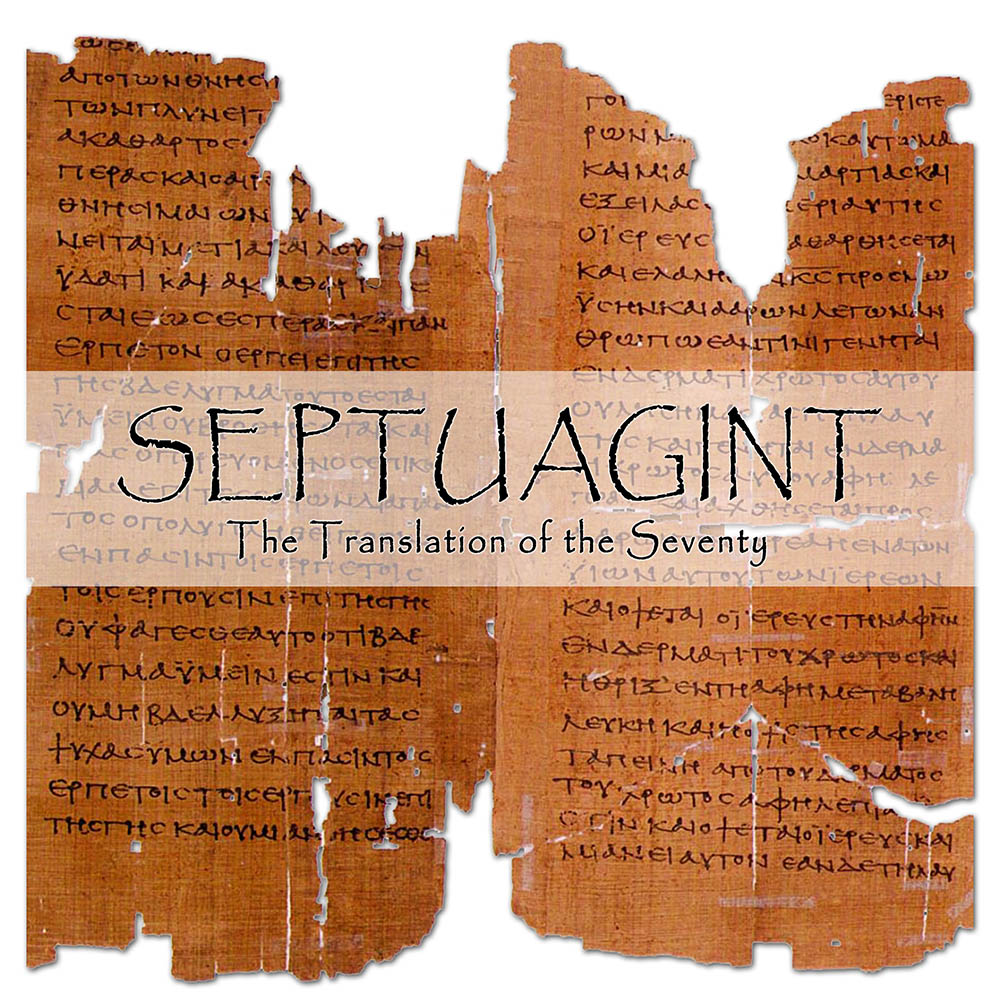
Here is a direct side-by-side comparison of the Masoretic Text with the LXX. I have concluded that the LXX is much to be preferred over the Masoretic Text, a position from which the Eastern Orthodox Church never deviated. Perhaps, if you take the time to read my comparisons and other articles, you will arrive at the same conclusion.
The Septuagint version I am using is the Lexham English Septuagint 2nd Edition, which is available in print or as part of Logos Bible Software. Occasionally I also use the Brenton translation of the LXX for insight into difficult passages.
If you want to know more, click on the following links.
- Why Christians Should Prefer the Septuagint over the Masoretic Text.
- Some Insights Gained through Comparing the Masoretic Text to the Septuagint
- More side by side comparisons of the Masoretic Text (MT) to the Septuagint (LXX).
| Masoretic Text | Septuagint | Significance |
|
1 LORD, I cry out to You; Make haste to me! Give ear to my voice when I cry out to You. 2 Let my prayer be set before You as incense, The lifting up of my hands as the evening sacrifice. Psalm 141:1–2 (NKJV) |
1 O Lord, to you I cried out. Give ear to me. Pay attention to the voice of my entreaty when I cry out to you. 2 Let my prayer be directed as a burnt sacrifice before you, a rising of my hands as an evening sacrifice. Psalm 140:1–2 (LES2) |
This psalm is a great example of of the differences between the MT and LXX. “Make haste” is very different from “listen” or “give ear.” The LXX for “burnt sacrifice” is the Greek word thumiama, which is normally translated as incense. So, no difference there. |
|
3 Set a guard, O LORD, over my mouth; Keep watch over the door of my lips. 4 Do not incline my heart to any evil thing, To practice wicked works With men who work iniquity; And do not let me eat of their delicacies. Psalm 141:3–4 (NKJV) |
3 O Lord, set a guard for my mouth and a door of fortification around my lips. 4 Do not turn my heart to words of wickedness, to allege pretexts in sins, with people working lawlessness, and never ever will I be joined with their chosen ones. Psalm 140:3–4 (LES2) |
Here the contrast is obvious. The MT says “any evil thing,” but the LXX says “words of wickedness.” David just asked God to guard his mouth; so, it stands to reason the problem was with his words. The MT says, “to practice wicked works,” but the LXX says “to allege pretexts in sins.” Apparently wicked people were plotting evil and making excuses for their actions, and David wanted no part in it. The MT has David asking God to protect him from their choice food, but the LXX is a prayer from David asking God not to let him be joined to those who are the chosen or “elect” of evil. The NT differentiates between God’s elect and the reprobate. |
|
5 Let the righteous strike me; It shall be a kindness. And let him rebuke me; It shall be as excellent oil; Let my head not refuse it. For still my prayer is against the deeds of the wicked. Psalm 141:5 (NKJV) |
5 The righteous one will train me with mercy, and he will reprove me. But do not anoint my head with the olive oil of the sinner, for again and again my prayer is against their pleasures. Psalm 140:5 (LES2) |
The righteous one, our Lord Jesus via his Holy Spirit, disciplines God’s children, but does it mercifully. The LXX captures this NT principle, but the MT does not, in my opinion. The MT says that the reproof of the righteous one will be as excellent oil, but the LXX is a prayer from David not to be anointed with the oil of sinners, which agrees with what came before in the LXX – his prayer not to be joined to evil plotters. The MT has David praying against the deeds of the wicked, but the LXX is a prayer asking for protection from the temptation coming from their illicit pleasures. |
|
6 Their judges are overthrown by the sides of the cliff, And they hear my words, for they are sweet. Psalm 141:6 (NKJV) |
6 Their strong ones were devoured next to a rock. They will hear my words because they were able [Greek: dunamai – powerful].Psalm 140:6 (LES2) |
The LXX uses “strong ones” instead of “judges.” The LXX replaces “they are sweet” with “they were able.” The Greek word is dunamai, which probably should be translated “powerful,” which to me makes more sense. David would not have been speaking sweet words to evil doers being overthrown, but powerful ones. |
|
7 Our bones are scattered at the mouth of the grave, As when one plows and breaks up the earth. 8 But my eyes are upon You, O GOD the Lord; In You I take refuge; Do not leave my soul destitute. Psalm 141:7–8 (NKJV) |
7 As a thick piece of earth is broken up upon the earth, our bones were scattered along Hades. 8 For to you, O Lord, Lord, are my eyes. In you I placed my hope. Do not remove my soul. Psalm 140:7–8 (LES2) |
There is a small difference here, one that shows up in other places. The MT uses the word “refuge,” but the LXX uses “hope.” The other difference is using the word “destitute” in place of “remove.” |
|
9 Keep me from the snares they have laid for me, And from the traps of the workers of iniquity. 10 Let the wicked fall into their own nets, While I escape safely. Psalm 141:9–10 (NKJV) |
9 Guard me from the trap that they contrived for me and from the stumbling block of those who work lawlessness. 10 Sinners will fall in his own net. I am alone wherever I go. Psalm 140:9–10 (LES2) |
The LXX declares that sinners will fall into their own traps, but the MT makes it a prayer. The LXX declares that David walked alone when he resisted sin. That is different from saying he escaped. The loneliness of being set apart to God and refusing to participate in evil is a real thing. |
| I leave it to you to decide which is the true version of the psalm. I know what I think. |