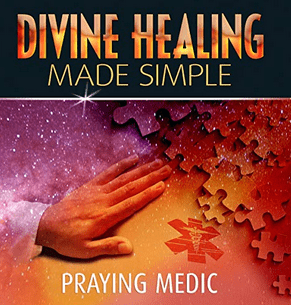
by Dave Hayes, The Praying Medic
Misconceptions and Myths about Healing
Dave Hayes was formerly an atheist EMT filled with skepticism. He describes how God drew him to himself and began to teach him about divine healing. He addresses some objections raised by some in the church who would argue that healing is not for today. In the process, he discusses the difference between the “gift” of healing and the authority to heal that is tied to the gospel. He also explains that Christ’s disciples were told to heal the sick as part of their mission. God enables us to heal, but followers of Christ are tasked with healing people in Christ’s name and authority. He points out that everyone who came to Jesus for healing received it.
No one is outside the reach of God’s grace for healing except those who don’t want to be healed.
Medic, Praying. Divine Healing Made Simple (The Kingdom of God Made Simple) (p. 32). Inkity Press. Kindle Edition.
Another key point is that since healing is meant to confirm the truth of the gospel, it does not always require faith in the receiver, but is intended to spark faith.
Just believe that I am in the Father and the Father is in me. Or at least believe because of the work you have seen me do. John 14:11 (NLT)
The Biblical Basis for Healing
Over the years I have read much about the biblical basis for physical healing. F.F. Bosworth’s book, Christ the Healer, is one of the best for understanding what the Bible says about this subject. Hayes’ book, however, inspired the most faith in me to continue on the journey toward becoming more proficient in this area. I found that the verses with commentary that he used were excellent.
The first point in this chapter that he makes is that it is God’s nature to heal or part of who he is, as revealed by the compound name – Jehovah Rapha, found in Exodus 15:26.
“If God’s nature was to heal then, it is still His nature to heal today.” (p.37)
Hayes believes that healing is available to all, which stands to reason since Christ carried our sicknesses and diseases on the cross, according to Isaiah 53:4 (NET), as interpreted by Matthew.
That evening many demon-possessed people were brought to Jesus. He cast out the evil spirits with a simple command, and he healed all the sick. 17 This fulfilled the word of the Lord through the prophet Isaiah, who said, “He took our sicknesses and removed our diseases.” Matthew 8:16-17 (NLT)
(Sadly, most translators do not use the best words for the corresponding verse in Isaiah, due to translator’s bias. Matthew removes all doubt that Isaiah 53:4 should be translated as is done in the New English Translation.)
He points out that everyone who came to Jesus and asked to be healed received their healing. One of the great limiting factors when it comes to healing is a lack of confidence or desire on the part of the one who is sick. God never forces healing upon anyone.
Hayes also addresses the objection that it is not God’s will to heal everyone who asks for it. A proper understanding of Isaiah 53 proves that Jesus dealt with sickness and disease the same way he dealt with our sin. He carried both. If you wish to read more about this, click here. Citing Mark 2:9-11 and James 5:14-16, the author points out the link between forgiveness and healing.
Jesus healed all who came to Him. No one was turned away. As long as people were willing to be healed, He was willing to heal them. He didn’t heal all who were sick, but rather, He healed all who were willing to be made well. Some who were sick, did not want to be healed, so they were not healed. The will of man is always honored by God, who gives to us according to our desires. (p.41)
Hayes believes that healing often is connected to the faith of the healer rather than an unwillingness on God’s part. He uses Matthew 17:14-17 as an example.
The author concludes the chapter by emphasizing our authority over the enemy in the realm of sickness and disease.
In the same way that police fight crime, we are commissioned to fight sickness. Healing is a matter of enforcing God’s will here upon the earth as His representatives. (p.43)
Identity
When Jesus walked the streets of Galilee, His acts of healing created division among those who watched Him. Some rejoiced at the miracles they witnessed, while others criticized Him. The same attitudes exist today. Healing, deliverance and miracles are ways in which the kingdom of God is made manifest through us. When we bring the kingdom of God to earth, we invite criticism, because wherever the kingdom goes, it destroys belief systems that are opposed it. The greatest criticism of healing during the first century came from religious leaders. They had followers who admired their shallow spirituality. The miracles of Jesus drew people away from them and turned their hearts back to God. The kingdoms these men had built were beginning to crumble. Their response was to criticize the new thing God was doing. Little has changed today. Most of the criticism of healing today comes from religious leaders who are building their own kingdoms. (pp.47-48)
It has always appalled me how the Jewish religious leaders could witness supernatural healings without their having any effect upon them, except to stir up their hatred for Jesus. Fear and spiritual pride can blind us to what God is doing right in front of us, simply because it does not fit our theology or somehow threatens our security. We should be wary of being as they did today. I have heard it said that the greatest enemies of the new move of God are those who were part of the previous one. We tend to shape our theology around our experience, often nullifying God’s Word in the process, instead of letting the Bible shape us. God help us not to do this!
Hayes believes that an important key to becoming more proficient in healing is to believe that God wants to use us in this arena.
True humility isn’t thinking less of yourself. It’s thinking of yourself exactly the way God thinks of you; not more and not less. The key to operating in the power of God is in knowing your identity in Christ and knowing how He wants to work in you. You must shed the false identities you’ve accepted from man and receive the identity given to you by God. (pp.50-52)
Dreams and Visions
Dave Hayes receives many dreams and visions from God. He believes the Lord taught him a great deal about healing in these dreams. He is careful never to elevate such personal revelation above the Scripture, but he does ask the reader to be open to God’s speaking to us in this manner. He points out the many times in the Bible that God used dreams to communicate to his people.
Some people take the view that where Scripture is silent we should remain silent. Since I began having dreams from God about healing, I’ve realized that He wants us to know more than what is contained in the Bible. This is why He gives us dreams. The Holy Spirit is given to us as the Spirit of Truth, who leads us into all truth (see Jn. 16: 13). As you read about the dreams God has given me, I’ll ask you to discern if there is truth in them or not. (p.58)
Healing and Relationships
The author often prays for strangers he meets in public places. He calls this “street healing.” This chapter is about the the things we can do to create relationships quickly with the people we meet, so that they will be more likely to accept an offer to pray for them. This is something we at LifeNet have striven to do for many years. We have found that people surprisingly usually are open to receive prayer, if they sense that we care about them and do not have a hidden agenda. Convincing them that this is the case often begins with initiating a conversation.
And I came to this conclusion: ministry flows through relationships. We must learn how to develop bridges of relationship with people if we hope to minister healing (or anything else) to them. (p.62)
We never know where a conversation may take us. Many people are facing big challenges in life and perhaps have been asking God to send someone to help. Perhaps that someone is one of us.
Hayes is a paramedic; so, he has had countless opportunities to pray for healing for people who truly need it. Here is his advice.
My suggestion is simple. Take a few minutes. Get to know the person you want to see healed. If they have an obvious injury, ask how it happened. Ask about the weather or their children. Ask about anything you might have in common with them. If you see sadness, ask what it’s about. If you sense fear, ask what they’re afraid of. Listen to what they say and respond out of compassion. Take time to establish a bridge of trust before attempting to minister to strangers. People don’t care how much you know until they know how much you care. (p.64)
Motives for Healing
It’s possible to do the right thing for the wrong reason. Healing, which in itself is a good thing, can be done out of questionable motives. I’ve had to check my motives more often than I’d like. When I began this life of healing, it was at the prompting of God. He kept after this reluctant, unbelieving skeptic until I finally got in the flow and saw people healed. I’m glad He was more persistent than I was. As time went on, I stepped out and laid hands on the sick more often because it was finally working. People were actually being healed. (p.65)
This chapter deals with an issue most of us are not yet encountering – feeling driven to pray for people to be healed. Hayes began to feel guilty if a day went by in which he had not effectively prayed for someone to be healed. He had to work through this, and, if we become more effective healers, so may we. Here is his conclusion.
Go out and heal the sick, raise the dead, cast out demons and preach the kingdom. But do it for only one reason. Your motive should be an overwhelming love and compassion for those in need. There is no other legitimate motive for healing. (p.68)
Faith for Healing
This chapter deals with the common understanding among many charismatics and evangelicals that healing is mainly a gift given to a few, not something that we should expect God to do every time we pray. If it is only a gift that operates occasionally, we have no basis for expecting a healing every time we pray, but if God has given us authority in Christ to heal the sick, that is altogether different.
Healing is something we do by faith. In contrast to traditional medicine, which is a function of what you know and how skilled you are, divine healing is a result of who you know and what you believe. Simply put, if you know Jesus and you believe He is still healing people today, He will heal the sick through you. Once your relationship with Him is established through the operation of the Holy Spirit, growing your faith in God’s ability and desire to heal is the next step. (p.69)
Hayes relates that when he first started praying for the sick almost no one was healed, which was very discouraging.
In one of the kingdom parables Jesus likened the kingdom of God to a mustard seed, explaining that it grew into a large tree; so large that the birds of the air came to nest in it (see Mt. 13: 31-32). Here is the key to how mustard seed faith acts – it grows. A seed bears no fruit until it germinates and grows into a plant; the larger the plant– the more fruit it bears. Faith that heals the sick may start out small, but it must grow before it produces fruit. When I began praying for the sick, almost no one was healed. I became discouraged and I wanted to quit. I had almost no faith. All I had was a promise from God; “You pray and I’ll heal.” I had a seed of promise from God and nothing else. But as we’ve seen, the kingdom of God is about growth. (pp.70-71)
Perhaps this is the most encouraging chapter in the book. Anyone who has prayed for the sick on a regular basis has experienced a lot of apparent failure. We come up with a theology that makes it acceptable to us. We may excuse our lack of results by saying that a perfect healing will come after death or that we simply do not understand why God heals some and not others. The latter of course is true, but should not be used to explain away an absence of healing. Jesus never used that excuse. To know that the author, who now claims that around eighty percent of those for whom he prays are healed, began his ministry by experiencing failure, should encourage the rest of us to plow forward.
The kind of faith that heals isn’t a belief that God wants to heal the sick. Many Christians believe that God wants to heal the sick and yet the sick are not healed when they pray for them. Faith that heals is different from this. Faith that heals consistently and predictably is the belief (confidence) that when you are presented with an opportunity to heal someone who is willing to be healed, that God will in fact heal that person of the condition they have through you. Faith that heals consistently is not general. It is specific to the person who is sick, the problem at hand and the one who is praying. (pp.71-72)
The author points out that, when he began his healing journey, he had general faith that God could heal the sick but specific doubts that he would heal a particular person of his or her specific condition. Been there, done that, got the t-shirt.
One of the big changes in Hayes’ success rate came when he understood that we have authority in Christ to command people to be healed, as opposed to our merely asking God to heal.
When we begin our journey in the kingdom, most of us have small faith. Our bank account of faith upon which we can draw out the resources of heaven is small. But as we walk with God and get to know His ways, we begin to trust Him more. As our faith in Him grows, so does the balance in our account. The more we step out and exercise our faith, the more we get to watch God at work. The more He works the more reason we have to trust Him. And trusting Him brings more faith into our account. Unlike the balance in our bank account, which decreases the more we use it, the balance in our faith account increases the more we use it. Those who have great faith are those who exercise it often. Many of us underestimate what is possible with the faith we now possess. It’s good to know that whatever level of faith we have today, it will increase if we exercise it. (p.76)
In my own faith-for-healing journey, I rationalized failure with a theology that Jesus paid for our healing (1 Peter 2:24), giving us the right or authority to claim it. Since not everyone I prayed for received healing, I reasoned that God does not always heal, despite Jesus’ having purchased it. Since, barring receiving a revelation from God, we do not know who will be healed and who will not be, we simply always ask for healing, leaving the result to God. Hayes asks us to make a huge leap to believe Jesus will always answer our prayers and respond to our faith. My father was moving in this direction in the year before his death, which I chalked up to his realizing that he needed a miracle to stay alive. Necessity often drives us to press into God more than we would have otherwise. Now I think he was indeed on to something. He kept the faith right up to the end, which was very God honoring. Of course, no matter how much faith for healing we may have, we are destined to die, due to the judgment upon Adam’s sin. Nevertheless, we can and should experience healing this side of eternity. This book has helped me to move beyond an intellectual grasp of knowing Christ purchased our healing into having greater faith that God will honor my faith to heal people when I pray for them. In the last few weeks I have seen people instantly healed when I prayed for them. As you may imagine, this is intensely encouraging to keep going. Healing is wonderful tool for evangelism and ministry and reveals God’s amazing love for people. The next chapter goes into more depth about our authority to heal.
Power and Authority for Healing
Hayes believes, and I agree, that one of the keys to healing is recognizing that it is a matter of authority. Jesus commissioned his disciples to heal the sick as a demonstration of the kingdom of God. (Matthew 10:7-8) In Luke 10:19, Jesus gave them authority over “all the power of the enemy.” Hayes believes that faith for healing must be linked to our using the authority delegated to us by Christ in order to release the power of God. I believe that the Holy Spirit is God’s enforcer. We proclaim a command in Christ’s name, and the Holy Spirit enforces it with his power. This is how I handle casting out evil spirits and how we should approach healing, too.
We must understand that the power to heal resides with us. It is true that the power does not originate in us. It comes from God. But it comes to us and is released through us by the power of the Holy Spirit operating in us. We are something like portable power stations walking the earth. How marvelous it is that He has placed His treasure in these very earthen vessels. (p.84)
It takes faith to believe that we have authority in Christ. This faith comes from understanding God’s Word and acting upon it. We should act as if we believe until we do. (The last sentence are my thoughts, not the author’s.)
God’s Healing Presence
In this chapter, Hayes addresses the phenomenon of God’s “manifest” presence, the times when we are aware of his being with us in such a way that inspires worship, awe, and faith.
The Holy Spirit is a person. He inhabits us and never leaves us… God’s glory (or presence) comes and goes, though His Spirit does not. When people refer to God’s presence being “everywhere” they’re speaking of God’s awareness of all that is happening in creation. But there is a different aspect to His presence, which is purely relational and it has to do with worship. It’s this presence (His glory) that appeared in the temple. The presence of God as it was manifested in the temple, and which is now manifested at different times in different places, is not present everywhere or all the time. It is reserved for places and times of worship. This aspect of His presence is manifested wherever the sincere worship of God takes place. It is there for the express purpose of entering into a relational experience with Him. God’s glory brings healing, deliverance, creative miracles, and much more into existence. Wherever God’s presence is manifested in this way, heaven touches earth. (pp.93-94)
I would not have worded the above paragraph as he did, but I believe his point is valid. God does “manifest” his presence, and, when he does, amazing things happen. I remember my first encounter with God’s manifest presence in 1971, the night when God showed up and revealed to me beyond a doubt that Jesus is who the Bible says. His presence transformed me on the inside, and I have never been the same. Another time in Honduras, we were praying for God’s Spirit to fall upon the congregation and for Jesus to baptize those who came forward in the Holy Spirit. The manifest presence there was very strong. Later that night I realized that I had been healed of a sinus condition without even praying for it or being aware of it.
If we want to have victory over sickness and we want people to recover faster with fewer complications, we should invite God’s presence to come and make Him welcome when He arrives. God’s presence can do the work of healing, deliverance and restoration that we need. I’ve read dozens of testimonies of people who were healed merely by resting in the presence of God in worship. Although healing is a tremendous blessing to those who receive it, the greater need we all have is to draw closer to God and to know Him in a deeper way. Healing is one way to bring people into a greater experience of His presence. (p.98)
Freeing the Prisoners
This chapter deals with the somewhat confounding issue that some people do not want to be healed.
When you ask strangers if they want to be healed, you will on occasion be turned down. I often wear my paramedic uniform because I’m either praying with people at work or on the way home from work. When in uniform, I rarely get turned down. But in street clothes, I get turned down more often. The funny thing is – some of the people who don’t want me to pray for them are Christians. When they say no, they usually tell me about the church they go to and how many people are already praying for them. (p.99)
We at LifeNet have experienced the same thing when out doing what we called Mobile Ministry. Religious people are usually the most reluctant to receive prayer. The conclusion the author makes is that we should honor the choice some people make not to receive healing prayer, whatever their reasons may be. But those who wish to be healed are the ones to whom we can minister.
Healing 101
The first point in this chapter on the practicalities of developing a healing ministry is the necessity of working in cooperation with God’s Spirit.
To operate successfully in healing it’s imperative to establish a strong, active relationship with the Holy Spirit. All that we do must be led and powered by the Spirit of God. (p.103)
Hayes advocates learning to hearing the voice of the Spirit, something Jesus said all his “sheep” can do. (John 10:27)
The Holy Spirit is like a quiet voice bringing wisdom and revelation to you. His role is to “lead you into all truth” but a teacher needs a willing student. You become a disciple when you allow yourself to be taught His ways. You can learn many things about God by reading the scriptures, but the only way to know God himself is through the experiences you have with Him personally. I would encourage you to ask questions of the Holy Spirit and listen for His answers. This is how you develop a relationship with the living God and grow confident that He is truly guiding you. (p.104)
Hayes advocates seeking specific instructions for each person for whom we pray. He also stresses the importance of studying the Scriptures to give the Spirit something with which to work. His next piece of advice is to associate with those who have had success in healing to learn from them.
He stresses how important it is not to give up until we experience success, including praying for people over and over again. Recently I prayed for my wife to be healed from a headache. When I was done, I asked her if it were gone. When she said that it was still there, I prayed again. The second prayer did the job. I would not have repeated the prayer immediately without the encouragement from this book. Hayes also encourages praying at a distance. Our Wednesday night Zoom prayer group has seen three instantaneous healings the last couple of months. Jesus healed the Centurion’s servant at a distance. He can and will heal us that way, too.
Hayes encourages us to pray specifically for specific answers. We should not hesitate to ask if those for whom we pray have experienced relief or not. We cannot be worried about “looking bad,” if nothing seems to happen. People want results, not spiritual platitudes or pretend religion.
Among my friends who have the highest success rates in healing, there is agreement on one approach that seems to work best. It involves commanding sickness or pain to leave and commanding healing to take its place. Don’t beg or plead with God to heal anyone. The most common mistake people make is begging God to heal. The second is quitting too soon. Persistence brings breakthrough. You’ll have to get used to a little embarrassment. You may look a bit foolish repeatedly commanding a broken leg to be healed when there is no outward sign that it’s helping. Yet the vast majority of healings I’ve seen came because I stood there looking like an idiot, repeatedly commanding an injury to be healed until it finally was healed. (pp.107-108)
Next the author addresses the need to confront and cast out any evil spirits which may be the underlying cause of sickness. Sicknesses can be healed, but spirits must be cast out. The author agrees with what I teach, that the Bible does not say anything about being “possessed” by an evil spirit. The Greek word is daimonizomai, which means to be demonized. I prefer to use the word oppressed. Possession implies ownership, which is impossible for evil spirits to do to a Christian because God owns us. However, even Christians can be oppressed by evil spirits.
I’ve had a number of experiences where I commanded a knee or ankle to be healed and nothing happened even after five or six attempts. In some cases, I closed my eyes and God showed me a spirit that needed to be removed and in other cases I assumed a spirit was there and commanded it to leave. In almost every case, the next command brought complete healing. Remember that when the disciples could not heal the boy with seizures, Jesus removed the spirit that caused the sickness. Once the spirit was evicted, the boy was healed. If healing is going poorly consider the possibility that a spirit is present that must be removed. (p.108)
Next Hayes introduces a concept new to me, but which I have already found to be quite effective.
Don’t be discouraged if nothing happens the first time you command healing to happen. Do it again. Don’t be discouraged if nothing happens the second time. Do it again. Don’t give up if nothing happens the third time. Do it again. Keep commanding the affliction to leave and command the sick or injured body part to be healed. If the individual you are praying for is willing to let you continue praying, by all means – keep going. But be sensitive to their comfort level and realize that they may not have the time or desire to have you continue after a few attempts. Be courteous and consider that they may have a busy schedule. If it seems like they are uncomfortable having you continue, respect their wishes and allow them to go about their day. When I started seeing people healed, most of it came after four or five times of commanding healing to happen. Be persistent and don’t quit. If you see any change in symptoms or severity of pain after four or five times, keep going. You’re making progress. If you see any change at all, you can eventually get it to go away completely. (pp.108-9)
This runs counter to what I was taught early on in my spiritual journey – that we should never ask for something twice. Just believe that God heard us the first time. Even Jesus prayed twice for the blind man, who after the first prayer only saw partially.
The Word of Knowledge
The author devotes a chapter to the gift of the Spirit called the word of knowledge, which is often connected to healing. God often reveals to the minister a specific condition that He wishes to heal. This not only identifies what God wants to do but also can spark faith in the healer and the one needing to be healed.
A word of knowledge may be given to encourage us to pray for a condition we wouldn’t normally have faith to heal. (p.118)
Hayes stresses that we can increase in our sensitivity to the Spirit in this area by spending more time with God.
Healing: A Tool for Evangelism and a Gift
Interestingly, Hayes believes that the gift of healing, one of the nine spiritual gifts listed in 1 Corinthians Chapter 12, is for the health of the church and is given under the specific direction of the Holy Spirit; whereas, the authority to heal in connection with preaching the gospel is always resident in the believer.
Healing is not only for evangelism, but also for the building up of the physical and spiritual health of believers.” (p. 126)
Street Healing
Jesus was the original street healer. He traveled the streets of Israel on foot, staying wherever He found lodging. During His travels He told people the secrets of their hearts, healed all who were sick and demon-possessed, raised the dead and shared the mysteries of the kingdom of God. This was His lifestyle and it could be yours. (p. 127)
Hayes suggests two ways to find people who need healing. The first is to be observant as we go about our business during the week and be ready to engage people in conversation who show any signs of needing healing. At our own church we teach people to seek to engage friends, neighbors, and even strangers in friendly conversation, with the hope that it might lead to building new friendships and opportunities to share to love of God. For example, if during the conversation a need is mentioned, such as a health or other issue, we can offer to pray for them. Hayes recommends boldly engaging people with health issues with the hope we will be given the opportunity to pray for them. Usually this requires us to have some social skills in conversation, show genuine interest and concern, and be bold enough to ask to pray for them, should it be appropriate. Practice makes perfect. The more comfortable and relaxed we are, the more success we likely will have.
Another method that some use to engage people is by first receiving revelation from the Holy Spirit. During times of “seeking the Lord,” God may reveal that he wishes to heal a certain person or a specific condition. If so, we can look for the person or the condition. Naturally this requires us to grow in our ability to hear God and our daring to step out in faith on that intuition.
Hayes suggests operating in teams when possible, which is good advice. This accomplishes several things. Two can combine their gifts and abilities. One can pray silently while the other speaks, and it is always good to have a witness in case misunderstandings occur or false accusations should fly.
The streets and shops you visit are full of people who desperately need to know that God cares about them. All around you, crippled people struggle to cope. The blind are robbed of experiencing the abundant life Jesus died to give them. You are the one who can release the power that changes those circumstances. Street healing is easy; it just takes a little compassion, a little boldness, some faith, and a desire to see God’s love in action. This is the model Jesus gave us. And if a skeptic like me can be used to heal the sick, so can you. (p. 136)
Healing in the Workplace
The author gives some tips for ministering in the workplace, which can be hazardous due to rules set in place by employers.
As we minister in the workplace, we should remember a few things; Jesus healed all who came to Him, but many chose not to come. As badly as we may want others to receive God’s healing touch, we must always ask permission and respect the wishes of those who say no. If we show honor and respect, it will be shown to us, even from those who disagree with us. “When a man’s ways please the Lord, He makes even his enemies to be at peace with him” (see Prov. 16: 7). Another thing to keep in mind is that employers hire us to work and they have a right to expect us to be productive. We should want to make our employer successful. If we spend too much time engaged in ministry at work and it interferes with productivity or proficiency, they may need to take corrective action. We should treat customers and co-workers well and be diligent in our duties. When we’re good employees, we fulfill the command to “do all things as unto the Lord.” A generation ago, it was common for people to talk about their faith in the workplace. Today, separatists and secularists are trying hard to ban public discussions of faith. Workplace discussions about God are becoming a risky proposition. In some parts of the world discussing Jesus puts you at risk for harassment, punishment or termination. Many people believe we have no right to engage in religious discussions while on the job. Make no mistake; if you hope to be an outspoken disciple of Jesus, there will always be a cost to consider. (pp. 138-9)
Hayes relates that “I had to choose obedience over what others thought about me.” (p. 139)
There seems to be a trend toward more restriction on workplace discussions of faith. This trend needs to be challenged and the responsibility falls on us. If you work in a place where you aren’t free to talk about God, it’s your responsibility to engage in discussions with management to have the rules changed. If our attempts to bring Jesus into the workplace cause customers to go elsewhere or co-workers to file complaints, perhaps we should rethink our strategy. After years of “witnessing” to people on the job, and having no fruit come from it, I began to offer healing prayer instead. In all the time I’ve used this approach, I haven’t had a complaint from anyone. Many people have been healed, and those who were not healed were grateful that I offered to pray with them. There are many ways in which healing can be brought to the workplace. I keep my eyes open for anyone walking in a way that shows they’re in pain or suggests they are disabled. I tune in to certain conversations and tune others out, listening for medical words. After a bit of practice you’ll become more perceptive to the needs of others. It’s surprising how many people discuss their health problems in public. When someone discusses a surgery, a chronic painful condition or even something like insomnia, there’s a need for healing standing in front of you. All you need to do is politely ask about the condition, maybe share a testimony of healing and ask if they’ll let you pray with them. After a few people are healed, your co-workers will begin to talk. As word gets around, you’ll find more opportunities. As more people are healed, your faith will grow and you’ll probably see more miracles. One day you’ll realize that asking a stranger if they want prayer is no longer considered “risky behavior” but a normal activity. (p. 140)
Healing in Health Care
This chapter deals specifically with praying for the sick in the healthcare workplace. As an EMT, the author had numerous opportunities to pray for patients during emergency situations, always with their permission. He relates a specific case.
Can we expect a few complaints? I suppose we should. Not long after I began praying with my patients I was called into my manager’s office. A nurse in one of the emergency departments saw me praying with a patient and filed a complaint with her manager. Her manager and mine had a talk about it. I found it a bit ironic that this happened at of all places, a Catholic hospital. I work for one of the largest private ambulance services in the country. In asking his supervisors what he should do about the complaint, my manager discovered some surprising news. None of the managers in our company could recall ever dealing with an employee caught praying with a patient. In our meeting, I explained that God asked me to pray for the people I transport. I told my manager I always ask permission before praying and I always respect the wishes of those who say no. He said our company had no policy regarding prayer on the job and there were no plans to change that. My manager’s position was very reasonable. His only concern was that I avoid behavior that might generate complaints from our customers. He respected my convictions about prayer. He said I would be allowed to continue praying for patients under two conditions; first, I had to ask permission and second, I agreed to confine it to the back of the ambulance. In practice, the second one is more difficult to do as the following story happened a few weeks later: I transported a patient from one hospital to another for a risky procedure. When a doctor inserted a tube in the patient’s chest, he accidentally punctured her lung and the tube became embedded in the lung tissue. She developed a pneumothorax and rapidly declined. She was sedated, intubated and placed on a ventilator. We transferred her to a trauma hospital for emergency surgery. During the transfer between hospitals I asked if she wanted me to pray with her and she nodded in agreement. We prayed in the ambulance. But when we were on the elevator inside the hospital, with two firefighters and two nurses looking on, she suddenly grabbed my hands and made a motion as if we were praying. I asked if she wanted to pray and she frantically nodded her head. So I had to pray with her in front of them. I told my manager about it. He smiled and told me not to worry about it. (pp. 151-2)
I don’t advocate a militant or defiant attitude toward prayer in health care. Romans chapter 13 tells us to respect the authorities placed over us and that includes supervisors at work. Humility and a spirit of cooperation will go a long way. God opens doors and changes people’s hearts. I do a lot of prayer in the area of asking God to grant me favor with people as I step out in faith and pray for the sick. If God wants you to heal your patients, He’ll make the way safe, though you’ll almost certainly encounter a little opposition. (p. 153)
Deliverance
When Jesus healed people in the New Testament, sometimes he simply healed them and other times he cast out spirits of infirmity. We extrapolate from this that some sicknesses have a demonic component or origin, and, for healing to take place, the evil spirit must be removed.
Apparently demons have the ability to mimic or induce sickness, disease, and pain. They are expelled by using Christ’s authority, which is enforced by the Holy Spirit. That is the easy part. The more challenging thing is to discern their presence and how or why they were able to oppress the person. It is always good to seek to close any “open door” through which they may have gained access to oppress. This is done by repentance and renunciation of whatever the person did to provide access. Sometimes it is not the oppressed person’s fault. Demonic oppression may have entered through sin or trauma committed against the person or by being passed down in the family. I have written extensively about deliverance elsewhere, which can be accessed on this website.
The author gives some practical insights he gained through experience.
When praying with someone, if they suddenly experience pain they didn’t have before, or if a present sensation of pain moves to another part of the body or becomes worse, it’s a sure sign that an evil spirit is manifesting. (p. 163)
The presence of a demon in a person can be recognized in a number of ways, which I wrote about in another article, which you can reach by clicking here. Hayes gives a simple checklist to get rid of a demon, to which I personally subscribe.
- Identify the root cause. (Through spiritual discernment, analysis, experience.)
- Once the root cause is identified, replace it with the truth from God’s Word.
- Assist them in embracing God’s truth, renouncing agreements with the enemy, and repenting of any attitudes stemming from the root cause.
- Remove evil spirits by operating in the authority of Christ. (pp.170-1)
Hayes states that people often still need healing after the spirit is commanded to leave. If this is so, it should be obvious.
The Bible makes it clear that demons must do as commanded by a disciple of Christ and reinforced by the Holy Spirit. When I encounter resistance to my command, I assume that some “hook” or other means of access still exists that needs to be identified and renounced. Once all such “hooks” have been removed, the demon must leave. It is God’s mercy to allow them to stay until the reason for their presence is properly removed; otherwise, they will likely return.
Raising the Dead
If we believe the Bible, we know that God raises the dead and that Jesus told his disciples to do the same. This chapter examines the topic with the clear understanding that the author has never done it. I personally have talked to people who raised the dead in Africa, but I have never witnessed it. It stands to reason that God may do this where we live in the last days.
Proclaiming the Kingdom
Divine healing is not primarily about physical health and wellness. The main objective of healing is to confirm a message from God. The message is that God wants to re-establish a vital and living relationship with mankind. (p. 190)
One reason that I am excited about gaining greater success in healing is that it will offer a perfect way to ask people if they would like to know that One who healed them.
Making Disciples
The kingdom is not a set of precepts we agree to, it is the transformational power of God working in the lives of believers, changing them into the image of Christ. In a span of three years, Jesus took uneducated men and transformed their lives by using frequent demonstration and teachings on the kingdom…This is the goal of making disciples; it’s the replication of the kingdom of God in the lives of others. One of the problems of our Christian culture is that it’s easy to live as a part-time Christian. Many of us have little interaction with other believers outside of Sunday church services. We tend to compartmentalize our Christianity, bringing it out only when it’s convenient. On Sunday we put on Jesus, but He remains hidden the rest of the week. (p. 202)
This chapter dovetails with the one on Street Healing. Both encourage the reader to get out of the house or church building into places where we can connect with people, especially those who do not yet know the Lord.
Persistence Pays Off
In this chapter, Hayes stresses the importance of persisting in prayer over the long haul in some cases, if we are going to see results. The following quote references a mentor, Todd White.
I think Todd was proposing the real reason why more people aren’t healed. It’s not because God doesn’t want them healed. It’s because we don’t want them healed enough to spend hours, days, weeks or months praying if that’s what it takes. We often blame God for not healing people when the blame probably belongs to us. We expect immediate results and if we don’t see an instant change, we give up. If you endeavor to operate in healing, you’ll eventually find a person who requires prayer over a long period of time. They may have multiple sclerosis, Lou Gehrig’s, autism or Lyme disease. Whatever their illness is, they will find you. And when they do, your persistence in prayer is the only thing that will get them healed. I believe many more people would be healed of such diseases if we would learn to persist and not give up so quickly. (pp. 208-10)
Receiving Our Healing
This chapter looks at the importance of properly receiving healing, or any other gift, from God. The steps the author gives are almost exactly the ones I use when explaining to people how to receive the baptism in the Holy Spirit.
- Ask for healing
- Expect to be healed
- Receive God’s healing power
- Believe you are healed
- Be thankful for your healing (p. 217)
Hayes gives several examples of attitudes that may need repentance before healing can be received, such as the following.
- Previous negative experiences when being prayed for
- Lack of trust due to prior abuse
- Being obsessed with our medical condition
- Thinking the sickness was put on us by God
- Demonic oppression
- Fear
- Doubt or unbelief
- Seeing ourselves as being sick even after prayer
Importantly, the author does not make the reader feel condemned or discouraged in this chapter. Rather, he gives practical tips for receiving our healing. Overall I found it quite helpful.
Keeping Our Healing
This chapter is really part of the previous one. The author looks at attitudes and beliefs that seem to allow sickness to return after a person is healed. He tells of a person who became sick again after deciding he was afraid to live as an able-bodied person no longer on the government dole for disability. He thinks that people who refuse to keep talking about their sickness after being healed stay healed.
Later in the chapter, the author tells of a demonic attack that mimicked a real medical condition, in his case, a herniated disc.
I learned a great deal from this experience. I learned that we may have the symptoms of a condition that perfectly mimic the condition itself, with no actual injury or disease process in our body. A demon can create a near perfect imitation of a real medical condition. I also learned that a key to victory over the enemy lies in what we believe and what we say. I refused to believe or admit that I had a herniated disc, even though the symptoms felt exactly like it. I also learned that although we might see complete removal of the spirit and symptoms once, it doesn’t mean they won’t return. And if the symptoms return, the strategy that worked the first time can be used again as often as needed until the spirit realizes we aren’t going to allow it to afflict us. I’ve used these principles in my own life many times since then. Today, when I pray with someone who has been healed, I always try to spend a few minutes teaching them what to do if the symptoms return. (p. 228)
The author also addressed the importance of conquering fear.
When we fear the return of sickness, we do so because we doubt that God has really healed us or that we will remain healed. We may also doubt that He truly loves us. Fear and doubt about God’s goodness allow the enemy to bring sickness back. When we live from a place of faith, we walk on ground that God has given us as our possession. It is our inheritance and our refuge. Faith is our place of strength. The enemy is at a disadvantage when we walk on the ground called faith. When we walk in doubt and fear, we walk on the enemy’s ground, which allows him to keep us in pain. Where we walk is a choice we have to make. The choice we make determines the outcome of our healing. Fear will keep us in sickness. Faith will keep us healed. This is why we must close our account with sickness and choose never again to entertain these thoughts. (p. 229)
When People Aren’t Healed
No book on healing would be complete without this chapter. Sadly, for may Christians, this is their biggest chapter. I like the way the author approaches this subject.
I’d like to dedicate this chapter to the friends who have come to me often for prayer and are still not healed. I want you to know that I haven’t given up on seeing you healed. You’ve received prayer from so many people and you’re still not well, but you refuse to quit. Your persistence is remarkable. I’ve learned some things by talking with all of you and it’s my hope that eventually you’ll get the breakthrough you’re looking for. Thanks for being patient with God as He teaches us about healing. Thank you for not giving up on us. We’re on a journey of discovery. That journey is a progressive revelation of eternal truths that have existed in the mind of God and upon which His kingdom was built long before Adam walked with Him in the cool of the day. On this journey, we’ll find many things that have been hidden, waiting for us to find them. For in Christ are hidden all the treasures of wisdom and it is His good pleasure to give us the kingdom. (p. 233-4)
Hayes provides a list of possible reasons why people do not experience healing.
- Lack of faith in the one praying
- Some spiritual obstacle – evil spirit, fear, bitterness, etc.
- Holding the minister in poor esteem
- An underlying issue which requires emotional or inner healing. This would fall under the ministry category of what I call “personal prayer ministry” or biblical healing and deliverance, about which I have written extensively.
The wisdom of God may allow our physical healing to manifest only after the spiritual and emotional problems are dealt with as a way to assure that in the end, we are completely healed. What good is a healed body connected to a bitter, unforgiving heart? What benefit is a sound tummy to someone plagued by a spirit of fear that dominates their every thought? I think what these people need most is not more prayer over their physical symptoms, but the completion of their emotional and spiritual healing which, if it were to happen, would result in their physical healing being completed. Many of us need some degree of deliverance and others need inner healing to take place before any long-term physical healing will happen. (p. 238)
The remainder of the book includes chapters on fasting and the future of healing.
I have put this book in my top ten list because it inspired me to pray and believe for healing. I have already seen some significant healings and plan to keep moving forward. I hope it has the same impact on you. May God release his healing power through the church in a greater and greater way. Amen.


 in a local church, I have put together in this book what I consider to be some essential teachings that are foundational for discipleshp or teaching people how to follow Christ. This collection does not cover everything since that would be impossible. The Holy Spirit is our on-the-job instructor who continues to teach and train us for the rest of our days. My hope is that these chapters will assist you on your spiritual journey and transformation into Christ’s image. May our Lord enable us all to faithfully love and serve him as a true disciple, which he deserves. (John 8:31-32)