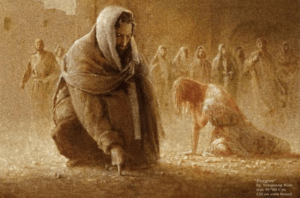

20: Christ’s Finished Work – Redemption from Dead Traditions of Men

Our redemption includes being set free from enslaving traditions of men.

And so, by your own tradition, you nullify the direct commandment of God. Matthew 15:6 (NLT)

This verse records Jesus’ rebuke of the Pharisees for allowing men to donate money or land to the synagogue that otherwise would have been used to support their aged parents, thus relieving them of their duty to provide for them. God is not impressed when we dodge a clear command to honor our parents under the pretext of being generous in a religious way. I remember counseling a young man who ducked into a denominational church wearing a hat. His hair was a mess, and he was embarrassed to remove his hat. The gate keeper of the church asked him to leave if he would not remove his hat. That young man was seeking after God, but the roadblock of a religious tradition barred the door. Sure, if he had been more mature, he would have swallowed his pride and uncovered his head. However, he was not that mature, and neither was the gate keeper. It ended poorly because tradition triumphed over mercy and love. When I spoke to this young man, another stumbling block had been erected in his life. Hopefully he forgave that man and moved on. Sometimes traditions of men keep us locked in bondage.

Nowhere is the deviousness of the human intellect so clearly seen as in our religious traditions that we think are expressions of devotion to God, but which defeat the clear intent of His Word.

Every group has traditions, even those who profess to be free from such things. Non-tradition can easily become a defining tradition. When Luther distanced himself from the Roman Catholic Church, he was careful to try to retain everything that he deemed was not a contradiction to Scripture. Others were more iconoclastic and rooted out anything they considered was not clearly found in the Bible. Hence, Lutherans have a more formal liturgical type of worship service somewhat reminiscent of Catholic tradition, while some more radical groups did such things as banning musical instruments from worship services, since the New Testament nowhere mentions them. The question we must ask ourselves is: “Which philosophy is correct, retention or iconoclasm?”

To answer this question requires that we step back and examine our presuppositions. The Protestant Reformation protested flagrant abuses and errors found in the Catholic Church at that time. Luther found much good in the church but could not abide certain things. Thus, he posted his 95 Theses on the church door in Wittenberg to launch a religious and political upheaval. He was careful to not “throw out the baby with the bath water”, so to speak. Others did not have his love and appreciation for the Roman church. They hated it and found it rotten to the core. Their version of the Reformation was much more an overthrow of the entire system. Centuries later, it is interesting that the church polity and style we follow more resembles the radical reformers than the Lutherans.

The Catholic Church adopted a theology that gives as much weight to church tradition, including ex cathedra pronouncements by the Pope, as it gives to the Holy Scripture. Evangelical Protestant tradition insists on sola scriptura, meaning the Bible is our only infallible source for doctrine and practice. As children of the Reformation, sola scriptura is an established doctrine. Things break down a little right off the bat, however, because not everyone interprets the Bible the same way. Different Protestant groups have established their own church traditions based on their interpretations of the Bible. Hence, some groups rally around what is called “Reformed” doctrine, based on John Calvin’s teachings. One group may make its stand on the proper mode of water baptism, which divided the Baptists and Methodists during the great early camp revivals in our nation. Other groups believe resolutely in the present-day baptism in the Holy Spirit and the operation of the spiritual gifts, while still other groups declare that these things are no longer in operation and are “of the devil”. Depending on the group to which you belong, you will think the other group has man-made religious traditions that nullify God’s Word. Christians have been fighting each other for centuries over doctrinal disputes. What is a person to do?

Some people get confused and rattled by all this wrangling. They wonder how anyone can determine what is right, or if there is a “right” side to the argument.

Jesus came to set us free from men’s traditions that conflict with the Word of God.

The core of God’s Word can be summed up in two commandments – love God and love your neighbor. (Matthew 22:36-40)

God has given us unity with our spiritual brothers and sisters based on our being children of the same Father, servants of the same Lord, and indwelled by the same Holy Spirit. Whether or not our doctrine is perfect does not affect any of these core unities.

Even if we dispute the meaning of certain scriptures, we are to maintain a unity of heart and Spirit.

Some doctrinal differences are so great, however, that they must be resisted vigorously.

Dear friends, I had been eagerly planning to write to you about the salvation we all share. But now I find that I must write about something else, urging you to defend the faith that God has entrusted once for all time to his holy people. 4  I say this because some ungodly people have wormed their way into your churches, saying that God’s marvelous grace allows us to live immoral lives. The condemnation of such people was recorded long ago, for they have denied our only Master and Lord, Jesus Christ. Jude 1:3-4 (NLT) 

Deciding what doctrines are pernicious is the responsibility of church leaders who are guardians of the truth.

Anything that detracts from God’s glory, Jesus’ lordship, or the Holy Spirit’s role in our lives, leads us to disobey God’s clear commands, or promotes immorality cannot be from God and must be heartily resisted because of their destructiveness.

The truths enunciated in the early church creeds are a good starting point for identifying what is essential.

However, if we allow a non-essential doctrinal tradition to separate us from our brethren, it is wrong. Honest God-fearing Christians see things quite differently.

If we hold to our own interpretations and traditions with a high regard and show respect for those held by others, and we refuse to allow our hearts to be divided from other groups because of these things, it shows that we have been redeemed from the power of tradition. Doctrine divides, but God’s love and the Holy Spirit unite us.

I believe God has made His Word deliberately ambiguous in certain areas to test our hearts. I do not suggest biblical truth is relative or malleable, but I do believe our ability to grasp the enormity and complexity of God’s truth is limited by our imperfect human minds. To make the human intellect the measure of what is true is gross arrogance. To insist that our group is the only group that really “gets it” is an expression of an ugly form of pride. To hold to one’s own convictions with magnanimity of heart towards those who disagree is an expression of spiritual maturity. Let’s use the following maxim as our guide.

IN ESSENTIALS UNITY, IN NON-ESSENTIALS LIBERTY, IN ALL THINGS CHARITY

Welcome with open arms fellow believers who don't see things the way you do. And don't jump all over them every time they do or say something you don't agree with—even when it seems that they are strong on opinions but weak in the faith department. Remember, they have their own history to deal with. Treat them gently. Romans 14:1 (MSG)

Click here to see the other articles in this series.

Questions for Further Study and Discussion

  • Can you name a man-made tradition that you or your church holds that is not clearly in Scripture.
  • Can you name any areas in which you have observed a man-made tradition lead someone to disobey clear biblical teaching?
  • If we find ourselves in a dispute over a particular doctrinal point of view, such as the rapture, what is the best way to handle it?

19: Christ’s Finished Work – Redemption from Lawlessness

Lawlessness is the opposite side of the coin from legalism. Legalism and lawlessness are both forms of rebellion against God. Lawlessness rejects God’s standard of righteous living altogether. It fully embraces sin and gives free rein to the sin nature. Legalism, as we have seen, embraces God’s standard of righteousness but rejects God’s way of attaining it through faith in Christ.

What shall we say then? Are we to continue in sin so that grace may increase? 2 May it never be! How shall we who died to sin still live in it? Romans 6:1-2 (NASB)

When we first hear about how Jesus set us free from the power of condemnation, the carnal mind is tempted to draw the conclusion that we are now free to be lawless, or, as Paul put it in the verse above, “to continue in sin that grace may increase.” A person who thinks this way has not yet experienced the transformation of the mind through the power of God’s Word and the Holy Spirit. The regenerated person receives a new heart that desires to serve God and be pleasing to him. The old nature inherited from Adam will always desire to sin; therefore, we should not be surprised when these sorts of thoughts occur to us. However, we must resist these temptations to believe a lie.

Spiritual maturity is the condition of thinking and living in harmony with God’s Spirit and Word.

God has not abandoned his desire for his people to live according to his ways. The only thing that has changed in the New Covenant is how we get there. The new way of the Spirit produces in us the obedience and purity of heart that the Law could not. All the Law can do it expose how far short we fall.

So now there is no condemnation for those who belong to Christ Jesus. 2  And because you belong to him, the power of the life-giving Spirit has freed you from the power of sin that leads to death. 3  The law of Moses was unable to save us because of the weakness of our sinful nature. So God did what the law could not do. He sent his own Son in a body like the bodies we sinners have. And in that body God declared an end to sin’s control over us by giving his Son as a sacrifice for our sins. 4  He did this so that the just requirement of the law would be fully satisfied for us, who no longer follow our sinful nature but instead follow the Spirit. Romans 8:1-4 (NLT) 

A distinguishing characteristic of those who serve God and those who refuse God is the fear of the Lord.

Part of the fear of the Lord is a regard for the consequences of our actions. Those who fear God fear his judgments against sin.

God’s born-again children should properly fear the Lord. We know that God loves us, and we love him back, but we still stand in awe of him and the discipline he may bring should we defy him.

A person who flaunts his or her sin is either not regenerated or still is yielding actively to the sin nature for some reason. Regardless of the reason, a lawless person embraces that which nailed Jesus to the cross. Such a person may be ignorant of the truth, or may be bitter or offended with God in some way, using that as an excuse for sin, or may be trying to cover up his or her pain by “self-medicating”. The answer for the unregenerate person is to put his or her faith in Christ and surrender to his lordship. This article is aimed at the born-again believer who still is living a lawless life.

“Walking in the Spirit” is a phrase Paul uses that describes the condition of allowing the Holy Spirit to live His life through us in such a way that makes us obedient and pleasing to God.

The gospel not only provides forgiveness: it also provides the power to live a new kind of life.

The best defense many times is a strong offense. If we actively seek after God by doing the things that promote deepening our relationship with him (worship, prayer, meditation on God’s Word, etc.), we are less likely to give ourselves over to sin.

Don’t be drunk with wine, because that will ruin your life. Instead, be filled with the Holy Spirit, 19  singing psalms and hymns and spiritual songs among yourselves, and making music to the Lord in your hearts. 20  And give thanks for everything to God the Father in the name of our Lord Jesus Christ. Ephesians 5:18-20 (NLT)

But I say, walk by the Spirit, and you will not carry out the desire of the flesh. Galatians 5:16 (NASB)

Walking in the Spirit produces an obedience that legalism cannot because it begins from a position of resting in our having already obtained God’s favor and blessing through Christ, instead of working to gain that favor through our performance.

If what we are doing is producing in us the fruit of the Spirit – love, joy, peace, patience, etc.., we can be sure it because we are resting in God’s grace. Legalism, in contrast, is an attempt to gain God’s favor and blessing through our own performance, proving, so to speak, that we deserve it. Legalism cannot produce the fruit of the Spirit. Usually it results in frustration, discouragement, pride, impatience, and judging others.

Walking in the Spirit makes us aware of God’s graciousness toward us and encourages us to show appreciation and love to the One Who has done so much for us.

By this we know that we love the children of God, when we love God and observe His commandments. 3 For this is the love of God, that we keep His commandments; and His commandments are not burdensome. 4 For whatever is born of God overcomes the world; and this is the victory that has overcome the world—our faith. 1 John 5:2-4 (NASB) 

The only way obeying God is not a heavy burden is when our love and appreciation for him is coupled with his grace toward us through faith.

When Jesus lives through us, we can serve God willingly.

I believe our Lord described what this is like better than anyone else.

Then Jesus said, “Come to me, all of you who are weary and carry heavy burdens, and I will give you rest. 29  Take my yoke upon you. Let me teach you, because I am humble and gentle at heart, and you will find rest for your souls. 30  For my yoke is easy to bear, and the burden I give you is light.” Matthew 11:28-30 (NLT)

Refusing to let the Holy Spirit have His way in our lives is the fundamental sin of self-directed living.

When the Holy Spirit directs us, He also gives us the power to perform what He shows us to do; whereas, the Law leaves us to our own devices.

Jesus described our predicament under legalism as follows, speaking of the Pharisees who represented legalistic self-righteousness:

They crush you with impossible religious demands and never lift a finger to help ease the burden. Matthew 23:4 (NLT) 

Grace is God’s power via the Holy Spirit to live the Christian life.

The Christian’s highest calling in life is to bring glory and honor to God. Anything that dishonors God can never be a product of grace or true righteousness. Grace was never meant to be an excuse for sin or permission to sin. Quite the opposite, it is the reason we do not have to sin any more after being born again. Through our identification with Christ in His death, the sin nature lost its power to dominate or rule us.

Sin is no longer your master, for you are no longer subject to the law, which enslaves you to sin. Instead, you are free by God's grace. Romans 6:14 (NLT) 

The lawless Christian is deliberately yielding once again to the domination of sin, which is a contradiction of the efficacy of the cross. Such a person’s life is actively testifying to all who know him or her that the cross of Christ is powerless to deliver someone from sin.

What do you think God should do about that? The lawless Christian should be in fear and trembling, wondering what God may do to preserve the testimony of Christ.

How much severer punishment do you think he will deserve who has trampled under foot the Son of God, and has regarded as unclean the blood of the covenant by which he was sanctified, and has insulted the Spirit of grace? 30 For we know Him who said, "VENGEANCE IS MINE, I WILL REPAY." And again, "THE LORD WILL JUDGE HIS PEOPLE." 31 It is a terrifying thing to fall into the hands of the living God. Hebrews 10:29-31 (NASB) 

Since Christ took our punishment for sin on the cross, he is not required to punish us as our sin deserves any longer. (Psalm 103:10)

When God disciplines a lawless son or daughter, it is the stern love of a Father who wants the best for his child.

God will chasten or discipline a rebellious person with three ends in mind: (1) to draw us to himself in love, (2) to make our lives match the truth that the gospel sets people free, and (3) to transform us into Christ’s image and likeness.  Everything God does is motivated by his love for us and will work for our good and his glory. (Romans 8:28)

God knows when to be gentle with us and when to be stern.  (Romans 11:22)

Even though God’s mercy is great, sin is no light thing, and it is very unwise to put God in a position where He may need to do something drastic to preserve the integrity of his name and the gospel.

Living by grace requires that we walk in the tension created between knowing that God does not demand perfection from us in keeping “the rules,” but He does expect us to surrender our lives to him and make a sincere effort to walk in cooperation with and obedience to his Spirit.

Jesus has set us free from legalism and lawlessness so that we can bring glory to the Father through heartfelt obedience.

Through Christ, God has given us the privilege and authority as apostles to tell Gentiles everywhere what God has done for them, so that they will believe and obey him, bringing glory to his name. Romans 1:5 (NLT) 


Click here to see the other articles in this series.


Questions for Further Study and Discussion

  • Do you think that most believers are surprised when they discover that the “flesh” can never be rehabilitated?
  • Can you describe how legalism and lawlessness are both examples of rebellion against God?
  • How would you explain to someone that lawlessness in a Christian is a contradiction of the effectiveness of the cross of Christ and the truth of the gospel?
  • Can you give an example of how an unbeliever might use the contradictory lifestyle of a lawless Christian as an excuse to reject the gospel?
  • Does it make sense to you why God disciplines his children who are lawless?

18: Christ’s Finished Work – Redemption from Performance-Based Living

Legalism or performance-based living is one of the greatest evils propagated by well-meaning people in cooperation with the devil. Paul likened it to being under the power of witchcraft. Legalism mesmerizes those under its sway. It is fueled by our pride and reinforced by rules that are used to measure people’s righteousness before God.

Oh, foolish Galatians! Who has cast an evil spell on you? For the meaning of Jesus Christ’s death was made as clear to you as if you had seen a picture of his death on the cross. 2  Let me ask you this one question: Did you receive the Holy Spirit by obeying the law of Moses? Of course not! You received the Spirit because you believed the message you heard about Christ. 3  How foolish can you be? After starting your Christian lives in the Spirit, why are you now trying to become perfect by your own human effort? 4  Have you experienced so much for nothing? Surely it was not in vain, was it? Galatians 3:1-4 (NLT)  

Performance-based living cannot give us the peace we desire because it is based on the lie that it is possible to gain and maintain a right relationship with God through our own effort.

Because of the effects of sin, most of us realize that something is missing in our relationship with God. Religion is man’s attempt to connect with God, but the Bible makes it clear that any restoration of that relationship must be initiated by God himself. We are quite incapable of pulling it off.

Just as the people of Israel thought they could fight against the Canaanites on their own, we are under the delusion that through trying hard we can please God without his help. The Israelites who followed Moses, illustrated this principle.

So Moses returned from the mountain and called together the elders of the people and told them everything the LORD had commanded him. 8  And all the people responded together, “We will do everything the LORD has commanded.” So Moses brought the people’s answer back to the LORD. Exodus 19:7-8 (NLT) 

They thought they had the capacity to obey. All they needed was to know what to do. The truth of the matter was that they were fatally flawed at the core of their being because of the devastating effects of sin. Even though they professed to want to obey God, they had no ability to follow through on their promise. God knew this, but they did not – yet. The same is often true for us. We imagine that if we just try a little harder, we can pull this off. But we cannot.

Most Christians understand that before being born again we desperately needed Christ. When we realize that we are unable to save ourselves, the gospel becomes most welcome news. Jesus died to take our punishment for all the sins we ever committed! God is willing to “let bygones be bygones” and erase or forgive all the marks against us on the great blackboard of life.

Those who do not fully understand the gospel tend to stop here with forgiveness, thinking that once we get a fresh clean slate, now it is our responsibility to make the most of it. After all, “God helps those who help themselves.” (This is probably the most quoted non-scripture ever!) This way of looking at things misses the point. We could not save ourselves before we turned to Christ, and we cannot do it after.

The good news is much more than simple forgiveness. God gives those who trust in Jesus his Spirit to live the Christ life in and through us!

This means that we need God’s grace to operate in every aspect of our lives from the beginning to the end.

Therefore, since we have been made right in God’s sight by faith, we have peace with God because of what Jesus Christ our Lord has done for us. 2  Because of our faith, Christ has brought us into this place of undeserved privilege where we now stand, and we confidently and joyfully look forward to sharing God’s glory. Romans 5:1-2 (NLT) 

Under legalism, we get into the kingdom by grace, but we remain in God’s favor through our obedience. In other words, we earn it. Grace thinking is quite different. We enter the kingdom by grace, and become obedient through grace. The result is the same, but how we get there is very different. Legalism requires self-effort.

Grace requires faith that Christ has already provided us with a permanent right standing with God. Our obedience stems from our love for such an amazing Savior and a desire to please and bring him glory.

For they don’t understand God’s way of making people right with himself. Refusing to accept God’s way, they cling to their own way of getting right with God by trying to keep the law. 4  For Christ has already accomplished the purpose for which the law was given. As a result, all who believe in him are made right with God. Romans 10:3-4 (NLT)

Legalistic thinking in earlier times led some to postpone water baptism until their deathbed. That way they would have the cleanest slate possible when they approached the judgment seat of Christ. The early Jewish believers in Christ often added a slightly different twist: people get into the kingdom by faith alone, but if you wanted to be a true follower of Christ, you then had to keep the law and be circumcised.

The key idea in legalism is that salvation comes through faith in Christ plus something else. The true gospel is that salvation comes through faith in Christ alone.

So Christ has truly set us free. Now make sure that you stay free, and don’t get tied up again in slavery to the law. 2  Listen! I, Paul, tell you this: If you are counting on circumcision to make you right with God, then Christ will be of no benefit to you. 3  I’ll say it again. If you are trying to find favor with God by being circumcised, you must obey every regulation in the whole law of Moses. 4  For if you are trying to make yourselves right with God by keeping the law, you have been cut off from Christ! You have fallen away from God’s grace. Galatians 5:1-4 (NLT) 

Every God-fearing person who has tried to keep the Law knows what it is like to feel the desperation of condemnation. Before faith in Christ, all of us were under condemnation and wrath because all have sinned.

We are made right with God by placing our faith in Jesus Christ. And this is true for everyone who believes, no matter who we are. 23  For everyone has sinned; we all fall short of God’s glorious standard. 24  Yet God, with undeserved kindness, declares that we are righteous. He did this through Christ Jesus when he freed us from the penalty for our sins. Romans 3:22-24 (NLT) 

No one has ever escaped this judgment, because no one apart from Christ has been without sin. Condemnation comes because of the Law.

The Law is God’s righteous standard of holiness that points out and defines sin in our lives. Its job is to place us under condemnation so that we will understand our desperate need for a Savior. It is our servant to lead us to Christ.

For no one can ever be made right with God by doing what the law commands. The law simply shows us how sinful we are. Romans 3:20 (NLT)

Once a person places his or her faith in Christ, this condemnatory role of the Law in our lives is finished forever.

We know that the law is good if one uses it properly. 9 We also know that law is made not for the righteous but for lawbreakers and rebels, the ungodly and sinful, the unholy and irreligious; for those who kill their fathers or mothers, for murderers, 10 for adulterers and perverts, for slave traders and liars and perjurers--and for whatever else is contrary to the sound doctrine 11 that conforms to the glorious gospel of the blessed God, which he entrusted to me. 1 Timothy 1:8-11 (NIV)

Christ took upon Himself all the condemnation that the Law placed upon us. He bore our sin and the penalty for our sin. When we placed our faith in Christ, we were justified by the Father, which means we received Christ’s perfect righteousness as a gift. This means in God’s eyes we already have the righteousness that comes from perfect obedience unto death over a lifetime. That is why we are no longer subject to condemnation.

Freedom from condemnation is a big key to victorious living by faith.

The strength of sin is the Law’s power to condemn. (1Cor.15:56) If we allow ourselves to be condemned because of our sins and failings after becoming a Christian, we are giving power to sin to rule us, even though it has no right to do so.

Until we decide to focus instead on Christ’s righteousness given to us instead of on our own sinfulness and weakness, we will struggle with a condemnation-induced power of sin in our lives.

Therefore, it is just as important to understand and believe that we are free from condemnation through dying to the law in Christ as it is to believe we are free from the power of indwelling sin through our identification with Christ’s death to sin and resurrection in life.

The Law will never go away. Its righteous standards are eternal. We had to “go away” by dying so that we could be married to someone else whose name is Jesus Christ. Just as our union with the Law brought forth evil fruit due to our corrupt sin nature, even so, our union with Christ produces good fruit out of our new nature in Christ.

The new nature cannot be joined to the Law because the two are incompatible. We must jettison old performance-based thinking and accept the new way of the Spirit.

But now we have been released from the law, for we died with Christ, and we are no longer captive to its power. Now we can really serve God, not in the old way by obeying the letter of the law, but in the new way, by the Spirit. Romans 7:6 (NLT) 

The only way this will work is if the power of grace and the indwelling Spirit is strong enough to overcome temptation and the desires of the sin nature, which still reside in us in diminished strength. According to Romans 8, this is indeed the case.

So now there is no condemnation for those who belong to Christ Jesus. 2 For the power of the life-giving Spirit has freed you through Christ Jesus from the power of sin that leads to death. 3 The law of Moses could not save us, because of our sinful nature. But God put into effect a different plan to save us. He sent his own Son in a human body like ours, except that ours are sinful. God destroyed sin's control over us by giving his Son as a sacrifice for our sins. 4 He did this so that the requirement of the law would be fully accomplished for us who no longer follow our sinful nature but instead follow the Spirit. Romans 8:1-4 (NLT) 

If this sounds too good to be true, it is because we have never understood the true gospel of grace. Instead, we have been living to some degree or another under a form of legalism or performance-based Christianity. Yes, it is vitally important to obey God, but we don’t do it to gain a right standing or acceptance from Him. We do it because we already have those things. Love and appreciation are far more powerful motivators than fear and condemnation. If we have any doubts about this, consider the story of the woman caught in adultery in John Chapter 8. She expected to be killed by stoning for her sin as required by the Law, but…

Then Jesus stood up again and said to the woman, “Where are your accusers? Didn’t even one of them condemn you?” 11  “No, Lord,” she said. And Jesus said, “Neither do I. Go and sin no more.” John 8:10-11 (NLT) 

She was able to walk in victory over sin because God forgave her and released her from condemnation. If we have only known serving God out of fear of judgment, we really should give this new way of living condemnation free in the Spirit a try. We will never go back!

Click here to see the other articles in this series.


Questions for Further Study and Discussion
  • How did God deliver us from the power of condemnation?
  • Why is condemnation so antithetical to living by grace?
  • Why is it just as important to understand and believe that we are dead to the law’s power to condemn as it is to know that we are dead to indwelling sin’s power to rule us?

17: Christ’s Finished Work – Redemption from the Power of Sin

The blood of Jesus provided for our overall redemption. It is the price that was paid to secure our freedom from every form of bondage.

For you know that it was not with perishable things such as silver or gold that you were redeemed from the empty way of life handed down to you from your forefathers, 19 but with the precious blood of Christ, a lamb without blemish or defect. 1 Peter 1:18-19 (NIV) 

The blood of our Lord provides us with forgiveness of sins. This aspect of redemption can be equated with salvation in general.

In him we have redemption through his blood, the forgiveness of sins, in accordance with the riches of God's grace Ephesians 1:7 (NIV)

Here we have an overlapping of propitiation and redemption. In this mediation, we will focus on how Jesus redeemed or set us free from the power of sin.

Our identification with Christ in his death and resurrection is the divine mechanism that sets us free from sin’s enslaving power.

The following scripture verse clearly shows this.

Our old sinful selves were crucified with Christ so that sin might lose its power in our lives. We are no longer slaves to sin. Romans 6:6 (NLT)

Many, if not most, Christians do not understand or even know about the importance of the principle of identification. Instead, they are usually only familiar with the idea of substitution.

Most believers know and believe that Jesus died FOR their sins, in their place, but they do not grasp that the believer died WITH Christ and lives IN Christ so that the sin nature or “old man” might lose its power to rule our lives.

Not only are we identified WITH Christ, but the Bible says that we are IN Christ. We are in him, and he is in us.

If you love me, obey my commandments. 16  And I will ask the Father, and he will give you another Advocate, who will never leave you. 17  He is the Holy Spirit, who leads into all truth. The world cannot receive him, because it isn’t looking for him and doesn’t recognize him. But you know him, because he lives with you now and later will be in you. 18  No, I will not abandon you as orphans—I will come to you. 19  Soon the world will no longer see me, but you will see me. Since I live, you also will live. 20  When I am raised to life again, you will know that I am in my Father, and you are in me, and I am in you. John 14:15-20 (NLT) 

The principle that we are “in Christ” is found throughout the New Testament. In fact, we are united with Christ in the Spirit. (1 Cor. 6:17) Here are a few verses for us to consider.

being justified as a gift by His grace through the redemption which is in Christ Jesus; Romans 3:24 (NASB) 

Even so consider yourselves to be dead to sin, but alive to God in Christ Jesus. Romans 6:11 (NASB)  

For the wages of sin is death, but the free gift of God is eternal life in Christ Jesus our Lord. Romans 6:23 (NASB)

Therefore there is now no condemnation for those who are in Christ Jesus. Romans 8:1 (NASB)  

nor height, nor depth, nor any other created thing, will be able to separate us from the love of God, which is in Christ Jesus our Lord. Romans 8:39 (NASB)  
I thank my God always concerning you for the grace of God which was given you in Christ Jesus, 1 Corinthians 1:4 (NASB)  

Blessed be the God and Father of our Lord Jesus Christ, who has blessed us with every spiritual blessing in the heavenly places in Christ, Ephesians 1:3 (NASB)

There are literally dozens of verses containing this small and often overlooked prepositional phrase “in Christ” which contains one of the most important concepts in the Bible.

God ingeniously inextricably linked our salvation to a Person. All we have from God is in His Son. By being in Him and his being in us, we have everything.

He who has the Son has life; he who does not have the Son of God does not have life. 1 John 5:12 (NIV) 

Therefore everything that is true of Christ, is true for us believers, aside from His divinity and unique role as the only begotten Son of God. He shares his life, his power, his holiness, his authority, and his freedom from sin’s power with us.

Because Jesus is free from sin, so are we.

For the death that He died, He died to sin once for all; but the life that He lives, He lives to God. 11 Even so consider yourselves to be dead to sin, but alive to God in Christ Jesus. Romans 6:10-11 (NASB)

For this freedom to be fully experienced and enjoyed, we must understand and believe it. Satan seeks to rob God’s children of our freedom and authority through ignorance and deception. He wants us to rely on our own experience and feelings to determine if we are indeed free from sin, instead of believing what God’s Word says.

Since the Bible teaches that Christ has indeed set us free from the power of sin, we are responsible to believe it and ask the Holy Spirit to make it our experience.

Click here to see the other articles in this series.


Questions for Further Study and Discussion
  • Explain in your own words what it means to be “in Christ”. (Hint: 1 Cor. 6:17)
  • Why is being in Christ fundamental to our freedom?
  • Is it right for us to claim that we are “dead to sin” even if we still commit sins? (Hint: Our true identity is who we are “in Christ.”)

16: Christ’s Finished Work – Redemption

In its basic sense, “redemption” means to buy back from slavery with the intent to set free. It is the power of the gospel to liberate us.

He did not enter by means of the blood of goats and calves; but he entered the Most Holy Place once for all by his own blood, having obtained eternal redemption. Hebrews 9:12 (NIV)

Redemption encompasses the entire work of Christ at times, but it also has a very specific meaning. Jesus our Redeemer purchased us from slavery and set us free. He liberated us from the dominion of a tyrant, the devil. He delivered us from our enemies. This is all part of what it means to be redeemed.

Redemption extends to everything that formerly held us in bondage – sin, death, Satan and his demons, the Law, men’s traditions, deception, sickness, disease, and various enslaving addictions. Redemption extends to all areas of bondage.

As much as most people don’t want to hear this, everyone is a slave to something or someone. Slavery is usually associated with being captured, mistreated, stripped of all rights, and forced to work without pay. Most slavery over the centuries has been just that. However, there is a type of slavery mentioned in the Bible that was more like what was once a common practice – indentured servanthood. In fact, my mother’s seventh great grandfather, Pieter Claesen Wyckoff , who was born on 26 JAN 1625 in Boda, the Netherlands, and died on 30 JUN 1694 in what is now Brooklyn, New York, came to the new world, New Amsterdam to be exact, as an indentured servant as a young boy. After fulfilling his term of seven years of service, he married and settled in the Brooklyn area. His home still stands and is a museum. His many thousands of descendants are scattered all over the United States. For him, indentured servanthood was a temporary “slavery” of sorts that served to liberate him from poverty in his motherland and give him new opportunities to thrive in a new world. He or his parents made the choice to enter this contract. I suspect it was a choice to either be a voluntary slave for seven years followed by freedom or be enslaved permanently by poverty in the Netherlands. 

In the Old Testament, if a person sold himself into this kind of slavery to a master for economic reasons, he might discover during his time of service that his life was far better than before. In this case, he could choose to make the enslavement permanent. His master would drive an awl through the ear lobe of the servant, marking him for life as a voluntary slave.

But the slave may declare, ‘I love my master, my wife, and my children. I don’t want to go free.’ 6  If he does this, his master must present him before God. Then his master must take him to the door or doorpost and publicly pierce his ear with an awl. After that, the slave will serve his master for life. Exodus 21:5-6 (NLT)

The Bible describes the Christian as a doulos or slave to Christ. Paul makes it clear that we only have two options in life - to be a slave to sin or a slave to God.

There is no third way of doing our own thing. That option, by definition, is serving self, which equates to serving Satan, the king of self.

Do you not know that when you present yourselves to someone as slaves for obedience, you are slaves of the one whom you obey, either of sin resulting in death, or of obedience resulting in righteousness? Romans 6:16 (NASB) 

Jesus taught that all who sin are slaves of sin. (John 8:34) Satan does a good job of deceiving us into thinking that, when we sin, we are simply doing what we want. The fact of the matter is that when we choose to sin, we become willing slaves of Satan in the matter of sin, taken captive by him to do his will.

Then they will come to their senses and escape from the Devil's trap. For they have been held captive by him to do whatever he wants. 2 Timothy 2:26 (NLT) 

Sin opens the door to all sorts of bondage. We became subject to slavery to death and the fear of death through our sin. Jesus died to set us free from that.

Because God's children are human beings—made of flesh and blood—Jesus also became flesh and blood by being born in human form. For only as a human being could he die, and only by dying could he break the power of the Devil, who had the power of death. 15 Only in this way could he deliver those who have lived all their lives as slaves to the fear of dying. Hebrews 2:14-15 (NLT) 

Jesus also set us free from demonic and satanic oppression through His death and resurrection.

In this way, God disarmed the evil rulers and authorities. He shamed them publicly by his victory over them on the cross of Christ. Colossians 2:15 (NLT)

Likewise Jesus redeemed us from sickness and disease; although, we still live in bodies that will one day suffer physical death. The full manifestation of our redemption from sickness and death will take place at the resurrection of the body.

He personally carried away our sins in his own body on the cross so we can be dead to sin and live for what is right. You have been healed by his wounds! 1 Peter 2:24 (NLT) 

Another aspect of redemption is deliverance from the performance-based system of attempting to find and maintain favor with God.

Christ redeemed us from the curse of the law by becoming a curse for us, for it is written: "Cursed is everyone who is hung on a tree." Galatians 3:13 (NIV) 

One of the most wonderful areas of redemption is deliverance from our bondage to deception. Jesus is the Truth, and as we continue in the revealed truth of His Word, we are made free.

So Jesus was saying to those Jews who had believed Him, "If you continue in My word, then you are truly disciples of Mine; 32 and you will know the truth, and the truth will make you free." John 8:31-32 (NASB)

Slavery to sin and the devil always produces death, destruction, sorrow, regret, and loss. In contrast to this, voluntary submission to God produces life, peace, righteousness, joy, and abundance.

Whereas the devil enslaves us to impoverish us and strip us from everything that brings joy and fulfillment in life, God “enslaves” us to set us free.

Submission to God fulfills and enhances our life. In fact, God has elevated us from simple slave status to sonship. We take our cue from the only begotten Son, who was subservient to His Father’s will. His obedience unto death elevated him to being Lord of all.

Before becoming a man, the Son of God enjoyed the privileges and status of being part of the Godhead. After his incarnation, death, and resurrection, he has all the rights and privileges of divine sonship, but as the God-man and Lord he has reclaimed the authority Adam gave away. This has enormous consequences for us who believe in him.

Through being identified with Christ, God has conferred upon us who serve Him all the wonderful privileges and status associated with being a child of God.

Far from being a miserable slave, our obedience to God elevates us to the highest status available, God’s own child.  This will be the subject of another aspect of Christ’s finished work on our behalf.

Jesus answered them, "Truly, truly, I say to you, everyone who commits sin is the slave of sin. 35 "The slave does not remain in the house forever; the son does remain forever. 36 "So if the Son makes you free, you will be free indeed. John 8:34-36 (NASB)

Now let’s review a bit. Use the following chart to clarify and deepen your understanding of what we have covered thus far regarding what Christ accomplished on our behalf on the cross and by his resurrection and ascension.


Work of Christ

Propitiation

Forgiveness

Justification

Redemption

Definition

God’s wrath against our sin has been appeased.

Our debt toward God has been erased.

Our guilt has been removed and we have been given Christ’s right standing with God.

We have been bought back from slavery and set free.

Result

We can now enjoy God’s love without fear.

We can now forgive others as God forgave us.

We can now come boldly into God’s presence without condemnation or shame.

We are now free to serve God and others.

Questions for Further Study and Discussion
  • From what has Christ set you free that is the most meaningful to you?
  • How does redemption differ from propitiation, forgiveness, and justification?
  • How do they overlap?

Click here to see the other articles in this series.

15: Christ’s Finished Work – Justification

Justification is the formal declaration of our righteous standing with God in the court of heaven.

Therefore, having been justified by faith, we have peace with God through our Lord Jesus Christ, Romans 5:1 (NASB)

It is one thing to be forgiven for an offense and quite another to be completely exonerated in court and declared not guilty! When we are forgiven, it means we admit that we have done something wrong to another person, concerning which we have incurred some sort of debt to them.

Forgiveness does not erase the wrong; it simply releases us from the debt. Justification, however, erases the record of the wrong altogether, as if it never happened.

What Jesus did on the cross delivered us from guilt and condemnation through his becoming our substitute. God’s justice demanded that we pay back our debt incurred by our sin by dying a criminal’s death.

For the wages of sin is death, but the free gift of God is eternal life through Christ Jesus our Lord. Romans 6:23 (NLT)

Jesus, who never sinned, agreed to die in our place as our substitute, taking upon himself our sin, our guilt, and our debt. Because he substituted for us and paid off our debt, we were forgiven. In other words, toward God we became debt free, but the record of our offense still existed. Forgiveness leaves us being wrongdoers for whom someone else has paid the debt.

Justification, however, removes the record of our wrongdoing. Perhaps the closest parallel in our legal system is expungement, the process by which a record of criminal conviction is destroyed or sealed from state or federal record.

An expungement order directs the court to treat the criminal conviction as if it had never occurred, essentially removing it from a defendant’s criminal record as well as, ideally, the public record.

When Jesus rose again, Father God declared that his atoning death was enough to erase the guilt and condemnation associated with our sin.

The reason this could be done without violating Father God’s own righteousness and justice is because we are now identified with our Lord Jesus. Instead of being defined as a “sinner”, we are now the righteousness of God because we are “in” Christ, and he is “in” us. This means that we are now partakers of who Christ is and all the benefits of what he accomplished through his death and resurrection.

He made Him who knew no sin to be sin on our behalf, so that we might become the righteousness of God in Him. 2 Corinthians 5:21 (NASB) 

We are now partakers of God’s own righteousness, a perfect righteousness without fault or blemish!

It is God who has made you part of Christ Jesus. And Christ has become for us wisdom from God. He is the reason we are right with God and pure enough to be in his presence. Christ is the one who set us free from sin. 1 Corinthians 1:30 (ETRV)

Some have said that to be justified is to be “just as if I’d” never sinned. This is a memorable way to define justification, but it is inadequate. Such a definition of justification returns us to a state of moral innocence, the condition that Adam and Eve enjoyed initially in the garden. Justification goes much further by giving us the complete and perfect righteousness of the Son of God, who was obedient to his Father unto death.

When we are justified, we receive Christ’s righteousness deposited into our spiritual bank account.

It is as if we had already lived a perfect life, died as a martyr, and already stand before the Father completely vindicated and faultless! In fact, that is our actual condition positionally in Christ.

Even before he made the world, God loved us and chose us in Christ to be holy and without fault in his eyes. Ephesians 1:4 (NLT)

The only way anyone of us can be without fault is because we are one with the Righteous One. There is no righteousness available outside of Christ’s. God is not dispensing little bags of righteousness based on our performance.

We either become righteous because we are in Christ, or we are outside of his righteousness altogether.

A thinking person will realize at this point that justification is an overwhelmingly amazing gift from God.

Imagine that while we are running in a race, it is announced that we have already finished our race and won. What kind of encouragement would that be? I imagine we would gain a new spring in our step! This is what has happened to us believers! We who are still on the earth are in a race (Hebrews 12:1), and we have won through Christ!

No, despite all these things, overwhelming victory is ours through Christ, who loved us. Romans 8:37 (NLT) 

In God’s eyes the race is already finished.

and these whom He predestined, He also called; and these whom He called, He also justified; and these whom He justified, He also glorified. Romans 8:30 (NASB) 

All of the verbs in the above verse are in the aorist past tense, which means the action has been completed once for all, never to be repeated. This means God regards us as having been justified and even glorified in His sight. He sees the end from the beginning. (Isaiah 46:10) He knows the outcome since He is sovereign and all-knowing.

Father knows you have already finished the race in Christ and have been declared a winner because Christ already won!

Even though we have already won our race, we must keep running. This is where our faith comes into view. Faith includes the following attributes – trust, allegiance, and steadfastness. The Bible says it is a gift from God, like everything else necessary for our existence. The idea is that the God who saved us by dying on the cross when we were still his enemies, will continue to “keep” us by and through faith now that we are his friends.

And since we have been made right in God’s sight by the blood of Christ, he will certainly save us from God’s condemnation. 10  For since our friendship with God was restored by the death of his Son while we were still his enemies, we will certainly be saved through the life of his Son. 11  So now we can rejoice in our wonderful new relationship with God because our Lord Jesus Christ has made us friends of God. Romans 5:9-11 (NLT)

As we, with God’s help, steadfastly continue in a trust and allegiance relationship with Christ (faith), God’s grace will keep us.

Yet now he has reconciled you to himself through the death of Christ in his physical body. As a result, he has brought you into his own presence, and you are holy and blameless as you stand before him without a single fault. 23  But you must continue to believe this truth and stand firmly in it. Don’t drift away from the assurance you received when you heard the Good News. The Good News has been preached all over the world, and I, Paul, have been appointed as God’s servant to proclaim it. Colossians 1:22-23 (NLT) 

This is what it means to be justified. We have been given another person’s, Christ’s, righteous standing before God – a perfect standing resulting from a completed life of absolute faithfulness to God. We are no longer under the Law or any performance-based system in which we must earn or maintain our standing before God. Our righteousness is no longer in question now that we have placed our confidence in Christ.

Everyone who believes in him is freed from all guilt and declared right with God—something the Jewish law could never do. Acts 13:39 (NLT) 

So, if we have put our faith and allegiance in Christ, we have passed from death to life (John 5:24). The next time we are tempted to get down on ourselves because of a recent sin or failure, we must remember that we stand before God clothed in Christ’s perfect righteousness. Therefore, we can come boldly before our Father’s glorious throne to receive mercy and grace to help us in our time of need. If we confess our faults and sins to our loving Father, he will let us experience the blessing of His mercy and forgiveness once again. We should never doubt our right standing with Him.

So let us come boldly to the throne of our gracious God. There we will receive his mercy, and we will find grace to help us when we need it. Hebrews 4:16 (NLT) 

Click here to see the other articles in this series.

Questions for Further Study and Discussion
  • Explain how justification is different from forgiveness.
  • Why did Jesus have to pay the penalty for our sin?
  • How did Jesus’ resurrection prove his vindication (righteousness) before God?
  • Can you explain the difference between moral innocence and justification.
  • Does it make sense to you that we are in a race that we have already won?
  • Why can we always boldly come into Father’s presence to receive grace and mercy, even when we have recently failed?

14: Christ’s Finished Work – Forgiveness

This is my blood of the covenant, which is poured out for many for the forgiveness of sins. Matthew 26:28 (NIV)

Forgiveness is another side of propitiation. Once the just wrath of God against sin has been appeased, forgiveness may be offered.

Forgiveness is never required. It is an offer to release someone from a debt that is justly owed. It is always an act of mercy.

In this case, our debt was one we had no means of ever paying – the debt of sin. The only acceptable payment that could release us from this debt was the death of a perfectly righteous God-Man offered in obedience on the cross. Only the Lamb of God could pay that price. Thank God He did!

The next day John saw Jesus coming toward him and said, "Look, the Lamb of God, who takes away the sin of the world! John 1:29 (NIV)

Jesus’ parable of the unrighteous servant (Matthew 18:23-35) teaches us that we are forgiven only because of the mercy of God. The unrighteous servant never understood and thought he could or should pay back his master over time for a debt that had already been removed. As a result, he failed to properly receive the gift offered to him or to show the same sort of mercy to others. Since he thought he must still earn his forgiveness; he demanded that others earn theirs, too, by repaying their debts to him. This kind of spiritual blindness and pride produces legalism in which we try to earn our acceptance and standing with God through our performance. Only One Person had the ability to pay the necessary price, and he has already done it.

Jesus offered himself, not because he was required to do so because of a personal debt he owed, but because he chose to extend mercy to us by paying our debt.

He purchased our forgiveness with His blood.

In Him we have redemption through His blood, the forgiveness of our trespasses, according to the riches of His grace Ephesians 1:7 (NASB) 

Redemption is a theological word which simply means to buy back from slavery and set free. We will look more at the depth of meaning of this word in future meditations. For now, we will concentrate on this one aspect of redemption – the forgiveness of sins.

Once a debt has been paid, it can never be legally demanded again.

Until the debt is paid, the debtor is in bondage to the lender. Being in a state of unforgiveness is a kind of prison, a debtor’s prison. We do not have this form of debt collection anymore, but in earlier times a person could go to prison for unpaid debts. On a personal level, we can hold people in a psychological or spiritual prison of our own making through refusing to forgive. It is impossible to relate in any sort of a close way when we hold an offense against another person or that person holds an offense against us.

Forgiveness means we release the other person from owing us anything at all. We let go of our demands for personal satisfaction or vengeance, knowing that God will handle any justice that needs to be administered.

When Jesus died for us and paid the price of His blood for our redemption, God’s wrath was completely satisfied, and He released us from our impossible debt. God forgave us completely and released us from the prison of our sins. We were still guilty of committing them, but we were released from the debt incurred. This is an important point.

Forgiveness does not remove guilt: only the debt.

If someone commits a murder, the family of the murdered person may offer forgiveness to the killer, but that will not remove the murderer’s guilt or bring the dead person back to life. He still did the act and must answer for it in a court of law. The consequences of the murder remain. If the governor should pardon him, he also would be released from the state’s demand for vengeance or pay back. In that case, he would be completely forgiven and set free. Nevertheless, he would still be guilty of killing a man, and that family would still have to suffer the consequences of losing a loved one. Forgiveness does not erase the guilt for what we did; only the debt we had to pay.

There is another aspect of salvation called justification that takes care of the guilt problem. We will look at that next time. For now, why not spend some time thanking God for releasing us from the impossible debt we owed Him because of our sins? And we should also make sure we are not failing to release anyone else from a debt owed to us.

Holding an offense against another person is one sure way to sabotage our own mercy.

God forgives us as we forgive others. God requires us to extend mercy to others. (Matthew 6:12 & Mark 11:25) If we have been holding on to an offense, we must let it go, just as God did for us. It’s not just the best way: it’s the only way.

You must make allowance for each other's faults and forgive the person who offends you. Remember, the Lord forgave you, so you must forgive others. Colossians 3:13 (NLT)
 
Questions for Further Study and Discussion
  • How does it affect us when someone refuses to forgive us?
  • How does it affect us when we refuse to forgive another person?
  • How does our refusal to forgive others reveal that we have never yet understood our own need for mercy?
  • Would you agree that when we refuse to forgive someone, it shows that we have elevated ourselves to be their judge on a par with God?
  • Are you aware of anyone that you still need to forgive?
  • What do we do when we know we should forgive someone, but our heart is not in it?
  • What do we do when we choose to forgive someone, but when we get around them the old feelings of bitterness resurface?
  • When we forgive someone, does that require us to act as if they never did anything to us?
  • When we forgive someone, does that mean we should trust them in the future?
  • How specific should we be when we forgive someone? (Example: I forgive you vs I forgive you for betraying me.)
  • What is the difference between forgiveness and reconciliation?

Click here to see the other articles in this series.

13: Christ’s Finished Work – Propitiation

In this is love, not that we loved God, but that He loved us and sent His Son to be the propitiation for our sins. 1 John 4:10 (NASB)

The work of salvation accomplished by the Lamb of God is so broad, deep, and high that it might be compared to viewing a mountain range. Mountains will look different depending on our vantage point. It is the same with the finished work of Christ. We will look at it from different perspectives to gain a better understanding of the whole. Some of the views will overlap, as when we blend many shots together to make a panorama.

As I begin breaking down the magnificent and multi-faceted work of our great Lord and Savior, Jesus Christ, I will be using theological terms that may or may not be familiar to you. Some of these concepts are overlapping and have more than one way of being understood. The word that I believe encompasses the entire work of salvation is the “atonement,” which is an invented word to describe what Christ did. Jesus died and rose again to restore us to a place of “at-one-ment” with God. I have chosen to break down the atonement into various aspects that I believe are distinctive and enlightening. It is important to see how each part contributes to the whole. Let’s begin with “propitiation”, a word rarely used today.

Propitiation is accomplished by offering a blood sacrifice to appease God’s just wrath against sin.

If we are in deep trouble with a very powerful and angry person because of a major offense we committed, the first thing we need to do is somehow defuse the situation. Otherwise, no progress will be made in the relationship. If we have betrayed someone to whom we owe loyalty, our treason demands justice.

Beginning with Adam and Eve, we humans have rejected our Creator in favor of going our own way and trying to be our own god. Instead of being grateful creatures, we have arrogantly refused to acknowledge, praise, and serve the One to whom we owe everything.

In our fallen condition, things have only gotten worse. We have committed numerous crimes against other people and the creation as well. This is a violation of God’s justice and has justly stirred up his holy wrath.

Our greatest primary need regarding God is to somehow satisfy or appease His just wrath against our rebellion and sin.

Jonathan Edwards was a brilliant theologian in New England many generations ago during the First Great Awakening in this country. In his famous sermon, “Sinners in the Hands of an Angry God,” he put into words the condition of every person without Christ.

So that, thus it is that natural men are held in the hand of God, over the pit of hell; they have deserved the fiery pit, and are already sentenced to it; and God is dreadfully provoked, his anger is as great towards them as to those that are actually suffering the executions of the fierceness of his wrath in hell, and they have done nothing in the least to appease or abate that anger, neither is God in the least bound by any promise to hold them up one moment; the devil is waiting for them, hell is gaping for them, the flames gather and flash about them, and would fain lay hold on them, and swallow them up; the fire pent up in their own hearts is struggling to break out: and they have no interest in any Mediator, there are no means within reach that can be any security to them. In short, they have no refuge, nothing to take hold of; all that preserves them every moment is the mere arbitrary will, and uncovenanted, unobliged forbearance of an incensed God.

Obviously, this was written for the purpose of awakening each of his listeners to the imminent danger of dying while being in an unforgiven and unreconciled state and to stimulate us to reach out to God for mercy. It is recorded that many in his congregation grasped the truth of his words and groaned in agony until they had a breakthrough of knowing in their hearts they were forgiven. Only the sacrifice of Jesus the Messiah, the innocent Lamb of God, could satisfy or propitiate God’s fiery wrath against our sin..

The next day John saw Jesus coming toward him and said, “Look! The Lamb of God who takes away the sin of the world! John 1:29 (NLT) 

Only Jesus could take the full fury of God’s wrath upon Himself, thereby leaving us unscathed and unthreatened. And that is just what He did!

Because Jesus took God’s wrath as our substitute, we now have been delivered from that wrath and any threat of ever encountering it.

For God has not destined us for wrath, but for obtaining salvation through our Lord Jesus Christ, 1 Thessalonians 5:9 (NASB)

We can compare Paul’s words to those of our Lord regarding our deliverance from wrath and condemnation.

I tell you the truth, those who listen to my message and believe in God who sent me have eternal life. They will never be condemned for their sins, but they have already passed from death into life. John 5:24 (NLT)

Jesus substituted for us by taking our punishment. We are identified with him because the Word of God says that when he died, we died, and when he rose, we rose. Our sin fell upon him, and his righteousness was given to us who believe. Substitution and identification are two very important concepts we need to understand and believe.

The reason we are not destined for wrath is because Jesus took our condemnation and punishment upon himself, leaving us “justified” or “not guilty” before God. We have passed from death to life because Jesus died for us and rose again. When he died, we died. When he rose, we rose.

Some appointments are pleasant, such as one to see an old friend. Others are not pleasant at all, such as an appointment to have a root canal. The most feared of all appointments is an appearance before the judgment seat of God for one who has no propitiation for his or her sins. This is an appointment to wrath. Every believer in Christ has been delivered from this appointment. It is not in our future. Praise the Lord!

This does not mean we will never encounter God’s discipline or reap the consequences of our sin. We will reap what we sow, but we will never have to endure God’s wrath.

For example, King David committed two deadly sins for which death was the just punishment. He committed adultery with his faithful friend’s wife and had his friend put to death to hide the fact. God, showing David New Covenant mercy, did not require David to be put to death. He was forgiven when he repented, but God warned him through the prophet that he, his family, and the entire nation would suffer bad consequences for his sins. We can be forgiven yet still have to reap what we sow. King David was a person who ushered in countless blessings to his family and the nation, but he also brought to them some negative reaping. The same is true for us. We all reap what we sow; so, we should ask God’s help to bring blessings upon those we love and serve and ask for a crop failure when we sow evil.

But those of us who put our faith and allegiance in Christ will never reap the wrath of God. That bit of reaping has already been taken by Jesus when he became sin on our behalf that we might become the righteousness of God in Him. (2 Cor.5:21)

And they speak of how you are looking forward to the coming of God's Son from heaven—Jesus, whom God raised from the dead. He is the one who has rescued us from the terrors of the coming judgment. 1 Thessalonians 1:10 (NLT)

The next time we think about what God has done for us in Christ, let us try to remember what it was like to fear the certainty of spending an eternity in hell suffering the torments of God’s wrath. Let us lift our hands to heaven in thanksgiving that He sent a Savior Who endured that wrath on our behalf so that we will never have to face it.

Instead of being sinners in the hands of an angry God, we are beloved children sitting in the lap of a loving Father.

Only Jesus could effect that change. What a Savior!

We have all benefited from the rich blessings he brought to us—one gracious blessing after another. 17 For the law was given through Moses; God's unfailing love and faithfulness came through Jesus Christ. 18 No one has ever seen God. But his only Son, who is himself God, is near to the Father's heart; he has told us about him. John 1:16-18 (NLT) 


Questions for Further Study and Discussion
  • Why didn’t God simply forgive us, instead of requiring Jesus to appease His wrath?
  • Why can we be confident we will never encounter God’s wrath if we put our faith and allegiance in our Lord Jesus Christ?
  • Animistic religions also recognize the need to appease the wrath of demon “gods.” If you were preaching the gospel to a group of people who regularly offered animal sacrifices to gain the blessing and protection of a demon spirit ruling the area, how would you go about it?

Click here to see the other articles in this series.

12: Christ’s Finished Work – A Mystery

In the Bible a “mystery” is something hidden until it is revealed by God. What Christ accomplished on the cross and through His resurrection is just such a mystery.

Therefore when Jesus had received the sour wine, He said, "It is finished!" And He bowed His head and gave up His spirit. John 19:30 (NASB)

What exactly did Jesus mean by these last words upon the cross? How we interpret them will somewhat depend on our view of Scripture and life. For the pessimist, maybe they were the last words of a defeated man who died tragically for nothing. For the more positive minded, perhaps Jesus was simply relieved that he had made it through the worst and finally would find escape in death. But what about the believer? What truth do we find in Jesus’ last words upon the cross? I believe he gave us the clue we need in a previous discourse.

Jesus spoke these things; and lifting up His eyes to heaven, He said, "Father, the hour has come; glorify Your Son, that the Son may glorify You, 2 even as You gave Him authority over all flesh, that to all whom You have given Him, He may give eternal life. 3 "This is eternal life, that they may know You, the only true God, and Jesus Christ whom You have sent. 4 "I glorified You on the earth, having accomplished the work which You have given Me to do. 5 "Now, Father, glorify Me together with Yourself, with the glory which I had with You before the world was. John 17:1-5 (NASB) 

Even before his crucifixion, Jesus could confidently say that He had accomplished the work his Abba Father had given Him to do. How much more could he claim that upon the cross as his last breath was exhaled as an act of total obedience to His Father’s will.

For us to understand what is meant by the finished work of Christ, we must go back to the “once for all” aspect of salvation.

The Bible makes it clear that Jesus died once and will never need to do that again, having purchased our salvation through His ultimate sacrifice.

He does not need to offer sacrifices every day like the other high priests. They did this for their own sins first and then for the sins of the people. But Jesus did this once for all when he sacrificed himself on the cross. Hebrews 7:27 (NLT) 

As we consider the nature of what Jesus did on the cross, we must engage our minds to think quite deeply. This was not a simple or superficial thing. C.S. Lewis, in his Chronicles of Narnia, which is an allegory about Christ, calls it “deep magic”. Of course, there was nothing magical about it, but it was “deep”. Paul calls it God’s “secret wisdom”.

Yet when I am among mature Christians, I do speak with words of wisdom, but not the kind of wisdom that belongs to this world, and not the kind that appeals to the rulers of this world, who are being brought to nothing. 7 No, the wisdom we speak of is the secret wisdom of God, which was hidden in former times, though he made it for our benefit before the world began. 8 But the rulers of this world have not understood it; if they had, they would never have crucified our glorious Lord. 9 That is what the Scriptures mean when they say, "No eye has seen, no ear has heard, and no mind has imagined what God has prepared for those who love him." 10 But we know these things because God has revealed them to us by his Spirit, and his Spirit searches out everything and shows us even God's deep secrets. 1 Corinthians 2:6-10 (NLT)

In the Bible a “mystery” is something hidden until it is revealed by God.

What Christ accomplished on the cross and through His resurrection is just such a mystery.

God's secret plan has now been revealed to us; it is a plan centered on Christ, designed long ago according to his good pleasure. 10 And this is his plan: At the right time he will bring everything together under the authority of Christ—everything in heaven and on earth. 11 Furthermore, because of Christ, we have received an inheritance from God, for he chose us from the beginning, and all things happen just as he decided long ago. 12 God's purpose was that we who were the first to trust in Christ should praise our glorious God. 13 And now you also have heard the truth, the Good News that God saves you. And when you believed in Christ, he identified you as his own by giving you the Holy Spirit, whom he promised long ago. 14 The Spirit is God's guarantee that he will give us everything he promised and that he has purchased us to be his own people. This is just one more reason for us to praise our glorious God. Ephesians 1:9-14 (NLT)

The mystery is that God’s salvation was accomplished in and through Christ via the cross and resurrection.

God’s eternal plan to conform us to His glorious image has been carried out to perfection through His Son’s ultimate sacrifice and his indwelling life (“Christ in you, the hope of glory” – Col.1:27). This plan was conceived in the mind of Abba Father before the world was created. (Ephesians 1:4)

The Holy Spirit applied Christ’s finished work to our lives when the gospel intersected our timeline.

Here is another passage that clarifies the plan.

For those whom He foreknew, He also predestined to become conformed to the image of His Son, so that He would be the firstborn among many brethren; 30  and these whom He predestined, He also called; and these whom He called, He also justified; and these whom He justified, He also glorified. Romans 8:29-30 (NASB) 

Every key verb in the above passage is in the Greek aorist past tense, which means it is a once for all completed action, a “done deal”.

Our faith is not in something shifting or uncertain.

We have been given a strong anchor that is hooked into Christ’s finished work.

So God has given us both his promise and his oath. These two things are unchangeable because it is impossible for God to lie. Therefore, we who have fled to him for refuge can take new courage, for we can hold on to his promise with confidence. 19 This confidence is like a strong and trustworthy anchor for our souls. It leads us through the curtain of heaven into God's inner sanctuary. 20 Jesus has already gone in there for us. He has become our eternal High Priest in the line of Melchizedek. Hebrews 6:18-20 (NLT) 

As we continue to trust in what God has already done for us in Christ, we have the stability to navigate through the uncertainties of our “fragile” earthly existence in these mortal bodies.

Despite having to do battle with renegade desires coming from the “flesh,” we have bold confidence that ultimately our salvation is complete and does not depend on our performance but on Christ’s perfect work.

God sees the end from the beginning. The Holy Spirit Who indwells us is God’s guarantee that what He has begun, He will finish. In fact, it is finished!

For I am confident of this very thing, that He who began a good work in you will perfect it until the day of Christ Jesus. Philippians 1:6 (NASB) 

God himself has prepared us for this, and as a guarantee he has given us his Holy Spirit. 2 Corinthians 5:5 (NLT) 
 
Questions for Further Study and Discussion
  • What difference does it make for us to know that Christ already completed the work of salvation?
  • How does our understanding of “spirit-soul-body” help us to grasp the difference between the “once-for-all” eternal salvation of the spirit and the “in process” daily salvation of the soul?
  • What part does each Person of the Godhead play in our salvation?
  • Does Christ’s death on the cross also cover all of our present and future sins or just those in our past?
  • If Jesus already paid for our forgiveness, what place does repentance have in the process?

Click here to see the other articles in this series.

Marriage, Divorce, and Remarriage

marriage divorce remarriage


Marriage, Divorce, and Remarriage

by Jay E. Adams

I well remember when a young divorced woman requested a meeting with our elder team many years ago. Anticipating that one day she might wish to remarry and knowing that our church’s stance on the issue forbade that, she requested that we seek the Lord about the matter. She was willing to submit to whatever conclusion we might reach, but she was wise enough to ask us to reconsider before the matter might arise. Her request proved to be a pivotal point in the development of our understanding on the matter.

My father, who was the pastor of the church at that time, did some research and found the book that is the subject of this summary. He asked all of us on the team to read it, and then we discussed its contents. The result was that we changed our policy. That is why I put it in my list of important books. I have referred to it often and have reread it at least twice. Here I will summarize some of the main points chapter by chapter.

Part 1 – Marriage

Chapter 1 – Some Basic Considerations about Marriage

In this chapter Adams examines the nature of marriage. The first point he makes is that marriage was instituted by God, unlike divorce. Even though the state “regulates” and records marriages, it has no authority to define it, since it is not a man-made institution. The second point is that marriage is foundational in that it produces a family, the basic unit of society. Thirdly, marriage cannot be reduced to a legalized and responsible means of mating and producing children. Procreation is indeed a sub-purpose of marriage, but its primary function, according to God, is to provide companionship. Chapter 2 explores this in more detail. Fourthly, marriage cannot be equated with sexual relations. Marriage authorizes sexual relations, which do not per se make or break a marriage.

Chapter 2 – What Marriage Is All About

Genesis 2:18 gives us God’s evaluation of the single life, in most cases.

Then the LORD God said, “It is not good for the man to be alone. I will make a helper who is just right for him.” Genesis 2:18 (NLT) 

Except for those single persons especially gifted by God to live a single life (Matthew 19:11-12 and 1 Corinthians 7:32-34), most of us will find fulfillment in marriage. Combining insights from Proverbs 2:17 and Malachi 2:14, Adams defines marital companionship as a “close, intimate relationship” that eliminates loneliness. (p.12)

Next the author looks at the Old Covenant concept of engagement, which was a contract to marry. Even though no sexual relations took place until after the marriage ceremony, the engagement was binding and could only be broken by divorce. This shows that marriage is fundamentally a contractual or covenantal arrangement that becomes binding even before the sexual consummation.

“Marriage is a formal (covenantal) arrangement between two persons to become each other’s loving companions for life.” (p. 13)

The contractual element is very important. An unmarried couple may be informally “committed” to one another, but publicly and formally declaring that commitment is integral to marriage. For the Christian, water baptism corresponds to some degree as a public acknowledgement of our allegiance to Christ. Adams points out that ”forsaking the companion of one’s youth is paralleled with forgetting the covenant of God.” (Proverbs 2:17)

Adams explores companionship further.

As his counterpart , the woman completes or fills out the man’s life, making him a larger person than he could have been alone, bringing into his frame of reference a new feminine dimension from which to view life that he could have known in no other way. Then, too, he also brings to his wife a masculine perspective that enlarges her life, making her a fuller, more complete person than she could have been apart from him. This marriage union by covenant solves the problem of loneliness not merely by filling a gap, but by overfilling it. More than mere presence is involved.” (p. 16)

This fact comes out even more fully in Genesis 2:24-25 where marriage is descibed as a cleaving (clinging or adhering) in which a man and his wife become “one flesh”… to become one person. (p. 17)

God’s revealed goal for a husband and wife is to become one in all areas of their relationship – intellectually, emotionally, physically. The Covenant of Companionship was designed to fill this need. (p. 17)

Chapter 3 – The Place of Marriage

In this chapter Adams points out the centrality of marriage in life. The primary relationship is husband and wife, not parent and child. There is no contractual relationship between a parent and child to provide companionship for one another. The nature of the parent-child relationship changes dramatically over time. Eventually, if all goes as expected, children will leave the home to establish their own families, but marriage is permanent and must not be broken. Anything that breaks the covenant of companionship is sin. Husbands and wives should put one another first, thus modeling a proper marriage to their children. By so doing, parents give their children security. No child was designed by God to be the center of attention. No parent or child should take priority over the marriage relationship.

Blood may be thicker that water, but it should not be thicker than promise. (p. 20)

Adams encourages couples to cultivate companionship to insure marital success and happiness.

Part II – Divorce

Chapter 4 – A Biblical Attitude toward Divorce

Adams opens this chapter by stating that divorce is biblical, where it is recognized and regulated.

To begin with, let us be clear about the fact that neither is the Bible silent on the subject of divorce, nor does it always, under all circumstances, for everyone, condemn divorce… While God  emphatically says, “I hate divorce” (Malachi 2:16), that statement must not be taken absolutely to mean that there is nothing about divorce that could be anything but detestable, because He, Himself, also tells us… “for all the adulteries which faithless Israel has done, I sent her away and gave her a divorce bill.” (Jeremiah 3:8) (p. 23)

It is altogether true that God hates divorce. But he neither hates all divorces in the same way nor hates every aspect of divorce. He hates what occasions every divorce… He hates the results that often flow to children and to injured parties of divorce… And he hates  divorces wrongly obtained on grounds that he has not sanctioned. (p. 24)

The author asks us to examine our attitude toward divorce, since that will affect how we come across to divorced persons. If people sense that we are judging them, it will be difficult, if not impossible, to help them. 

Chapter 5 – The Concept of Divorce

Adams opens this chapter by pointing out that even though the Bible recognizes, permits, and regulates divorce, God did not institute it. Instead of recognizing that divorce is part of God’s divine order, Jesus pointed out that divorce alters God’s original plan.

Jesus replied, “Moses permitted divorce only as a concession to your hard hearts, but it was not what God had originally intended. Matthew 19:8 (NLT) 

If Moses “allowed” divorce by regulating rather than forbidding it, we must never get the idea that God merely winked at divorce. He neither ignores it (hoping it will go away), nor in toto (as a practice) denounces it, but, rather, takes cognizance of it and does something about it (1) to see to it that divorce is permitted only under certain circumstances, and not under others (cf. Deut. 22:19, 29), (2) that when it is done it is done in an orderly fashion, and (3) that those who obtain a divorce are fully aware of the possible consequences. (Deut. 24:1-4) It is certainly correct to say that in the Scriptures God acknowledges the existence of divorce and carefully regulates it. (p. 28)

Adams reminds us that God hates divorce and did not institute it, but he does recognize and regulate it under certain biblically prescribed circumstances. He hates divorce because sin is always the cause, but that does not mean that every divorce is sinful.

The Christian’s stance, then, is that divorce is never desirable, and (among Christians) it is never inevitable. Reconciliation… is always possible for believers under the care and discipline of the church. While permitted for Christians in cases of sexual sin, divorce is never required… Every legitimate effort, therefore, ought to be made to help persons contemplating divorce to reconsider the alternatives, and to assist divorced persons to become reconciled to one another (whenever possible) before they remarry another and it is too late to do so. (p. 31)

Chapter 6 – What Is Divorce?

A divorce…is the repudiation of…(the) covenant (or agreement) in which both parties promised to provide companionship (in all its ramifications) for one another. A divorce is, in effect, a declaration that these promises are no longer expected, required, or permitted. (p. 32)

As Adams will endeavor to prove, divorce is intended to free both parties to make the same commitment to someone else. That was certainly the case in the passage previously cited from Deuteronomy 24:1-4.

The author observes that separation, as a precursor or alternative to divorce, is not a biblical idea. When the Bible uses the words “leave,” “send away,” or “separate,” it is always speaking of divorce, which renders the persons unmarried.

Chapter 7 – The Two Groups in 1 Corinthians 7

Adams believes that chapter 7 of First Corinthians is the perfect place to start because it addresses two groups of marriages – those between two believers and those in which only one spouse is a believer. Adams stresses that Paul applied Jesus’ teaching on marriage in its proper context, a marriage between two believers. Paul addresses the issue that arose as the gospel penetrated the pagan world when one spouse came to faith but the other did not. He believes that applying the principles Jesus intended for the first group to the second group can have bad consequences. The author believes this clarifies, not diminishes, the power of Christ’s words.

Adams says this distinction is true in matters of law as well. Believers are not to sue other believers because we have the resources within the church to settle such matters outside of court. However, when it comes to unbelievers, this does not work. The same is true for marriage. Believers should be able to reconcile via the resources found in God, the Bible, and the church. A marriage between a believer and an unbeliever may not be able to work things out in the same way.

Chapter 8 – Divorce among Believers (Preliminary Considerations)

In this chapter, Adams does not yet address the “exception clause,” which allows believers to divorce with God’s permission in the case of sexual infidelity. Instead he looks at the cases where believers disobey Christ’s clear command and divorce without proper cause. He states that in this and every case divorce actually dissolves the marriage, whether it is a sinful or permitted one. The divorced couple is not still “married in God’s eyes,” as some teach, but are “agamos,” that is, unmarried. The obligations and privileges of married couples no longer exist for them. Two new obligations exist for divorced believers, however.

  1. They are required (again by command – 1 Corinthians 7:11) to remain unmarried (i.e., not to marry another) in order to
  2. be able to be reconciled.

Their chief obligation is reconciliation.(p. 43)

When a divorced person remarries, reconciliation to the first spouse is not allowed by God. (Deut. 24:4)

Chapter 9 – Divorce among the Unequally Yoked

In this case, Paul addresses a group of people to whom Jesus did not refer. As previously mentioned, believers have resources available to them that unbelievers do not – the Word of God, the Holy Spirit, and the church.

Rather than commanding the believer not to divorce his unsaved partner, regardless of what happens, he (Paul) requires something less: he (or she) must not divorce a partner who is willing to make a go of their marriage. (p. 46)

This has a two-fold purpose: to hopefully lead to the salvation of the unsaved spouse and to protect the children.

Under circumstances when the unbeliever wants to get out of the marriage, Paul says, “let him separate.” (1 Cor. 7:15) The clause (literally) reads, “if the unbeliever is separating [chorizo – to separate by divorce], let him separate [chorizo]. (p. 47)

According to Adams, this in the one instance in which divorce is required.

According to 1 Cor. 7:15, when a believer divorces an unbeliever at the unbeliever’s request, it completely frees both parties from all marital obligations, rendering them free to remarry. The author wrote that Paul did not want any “loose ends” attached to these situations, but wanted the matter resolved. God wants peace. The New Living Translation captures the idea.

(But if the husband or wife who isn’t a believer insists on leaving, let them go. In such cases the Christian husband or wife is no longer bound to the other, for God has called you to live in peace.) 1 Corinthians 7:15 (NLT) 
Chapter 10 – The Exceptional Clause

This chapter addresses Christ’s exception for divorce mentioned in Matthew.

You have heard the law that says, ‘A man can divorce his wife by merely giving her a written notice of divorce.’ 32  But I say that a man who divorces his wife, unless she has been unfaithful, causes her to commit adultery. And anyone who marries a divorced woman also commits adultery. Matthew 5:31-32 (NLT) 

And I tell you this, whoever divorces his wife and marries someone else commits adultery—unless his wife has been unfaithful. Matthew 19:9 (NLT) 

I used the New Living Translation for these two passages because it simplifies the meaning without doing damage to the intent of original language. It is important that we accept the link between divorce and remarriage in the exception clause. Divorce in the case of unfaithfulness frees both parties to remarry without committing adultery.

Adams examines the different Greek words used in this passage – porneia and moichao, which can be translated fornication and adultery. Fornication refers to any sexual sin, and adultery, of course, is a violation of the marriage covenant. Some argue that the two verses above, therefore, only pertain to the breaking of the engagement, not the actual marriage. However, in the Bible, porneia can refer even to adultery. (Jeremiah 3:1, 2, 6, and 8, using the Septuagint translation, which is a Greek rendering of the Hebrew scriptures.) Adams points out that adultery is a broader term than the sexual act. It refers to allowing a third party to breach the covenant of companionship. (p. 54) The author quotes an interesting extra-biblical passage that joins the two words. Sirach 23:22-23 records that an unfaithful wife “committed adultery by fornication.” (p.54)

Adams makes the case that Jesus permits divorce based on the act of fornication that breaches the marriage, which is adultery.

The word porneia (fornication) covers all forms of sexual transgression: incest, bestiality, homosexuality, lesbianism, as well as adultery. That is the reason why many translators render porneia as the more inclusive “sexual sin.”

Adams dismisses the engagement thesis by listing several arguments, beginning with that Jesus and Pharisees were discussing marriage, not engagement. I will leave it to you to check these out on your own, if you are interested. (p. 55-56) He concludes by writing that the standard, historical Protestant interpretation is that a believer may divorce his spouse for committing fornication. However, even though divorce is permitted, it is certainly not required. Adams goes a step further by stating that if forgiveness is granted after repentance, the marriage cannot be terminated. (p. 56) I am not sure I agree. Forgiveness does not necessarily reestablish trust. One may forgive without remaining married. However, it is hoped that repentance can be made, forgiveness granted, and trust reestablished. That would be the best possible outcome, in my opinion.

Next the author addresses the case when the offending spouse refuses to repent. In that case, when possible, church discipline must take place. Using the paradigm given to us by our Lord, the faithful spouse should personally confront the unfaithful one. If this does not bring about repentance, one or two others should be asked to make the confrontation. If this does not have the proper effect, church discipline resulting in excommunication must be brought to bear. The result will be that the unfaithful party will then be rendered as a “heathen” practically speaking. At this point, if there is not repentance and reconciliation, the faithful party is now able to relate to the unfaithful spouse as an unbeliever, according to the principles set forth in 1 Corinthians 7. The effect will be the resolution of the matter, since believers are not permitted to marry unbelievers. God does not want things held in “limbo” for long periods of time. (pp. 57-58) Of course, if the offending party repents, reconciliation may become possible.

Chapter 11 – Christ, Deuteronomy, and Genesis

In this chapter, Adams compares passages from Genesis 1:26-28, 2:18 and 21-25, Deuteronomy 24:1-4, Matthew 5:32-32, and 19:3-9, Mark 10:2-12, and Luke 16:18. He attempts to properly interpret Jesus’ words regarding divorce by placing them in their proper Old Testament context.

I will not go through the author’s entire argument regarding the “defilement” of the divorced wife in Deuteronomy 24. Instead I will quote his concluding paragraph.

The wife of Deuteronomy 24, then, was not defiled by sexual relations with the second husband, but by her involvement in marriage and sexual relations because of a divorce (though legal) that was sinful, and so was the second marriage. Because  the divorce was for some flimsy reason, it was sinful, and so was the second marriage. (p. 65)

Jesus said that a wife divorced for a sinful reason was caused to commit adultery. (Matthew 5:32) Adams states that if she had been free to remarry, she would not have committed adultery when she did (remarried), and she would not be considered defiled. (p. 66) Adams then asks the obvious question.

The sinful divorce (based only on an erwath dabar [something indecent or repulsive to the husband short of adultery]) truly broke the first marriage; the sinful adulterous marriage to the second man was a genuine marriage, though adulterous… (p. 67)

Adams reminds the reader that “adultery always involves a violation of the marriage covenant in such a way that a third party is introduced into the picture claiming the right (or privilege) to do for one of the parties what they have contracted to do for one another.” (p.67) He states that even though the first marriage is broken by divorce, the former spouses have no right to be in that state and are required by God to reconcile the first marriage. Adams “redefines” adultery by saying it is “sexual sin with someone other than the one with whom one ought to be having sexual relations.” (p. 67)

Adams closes the chapter by reminding the reader that Jesus did not consider Deuteronomy 24:1-4 to be the defining passage on marriage and divorce. Rather he considered it to be God’s way of regulating a practice already in existence, similar to concubinage or polygamy. (p. 68) From the beginning (Genesis), it was not that way. It was not what God had in mind.

Chapter 12 – The Origin of Divorce for Sexual Sin

This chapter is difficult to summarize and needs to be read in its entirety. However, I will attempt to give you the main points.

Adams explains that the origin of divorce for sexual sin came from God himself, who taught us that by “both precept and example.” (p.71) He points out that God refers to his relationship with Old Covenant as a marriage. (Ezekiel 16:8, Jeremiah 2:2) The New Covenant uses the marriage analogy to describe the relationship believers have with our Lord. (Ephesians 5:22-30) Regarding God’s relationship with Israel in the Old Covenant, the Bible points out that Israel was unfaithful “lay down like a harlot” (Jeremiah 2:20), “went after other lovers” (Hosea 2:13), and “committed adultery” (Jeremiah 3:8). In the last passage, God declares that he “put her away and gave her a bill of divorce.” Isaiah and Hosea also mention God’s divorce of Israel (Isaiah 50:11 and Hosea 2:2). Nevertheless, God still loved Israel and called her to repentance, which would be the grounds for his taking her back. (Hosea 14:1-2) In that same book, God took the initiative to woo Israel back to himself. In Isaiah, God tells Israel that he will take her back as if she were never guilty of adultery. (Isaiah 54:6-7) Adams states:

The very least we can say is that in these prophets, by His (God’s) recognition, adoption, and (implied) endorsement of the practice, God placed his approval on it [divorce]. (p.73)

The case in the New Testament when the Bible says that Joseph, being a just man, decided to divorce Mary quietly for her apparent infidelity further corroborates this. There Adams concludes:

If from no other source, Joseph and Jesus might easily have derived their view of divorce for fornication – just as we have here- from the example and words of God himself. (p.74)

Adams observes that God did not always follow the “letter” of what he calls “case law” in exacting punishment for capital offenses, such as with David regarding his sins of adultery with Bathsheba and the subsequent murder of her husband Uriah. It seems that God made room for mercy if repentance were present. When Jesus acknowledged that Moses allowed divorce because of the hardness of our hearts, it was a concession to the original creation ordinance. Adams points out that Jesus did not elaborate on the basis of the concession and it would be mere speculation to try to determine it. In any case, the exception was one of long standing practice, which gave room for Joseph to take this direction without being rebuked by God.

Part III – Remarriage

Chapter 13 – Remarriage

Adams begins by acknowledging that remarriage of widows and widowers is allowed and even encouraged. He next addresses the issue of whether a remarried man can serve as an elder. He believes that interpreting 1 Timothy 3:2 and 12 and Titus 1:6 to mean a prospective elder must have only married one time in his life is incorrect. Rather, Paul is prohibiting a polygamist from holding the office. In other words, an elder must be married to only one woman at a time.

But in the NT, while a polygamous convert was allowed to enter the body without putting away his wives (on the principle stated and reiterated in 1 Corinthians 7:17, 20, and 24), he could not become an officer. (p.81)

Adams cites various sources to prove that polygamy among the Jews existed in Paul’s day and up to the eleventh century.

Chapter 14 – Remarriage after Divorce

Adams begins the chapter by stating that remarriage of divorced persons is allowed in the New Testament. He quotes the following passage.

Are you bound to a wife? Do not seek to be released. Are you released from a wife? Do not seek a wife. 28  But if you marry, you have not sinned... 1 Corinthians 7:27-28 (NASB) 

The word “loosed” clearly refers to divorce, not the death of a spouse.

To call “sin” what God expressly says is not sin (v.28) – wittingly or unwittingly – is a serious error… Nothing in the Bible forbids the remarriage of divorced persons without obligations, except to priests, who were exceptions to this policy. It is assumed in the Bible that wherever Scripture allows divorce, remarriage is also allowed… All persons properly divorced may be remarried. (pp.85-86)

Adams cites John Murray’s exegetical work to conclude that all persons divorced under Christ’s exception clause are free to remarry “in the Lord” (to another believer) without committing adultery.

Next the author begins to examine more complicated cases that arise in the aftermath of sinful divorces (those done for biblically unsanctioned reasons). Adams admits that this gets complicated, due to the fact that sin complicates life. The first such issue he addresses is the hypothetical case where a believing man divorces his unbelieving wife against her will. If the man later repents, he is not able to remarry his wife because she is not a believer; that is, unless she becomes a follower of Christ.

Next he address the complication that can arise if the church does not do its part in trying to reconcile partners who are considering divorce.

Many of the difficulties that result could have been avoided if the church had done what it ought to do at the outset. (p.88)

Here is a summary of his thoughts and conclusions. I encourage you to read the chapter in its entirety because I am omitting a lot of good information below.

If a one married partner pursues a divorce that has no scriptural basis, the church should intervene to stop it. If the one pursuing divorce will not be persuaded using standard church discipline procedures (Matthew 18:15 and following), he or she should be excommunicated and regarded as a “heathen.” This turn of events will grant the “innocent” party permission to remarry, since functionally the one pursuing the divorce is now regarded as an unbeliever. If an unbeliever desires a divorce, the believing spouse is to let them go. If church discipline is not pursued, if the couple gets a divorce, neither party is free to remarry as long as the other spouse is unmarried. They have an obligation to reconcile.

Chapter 15 – Persons with a Past

In this chapter Adams addresses how to handle situations that arise when persons with an ungodly past desire to marry or remarry. His writes that people who are born again are washed clean from the past sins. ( 1 Corinthians 6:11) He points out that King David’s union with Bathsheba was initially adulterous, but later was sanctified through forgiveness. She became part of the lineage of the Messiah, as did Rahab the harlot. Without minimizing the sins of divorce and adultery, we must acknowledge that Christ’s blood cleanses us from these sins. Therefore, when a person truly repents for his or her sin(s) of adultery and/or divorce, we must no longer consider him or her the “guilty” party. They are forgiven and declared “not guilty”.

Citing the case of David and Bathsheba, Adams writes:

If this marriage, which at its inception was knee deep in sin (David didn’t repent until after the marriage.), could be blessed by God…, why do we say that persons who are forgiven and cleansed before marrying, cannot expect God to bless their marriage because of sin in their past? (p. 95)

Adams concludes:

…remarriage after divorce is allowed in the Bible and… the guilt party – after forgiveness – is free to remarry. (p.95)

Next Adams asks if people who wish to (re)marry should be examined to see if there are any hindrances that must be first addressed. The author answers “yes” in some cases. Here are things he believes must be addressed.

  1. Has the person freed himself or herself from all past obligations?
  2. Has the person sought forgiveness from all parties hurt by the previous sinful divorce, etc.?
  3. Has every effort been made to reconcile if possible?
  4. Has every effort been made to right all wrongs such as repayment of unfairly-obtained monies from a divorce settlement or back alimony or child support?

In addition, anything that contributed to the first failed marriage should be addressed so that it will not sabotage the future marriage. This should happen in pre-marital counseling.

Chapter 16 – Dealing with Divorce and Remarriage

This chapter is a summary of the principles presented in this book with the acknowledgement that everything has not been covered. In his conclusion, Adams writes:

My prayer is that God will use this book to bring balance and blessing to His church

I have found it to be very helpful in navigating complex issues that arise while seeking to help people who have done sinful things in the past but who wish to participate in the God-given blessing of marriage going forward. I hope this summary helps you and inspires you to read the book for yourself.

Share this post...