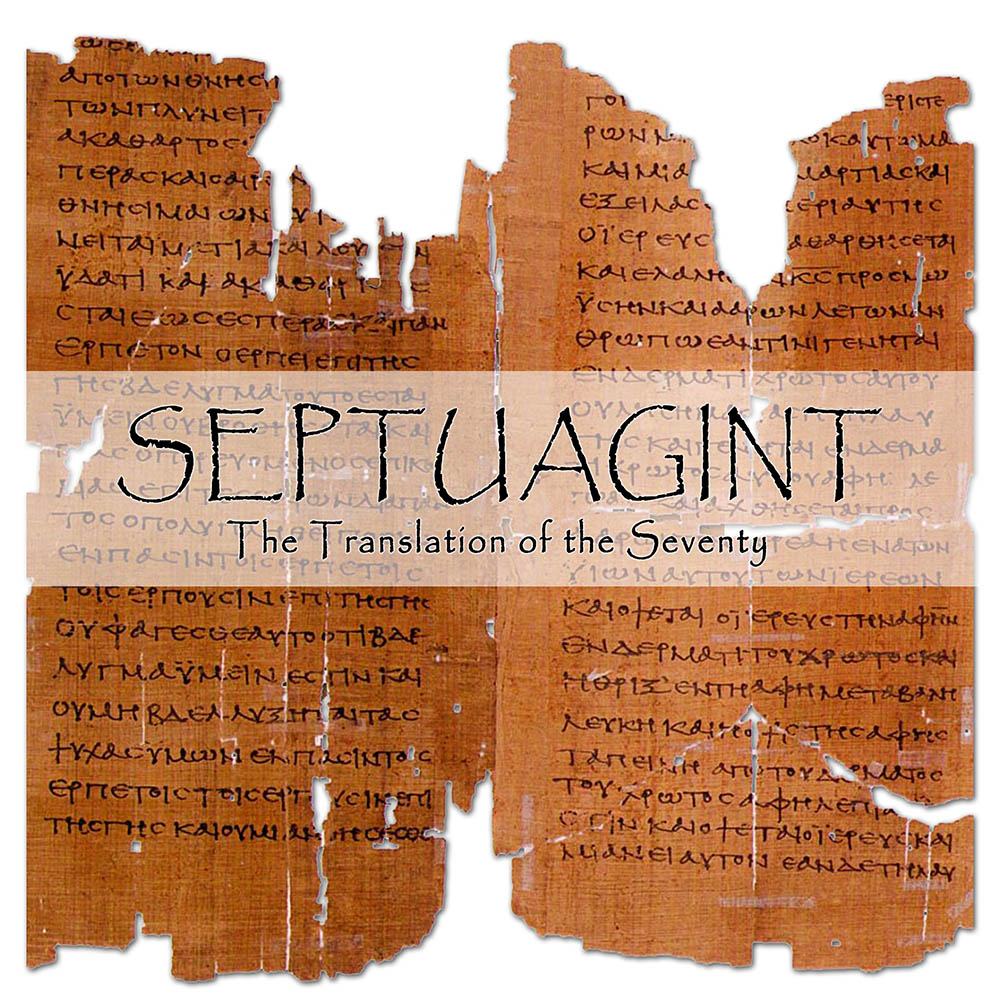
Here is a direct side-by-side comparison of the Masoretic Text with the LXX. I have concluded that the LXX is much to be preferred over the Masoretic Text, a position from which the Eastern Orthodox Church never deviated. Perhaps, if you take the time to read my comparisons and other articles, you will arrive at the same conclusion.
The Septuagint version I am using is the Lexham English Septuagint 2nd Edition, which is available in print or as part of Logos Bible Software. Occasionally I also use the Brenton translation of the LXX for insight into difficult passages.
If you want to know more, click on the following links.
- Why Christians Should Prefer the Septuagint over the Masoretic Text.
- Some Insights Gained through Comparing the Masoretic Text to the Septuagint
- More side by side comparisons of the Masoretic Text (MT) to the Septuagint (LXX).
| Masoretic Text | Septuagint | Significance |
|
1 How blessed is he whose transgression is forgiven, Whose sin is covered! 2 How blessed is the man to whom the LORD does not impute iniquity, And in whose spirit there is no deceit! Psalm 32:1–2 (NASB95) |
1 Blessed are they whose lawless acts are forgiven and whose sins were covered up. 2 Blessed is the man whose sin the Lord will never reckon, nor is there guile in his mouth. Psalm 31:1–2 (LES2) |
The LXX says God will not reckon or count our sin against us. This is basically the meaning of the MT and agrees with the words of Jesus in John 5:24. The MT says there is no deceit in his spirit, but the LXX says “in his mouth.” |
|
3 When I kept silent about my sin, my body wasted away Through my groaning all day long. 4 For day and night Your hand was heavy upon me; My vitality was drained away as with the fever heat of summer. Selah. Psalm 32:3–4 (NASB95) |
3 Because I was silent, my bones were worn out from my crying aloud the whole day. 4 For day and night your hand was weighed down upon me. I was turned into misery when a thorn was planted. Musical interlude Psalm 31:3–4 (LES2) |
Verse 4 in the LXX speaks of “when a thorn was planted.” This may be where Paul got his term “thorn in the flesh” (2 Corinthians 12:7), which seems to have been some sort of spiritual harassment that God allowed in his life to keep him humble. Perhaps David referred to something similar. Just a thought. |
|
5 I acknowledged my sin to You, And my iniquity I did not hide; I said, “I will confess my transgressions to the LORD”; And You forgave the guilt of my sin. Selah. Psalm 32:5 (NASB95) |
5 I made known my sin, and I did not cover up my lawlessness. I said, “I will make my sin against myself known to the Lord,” and you forgave the ungodliness of my heart. Musical interlude Psalm 31:5 (LES2) |
The wording is slightly different, but the idea is the same. David made known his sin to God. |
|
6 Therefore, let everyone who is godly pray to You in a time when You may be found; Surely in a flood of great waters they will not reach him. 7 You are my hiding place; You preserve me from trouble; You surround me with songs of deliverance. Selah. Psalm 32:6–7 (NASB95) |
6 Because of this, every holy person will pray to you at the suitable time. Surely in the flood of many waters they will not come near to him. 7 You are my place of refuge from the affliction of that which is surrounding me. You are my great joy to deliver me from the ones who are encircling me. Musical interlude Psalm 31:6–7 (LES2) |
The MT words things differently, saying that songs of deliverance surround David; whereas, the LXX says that afflictions surround him. Then the LXX says that God is his great joy who delivers him. |
|
8 I will instruct you and teach you in the way which you should go; I will counsel you with My eye upon you. 9 Do not be as the horse or as the mule which have no understanding, Whose trappings include bit and bridle to hold them in check, Otherwise they will not come near to you. Psalm 32:8–9 (NASB95) |
8 I will instruct you, and I will teach you in this way that you should go. I will strengthen my eye upon you. 9 Do not become as the horse and the mule, for which there is no understanding. With bridle and muzzle one compresses their jaws, which do not come near to you. Psalm 31:8–9 (LES2) |
Essential agreement. |
|
10 Many are the sorrows of the wicked, But he who trusts in the LORD, lovingkindness shall surround him. 11 Be glad in the LORD and rejoice, you righteous ones; And shout for joy, all you who are upright in heart. Psalm 32:10–11 (NASB95) |
10 Many are the scourges of the sinner, but the one who hopes in the Lord will be encircled in mercy. 11 Be cheerful in the Lord, and rejoice exceedingly, O righteous ones, and boast, all the upright with respect to the heart. Psalm 31:10–11 (LES2) |
The MT’s “sorrows of the wicked” are the LXX’s “scourges of the sinner.” The MT says, “shout for joy,” but the LXX says, “boast.” Paul said he would only boast in the Lord. (2 Corinthians 10:17) |
Summary: There is not a great deal of difference between the MT and LXX in this psalm.