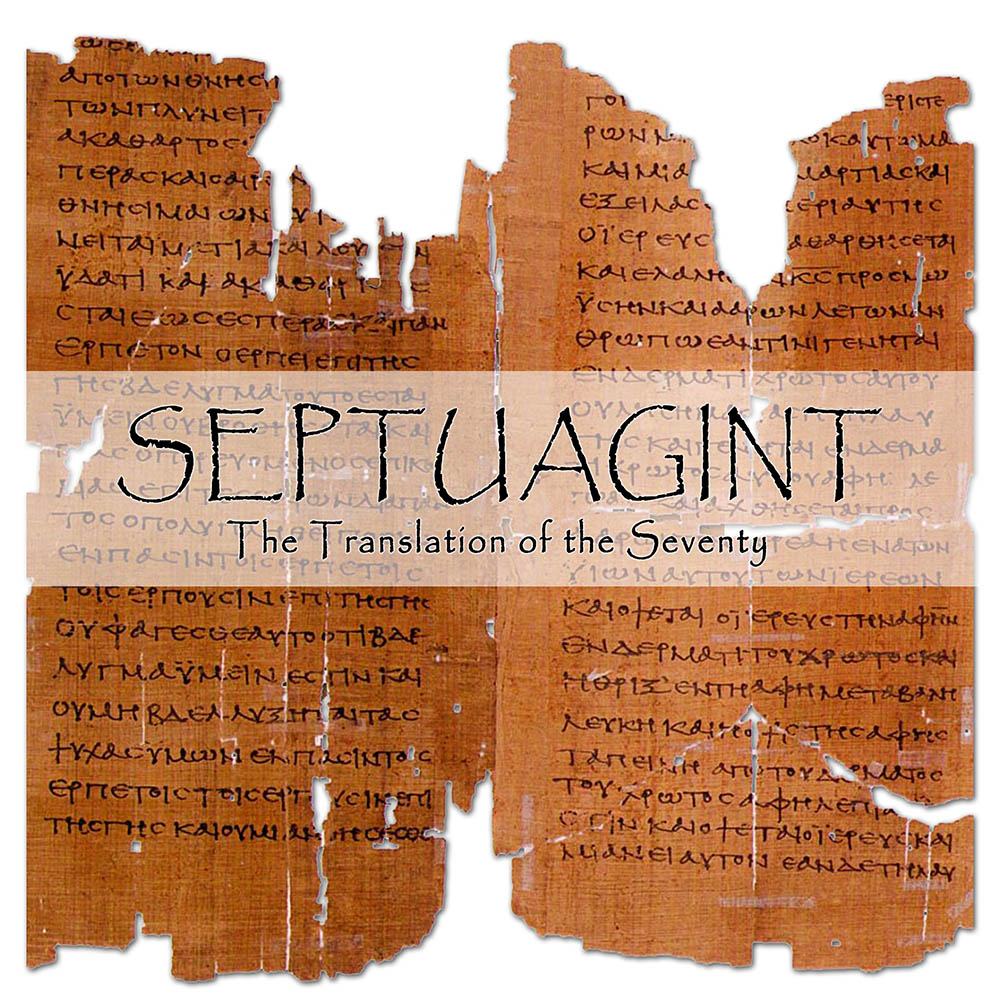
Here is a direct side-by-side comparison of the Masoretic Text with the LXX. I have concluded that the LXX is much to be preferred over the Masoretic Text, a position from which the Eastern Orthodox Church never deviated. Perhaps, if you take the time to read my comparisons and other articles, you will arrive at the same conclusion.
The Septuagint version I am using is the Lexham English Septuagint 2nd Edition, which is available in print or as part of Logos Bible Software. Occasionally I also use the Brenton translation of the LXX for insight into difficult passages.
If you want to know more, click on the following links.
- Why Christians Should Prefer the Septuagint over the Masoretic Text.
- Some Insights Gained through Comparing the Masoretic Text to the Septuagint
- More side by side comparisons of the Masoretic Text (MT) to the Septuagint (LXX).
| Masoretic Text | Septuagint | Significance |
|
1 In You, O LORD, I put my trust; Let me never be ashamed; Deliver me in Your righteousness. 2 Bow down Your ear to me, Deliver me speedily; Be my rock of refuge, A fortress of defense to save me. Psalm 31:1–2 (NKJV) |
2 In you, O Lord, I placed my hope. Do not let me be put to shame for eternity. With your righteousness rescue me and deliver me. 3 Bend your ear to me. Be quick to deliver me. Become for me a protector God and a house of refuge to save me. Psalm 30:2–3 (LES2) |
The words are different in places, but the idea is the same in this passage. This psalm is a prophecy about the passion and crucifixion of our Lord Jesus. |
|
3 For You are my rock and my fortress; Therefore, for Your name’s sake, Lead me and guide me. 4 Pull me out of the net which they have secretly laid for me, For You are my strength. 5 Into Your hand I commit my spirit; You have redeemed me, O LORD God of truth. Psalm 31:3–5 (NKJV) |
4 For you are my strength and my refuge, and on account of your name you will lead me, and you will sustain me continually. 5 Lead me out from this trap that they hid for me, because you are my protector. 6 Into your hands I will place my spirit. You will deliver me, O Lord, the God of the truth. Psalm 30:4–6 (LES2) |
One difference worth mentioning is is verse 3/4. The MT is a prayer for God to guide the psalmist. In the LXX, it is a declaration of faith in God’s sustaining power. In verse 4/5, the MT calls God the psalmist’s strength, but the LXX says he is “my protector.” In verse 5/6, we have passage that Jesus quoted on the cross in Luke 23:46. He quoted from the LXX and used the same Greek word that is translated as “place” in the LXX – paratithemi, which is its literal meaning. Since the translators of our English Bible were committed to follow the MT, they chose the English word “commit” to match the MT; whereas, “place” would have been the proper word to use. In keeping with our Lord’s prayer on the cross, in the LXX, the psalmist declares his faith in a future deliverance, rather than the MT’s past tense redemption. This passage gives us insight into how our Lord was thinking as he hung upon the cross. He trusted the Lord to raise him from the dead. |
|
6 I have hated those who regard useless idols; But I trust in the LORD. 7 I will be glad and rejoice in Your mercy, For You have considered my trouble; You have known my soul in adversities, 8 And have not shut me up into the hand of the enemy; You have set my feet in a wide place. Psalm 31:6–8 (NKJV) |
7 You hated the ones keeping pointlessness through vanity. But I hoped in the Lord. 8 I will rejoice greatly, and I will be cheerful in your mercy, because you observed my lowliness; you saved my soul from the tribulations. 9 And you did not enclose me in the hands of the enemy. You established my feet in the wide place. Psalm 30:7–9 (LES2) |
In verse 6/7, the MT say the psalmist hated idol worshipers. The LXX says that God hated them. In verse 7/8, the MT says God “considered my trouble,” but the LXX literally says, “you saw my humiliation,” which accurately describes part of what Jesus suffered on the cross. The MT says, “you have known my soul in adversities,” but the LXX says, “you saved my soul from the tribulations.” The rest of the passage agrees. |
|
9 Have mercy on me, O LORD, for I am in trouble; My eye wastes away with grief, Yes, my soul and my body! 10 For my life is spent with grief, And my years with sighing; My strength fails because of my iniquity, And my bones waste away. 11 I am a reproach among all my enemies, But especially among my neighbors, And am repulsive to my acquaintances; Those who see me outside flee from me. 12 I am forgotten like a dead man, out of mind; I am like a broken vessel. 13 For I hear the slander of many; Fear is on every side; While they take counsel together against me, They scheme to take away my life. Psalm 31:9–13 (NKJV) |
10 Have mercy upon me, O Lord, because I am afflicted. My eye was troubled in anger, my soul also, and my belly. 11 For my life came to an end with distress, and my years were weakened with groaning in poverty. My strength and my bones were troubled. 12 From all my enemies I became a reproach, and to my neighbors very much so, and I became a fear to my acquaintances. The ones looking at me outside fled from me. 13 I was forgotten from hearts like a corpse. I became like a broken vessel. 14 For I heard the censure of many, dwelling from all around, while they gathered at once against me. They deliberated to take my soul. Psalm 30:10–14 (LES2) |
In verse 9/10, the MT says “my eye wastes away in grief,” but the LXX says, “my eye was troubled with anger,” which perhaps the Lord felt on the cross, which would be understandable considering the terrible injustice perpetrated on him. We know that he forgave his tormentors, however. Verse 10/11 says, “my life is spent with grief,” but the LXX, true to describing the crucifixion, says, “my life came to an end with distress.” The MT says, “my strength fails because of my iniquity,” but the LXX says, “my years were weakened with groaning in poverty.” The MT says, “my bones waste away,” but the LXX says, “my bones were troubled.” In verse 13/14, the MT says, “I hear the slander of many, ” but the LXX says, “I heard the censure of many.” The rest of the passage agrees. |
|
14 But as for me, I trust in You, O LORD; I say, “You are my God.” 15 My times are in Your hand; Deliver me from the hand of my enemies, And from those who persecute me. 16 Make Your face shine upon Your servant; Save me for Your mercies’ sake. 17 Do not let me be ashamed, O LORD, for I have called upon You; Let the wicked be ashamed; Let them be silent in the grave. 18 Let the lying lips be put to silence, Which speak insolent things proudly and contemptuously against the righteous. Psalm 31:14–18 (NKJV) |
15 But I hoped in you, O Lord. I said, “You are my God.” 16 My portion is in your hands. Rescue me from the hand of my enemies, and from the ones who are persecuting me. 17 Show forth your face upon your servant. Save me with your mercy. 18 O Lord, may I not be disgraced, because I called upon you. May the ungodly ones be put to shame and be led down into Hades. 19 Let deceitful lips be quiet, which speak against the righteous one lawlessly, with arrogance and contempt. Psalm 30:15–19 (LES2) |
In verse 15/16, the MT says, “my times are in your hands,” but the LXX says, “my portion is in your hands.” This is a word that can also mean “lot” or “share.” It reminds one of Psalm 16 (15 in LXX). 5 The Lord is the portion of my inheritance and of my cup. You are the one who restores my inheritance to me. Psalm 15:5 (LES2) Jesus trusted that God the Father would raise him from the dead and establish him as the Lord of lords. The rest of the passage basically agrees. |
|
19 Oh, how great is Your goodness, Which You have laid up for those who fear You, Which You have prepared for those who trust in You In the presence of the sons of men! 20 You shall hide them in the secret place of Your presence From the plots of man; You shall keep them secretly in a pavilion From the strife of tongues. Psalm 31:19–20 (NKJV) |
20 How great is the magnitude of your kindness, O Lord, which you hid for those who are fearing you. You worked matters out for those who are hoping in you, before the sons of humans. 21 Hide them in the secret place of your face from the rebellion of humanity. Shelter them in the temple from the controversy of tongues. Psalm 30:20–21 (LES2) |
A few words are different, but the passage fundamentally agrees. |
|
21 Blessed be the LORD, For He has shown me His marvelous kindness in a strong city! 22 For I said in my haste, “I am cut off from before Your eyes”; Nevertheless You heard the voice of my supplications When I cried out to You. 23 Oh, love the LORD, all you His saints! For the LORD preserves the faithful, And fully repays the proud person. 24 Be of good courage, And He shall strengthen your heart, All you who hope in the LORD. Psalm 31:21–24 (NKJV) |
22 Blessed is the Lord, because he magnified his mercy in the city of siege. 23 But I said in my dismay, “I am abandoned then from the face of your eyes.” On account of this, you gave ear to the voice of my entreaty, O Lord, when I cried out to you. 24 Love the Lord, all his holy ones, because the Lord seeks out truths and repays to the ones who are making exceeding arrogance. 25 Be brave, and let your heart be strengthened, all you who are hoping in the Lord. Psalm 30:22–25 (LES2) |
In verse 23/24, the MT says, “the Lord preserves the faithful,” but the LXX says, “the Lord seeks out truths,” or perhaps “truth.” Another way to understand the LXX might be that God seeks those who love truth – the faithful. The rest of the passage agrees. |
Summary: This beautiful psalm is a prophecy about the crucifixion of our Lord. The LXX once again proves to be the best version for Christians to use.