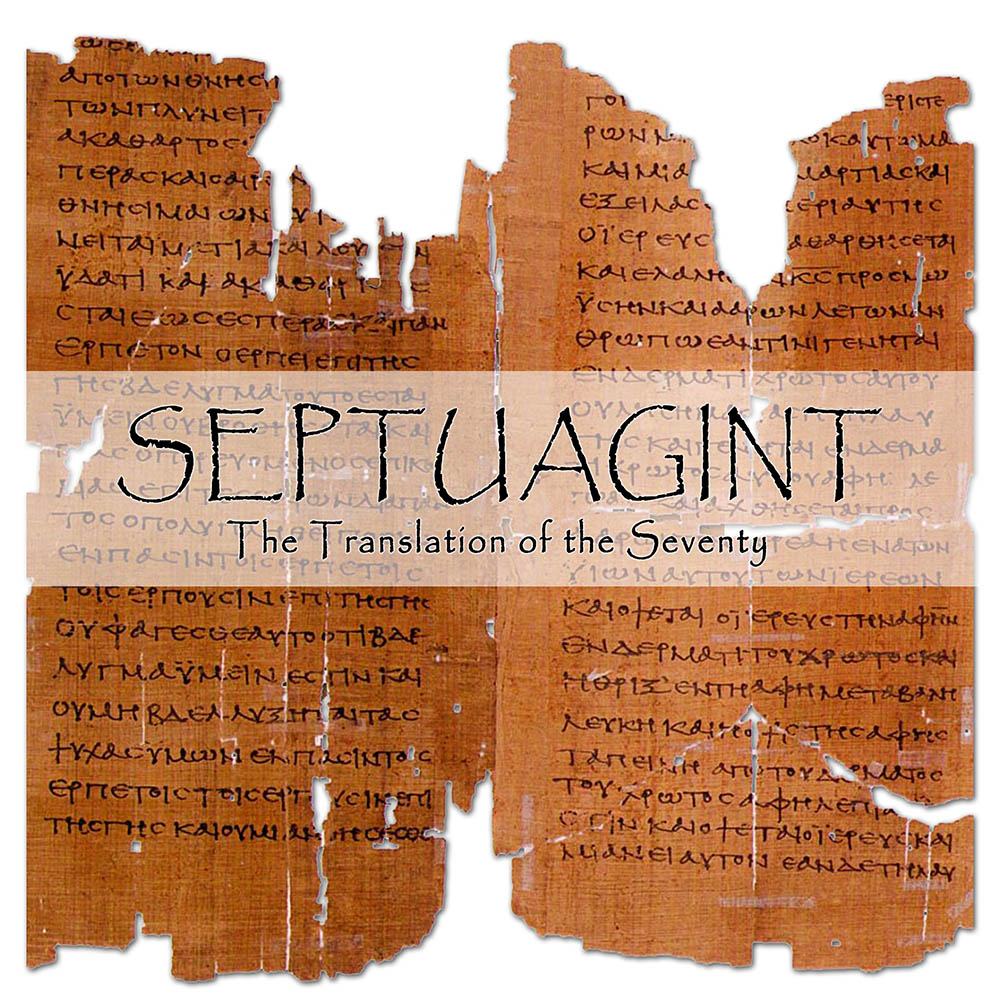
Here is a direct side-by-side comparison of the Masoretic Text with the LXX. I have concluded that the LXX is much to be preferred over the Masoretic Text, a position from which the Eastern Orthodox Church never deviated. Perhaps, if you take the time to read my comparisons and other articles, you will arrive at the same conclusion.
The Septuagint version I am using is the Lexham English Septuagint 2nd Edition, which is available in print or as part of Logos Bible Software. Occasionally I also use the Brenton translation of the LXX for insight into difficult passages.
If you want to know more, click on the following links.
- Why Christians Should Prefer the Septuagint over the Masoretic Text.
- Some Insights Gained through Comparing the Masoretic Text to the Septuagint
- More side by side comparisons of the Masoretic Text (MT) to the Septuagint (LXX).
| Masoretic Text | Septuagint | Significance |
|
1 The earth is the LORD’s, and all its fullness, The world and those who dwell therein. 2 For He has founded it upon the seas, And established it upon the waters. Psalm 24:1–2 (NKJV) |
1 The earth is the LORD’s, and all its fullness, The world and those who dwell therein. 2 For He has founded it upon the seas, And established it upon the waters. Psalm 24:1–2 (NKJV) |
These two passages agree, which is how it should always be. The only thing I will point out is that “waters” in both the MT and LXX literally means “rivers.” |
|
3 Who may ascend into the hill of the LORD? Or who may stand in His holy place? 4 He who has clean hands and a pure heart, Who has not lifted up his soul to an idol, Nor sworn deceitfully. 5 He shall receive blessing from the LORD, And righteousness from the God of his salvation. 6 This is Jacob, the generation of those who seek Him, Who seek Your face. Selah Psalm 24:3–6 (NKJV) |
3 Who will go up into the mountain of the Lord, and who will stand in His holy place? 4 The innocent one with respect to his hands, and the clean one with respect to his heart, who does not take up his soul with vanity and does not swear with cunning against his neighbor. 5 This one will receive a blessing from the Lord and mercy from God, his savior. 6 This is the generation of those seeking him, of those seeking the face of the God of Jacob. Psalm 23:3–6 (LES2) |
The MT translates “shav” as “idol,” but it simply means “vanity,” which is how the LXX translates it. In verse 4, both the MT and LXX agree regarding swearing with deceit, cunning, or treachery, but the LXX adds the phrase “against his neighbor,” or perhaps the MT omits it. We do not know since we do not have the original Paleo-Hebrew document. The MT says the godly person will receive righteousness from God, but the LXX says, “mercy.” The MT calls the benefactor “the God of his salvation,” but the LXX says, “from God, the savior,” which is one of Christ’s titles. The MT says this generation seeks “your face,” but the LXX says the “face of the God of Jacob.” The biggest issue is between receiving righteousness or mercy. Both are needed, and both come to those who believe in Christ. He extends mercy to us and imparts his righteousness to those who receive him as Lord and Savior. |
|
7 Lift up your heads, O you gates! And be lifted up, you everlasting doors! And the King of glory shall come in. 8 Who is this King of glory? The LORD strong and mighty, The LORD mighty in battle. 9 Lift up your heads, O you gates! Lift up, you everlasting doors! And the King of glory shall come in. 10 Who is this King of glory? The LORD of hosts, He is the King of glory. Selah Psalm 24:7–10 (NKJV) |
7 Lift up the gates, those rulers of you. Lift eternal gates, and the King of glory will enter. 8 Who is this King of glory? The Lord, mighty and strong, the Lord, strong in battle. 9 Lift up the gates, those rulers of you. Lift eternal gates, and the King of glory will enter. 10 Who is this King of glory? The Lord of mighty powers, he is this King of glory! Psalm 23:7–10 (LES2) |
I like Brenton’s translation of this passage. Lift up your gates, ye princes, and be ye lifted up, ye everlasting doors; and the king of glory shall come in. 8 Who is this king of Glory? the Lord strong and mighty, the Lord mighty in battle. 9 Lift up your gates, ye princes; and be ye lift up, ye everlasting doors; and the king of glory shall come in. 10 Who is this king of glory? The Lord of hosts, he is this king of glory. [Brenton, Sir Lancelot C. L.. English Translation of the Greek Septuagint, Including the Apocrypha . E.C. Marsh. Kindle Edition] I think it captures the true meaning of the passage, which points to King Jesus who entered Jerusalem on a donkey in fulfillment of prophecy (Zechariah 9:9-17) which predicts the shedding of Jesus’ blood to establish the New Covenant. (Zechariah 9:11) The apostle John refers to this dramatic entrance of the King of glory. 12 The next day a great multitude that had come to the feast, when they heard that Jesus was coming to Jerusalem, 13 took branches of palm trees and went out to meet Him, and cried out: “Hosanna! ‘Blessed is He who comes in the name of the LORD!’ The King of Israel!” [Psalm 118:25-26] 14 Then Jesus, when He had found a young donkey, sat on it; as it is written: 15 “Fear not, daughter of Zion; Behold, your King is coming, Sitting on a donkey’s colt.” 16 His disciples did not understand these things at first; but when Jesus was glorified, then they remembered that these things were written about Him and that they had done these things to Him. John 12:12–16 (NKJV) The people of Jerusalem and even his own disciples did not understand what was happening at the time. In Luke’s recounting of this scene (Luke 19:35-44), Jesus prophesied that Jerusalem would be destroyed because the Jews failed to recognize the time of their visitation. This mighty King, who now sits at God’s right hand (Colossians 3:1), will come again in glory to judge the living and the dead. (Matthew 16:27) |
Summary: This psalm shows remarkable agreement between the MT and LXX, which should be the case throughout the Old Testament, but, sadly, is not. This sometimes severe discrepancy requires those who care about truth to decide which version of the Old Covenant scriptures to accept, the one used by Jesus, the early church, and all Jews in the time of Christ – the LXX, or the one produced centuries later after the Jews had developed a deep antipathy toward Christ and his church – the MT? For me, the answer is clear – the Septuagint.