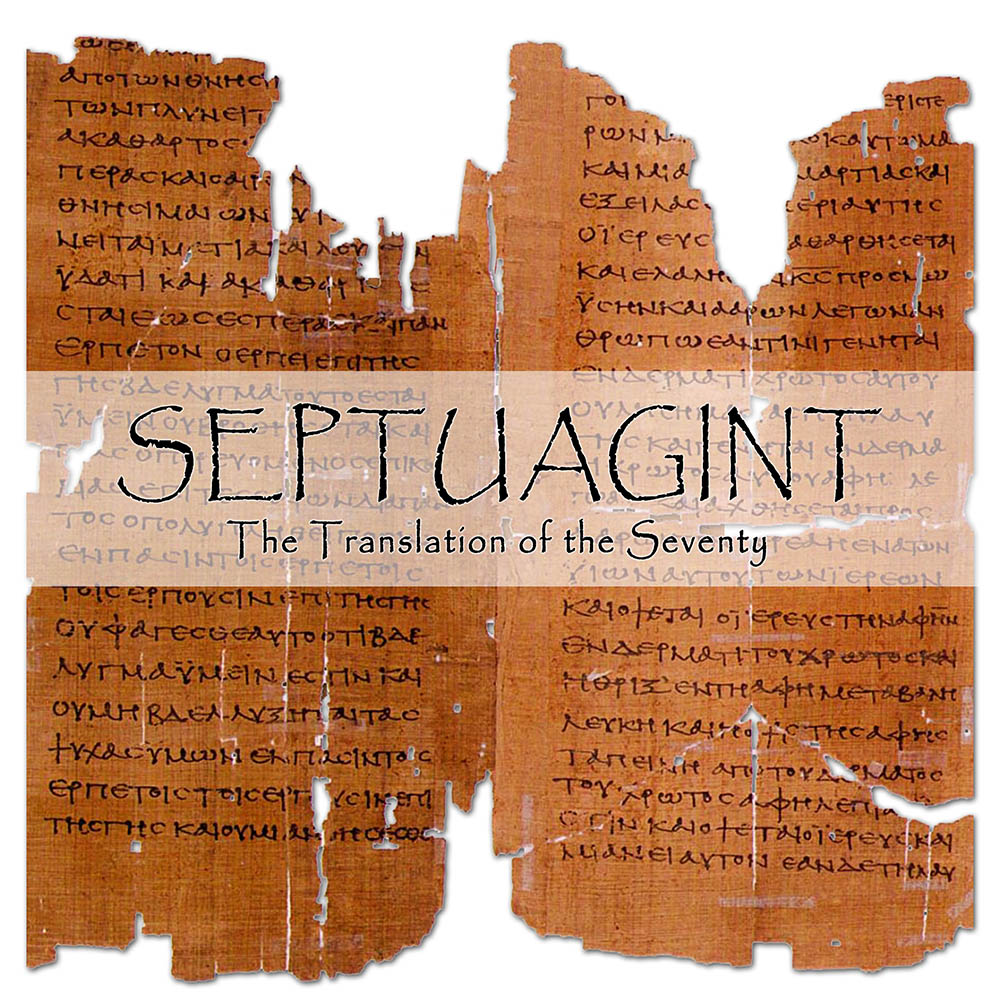
Here is a direct side-by-side comparison of the Masoretic Text with the LXX. I have concluded that the LXX is much to be preferred over the Masoretic Text, a position from which the Eastern Orthodox Church never deviated. Perhaps, if you take the time to read my comparisons and other articles, you will arrive at the same conclusion.
The Septuagint version I am using is the Lexham English Septuagint 2nd Edition, which is available in print or as part of Logos Bible Software. Occasionally I also use the Brenton translation of the LXX for insight into difficult passages.
If you want to know more, click on the following links.
- Why Christians Should Prefer the Septuagint over the Masoretic Text.
- Some Insights Gained through Comparing the Masoretic Text to the Septuagint
- More side by side comparisons of the Masoretic Text (MT) to the Septuagint (LXX).
| Masoretic Text | Septuagint | Significance |
|
1 And in that day you will say: “O LORD, I will praise You; Though You were angry with me, Your anger is turned away, and You comfort me. 2 Behold, God is my salvation, I will trust and not be afraid; ‘For YAH, the LORD, is my strength and song; He also has become my salvation.’ ” Isaiah 12:1–2 (NKJV) |
1 And on that day you will say, “I will praise you, Lord, for you were angered by me, and you turned back your wrath, and you showed mercy to me. 2 Look, my God is my savior; I will trust him, and I will not be frightened, for the Lord is my glory and my praise, and he has become salvation for me.” Isaiah 12:1–2 (LES2) |
In general the MT more often uses passive verbs, such as when it says, “Your anger is turned away,” as opposed to the LXX’s, “you turned back your wrath.” Rather than comforting Isaiah, the LXX says God had mercy on him. The LXX identifies God as our savior, but it is hard to object to the MT’s calling him “yeshuah” or Jesus. The MT leaves out the “him” after trust, which in the LXX points to Jesus. The MT says the Lord is my “strength and song,” but the LXX says that the Lord is “my glory and praise.” |
|
3 Therefore with joy you will draw water From the wells of salvation. 4 And in that day you will say: “Praise the LORD, call upon His name; Declare His deeds among the peoples, Make mention that His name is exalted. 5 Sing to the LORD, For He has done excellent things; This is known in all the earth. Isaiah 12:3–5 (NKJV) |
3 And you will draw water with cheer from the streams [Greek – pege] of salvation. 4 And on that day you will say, “Sing of the Lord; shout his name; declare among the nations his glorious deeds; be mindful that his name is exalted! 5 Sing of the Lord’s name, for he has done high things; declare these things in all the land! Isaiah 12:3–5 (LES2) |
The MT uses the word “wells” when referring to the source of salvation, but the LXX uses a word that means fountain or spring, which connects with Jesus’ words in John. 14 but whoever drinks of the water that I shall give him will never thirst. But the water that I shall give him will become in him a fountain [Greek – pege] of water springing up into everlasting life.” John 4:14 (NKJV) In verse 4, the MT says, “Declare his deeds among the peoples,” but the LXX specifically uses the word for “nations” and defines the deeds as glorious. In verse 5, the LXX says, “Sing of the Lord’s name;” whereas, the MT says, “Sing to the Lord.” The name in question is Jesus. (John 5:39) The MT says the Lord has done “excellent” things, but the LXX says he has done “high,” lofty, or exalted things. This points to Christ’s ascension into heaven and exaltation, where he now sits at God’s right hand as Lord of lords. The MT passively says “this is known in all the earth,” but the LXX says to actively “declare these things in all the earth,” which is a reference to our responsibility to declare the gospel. |
|
6 Cry out and shout, O inhabitant of Zion, For great is the Holy One of Israel in your midst!” Isaiah 12:6 (NKJV) |
6 Rejoice and be cheerful, you who dwell in Zion, for the Holy One of Israel is exalted in her midst!” Isaiah 12:6 (LES2) |
The MT’s “cry out and shout” is much different from the LXX’s “rejoice and be cheerful.” |
Summary: Once again the MT obscures a reference to Christ and the gospel and strips away some of the rich meaning found in the LXX.