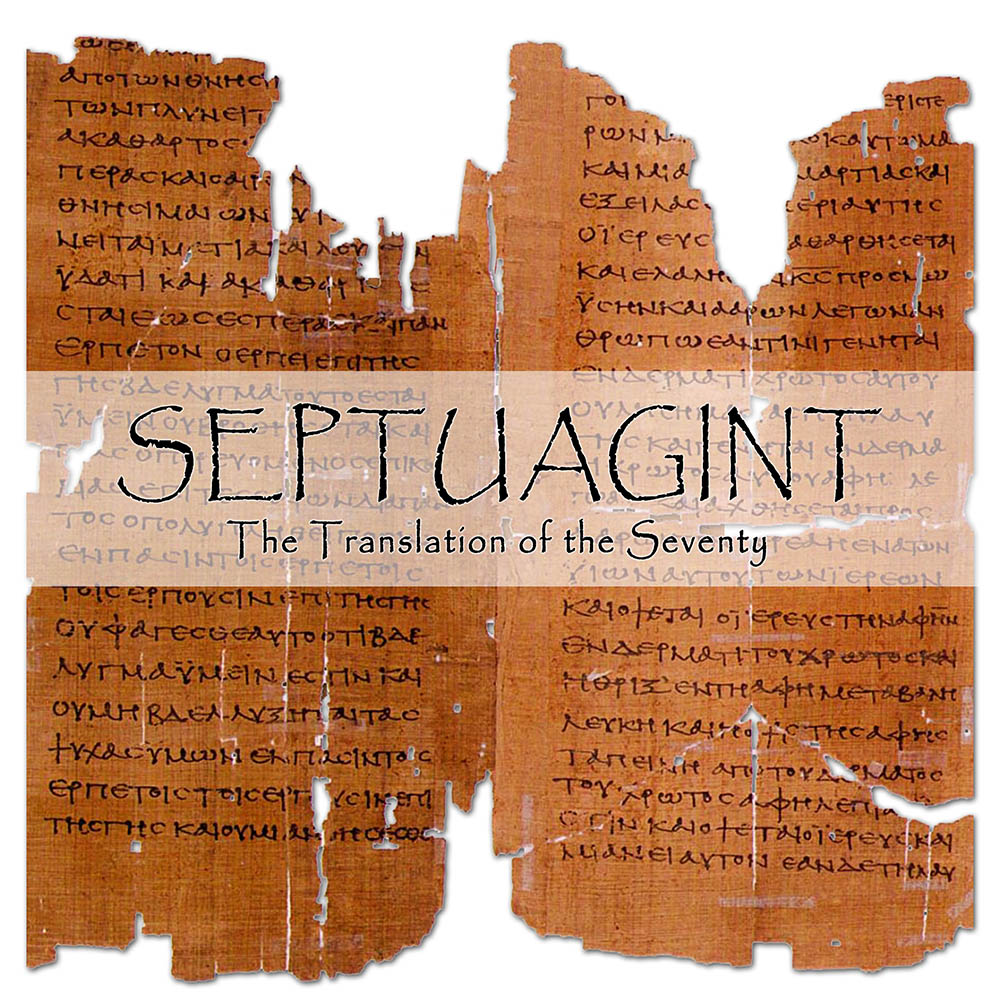
Here is a direct side-by-side comparison of the Masoretic Text with the LXX. I have concluded that the LXX is much to be preferred over the Masoretic Text, a position from which the Eastern Orthodox Church never deviated. Perhaps, if you take the time to read my comparisons and other articles, you will arrive at the same conclusion.
The Septuagint version I am using is the Lexham English Septuagint 2nd Edition, which is available in print or as part of Logos Bible Software. Occasionally I also use the Brenton translation of the LXX for insight into difficult passages.
If you want to know more, click on the following links.
- Why Christians Should Prefer the Septuagint over the Masoretic Text.
- Some Insights Gained through Comparing the Masoretic Text to the Septuagint
- More side by side comparisons of the Masoretic Text (MT) to the Septuagint (LXX).
| Masoretic Text | Septuagint | Significance |
|
1 In the LORD I put my trust; How can you say to my soul, “Flee as a bird to your mountain”? 2 For look! The wicked bend their bow, They make ready their arrow on the string, That they may shoot secretly at the upright in heart. 3 If the foundations are destroyed, What can the righteous do? Psalm 11:1–3 (NKJV) |
1 I have trusted in the Lord. How will you say to my soul, “Flee to the mountains as a sparrow”? 2 because, look, the sinners stretched a bow; they prepared arrows for the quiver to strike down the upright in heart on a moonless night, 3 because that which you created they took down. But the righteous, what did he do? Psalm 10:1–3 (LES2) |
In verse 2 David describes the night as moonless when sinners strike down the upright. The MT merely says the wicked archers shoot in secret. In verse 3, the contrast is significant. The LXX literally says, “that which you established, they destroyed.” I suppose that could be rendered, “the foundations are destroyed” as in the MT, but the LXX’s more literal way of putting it allows for a broader interpretation. The MT asks, “What can the righteous do?,” implying helplessness. The LXX, however, asks what did the righteous do, implying innocence. |
|
4 The LORD is in His holy temple, The LORD’s throne is in heaven; His eyes behold, His eyelids test the sons of men. 5 The LORD tests the righteous, But the wicked and the one who loves violence His soul hates. 6 Upon the wicked He will rain coals; Fire and brimstone and a burning wind Shall be the portion of their cup. Psalm 11:4–6 (NKJV) |
4 The Lord is in his holy temple. The Lord, his throne is in the heavens. His eyes gaze steadily upon the poor one. His eyes examine well the sons of humans. 5 The Lord examines well the righteous one and the ungodly one. But the one who loves injustice hates his own soul. 6 He will rain snares upon the sinners. Fire and sulphur and wind of a storm will be the portion of their cup, Psalm 10:4–6 (LES2) |
Interestingly, the word translated “heaven” in verse 4 of the MT is plural in Hebrew, but the word translated “heavens” in the LXX is singular in the Greek. The MT simply says, “His eyes behold,” but the LXX says, “His eyes gaze steadily (gaze, see) upon the poor one.” Both the Hebrew and Greek in the last part of verse 4 literally mean “eyelids.” The MT says he tests us, but the LXX says he thoroughly examines us. Verse 5 in the LXX says God tests both the godly and ungodly. The MT says he only tests the righteous, but hates the wicked. The LXX says that the wicked hate their own souls. The MT says he will rain coals upon the wicked, which goes along with the rest of the verse. The LXX says he will rain snares or traps upon the wicked. In the last part of verse 6, the MT and LXX agree. |
|
7 For the LORD is righteous, He loves righteousness; His countenance beholds the upright. Psalm 11:7 (NKJV) |
7 because the Lord is righteous and he loved righteous actions. His face saw uprightness. Psalm 10:7 (LES2) |
The MT and LXX agree here. |
Summary: Once again, although there are no Christological issues at stake, the text differs considerably. Is this because the Paleo-Hebrew was difficult to decipher? The translation of the LXX was closer to the time that the dead Paleo-Hebrew had been used; so, it could very well be assumed those scholars would have had a better understanding of it than did the Masoretes.