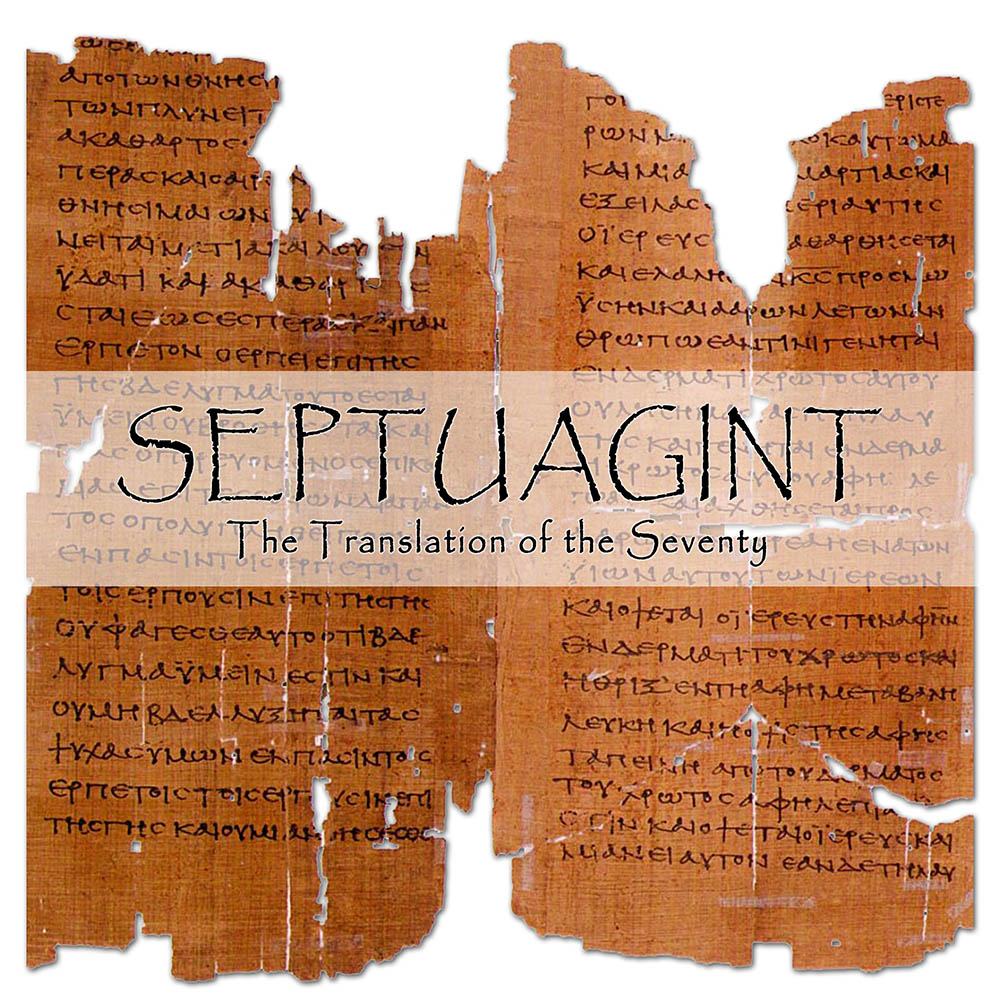
Here is a direct side-by-side comparison of the Masoretic Text with the LXX. I have concluded that the LXX is much to be preferred over the Masoretic Text, a position from which the Eastern Orthodox Church never deviated. Perhaps, if you take the time to read my comparisons and other articles, you will arrive at the same conclusion.
The Septuagint version I am using is the Lexham English Septuagint 2nd Edition, which is available in print or as part of Logos Bible Software. Occasionally I also use the Brenton translation of the LXX for insight into difficult passages.
If you want to know more, click on the following links.
- Why Christians Should Prefer the Septuagint over the Masoretic Text.
- Some Insights Gained through Comparing the Masoretic Text to the Septuagint
- More side by side comparisons of the Masoretic Text (MT) to the Septuagint (LXX).
| Masoretic Text | Septuagint | Significance |
|
1 Behold, a king will reign righteously And princes will rule justly. 2 Each will be like a refuge from the wind And a shelter from the storm, Like streams of water in a dry country, Like the shade of a huge rock in a parched land. 3 Then the eyes of those who see will not be blinded, And the ears of those who hear will listen. 4 The mind of the hasty will discern the truth, And the tongue of the stammerers will hasten to speak clearly. Isaiah 32:1–4 (NASB95) |
1 For look, a righteous king will reign, and rulers will lead with judgment. 2 And the person will keep hiding his words, and he will be hidden as if from rushing water, and he will appear in Zion like a rushing river, esteemed in a thirsting land. 3 And they will no longer trust humans, but rather they will set their ears to listen. 4 And the heart of the weak will be proper to listen, and the faltering tongues will quickly learn to speak peace. Isaiah 32:1–4 (LES2) |
Verse 1 agrees. Verse 2 must have been difficult to translate, as is the case with most of this chapter, which could account for the difficulties understanding the meaning in the LXX, which I have come to believe is a more literal translation. The MT’s rendering here may be the best, but who can know since we do not have the original documents and the Dead Sea Scrolls have no chain of custody? Verse 3 is a similar case. Verse 4 is some better, but still the two verses do not completely sync. |
|
5 No longer will the fool be called noble, Or the rogue be spoken of as generous. 6 For a fool speaks nonsense, And his heart inclines toward wickedness: To practice ungodliness and to speak error against the LORD, To keep the hungry person unsatisfied And to withhold drink from the thirsty. 7 As for a rogue, his weapons are evil; He devises wicked schemes To destroy the afflicted with slander, Even though the needy one speaks what is right. 8 But the noble man devises noble plans; And by noble plans he stands. Isaiah 32:5–8 (NASB95) |
5 And they will no longer tell the foolish to rule, and your assistants will no longer say, “Be quiet!” 6 For the fool will speak foolish things, and his heart will think pointless things, to accomplish lawless things and to speak error against the Lord, to scatter hungering souls; and he will cause the souls that thirst to be empty. 7 For the counsel of evil people will plan lawless things, to ruin low people by unjust words and to scatter lowly people’s words in judgment. 8 But pious people have planned intelligent things, and this counsel will remain. Isaiah 32:5–8 (LES2) |
Verse 5 continues the confusion. Verse 6 mostly agrees. Verse 7 is confusing again. In verse 8, there is some agreement, but the MT uses “noble” to describe these people; whereas, the LXX says “godly” or “pious.” |
|
9 Rise up, you women who are at ease, And hear my voice; Give ear to my word, You complacent daughters. 10 Within a year and a few days You will be troubled, O complacent daughters; For the vintage is ended, And the fruit gathering will not come. 11 Tremble, you women who are at ease; Be troubled, you complacent daughters; Strip, undress and put sackcloth on your waist, 12 Beat your breasts for the pleasant fields, for the fruitful vine, 13 For the land of my people in which thorns and briars shall come up; Yea, for all the joyful houses and for the jubilant city. 14 Because the palace has been abandoned, the populated city forsaken. Hill and watch-tower have become caves forever, A delight for wild donkeys, a pasture for flocks; 15 Until the Spirit is poured out upon us from on high, And the wilderness becomes a fertile field, And the fertile field is considered as a forest. Isaiah 32:9–15 (NASB95) |
9 Rise up, wealthy women, and listen to my voice; you daughters with hope, hear my words! 10 Make remembrance of this year’s day, in pain with hope; the harvest has been consumed; it has ceased; it will not come any longer. 11 Be astounded; grieve, you confident women; strip; become exposed; gird your loins 12 and strike yourselves on your breasts because of a yearning for a field and the produce of the vine. 13 The land of my people will come up thorns and grass, and from every house cheer will be taken away. Wealthy city, 14 abandoned houses will give up a city’s wealth and houses of desire; and the villages will be caverns until eternity, cheer for wild donkeys, a pasture for shepherds, 15 until a wind comes upon you from on high; and Carmel will be deserted, and Carmel will be considered a forest. Isaiah 32:9–15 (LES2) |
This passage mostly agrees, but there are some difficult verses. |
|
16 Then justice will dwell in the wilderness And righteousness will abide in the fertile field. 17 And the work of righteousness will be peace, And the service of righteousness, quietness and confidence forever. 18 Then my people will live in a peaceful habitation, And in secure dwellings and in undisturbed resting places; 19 And it will hail when the forest comes down, And the city will be utterly laid low. 20 How blessed will you be, you who sow beside all waters, Who let out freely the ox and the donkey. Isaiah 32:16–20 (NASB95) |
16 And fair judgment will rest in the desert, and righteousness will settle in Carmel. 17 And the deeds of righteousness will be peace, and righteousness will control rest, and they will be secure until eternity. 18 And his people will dwell in a city of peace, and they will dwell confidently, and they will rest with wealth. 19 And the hail, if it comes down, will not come upon you, and those who dwell in the forests will be secure, as in the plain. 20 Blessed are those who sow on all the water where ox and donkey tread. Isaiah 32:16–20 (LES2) |
Verse 17 is the most interesting verse from a New Testament point of view. Most Bible students are quite familiar with the MT’s version. The LXX words it differently, which may account for Paul’s wording in Romans 5:1. Paraphrasing the LXX, I would render the verse: The deeds of righteousness will be peace, and righteousness will determine if a person experiences rest in his or her soul. Those who receive God’s righteousness will be secure forever. Compare this to the following passage in Romans. 1 Therefore, having been justified by faith, we have peace with God through our Lord Jesus Christ, 2 through whom also we have access by faith into this grace in which we stand, and rejoice in hope of the glory of God. Romans 5:1–2 (NKJV) It is important for us to remember that Paul derived his New Covenant theology from the LXX. Studying it instead of the MT gives us more insight into Paul’s thinking and the NT in general. Verse 18 says that God’s people will live in a “city of peace,” which must be the heavenly Jerusalem. The natural city has not experienced peace in a very long time. |
Summary: I included this chapter, even though only two verses, 17-18, were of much interest to me. By examining the whole chapter, it is easy to see why I think the LXX is a more literal rendering of what must have been a sometimes difficult to translate Paleo-Hebrew text. The MT seems too tidy to be literal and many times appears to wander away from the actual meaning to attain greater readability and symmetry.