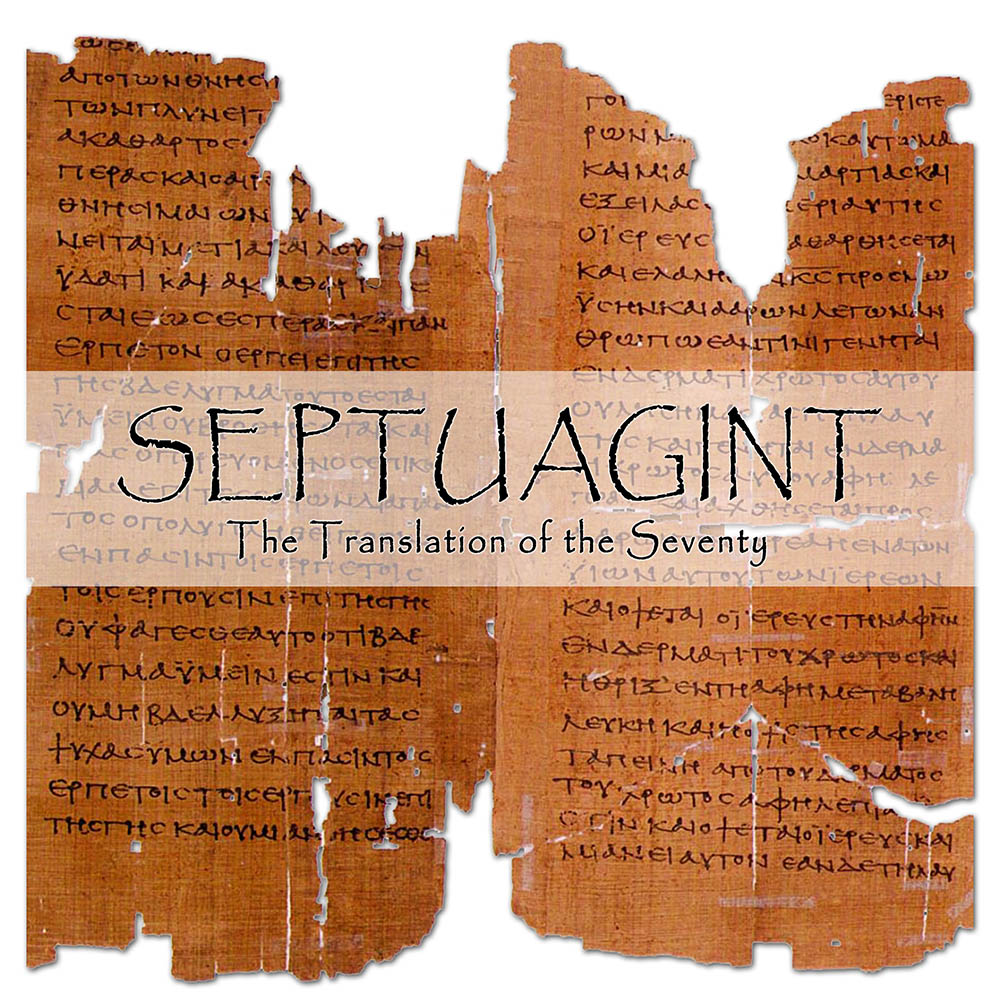
Here is a direct side-by-side comparison of the Masoretic Text with the LXX. I have concluded that the LXX is much to be preferred over the Masoretic Text, a position from which the Eastern Orthodox Church never deviated. Perhaps, if you take the time to read my comparisons and other articles, you will arrive at the same conclusion.
The Septuagint version I am using is the Lexham English Septuagint 2nd Edition, which is available in print or as part of Logos Bible Software. Occasionally I also use the Brenton translation of the LXX for insight into difficult passages.
If you want to know more, click on the following links.
- Why Christians Should Prefer the Septuagint over the Masoretic Text.
- Some Insights Gained through Comparing the Masoretic Text to the Septuagint
- More side by side comparisons of the Masoretic Text (MT) to the Septuagint (LXX).
| Masoretic Text | Septuagint | Significance |
|
13 Behold, My Servant shall deal prudently; He shall be exalted and extolled and be very high. 14 Just as many were astonished at you, So His visage was marred more than any man, And His form more than the sons of men; Isaiah 52:13–14 (NKJV) |
13 Look! My child will understand and be raised up and be magnified very much. 14 The way many will be impressed by you, so your appearance will be despised by people and your glory by the people, Isaiah 52:13–14 (LES2) |
The MT calls this one a servant or slave, but the LXX says he is God’s child. We know now that this passage refers to Jesus, God’s only begotten Son, who indeed served God, but was by identity, God’s beloved Son. (Matthew 3:17, Mark 9:7, Luke 9:35, Matthew 17:5) “Deal prudently” and “understand” mean essentially the same things in Hebrew and Greek, but were translated using different English words. The MT’s “astonished” means “desolated or appalled.” This is very different from the LXX’s “impressed,” which means “amazed” or “confounded.” Perhaps amazed and confounded could be taken together, but the translator thought impressed worked best. The MT says “his visage was marred more than any man, and his form more than the sons of men,” but the LXX says “your appearance will be despised by people and your glory by the people.” Most people who apply this passage to Christ, as it should be, think that the MT refers to the severe beating and other damage done to Christ’s face and body during the scourging and crucifixion. There are numerous references in the gospels to the beating Jesus endured, but I do not know of any NT quotes of this passage from the MT. Perhaps there is one of which I am unaware. The LXX, on the other hand, focuses on his being despised, something that continues to this day. His name is still used as a common vain expression by those who do not revere him as Lord. His glory as the risen Lord is not recognized or appreciated by the vast majority of humanity. Another difference in this passage is that the MT talks about Christ in the third person; whereas, the LXX addresses him directly. This is significant. I imagine that as Jesus read these verses, he understood them as a message to him from his Father, not simply a third person description. These seemingly slight changes that the MT makes to the text all add up to a significant tampering with God’s Word, in my opinion. As I wrote before, it might be compared to death by a thousand cuts instead on by one thrust of the sword. |
| 15 So shall He sprinkle many nations. Kings shall shut their mouths at Him; For what had not been told them they shall see, And what they had not heard they shall consider. Isaiah 52:15 (NKJV) | 15 Thus many nations will be impressed at him, and kings will shut their mouth, because those to whom it has not been declared concerning him will see, and those who have not heard will understand. Isaiah 52:15 (LES2) |
The MT says, “so shall he sprinkle many nations,” which has always been applied to the blood Jesus shed on the cross, which is applied to us for the forgiveness of sins. 1 Peter, an apostle of Jesus Christ, To the pilgrims of the Dispersion in Pontus, Galatia, Cappadocia, Asia, and Bithynia, 2 elect according to the foreknowledge of God the Father, in sanctification of the Spirit, for obedience and sprinkling of the blood of Jesus Christ: Grace to you and peace be multiplied. 1 Peter 1:1–2 (NKJV) The LXX, however, translates this segment as “thus many nations will be “impressed” with him.” The Greek word for impressed means to “wonder” or “marvel.” Whatever causes this wonder and marveling, probably the resurrected glory of our Lord, will cause kings and those in authority to shut their mouths. Eventually, at the Second Coming, all people will come to understand who Christ is, the Lord of Glory. Perhaps Paul derived the following verse from this verse in Isaiah. 9 These shall be punished with everlasting destruction from the presence of the Lord and from the glory of His power, 10 when He comes, in that Day, to be glorified in His saints and to be admired among all those who believe, because our testimony among you was believed. 2 Thessalonians 1:9–10 (NKJV) The Greek word that is translated “admired” is thaumazo, the same word used in the LXX, which is translated as “wonder” or “marvel.” Paul did not pull his theology out of thin air. He was very familiar with the gospel according to Isaiah. The Second Coming will be the event that will cause kings and all people of the earth to be quiet and bow their knee to our Lord. 11 For it is written: “As I live, says the LORD, Every knee shall bow to Me, And every tongue shall confess to God.” 12 So then each of us shall give account of himself to God. Romans 14:11–12 (NKJV) |
|
This is a most interesting passage to use to compare the MT to the LXX. Either way we go, both seem to point to Christ, but in a different way. The MT focuses on the Lamb of God ministry; whereas, the LXX focuses on the Lordship of Christ. Both are true, but Christ’s lordship is the claim that is most offensive to the world and which is essential to the gospel message. (Romans 10:9-10) |