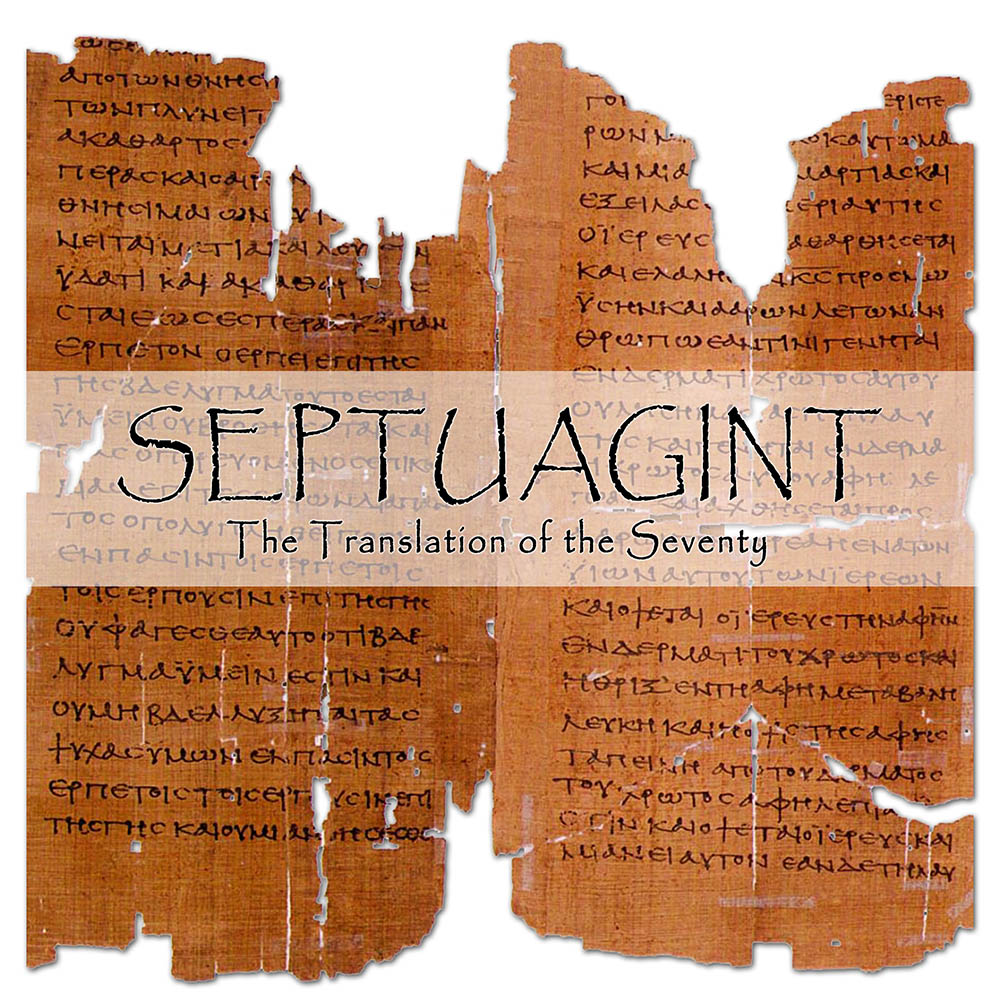
In the West, Christians have used the Masoretic Text (MT) since Jerome chose to use it as the basis for his Latin Vulgate Bible Old Testament. The Eastern Orthodox Church, to their credit, never deviated from the Septuagint (LXX). The LXX is a much older translation than the MT (285 BC compared to hundreds of years after Christ), was the predominant source used and quoted by the New Testament writers, and was translated from Hebrew before any animosity toward Christ could influence it. Notwithstanding, because of the power of tradition, it is quite difficult for many to think of it as a more trustworthy version. Sadly for us Christians and the world in general, the MT has obscured or omitted many texts that clearly refer to Christ.
Jesus taught us that all scripture points to him (John 5:39). Therefore, any translation that gets in the way of our seeing Christ is suspicious.
Doing a side by side comparison of the LXX and the MT makes this obfuscation obvious. I have observed that most of the significant changes that pertain to Christ take place in prophetic passages, rather than historical ones. Here is an example. The Septuagint version I am using is the Lexham English Septuagint 2nd Edition, which I prefer. It is available in print or digitally through Logos Bible Software.
| Masoretic Text | Septuagint | Significance |
|
4 “The Lord GOD has given Me The tongue of the learned, That I should know how to speak A word in season to him who is weary. He awakens Me morning by morning, He awakens My ear To hear as the learned. 5 The Lord GOD has opened My ear; And I was not rebellious, Nor did I turn away. Isaiah 50:4–5 (NKJV) |
4 The Lord is giving me a tongue of discipline so that I might know when it is necessary to speak a word; he appointed me early, he added a listening ear to me, 5 and the discipline of the lord Lord opens my ears, and I do not resist or oppose. Isaiah 50:4–5 (LES2) |
This is a prophecy about Jesus; so, I would expect to find some changes to the Masoretic text that would make that less obvious. Let’s see if that is true. Immediately we see that the MT added text to verse 4 and changed its meaning from knowing “when it is necessary to speak a word” to “how to speak a word in season to him who is weary.” |
|
6 I gave My back to those who struck Me, And My cheeks to those who plucked out the beard; I did not hide My face from shame and spitting. 7 “For the Lord GOD will help Me; Therefore I will not be disgraced; Therefore I have set My face like a flint, And I know that I will not be ashamed. Isaiah 50:6–7 (NKJV) |
6 I gave my back to the lashes and my cheeks to blows, and I did not turn my face away from the shame of spittings. 7 And the lord Lord has become a helper to me; on account of this I was not ashamed, but I set my face like a solid rock, and I knew that I would surely not be ashamed. Isaiah 50:6–7 (LES2) |
Literally, the LXX says, “I gave my back to the “mastix” or scourge. This exactly matches what Jesus endured. (Matthew 27:26) Instead of giving his cheeks to those who plucked out the beard, as the MT says, the LXX reads that he gave “my cheeks to blows.” It goes on to say that the specific shame he endured was that of spitting, which Jesus experienced, along with blows.” 67 Then they spat in His face and beat Him; and others struck Him with the palms of their hands, 68 saying, “Prophesy to us, Christ! Who is the one who struck You?” Matthew 26:67–68 (NKJV) The LXX puts the activity of the Holy Spirit, the Helper, to protect our Lord from shame in the past tense – “I was not ashamed.” This is the prophetic past tense. At the time Isaiah prophesied these events were in the future, but God is outside of the constraints of time and saw it as already accomplished. Jesus set his face like solid rock, knowing that he would suffer no shame in the end. |
|
8 He is near who justifies Me; Who will contend with Me? Let us stand together. Who is My adversary? Let him come near Me. 9 Surely the Lord GOD will help Me; Who is he who will condemn Me? Indeed they will all grow old like a garment; The moth will eat them up. Isaiah 50:8–9 (NKJV) |
8 Because the one who justifies me is approaching. Who is the one who judges me? Let him withstand me at once. Yes, who is the one who judges me? Let him approach me. 9 Look! The Lord will help me; who will mistreat me? Look! You all will grow old like a garment, and a moth will devour you. Isaiah 50:8–9 (LES2) |
Here our Lord declares that his vindication comes from God, but his accusers and judges will pass away. Paul paraphrases and expands upon this passage in his letter to the Romans, applying it to those who believe and are now identified with Christ. 33 Who shall bring a charge against God’s elect? It is God who justifies. 34 Who is he who condemns? It is Christ who died, and furthermore is also risen, who is even at the right hand of God, who also makes intercession for us. Romans 8:33–34 (NKJV) |
|
10 “Who among you fears the LORD? Who obeys the voice of His Servant? Who walks in darkness And has no light? Let him trust in the name of the LORD And rely upon his God. 11 Look, all you who kindle a fire, Who encircle yourselves with sparks: Walk in the light of your fire and in the sparks you have kindled— This you shall have from My hand: You shall lie down in torment. Isaiah 50:10–11 (NKJV) |
10 Who among you is the one who fears the Lord? Let him listen to the voice of his child. You who walk in darkness and have no light, trust in the name of the Lord and lean upon God! 11 Look! You are all kindling a fire and feeding a flame; walk in the light of your fire and in the flame that you have kindled. These things have happened to you because of me; you will sleep in sorrow. Isaiah 50:10–11 (LES2) |
As we have seen elsewhere, the MT uses the word for “slave” or “servant” in the place of the LXX using “child.” This verse applies to Jesus, God’s child or Son, whose voice the Jews, for the most part, did not heed. The warning of Deuteronomy 18:15, which is quoted in Acts 3:22, came to pass. Those who did not listen to the prophet, Jesus, were cut off. Those who did were saved. I suppose the last verse may apply to the terrible destruction of 70 AD, when the blood of all the prophets was required from that generation of Jews who resided in Jerusalem. (Luke 11:50) |
Conclusion
If you want to know more about why Christians should prefer the Septuagint to the MT, click on this link.The Eastern Orthodox Church had the wisdom to retain the LXX for its Old Testament scriptures. As for me, I now rely on the LXX. It was Paul’s standard for Old Covenant truth and is quoted in the New Testament. That makes it good enough for me.