
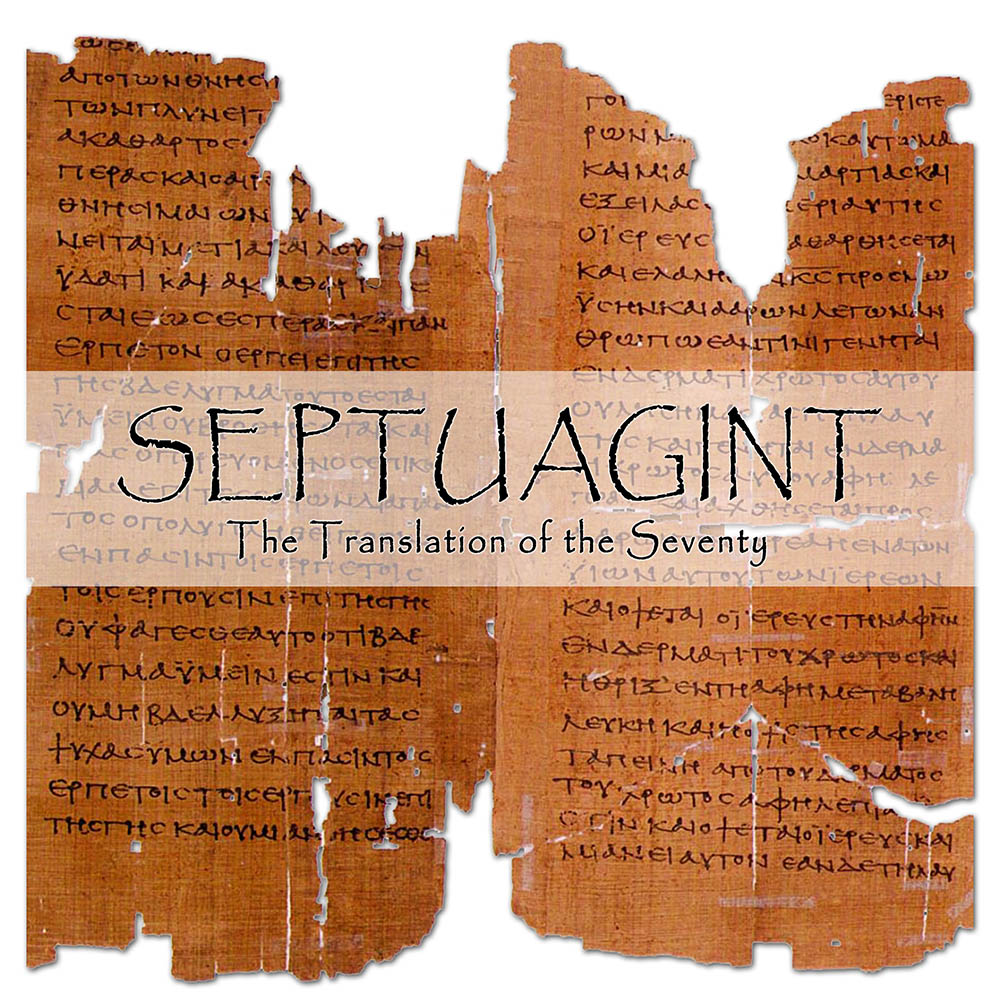
Masoretic Text (MT) vs Septuagint (LXX): Numbers 13:16, 26-33

In the West, Christians have used the Masoretic Text (MT) since Jerome chose to use it as the basis for his Latin Vulgate Bible Old Testament. The Eastern Orthodox Church, to their credit, never deviated from the Septuagint (LXX). The LXX is a much older translation than the MT (285 BC compared to hundreds of years after Christ), was the predominant source used and quoted by the New Testament writers, and was translated from Hebrew before any animosity toward Christ could influence it. Notwithstanding, because of the power of tradition, it is quite difficult for many to think of it as a more trustworthy version. Sadly for us Christians and the world in general, the MT has obscured or omitted many texts that clearly refer to Christ.

Jesus taught us that all scripture points to him (John 5:39). Therefore, any translation that gets in the way of our seeing Christ is suspicious.

Doing a side by side comparison of the LXX and the MT makes this obfuscation obvious. I have observed that most of the significant changes that pertain to Christ take place in prophetic passages, rather than historical ones. Here is an example. The Septuagint version I am using is the Lexham English Septuagint 2nd Edition, which I prefer. It is available in print or digitally through Logos Bible Software.

Masoretic Text Septuagint Significance

16 These are the names of the men whom Moses sent to spy out the land. And Moses called Hoshea the son of Nun, Joshua. Numbers 13:16 (NKJV) 

17 These are the names of the men whom Moses sent to seek out the land. And Moses renamed Hoshea, son of Nun: Joshua. Numbers 13:17 (LES2) 

The reason I included this verse in the comparison is because the Greek word translated “Joshua” is very same word for Jesus in the New Testament. It could not be more obvious to the early church that this verse pointed to Christ.

The author of Hebrews referenced Joshua and compared him to our Lord.

8 For if Joshua had given them rest, then He would not afterward have spoken of another day. 9 There remains therefore a rest for the people of God. 10 For he who has entered His rest has himself also ceased from his works as God did from His. Hebrews 4:8–10 (NKJV) 

The Greek word for Joshua is again the very same word for Jesus. The identification could not have been more obvious. Joshua led Israel into the promised land, as a type of Christ. Jesus brought those who believe into the promised rest of the New Covenant.

26 Now they departed and came back to Moses and Aaron and all the congregation of the children of Israel in the Wilderness of Paran, at Kadesh; they brought back word to them and to all the congregation, and showed them the fruit of the land. 27 Then they told him, and said: “We went to the land where you sent us. It truly flows with milk and honey, and this is its fruit. 28 Nevertheless the people who dwell in the land are strong; the cities are fortified and very large; moreover we saw the descendants of Anak there. 29 The Amalekites dwell in the land of the South; the Hittites, the Jebusites, and the Amorites dwell in the mountains; and the Canaanites dwell by the sea and along the banks of the Jordan.” Numbers 13:26–29 (NKJV) 

26 And after scouting out the land, they returned from there after forty days. 27 And proceeding on they came to Moses and Aaron and to the whole assembly of the sons of Israel in the wilderness area of Paran Kadesh, and they related to them a verbal report and to all the assembly, and they showed the fruit of the land. 28 And they gave a thorough report to him and said, “We went into the land to which you sent us, a land flowing with milk and honey, and this is its fruit. 29 But the people dwelling on it are strong, and cities are fortified with walls and exceedingly large, and indeed we have seen the offspring of Anak there. 30 And Amalekites inhabit the land in the area to the south, and the Hittites and the Hivites and the Jebusites and the Amorites inhabit the hill country, and the Canaanites dwell by the sea.” Numbers 13:26–30 (LES2) 

 This passage is essentially the same except for a couple of things. First, the MT has one less verse to cover the same material. Secondly, the MT omits the Hivites but adds the phrase “and along the banks of the Jordan.”

30 Then Caleb quieted the people before Moses, and said, “Let us go up at once and take possession, for we are well able to overcome it.” Numbers 13:30 (NKJV) 

31 And Caleb silenced the people before Moses and said to him, “No! But going up we will go on up and gain possession of it, because we, powerful, will overpower them!” Numbers 13:31 (LES2) 

The language of the LXX is much more forceful. Caleb began his speech is a strong, “No!” Instead of saying, “Let’s go up,” as in the MT, he says, “Going up we will go up…” in the LXX.

31 But the men who had gone up with him said, “We are not able to go up against the people, for they are stronger than we.” 32 And they gave the children of Israel a bad report of the land which they had spied out, saying, “The land through which we have gone as spies is a land that devours its inhabitants, and all the people whom we saw in it are men of great stature. 33 There we saw the giants (the descendants of Anak came from the giants); and we were like grasshoppers in our own sight, and so we were in their sight.” Numbers 13:31–33 (NKJV) 

32 And the people, who went up together with him said, “We will not go up, because we are not able to go up against the people, because they are very much stronger than we are.” 33 And they brought about a terrifying trance on the land, which they inspected among the sons of Israel, saying, “The land that we passed through to spy out is a land that consumes the people who dwell on it; all the people whom we have seen there in it are men of great stature. 34 And there we have seen the giants, and we were, compared to them, like locusts; and surely we appeared likewise before them.” Numbers 13:32–34 (LES2) 

Once again, the language in the LXX is more forceful and direct. Instead of the MT’s “We are not able to go up,” the LXX says, “We will not go up” first before adding because we are not able. This is a big difference. The decision was already made. 

The word translated “terrifying trance” is the Greek ekstasis, from which we get ecstasy, which is an alternate state of mind. This word is used elsewhere in the LXX with a variety of meanings. Brenton’s English translation of the LXX roughly says that the bad report caused the people to be horrified regarding the land. Genesis 15:12 uses the same word.

12 About sunset, a trance [ekstasis] fell on Abram, and look, a great dark fear fell upon him. Genesis 15:12 (LES2) 

Acts uses the same word when describing Peter’s vision.

9 The next day, as they went on their journey and drew near the city, Peter went up on the housetop to pray, about the sixth hour. 10 Then he became very hungry and wanted to eat; but while they made ready, he fell into a trance [ekstasis] 11 and saw heaven opened and an object like a great sheet bound at the four corners, descending to him and let down to the earth. Acts 10:9–11 (NKJV) 

I think our passage from Numbers should be understood as a trance producing fear entered their hearts and minds, robbing them of the ability to think rationally and  critically. Fear has the ability to do that to us. They were literally overcome by fear.

We should beware of that happening to us. We should never allow fear to overpower faith in God and dictate our course of action. 

Conclusion

If you want to know more about why Christians should prefer the Septuagint to the MT, click on this link.The Eastern Orthodox Church had the wisdom to retain the LXX for its Old Testament scriptures. As for me, I now rely on the LXX. It was Paul’s standard for Old Covenant truth and is quoted in the New Testament. That makes it good enough for me.

More articles on the Septuagint

Comparing MT to the Septuagint (LXX): Numbers 12:1-8

In the West, Christians have used the Masoretic Text (MT) since Jerome chose to use it as the basis for his Latin Vulgate Bible Old Testament. The Eastern Orthodox Church, to their credit, never deviated from the Septuagint (LXX). The LXX is a much older translation than the MT (285 BC compared to hundreds of years after Christ), was the predominant source used and quoted by the New Testament writers, and was translated from Hebrew before any animosity toward Christ could influence it. Notwithstanding, because of the power of tradition, it is quite difficult for many to think of it as a more trustworthy version. Sadly for us Christians and the world in general, the MT has obscured or omitted many texts that clearly refer to Christ.

Jesus taught us that all scripture points to him (John 5:39). Therefore, any translation that gets in the way of our seeing Christ is suspicious.

Doing a side by side comparison of the LXX and the MT makes this obfuscation obvious. I have observed that most of the significant changes that pertain to Christ take place in prophetic passages, rather than historical ones. Here is an example. The Septuagint version I am using is the Lexham English Septuagint 2nd Edition, which I prefer. It is available in print or digitally through Logos Bible Software.

Masoretic Text Septuagint Significance

1 Then Miriam and Aaron spoke against Moses because of the Ethiopian woman whom he had married; for he had married an Ethiopian woman. 2 So they said, “Has the LORD indeed spoken only through Moses? Has He not spoken through us also?” And the LORD heard it. 3 (Now the man Moses was very humble, more than all men who were on the face of the earth.) Numbers 12:1–3 (NKJV) 

1 And Miriam and Aaron complained against Moses because of the Cushite woman whom Moses had married, that he had married a Cushite woman. 2 And they said, “Has the Lord spoken to Moses alone? Has he not also spoken to us?” And the Lord heard. 3 Now the man, Moses, was exceedingly meek, more than any humans existing on the earth. Numbers 12:1–3 (LES2) 

Literally, the Greek in the LXX says “spoke against.” The LXX translators interpreted that to mean complained in English. Cush and Ethiopia are the same country. The MT asked if the Lord had only spoken “through” Moses, but the LXX asks if he has only spoken to Moses. The Hebrew in the MT could also be translated as “with.” The MT says Moses was more humble than anyone else on the “face of the ground.” The LXX says “on the earth.” Close enough?

4 Suddenly the LORD said to Moses, Aaron, and Miriam, “Come out, you three, to the tabernacle of meeting!” So the three came out. 5 Then the LORD came down in the pillar of cloud and stood in the door of the tabernacle, and called Aaron and Miriam. And they both went forward. 6 Then He said, “Hear now My words: If there is a prophet among you, I, the LORD, make Myself known to him in a vision; I speak to him in a dream. 7 Not so with My servant Moses; He is faithful in all My house. 8 I speak with him face to face, Even plainly, and not in dark sayings; And he sees the form of the LORD. Why then were you not afraid To speak against My servant Moses?” Numbers 12:4–8 (NKJV) 

4 And the Lord said to Moses and Miriam and Aaron, “Go forth, you yourselves, the three of you, to the tent of testimony.” And so they went out, the three of them, to the tent of testimony. 5 And the Lord descended in a pillar of cloud and stood at the entrance of the tent of testimony, and Aaron and Miriam were called, and both of them went forth. 6 And he said to them, “Hear my words: If there may be a prophet from among you to the Lord, I will be made known to him in a vision, and while he is sleeping, I will speak to him. 7 Not so with my servant Moses; in my whole household he is trustworthy. 8 Mouth to mouth I will speak to him, in appearance and not through riddles. And he has beheld the glory of the Lord. And why are you not fearful of speaking against my servant, Moses?” Numbers 12:4–8 (LES2) 

The MT consistently calls the tent of testimony a tabernacle of meeting. In the passage following is where it gets interesting and demonstrates why I prefer the LXX. 

Once again we see the consistent use of up and down in the Bible. God dwells above the firmament in heaven. He comes down to the earth to meet with us. (Notwithstanding the few occasions he takes people up to meet with him in heaven!) The three-tiered heaven – earth – Hades / Sheol complex is mentioned from Genesis to Revelation, requiring us to adhere to biblical cosmology if we are to properly understand and believe the scriptures.  Apparently the cloud reached from heaven to earth and provided a passage way for God, which is reminiscent of the ladder about which Jacob dreamed. (Genesis 28:12 and John 1:31) This must have been a pre-incarnate theophany of our Lord Jesus. 

I think it is also noteworthy that the MT says that Moses beheld the “form” of the Lord, but the LXX says he saw his “glory.” This reminds us of John 1:14, when John says that Jesus became flesh and the apostles beheld his glory. They beheld his glory on the Mount of Transfiguration and after the resurrection. Apparently Moses was given a sneak preview as well.

Conclusion

If you want to know more about why Christians should prefer the Septuagint to the MT, click on this link.The Eastern Orthodox Church had the wisdom to retain the LXX for its Old Testament scriptures. As for me, I now rely on the LXX. It was Paul’s standard for Old Covenant truth and is quoted in the New Testament. That makes it good enough for me.

More articles on the Septuagint

Comparing MT to the Septuagint (LXX): Exodus 20:12-17

In the West, Christians have used the Masoretic Text (MT) since Jerome chose to use it as the basis for his Latin Vulgate Bible Old Testament. The Eastern Orthodox Church, to their credit, never deviated from the Septuagint (LXX). The LXX is a much older translation than the MT (285 BC compared to hundreds of years after Christ), was the predominant source used and quoted by the New Testament writers, and was translated from Hebrew before any animosity toward Christ could influence it. Notwithstanding, because of the power of tradition, it is quite difficult for many to think of it as a more trustworthy version. Sadly for us Christians and the world in general, the MT has obscured or omitted many texts that clearly refer to Christ.

Jesus taught us that all scripture points to him (John 5:39). Therefore, any translation that gets in the way of our seeing Christ is suspicious.

Doing a side by side comparison of the LXX and the MT makes this obfuscation obvious. I have observed that most of the significant changes that pertain to Christ take place in prophetic passages, rather than historical ones. Here is an example. The Septuagint version I am using is the Lexham English Septuagint 2nd Edition, which I prefer. It is available in print or digitally through Logos Bible Software.

Masoretic Text Septuagint Significance

12 “Honor your father and your mother, that your days may be long upon the land which the LORD your God is giving you. Exodus 20:12 (NKJV) 

12 “Honor your father and mother, so that it may be well for you and so that you may be long-lived upon the good land that the Lord your God is giving to you. Exodus 20:12 (LES2) 

The LXX adds “so that it may be well for you.” This is what Paul quotes in Ephesians 6:2. Deuteronomy 5:16 in the MT adds a similar phrase, but it does not match Paul’s quote. 

13 “You shall not murder. 14 “You shall not commit adultery. 15 “You shall not steal. 16 “You shall not bear false witness against your neighbor. Exodus 20:13–16 (NKJV) 

13 “You shall not commit adultery. 14 “You shall not steal. 15 “You shall not murder. 16 “You shall not testify falsely against your neighbor with a false testimony. Exodus 20:13–16 (LES2) 

The order of the commandments is changed in the LXX. In this case, the New Testament quotes of this passage does not perfectly matches either. Matthew 19:18 goes with the MT, but Mark 10:19 and Luke 18:20 do not follow the order of either the MT or LXX. It must not matter regarding the order.

17 “You shall not covet your neighbor’s house; you shall not covet your neighbor’s wife, nor his male servant, nor his female servant, nor his ox, nor his donkey, nor anything that is your neighbor’s.” Exodus 20:17 (NKJV) 

17 “You shall not desire the wife of your neighbor; you shall not desire the house of your neighbor, or his field or his male servant nor his female servant or his ox or his beast of burden, or any animal of his, or anything that belongs to your neighbor.” Exodus 20:17 (LES2) 

The LXX put the wife at the top of the list, which makes sense, and adds “field” and “any animal.” 

Conclusion

If you want to know more about why Christians should prefer the Septuagint to the MT, click on this link.The Eastern Orthodox Church had the wisdom to retain the LXX for its Old Testament scriptures. As for me, I now rely on the LXX. It was Paul’s standard for Old Covenant truth and is quoted in the New Testament. That makes it good enough for me.

More articles on the Septuagint

Rediscovering the Septuagint (LXX): Isaiah 50:4-11

In the West, Christians have used the Masoretic Text (MT) since Jerome chose to use it as the basis for his Latin Vulgate Bible Old Testament. The Eastern Orthodox Church, to their credit, never deviated from the Septuagint (LXX). The LXX is a much older translation than the MT (285 BC compared to hundreds of years after Christ), was the predominant source used and quoted by the New Testament writers, and was translated from Hebrew before any animosity toward Christ could influence it. Notwithstanding, because of the power of tradition, it is quite difficult for many to think of it as a more trustworthy version. Sadly for us Christians and the world in general, the MT has obscured or omitted many texts that clearly refer to Christ.

Jesus taught us that all scripture points to him (John 5:39). Therefore, any translation that gets in the way of our seeing Christ is suspicious.

Doing a side by side comparison of the LXX and the MT makes this obfuscation obvious. I have observed that most of the significant changes that pertain to Christ take place in prophetic passages, rather than historical ones. Here is an example. The Septuagint version I am using is the Lexham English Septuagint 2nd Edition, which I prefer. It is available in print or digitally through Logos Bible Software.

Masoretic Text Septuagint Significance

4 “The Lord GOD has given Me The tongue of the learned, That I should know how to speak A word in season to him who is weary. He awakens Me morning by morning, He awakens My ear To hear as the learned. 5 The Lord GOD has opened My ear; And I was not rebellious, Nor did I turn away. Isaiah 50:4–5 (NKJV) 

4 The Lord is giving me a tongue of discipline so that I might know when it is necessary to speak a word; he appointed me early, he added a listening ear to me, 5 and the discipline of the lord Lord opens my ears, and I do not resist or oppose. Isaiah 50:4–5 (LES2) 

This is a prophecy about Jesus; so, I would expect to find some changes to the Masoretic text that would make that less obvious. Let’s see if that is true. 

Immediately we see that the MT added text to verse 4 and changed its meaning from knowing “when it is necessary to speak a word” to “how to speak a word in season to him who is weary.”

6 I gave My back to those who struck Me, And My cheeks to those who plucked out the beard; I did not hide My face from shame and spitting. 7 “For the Lord GOD will help Me; Therefore I will not be disgraced; Therefore I have set My face like a flint, And I know that I will not be ashamed. Isaiah 50:6–7 (NKJV) 

6 I gave my back to the lashes and my cheeks to blows, and I did not turn my face away from the shame of spittings. 7 And the lord Lord has become a helper to me; on account of this I was not ashamed, but I set my face like a solid rock, and I knew that I would surely not be ashamed. Isaiah 50:6–7 (LES2) 

Literally, the LXX says, “I gave my back to the “mastix” or scourge. This exactly matches what Jesus endured. (Matthew 27:26) Instead of giving his cheeks to those who plucked out the beard, as the MT says, the LXX reads that he gave “my cheeks to blows.” It goes on to say that the specific shame he endured was that of spitting, which Jesus experienced, along with blows.” 

67 Then they spat in His face and beat Him; and others struck Him with the palms of their hands, 68 saying, “Prophesy to us, Christ! Who is the one who struck You?” Matthew 26:67–68 (NKJV) 

The LXX puts the activity of the Holy Spirit, the Helper, to protect our Lord from shame in the past tense – “I was not ashamed.” This is the prophetic past tense. At the time Isaiah prophesied these events were in the future, but God is outside of the constraints of time and saw it as already accomplished. Jesus set his face like solid rock, knowing that he would suffer no shame in the end.

8 He is near who justifies Me; Who will contend with Me? Let us stand together. Who is My adversary? Let him come near Me. 9 Surely the Lord GOD will help Me; Who is he who will condemn Me? Indeed they will all grow old like a garment; The moth will eat them up. Isaiah 50:8–9 (NKJV) 

8 Because the one who justifies me is approaching. Who is the one who judges me? Let him withstand me at once. Yes, who is the one who judges me? Let him approach me. 9 Look! The Lord will help me; who will mistreat me? Look! You all will grow old like a garment, and a moth will devour you. Isaiah 50:8–9 (LES2) 

Here our Lord declares that his vindication comes from God, but his accusers and judges will pass away.

Paul paraphrases and expands upon this passage in his letter to the Romans, applying it to those who believe and are now identified with Christ.

33 Who shall bring a charge against God’s elect? It is God who justifies. 34 Who is he who condemns? It is Christ who died, and furthermore is also risen, who is even at the right hand of God, who also makes intercession for us. Romans 8:33–34 (NKJV) 

10 “Who among you fears the LORD? Who obeys the voice of His Servant? Who walks in darkness And has no light? Let him trust in the name of the LORD And rely upon his God. 11 Look, all you who kindle a fire, Who encircle yourselves with sparks: Walk in the light of your fire and in the sparks you have kindled— This you shall have from My hand: You shall lie down in torment. Isaiah 50:10–11 (NKJV) 

10 Who among you is the one who fears the Lord? Let him listen to the voice of his child. You who walk in darkness and have no light, trust in the name of the Lord and lean upon God! 11 Look! You are all kindling a fire and feeding a flame; walk in the light of your fire and in the flame that you have kindled. These things have happened to you because of me; you will sleep in sorrow. Isaiah 50:10–11 (LES2) 

 As we have seen elsewhere, the MT uses the word for “slave” or “servant” in the place of the LXX using “child.” This verse applies to Jesus, God’s child or Son, whose voice the Jews, for the most part, did not heed. The warning of Deuteronomy 18:15, which is quoted in Acts 3:22, came to pass. Those who did not listen to the prophet, Jesus, were cut off. Those who did were saved.

I suppose the last verse may apply to the terrible destruction of 70 AD, when the blood of all the prophets was required from that generation of Jews who resided in Jerusalem. (Luke 11:50)

Conclusion

If you want to know more about why Christians should prefer the Septuagint to the MT, click on this link.The Eastern Orthodox Church had the wisdom to retain the LXX for its Old Testament scriptures. As for me, I now rely on the LXX. It was Paul’s standard for Old Covenant truth and is quoted in the New Testament. That makes it good enough for me.

More articles on the Septuagint

Comparing MT to the Septuagint (LXX): Exodus 19:1-6

In the West, Christians have used the Masoretic Text (MT) since Jerome chose to use it as the basis for his Latin Vulgate Bible Old Testament. The Eastern Orthodox Church, to their credit, never deviated from the Septuagint (LXX). The LXX is a much older translation than the MT (285 BC compared to hundreds of years after Christ), was the predominant source used and quoted by the New Testament writers, and was translated from Hebrew before any animosity toward Christ could influence it. Notwithstanding, because of the power of tradition, it is quite difficult for many to think of it as a more trustworthy version. Sadly for us Christians and the world in general, the MT has obscured or omitted many texts that clearly refer to Christ.

Jesus taught us that all scripture points to him (John 5:39). Therefore, any translation that gets in the way of our seeing Christ is suspicious.

Doing a side by side comparison of the LXX and the MT makes this obfuscation obvious. I have observed that most of the significant changes that pertain to Christ take place in prophetic passages, rather than historical ones. Here is an example. The Septuagint version I am using is the Lexham English Septuagint 2nd Edition, which I prefer. It is available in print or digitally through Logos Bible Software.

Masoretic Text Septuagint Significance

1 In the third month after the children of Israel had gone out of the land of Egypt, on the same day, they came to the Wilderness of Sinai. 2 For they had departed from Rephidim, had come to the Wilderness of Sinai, and camped in the wilderness. So Israel camped there before the mountain. Exodus 19:1–2 (NKJV) 

1 And in the third month after the exit of the sons of Israel from the land of Egypt, on this day they arrived in the wilderness of Sinai. 2 They departed from Rephidim, and they came into the wilderness of Sinai, and Israel encamped there, right before the mountain. Exodus 19:1–2 (LES2) 

The Greek word for “exit” is exodus. These two passages are the same.

3 And Moses went up to God, and the LORD called to him from the mountain, saying, “Thus you shall say to the house of Jacob, and tell the children of Israel: 4 ‘You have seen what I did to the Egyptians, and how I bore you on eagles’ wings and brought you to Myself. Exodus 19:3–4 (NKJV) 

3 Now Moses went up the mountain of God, and God summoned him from the heavens, saying, “This is what you shall say to the house of Jacob and report to the sons of Israel. 4 You yourselves have seen the things that I have done to the Egyptians, and I have brought you up as if on wings of eagles, and I have led you to myself. Exodus 19:3–4 (LES2) 

Moses went up the mountain, according to the LXX, from where he heard God summon him from heaven. This alteration of the LXX by the MT I find to be rather mystifying and infuriating. Since God dwells in heaven, it is much more believable that heaven was the location from which he called Moses. There is also quite a difference between going up the mountain and going up to God.

5 Now therefore, if you will indeed obey My voice and keep My covenant, then you shall be a special treasure to Me above all people; for all the earth is Mine. 6 And you shall be to Me a kingdom of priests and a holy nation.’ These are the words which you shall speak to the children of Israel.” Exodus 19:5–6 (NKJV) 

5 And now if you listen with hearing to my voice and keep my covenant, you will be my special people of all the nations, for all the earth is mine. 6 And you yourselves will be a royal priesthood to me and a holy nation. These are the words you shall say to the sons of Israel.” Exodus 19:5–6 (LES2) 

In keeping with the MT’s propensity to enlarge upon Israel’s uniquely special relationship with God, it used the word “treasure” instead of “people,” which the LXX uses. The MT says that Israel is special above “all people,” but the LXX says above “all the nations.” Perhaps that is no big deal to many, but to someone who wants to know exactly what the Holy Spirit said, it matters. 

The wording in verse 6 in the LXX is quoted in the New Testament.

9 But you are a chosen generation, a special people, a royal priesthood, and a holy nation, His own special people, that you may proclaim the praises of Him who called you out of darkness into His marvelous light; 1 Peter 2:9 (NKJV) 

Peter used “special people” instead of “special treasure.” The MT makes kingdom a noun modified by priests; whereas, the LXX makes priesthood the noun modified by royal, which is exactly how it is worded in the New Testament, confirming that Peter used the LXX for his Bible.

Conclusion

If you want to know more about why Christians should prefer the Septuagint to the MT, click on this link.The Eastern Orthodox Church had the wisdom to retain the LXX for its Old Testament scriptures. As for me, I now rely on the LXX. It was Paul’s standard for Old Covenant truth and is quoted in the New Testament. That makes it good enough for me.

More articles on the Septuagint

Comparing MT to the Septuagint (LXX): Psalm 10

The Septuagint (LXX) was the accepted version of the Old Testament at the time of Christ and during the early church period. It was much later that the Masoretic Text (MT) became the basis for our English translations, which continues to this day in the Western church. The Eastern Orthodox Church stayed with the LXX. Conventional wisdom is that there were various textual versions of the paleo-Hebrew that were passed down, the LXX using one of them, perhaps the earliest. The MT is supposed to be based on alternate sources and to be superior. This claim is made without offering any sort of proof, however, and creates doubt regarding the preservation of the original inspired text.

It seems to me that God has already given us the answer. 70 – 80 % of the quotes from the Old Testament that are found in the New Testament come directly from the Septuagint, which is a divine affirmation of that version.

A very significant factor in making a decision regarding which version is better is that the MT sometimes omits or obscures references to Christ that are quoted from the LXX in the New Testament.

This makes one question the integrity and motives of the translators of the MT.

After perusing the MT alongside the LXX, I have discovered numerous textual differences, not just a few, but not all of them, or even the majority of them, have theological or Christological significance. My own “gut” feeling is that the LXX better. It seems more “literal” and believable. The conversations seem natural, and, perhaps most importantly, almost always the LXX provides the clearest references to Christ. 

You can read about some of my insights after comparing numerous sections of scripture by clicking hereIn this series on the LXX, I have done my best to compare and contrast significant passages. Here is an another example. The Septuagint version I am using is the Lexham English Septuagint 2nd Edition, which I like the best. It is available in print or through Logos Bible Software. Another favorite English version is that translated by Brenton, which uses an older style of English.

Masoretic Text Septuagint Significance

1 Why do You stand afar off, O LORD? Why do You hide in times of trouble? 2 The wicked in his pride persecutes the poor; Let them be caught in the plots which they have devised. 3 For the wicked boasts of his heart’s desire; He blesses the greedy and renounces the LORD. 4 The wicked in his proud countenance does not seek God; God is in none of his thoughts. Psalm 10:1–4 (NKJV) 

22 Why, O Lord, have you withdrawn far from here? You disregard in seasons in affliction 23 When the ungodly one is arrogant, the poor one is burned. They are caught in the counsels with which they devise, 24 because the sinner praises himself in the desires of his soul, and the one doing wrong blesses himself. 25 The sinful one angered the Lord. According to the magnitude of his wrath he will not seek God. God is not before him. Psalm 9:22–25 (LES2) 

I chose to compare the text of Psalm 10/9 not because of an omission or obfuscation of a Christological text but because this comparison is a good example of how much difference there is between the MT and LXX even when theological issues are not at stake.

The first thing we notice is that the LXX simply continues Psalm 9, but the MT starts another psalm, thus making the rest of the psalms out of order until Psalm 148, when they realign. 

In verse 1/22, the MT says God hides himself in times of trouble. The LXX says he disregards when we are in seasons of affliction. In the next verse, the MT seems to take the literal words of David found in the LXX and reword them for us to make it read better. The rest of this passage does not seem to follow the same paleo-Hebrew document. As I have already argued, I believe the LXX is more reliable.

5 His ways are always prospering; Your judgments are far above, out of his sight; As for all his enemies, he sneers at them. 6 He has said in his heart, “I shall not be moved; I shall never be in adversity.” 7 His mouth is full of cursing and deceit and oppression; Under his tongue is trouble and iniquity. Psalm 10:5–7 (NKJV) 

26 His ways are profane in every season. Your judgments are removed from his face. He will gain dominion over all his enemies. 27 For he said in his heart, “I will not be afflicted, from generation to generation I will be without evil.” 28 Him whose curse and bitterness and guile fill his mouth, under his tongue are trouble and distress. Psalm 9:26–28 (LES2) 

Death by a thousand cuts. These little changes add up to something quite big.

8 He sits in the lurking places of the villages; In the secret places he murders the innocent; His eyes are secretly fixed on the helpless. 9 He lies in wait secretly, as a lion in his den; He lies in wait to catch the poor; He catches the poor when he draws him into his net. 10 So he crouches, he lies low, That the helpless may fall by his strength. Psalm 10:8–10 (NKJV) 

29 He takes a position in ambush with the wealthy, in hidden places to kill the innocent one. His eyes gaze steadily toward the poor one. 30 He lies in wait with concealment as a lion in its den. He lies in wait to snatch away the poor, to snatch away the poor when he drags him in his net. In his trap 31 he will make him lowly. He will stoop down and fall when he gains dominion over the poor. Psalm 9:29–31 (LES2) 

The MT sounds better, perhaps, but I lean toward the LXX for accuracy. Why should I not? Once we catch someone in a lie, we should not trust him or her going forward, unless there is clear evidence of repentance and transformation. The lie in which the MT has been caught refers to all the verses pointing to Christ that were changed.

11 He has said in his heart, “God has forgotten; He hides His face; He will never see.” 12 Arise, O LORD! O God, lift up Your hand! Do not forget the humble. 13 Why do the wicked renounce God? He has said in his heart, “You will not require an account.” Psalm 10:11–13 (NKJV) 

32 For he said in his heart, “God has forgotten; he turned away his face so that he does not see in the end.” 33 Rise up, O Lord God. Lift up your hand. Do not forget the poor. 34 On what behalf did the ungodly provoke God? For he said in his heart, “He will not seek.” Psalm 9:32–34 (LES2) 

Other than changing a few words, these passages agree in essence. If agreement was accomplished here, why not elsewhere in the psalm? Why does the MT make so many changes to prophetic portions of the Old Testament and to the psalms? 

14 But You have seen, for You observe trouble and grief, To repay it by Your hand. The helpless commits himself to You; You are the helper of the fatherless. 15 Break the arm of the wicked and the evil man; Seek out his wickedness until You find none. Psalm 10:14–15 (NKJV) 

35 You see, for you will perceive distress and anger, to give them over into your hands. Therefore the poor one has been abandoned to you; for the orphan you were a helper. 36 Crush the arm of the sinner and evil one. His sin will be sought for, and he will not be found because of it. Psalm 9:35–36 (LES2) 

As usual, the MT changes some verb tenses and words. The last part of verse 14/35 is problematic in the LXX. I think the MT captures the meaning in this case. Perhaps the LXX should have said, “The poor has abandoned himself to you.” Other than that, the passages align.

16 The LORD is King forever and ever; The nations have perished out of His land. 17 LORD, You have heard the desire of the humble; You will prepare their heart; You will cause Your ear to hear, 18 To do justice to the fatherless and the oppressed, That the man of the earth may oppress no more. Psalm 10:16–18 (NKJV) 

37 The Lord will rule for eternity and for eternity of eternity. The nations will perish from his earth. 38 The Lord heard the desire of the poor ones. Your ear paid heed to the preparation of their heart, 39 to judge for the orphan and for the low, so a person does not proceed further to boast upon the earth. Psalm 9:37–39 (LES2) 

The LXX says the nations shall perish from the land / earth. The MT says the have perished. Verse 17-18/38-39 are quite different. As I said before, such variances makes one question what sources did the MT use that were so different from the LXX, or did they simply change the wording? The paleo-Hebrew Phoenician script had been a dead language for centuries before the MT was translated into the modern Hebrew block script derived from Aramaic. I see no reason to suppose the Masoretes had more accurate sources than the Seventy. I rather think they simply took greater liberties with the text, but that is just my opinion. You have to decide for yourself or let someone else decide for you, as most people do.

Conclusion

If you want to know more about why Christians should prefer the Septuagint to the MT, click on this link. 

More articles on the Septuagint

Comparing MT to the Septuagint (LXX): Psalm 8

The Septuagint (LXX) was the accepted version of the Old Testament at the time of Christ and during the early church period. It was much later that the Masoretic Text (MT) became the basis for our English translations, which continues to this day in the Western church. The Eastern Orthodox Church stayed with the LXX. Conventional wisdom is that there were various textual versions of the paleo-Hebrew that were passed down, the LXX using one of them, perhaps the earliest. The MT is supposed to be based on alternate sources and to be superior. This claim is made without offering any sort of proof, however, and creates doubt regarding the preservation of the original inspired text.

It seems to me that God has already given us the answer. 70 – 80 % of the quotes from the Old Testament that are found in the New Testament come directly from the Septuagint, which is a divine affirmation of that version.

A very significant factor in making a decision regarding which version is better is that the MT sometimes omits or obscures references to Christ that are quoted from the LXX in the New Testament.

This makes one question the integrity and motives of the translators of the MT.

After perusing the MT alongside the LXX, I have discovered numerous textual differences, not just a few, but not all of them, or even the majority of them, have theological or Christological significance. My own “gut” feeling is that the LXX better. It seems more “literal” and believable. The conversations seem natural, and, perhaps most importantly, almost always the LXX provides the clearest references to Christ. 

You can read about some of my insights after comparing numerous sections of scripture by clicking hereIn this series on the LXX, I have done my best to compare and contrast significant passages. Here is an another example. The Septuagint version I am using is the Lexham English Septuagint 2nd Edition, which I like the best. It is available in print or through Logos Bible Software. Another favorite English version is that translated by Brenton, which uses an older style of English.

Masoretic Text Septuagint Significance

1 O LORD, our Lord, How excellent is Your name in all the earth, Who have set Your glory above the heavens! Psalm 8:1 (NKJV) 

2 O Lord, our Lord, how wonderful is your name in all the earth, because your magnificence was lifted up far above the heavens. Psalm 8:2 (LES2) 

No appreciable difference.

2 Out of the mouth of babes and nursing infants You have ordained strength, Because of Your enemies, That You may silence the enemy and the avenger. Psalm 8:2 (NKJV) 

3 From the mouth of infants and nursing babies you created praise, on account of your enemies, to destroy the enemy and the avenger. Psalm 8:3 (LES2) 

The LXX is quoted in Matthew 21:16.

16 and said to Him, “Do You hear what these are saying?” And Jesus said to them, “Yes. Have you never read, ‘Out of the mouth of babes and nursing infants You have perfected praise’?” Matthew 21:16 (NKJV) 

This is further evidence that the MT is not the inspired word of God, at least in cases where it changes the LXX to hide clear references to Christ or quotes in the New Testament. The same Greek verb is used in both the LXX and New Testament – katartizo, which can be translated in various ways, as can be seen. In this instance it is translated “created” in the LXX and “perfected” in the New Testament.

The MT says God did this to silence the enemy, but the LXX goes further to say it is to destroy him.

Jesus quoted this psalm when he was receiving praise at the Messiah. His mission, in summary, according to John, was to destroy the works of the devil (1 John 3:8), which agrees with the LXX.

3 When I consider Your heavens, the work of Your fingers, The moon and the stars, which You have ordained, 4 What is man that You are mindful of him, And the son of man that You visit him? 5 For You have made him a little lower than the angels, And You have crowned him with glory and honor. Psalm 8:3–5 (NKJV) 

4 Because I will see the heavens, the works of your fingers, the moon and the stars, which you laid down. 5 What is a man that you remember him? Or a son of a man that you observe him? 6 You made him somewhat less than angels; you crowned him with glory and honor. Psalm 8:4–6 (LES2) 

Verses 3/4-4/5 have slight differences, but verse 5/6 has a major discrepancy. The MT says we were made a little lower than “elohim,” which should be translated “God,” as does the NASB. The NKJV chose to go with the LXX here by translating elohim as “angels.” 

The New Testament quotes this verse in Hebrews 2:7, where it uses the Greek word for “angels,” thus corroborating the accuracy of the LXX and justifying the NKJV translators’ choice.

This is the second place in this short psalm where the MT translators chose to tamper with an LXX text that is quoted in the New Testament. This cannot possibly be a coincidence. When we catch someone in a lie, why trust them thereafter? Personally I have very little confidence in the MT’s accuracy, except where it agrees with the LXX.

6 You have made him to have dominion over the works of Your hands; You have put all things under his feet, 7 All sheep and oxen— Even the beasts of the field, 8 The birds of the air, And the fish of the sea That pass through the paths of the seas. 9 O LORD, our Lord, How excellent is Your name in all the earth! Psalm 8:6–9 (NKJV) 

7 And you appointed him over the works of your hands. You arranged all things under his feet, 8 all sheep and oxen, and even still the livestock of the plains, 9 the birds of the heavens and the fish of the sea, the creatures that go through the paths of the seas. 10 O Lord, our Lord, how wonderful is your name in all the earth. Psalm 8:7–10 (LES2) 

There are no significant differences here.
    The only significant differences between the MT and LXX are where the New Testament quotes the LXX. This is not an accident.

Conclusion

If you want to know more about why Christians should prefer the Septuagint to the MT, click on this link. 

More articles on the Septuagint

Comparing MT to the Septuagint (LXX): Psalm 22

The Septuagint (LXX) was the accepted version of the Old Testament at the time of Christ and during the early church period. It was much later that the Masoretic Text (MT) became the basis for our English translations, which continues to this day in the Western church. The Eastern Orthodox Church stayed with the LXX. Conventional wisdom is that there were various textual versions of the paleo-Hebrew that were passed down, the LXX using one of them, perhaps the earliest. The MT is supposed to be based on alternate sources and to be superior. This claim is made without offering any sort of proof, however, and creates doubt regarding the preservation of the original inspired text.

It seems to me that God has already given us the answer. 70 – 80 % of the quotes from the Old Testament that are found in the New Testament come directly from the Septuagint, which is a divine affirmation of that version.

A very significant factor in making a decision regarding which version is better is that the MT sometimes omits or obscures references to Christ that are quoted from the LXX in the New Testament.

This makes one question the integrity and motives of the translators of the MT.

After perusing the MT alongside the LXX, I have discovered numerous textual differences, not just a few, but not all of them, or even the majority of them, have theological or Christological significance. My own “gut” feeling is that the LXX better. It seems more “literal” and believable. The conversations seem natural, and, perhaps most importantly, almost always the LXX provides the clearest references to Christ. 

You can read about some of my insights after comparing numerous sections of scripture by clicking hereIn this series on the LXX, I have done my best to compare and contrast significant passages. Here is an another example. The Septuagint version I am using is the Lexham English Septuagint 2nd Edition, which I like the best. It is available in print or through Logos Bible Software. Another favorite English version is that translated by Brenton, which uses an older style of English.

Masoretic Text Septuagint Significance

1 My God, My God, why have You forsaken Me? Why are You so far from helping Me, And from the words of My groaning? Psalm 22:1 (NKJV) 

2 O God, my God, attend to me. For what purpose did you abandon me? Far away from my salvation are the words of my transgressions. Psalm 21:2 (LES2) 

Parts of this psalm are quoted in the New Testament with reference to Christ’s crucifixion, revealing that the Holy Spirit wants us to see it as a Davidic prophecy. The LXX’s wording helps us to properly understand it.

46 And about the ninth hour Jesus cried out with a loud voice, saying, “Eli, Eli, lama sabachthani?” that is, “My God, My God, why have You forsaken Me?Matthew 27:46 (NKJV) 

Jesus’ words on the cross echo what David saw hundreds of year earlier. They were in Aramaic, which the gospel writers translated into Greek, the world’s most used language at the time.

This verse in the MT is one big question, but the LXX begins with a request, “O God, my God, attend to me.” The Greek word for “attend” means to be near. The speaker, whom we understand to be Jesus, begs for God’s presence to be near, something he had enjoyed for all eternity. When Jesus offered himself as God’s Lamb for the sins of the world, those sins became identified with him for our sake. (2 Corinthians 5:21) God cannot dwell with sin, which accounts for Jesus’ experience of abandonment on the cross. The one who never sinned was treated as if he were a sinner.  I am sure that Jesus understood the dynamic, but it must have been excruciating, literally.

The LXX and MT translated the last word of the verse quite differently. The Hebrew word translated as “groanings” can also mean roaring. The Greek word used in the LXX means trespasses or sins. I am not sure how to understand that phrase n the LXX. Perhaps someone can help me with that.

2 O My God, I cry in the daytime, but You do not hear; And in the night season, and am not silent. 3 But You are holy, Enthroned in the praises of Israel. 4 Our fathers trusted in You; They trusted, and You delivered them. 5 They cried to You, and were delivered; They trusted in You, and were not ashamed. Psalm 22:2–5 (NKJV) 

3 O my God, I will cry aloud for days to you, and you will not hear; and during the night, there is nothing for my folly. 4 But you, the praise of Israel, dwell in the holy place. 5 Upon you our fathers hoped; they hoped, and you rescued them. 6 To you they cried aloud, and they were saved. Upon you they hoped, and they were not disgraced. Psalm 21:3–6 (LES2) 

The first verse has some differences which I will not address. The second verse contrasts God’s being enthroned on the praises of Israel to his dwelling in the Holy Place. The MT’s wording is poetic but the LXX is reality. God is enthroned in heaven and is the object of our praise. The remainder of the passage is essentially the same.

6 But I am a worm, and no man; A reproach of men, and despised by the people. 7 All those who see Me ridicule Me; They shoot out the lip, they shake the head, saying, 8 “He trusted in the LORD, let Him rescue Him; Let Him deliver Him, since He delights in Him!” Psalm 22:6–8 (NKJV) 

7 But I am a worm and not a person, a reproach of humanity and an object of contempt of the people. 8 All the ones who look at me turn up their nose at me. They speak with their lips; they shake their head, 9 “He hoped upon the Lord; let him rescue him; let him save him, because he wants him.” Psalm 21:7–9 (LES2) 

There are no real differences here. My only comment is that Jesus endured the rejection our sins deserve so that those who believe on him will never have to experience God’s not wanting us. Hallelujah!

9 But You are He who took Me out of the womb; You made Me trust while on My mother’s breasts. 10 I was cast upon You from birth. From My mother’s womb You have been My God. 11 Be not far from Me, For trouble is near; For there is none to help. Psalm 22:9–11 (NKJV) 

10 For you are the one who drew me out from the womb. You are my hope from the breasts of my mother. 11 Upon you I was cast from the womb. From my mother’s belly, you are my God. Do not turn away from me, for affliction is near, 12 because there is no one who helps. Psalm 21:10–12 (LES2) 

There are no real differences here. I am in awe of Jesus who faced down Satan and the entire world system all by himself on our behalf!

12 Many bulls have surrounded Me; Strong bulls of Bashan have encircled Me. 13 They gape at Me with their mouths, Like a raging and roaring lion. 14 I am poured out like water, And all My bones are out of joint; My heart is like wax; It has melted within Me. 15 My strength is dried up like a potsherd, And My tongue clings to My jaws; You have brought Me to the dust of death. Psalm 22:12–15 (NKJV) 

13 Young bulls encircled me. Many fat bulls surrounded me. 14 They opened their mouth against me, as a lion that snatches away and roars. 15 I was poured out like water, and all my bones were scattered. My heart became like beeswax melting in the middle of my belly. 16 My strength was dried up like an earthen vessel, and my tongue has been glued to my throat. You led me into the dust of death. Psalm 21:13–16 (LES2) 

The MT says “all my bones are out of joint,” but the LXX says, “all my bones were scattered.” The Greek word is diaspora, the same word used to describe the scattering of the Jews throughout the world. Since this psalm is a prophecy concerning Jesus and the crucifixion, it seems to me that the LXX must be a reference to Christ’s bride, the church, later being scattered throughout the world as a result of the proclamation of the gospel message. When God created Eve, the first bride, Adam remarked: “this is bone of my bones.” (Genesis 2:23) The bride of Christ is “bone of his bones.” It also may have a connection to Ezekiel’s prophecy of the dry bones coming to life through the new birth, the outpouring of the Spirit on Pentecost, and the resurrection. (Ezekiel 37:3-14)

16 For dogs have surrounded Me; The congregation of the wicked has enclosed Me. They pierced My hands and My feet; 17 I can count all My bones. They look and stare at Me. 18 They divide My garments among them, And for My clothing they cast lots. Psalm 22:16–18 (NKJV) 

17 For many dogs encircled me. A gathering of those doing evil surrounded me. They pierced my hands and feet. 18 They can count all my bones; they perceived and gazed upon me. 19 They distributed my garments among themselves, and they cast a lot for my clothing. Psalm 21:17–19 (LES2)

As I wrote elsewhere, the MT reading of verse 16 is quite weird, which is why the translators of the English Bible did not use it. Instead, in this instance, they chose to go with the LXX. The MT reads something like, “…lions, my hands and my feet.” Having recognized the duplicity of the Masoretes in this and other instances, why the translators of our English Bible and many scholars still believe the MT is more reliable in general is beyond me. Once we catch a person in a lie, we should beware of trusting them in the future.

The other difference is that the MT says, “I can count all my bones;” whereas, the LXX says, “they can count all my bones.” Such changes of subject and verb tenses are frequent and not without consequence.

Matthew, Mark, Luke, and John all quote verse 18 in their gospels, proving this psalm is a prophecy about Christ’s crucifixion, something the Masoretes surely knew and wished to obscure in verse 16.

19 But You, O LORD, do not be far from Me; O My Strength, hasten to help Me! 20 Deliver Me from the sword, My precious life from the power of the dog. 21 Save Me from the lion’s mouth And from the horns of the wild oxen! You have answered Me. Psalm 22:19–21 (NKJV) 

20 But you, O Lord, do not delay my rescue; give heed to my help. 21 Rescue my soul from the sword, and my unique one from the hand of a dog. 22 Save me from the mouth of the lion, and my lowliness from the horn of the unicorn. Psalm 21:20–22 (LES2) 

The only difference that I will point out, which is probably not one, is that the word translated “unicorn” is probably the equivalent of the Hebrew word translated as wild oxen. It would have referred to a now extinct wild bovine with two horns called the aurochs. Others think it might have referred to a rhinoceros, which indeed had one horn. Perhaps the LXX translators thought the rhino corresponded to the aurochs in power and dangerousness. The word certainly did not refer to the mythical unicorn so popular today.

22 I will declare Your name to My brethren; In the midst of the assembly I will praise You. 23 You who fear the LORD, praise Him! All you descendants of Jacob, glorify Him, And fear Him, all you offspring of Israel! 24 For He has not despised nor abhorred the affliction of the afflicted; Nor has He hidden His face from Him; But when He cried to Him, He heard. Psalm 22:22–24 (NKJV) 

23 I will set out in detail your name to my brothers. In the middle of the assembly I will sing of you. 24 Those who fear the Lord, praise him all together. Seed of Jacob, glorify him. Let the seed of Israel fear him all together. 25 For he did not scorn nor was he irritated with the entreaty of the poor, nor did he turn his face away from me. And when I cried out to him, he gave ear to me. Psalm 21:23–25 (LES2) 

If this refers to Jesus, it is quite interesting, since the only name he gave us for God’s name is Father. Apparently that is all the detail we need, making all the focus on properly pronouncing God’s name in the Hebrew a moot point. (Click here to read more about this.

The LXX uses the word “poor” instead of “afflicted” in verse 24/25. This is interesting since Jesus said the poor in spirit will inherit the kingdom of heaven. (Matthew 5:3) Rich people might get irritated with the poor, but not God.

As in other places, the MT changes first person to third person for some reason, changing it to a description instead of a testimony.

25 My praise shall be of You in the great assembly; I will pay My vows before those who fear Him. 26 The poor shall eat and be satisfied; Those who seek Him will praise the LORD. Let your heart live forever! 27 All the ends of the world Shall remember and turn to the LORD, And all the families of the nations Shall worship before You. 28 For the kingdom is the LORD’s, And He rules over the nations. Psalm 22:25–28 (NKJV) 

26 From you is my praise in the great assembly. I will render my prayers before those who fear him. 27 The poor will eat and be satisfied. The ones who seek him will praise the Lord. Their hearts will live for eternity of eternity. 28 All the ends of the earth will remember and return to the Lord, and all the families of the nations will worship before him. 29 For the kingdom is the Lord’s, and he is Lord over the nations. Psalm 21:26–29 (LES2) 

This passage contains some significant differences. First, the MT changed the praise coming from God to Jesus to praise going to God from the assembly. 

Secondly, the poor will be satisfied. Those who taste of the Lord’s goodness will never look elsewhere. (Psalm 34:8) Those who seek the Lord will live forever, according to the LXX, which agrees with Jesus’ giving those who believe in him eternal life. (John 10:28) The MT waters that down as a prayer instead of its being a declaration of God’s truth or a promise. 

Verse 27/28 in the MT says the nations will worship before you, meaning God, but the LXX says they will worship before him, meaning Jesus, who is lord over the nations. (Matthew 28:18) The MT could be understood in the same way, but to me the LXX is clearer.

4 Who shall not fear You, O Lord, and glorify Your name? For You alone are holy. For all nations shall come and worship before You, For Your judgments have been manifested.” Revelation 15:4 (NKJV) 

29 All the prosperous of the earth Shall eat and worship; All those who go down to the dust Shall bow before Him, Even he who cannot keep himself alive. 30 A posterity shall serve Him. It will be recounted of the Lord to the next generation, 31 They will come and declare His righteousness to a people who will be born, That He has done this. Psalm 22:29–31 (NKJV) 

30 All the fat of the earth ate and worshiped before him. All the ones who come down into the earth bowed down. And my soul lives for him. 31 My seed will serve him. The generation that is coming will be reported to the Lord. 32 They will report his righteousness to the people who are being born, whom the Lord made. Psalm 21:30–32 (LES2) 

The MT puts verse 29/30 in the future; whereas, the LXX makes it a past tense. I believe this verse says that the dead shall acknowledge Jesus’ lordship. This agrees with Paul’s statement that Jesus descended into Hades and led captivity captive. (Ephesians 4:7-10) Every knee will bow before him, both the living and the dead. (Philippians 2:10, Romans 14:11)

The MT includes those “who cannot keep himself alive,” but the LXX has “my soul lives for him.” This is most likely a reference to the resurrected Jesus, who Paul says ever lives for God. (Romans 6:10)

Then the speaker, who is Jesus, states that “my seed will serve him (God)”. This I believe refers to those born again by the Spirit, Jesus’ seed, who serve God in the New Covenant. Isaiah 53:10 says that the crucified one will see his seed.

12 But as many as received Him, to them He gave the right to become children of God, to those who believe in His name: 13 who were born, not of blood, nor of the will of the flesh, nor of the will of man, but of God. John 1:12–13 (NKJV) 

This seed of the Lord will proclaim the good news of the New Covenant gospel throughout the world in the time to come to a people not yet born when David wrote this psalm!

Conclusion

If you want to know more about why Christians should prefer the Septuagint to the MT, click on this link. 

More articles on the Septuagint

Comparing MT to the Septuagint (LXX): Interesting Examples

Some alterations of the Septuagint that are found in the MT are so egregious that the translators of our English Bible chose to abandon it in favor of the LXX. I list some examples below for your consideration.

My question is this: once see that the MT is lying, why should we trust it ever again? 

The Septuagint version I am using is the Lexham English Septuagint 2nd Edition, which I like the best. It is available in print or as part of Logos Bible Software.

NT Quote
LXX
MT
Comment

35 Then they crucified Him, and divided His garments, casting lots, that it might be fulfilled which was spoken by the prophet: “They divided My garments among them, And for My clothing they cast lots.” Matthew 27:35 (NKJV) 

17 For many dogs encircled me. A gathering of those doing evil surrounded me. They pierced my hands and feet. 18 They can count all my bones; they perceived and gazed upon me. 19 They distributed my garments among themselves, and they cast a lot for my clothing. Psalm 21:17–19 (LES2) 

16 For dogs have surrounded Me; The congregation of the wicked has enclosed Me. They pierced My hands and My feet; 17 I can count all My bones. They look and stare at Me. 18 They divide My garments among them, And for My clothing they cast lots. Psalm 22:16–18 (NKJV) 

It is apparent that these two passages are mostly the same. This is because the translators took it upon themselves to depart from the MT regarding one phrase. The MT says: “…like a lion, my hands and my feet…” This was such an egregious departure from a clear reference to Christ’s crucifixion that the translators could not abide it. Sadly, however, they tolerate many other omissions and obfuscation, as you will see if you look at other articles comparing specific texts.
 

1 Saul reigned one year; and when he had reigned two years over Israel, 2 Saul chose for himself three thousand men of Israel. Two thousand were with Saul in Michmash and in the mountains of Bethel, and a thousand were with Jonathan in Gibeah of Benjamin. The rest of the people he sent away, every man to his tent. 1 Samuel 13:1–2 (NKJV) 

1 Saul was thirty years old when he began to reign, and he reigned forty two years over Israel. 2 Now Saul chose for himself 3,000 men of Israel, of which 2,000 were with Saul in Michmash and in the hill country of Bethel, while 1,000 were with Jonathan at Gibeah of Benjamin. But he sent away the rest of the people, each to his tent. 1 Samuel 13:1–2 (NASB95) 

In this case, by sticking with the MT, translators of our English Bible chose to insert an age into the text that was missing. The LXX does not even go there. It leaves out the 30 years and the 42 years. Adding to God’s Word is not a good idea, even when it is an educated guess. 

23 “Behold, the virgin shall be with child, and bear a Son, and they shall call His name Immanuel,” which is translated, “God with us.” Matthew 1:23 (NKJV) 

14 Because of this, the Lord himself will give you a sign: Look, the virgin will conceive in the womb and will bear a son, and you will call his name Immanuel. Isaiah 7:14 (LES2) 

14 Therefore the Lord Himself will give you a sign: Behold, the virgin shall conceive and bear a Son, and shall call His name Immanuel. Isaiah 7:14 (NKJV) 

The LXX uses the Greek word parthenos for “virgin.” The Hebrew word in the MT is almah, which normally means young woman. The translators of the NKJV chose to go with the LXX since it  matches the New Testament quote, which definitely is the Word of God.

17 So that the rest of mankind may seek the LORD, Even all the Gentiles who are called by My name, Says the LORD who does all these things.’ Acts 15:17 (NKJV) 

12 so that the remnant of the people, and all the nations upon whom my name was invoked upon them, will search for me,” says the Lord who is making these things. Amos 9:12 (LES2) 

12 That they may possess the remnant of Edom, And all the Gentiles who are called by My name,” Says the LORD who does this thing. Amos 9:12 (NKJV) 

This was a case when the translators of Amos 9:12 went with the MT, but the apostle quoted the LXX. There is a huge difference between the nations seeking for God and Israel possessing them. The LXX points to Christ, but the MT elevates Israel.


Conclusion

If you want to know more about why Christians should prefer the Septuagint to the MT, click on this link.The Eastern Orthodox Church had the wisdom to retain the LXX for its Old Testament scriptures. As for me, I now rely on the LXX. It was Paul’s standard for Old Covenant truth and is quoted in the New Testament. That makes it good enough for me.

More articles on the Septuagint

What I Have Learned by Comparing the Masoretic Text to the Septuagint

Since I began reading through the Old Testament comparing the Masoretic Text (MT) of our EnglishSeptuagint Bibles to the English Translation of the Septuagint (LXX) I have learned some important things for myself. I was told that the differences between the two are minor, but that is not true. Most of the differences are not theological in nature, but when one sees differences throughout, it makes one question which one is the true Word of God. I have come to some conclusions, which I will share below. I encourage you to make your own comparison. Don’t just take my word for it.

  1. Death by a thousand cuts. Theoretically it is possible to kill someone by making small cuts all over his or her body, rather than inflicting one critical wound. This is what I suspect the Masoretic Text has done to the Old Testament. There are so many differences, both big and small, between the MT and LXX that it casts doubt on what was the inspired version. Scholars claim that they are derived from different textual traditions. I have heard some say that the MT is the best of them, but without offering any sort of proof. Why should one think that? Usually older means better because there would have been less opportunity for copiest errors and deliberate changes to have occurred. But there is no way for anyone to know which version is based on the oldest, since virtually all paleo-Hebrew manuscripts are now gone. The Dead Sea Scrolls that are written in the older paleo script mostly agree with the LXX, which lends credence to my contention that the LXX is more reliable. However, logically having differing versions means one cannot have complete assurance which is the actual the Word of God. This is what I mean by death by a thousand cuts. Such ambiguity is not a good thing. Since Jesus and the early church used the LXX, that is good enough for me to go with it when forced to choose. Fortunately, none of the thousand cuts is enough to make someone change his or her theology.
  2. Both the MT and the LXX are translations. Proponents of the MT argue that the LXX is a translation, while the MT is not. Actually, both are translated from the original paleo-Hebrew, which was a Phoenician script that died out as an active language around 400 BC. The LXX was translated presumably from the paleo-Hebrew into Greek around 285 BC and became the official Bible for the Jews who lived in the Greek speaking world, which was most everywhere in the Roman Empire. As a result, the LXX was what Jesus would have read, been familiar with, and quoted since it was being used in the synagogues. The apostles and early church used the LXX for hundreds of years, and the Eastern Orthodox Church never stopped. In addition, it is the version quoted in the New Testament about 70-80% of the time, thus giving it the Holy Spirit’s stamp of approval. The MT also was translated from the paleo-Hebrew into a more modern form of Hebrew that is based on Aramaic. So, it too is a translation, but since it was not completed until around 1000 AD by the Masoretes, it is the newer one. That being the case, we are not sure if those translators were able to put their hands on the same paleo-Hebrew manuscripts that had been available to the Seventy. Perhaps some of those had been lost or destroyed. Certainly much must have been lost when the temple was burned in 70 AD. By the time the MT was produced, Christianity had spread all over the world and was using quotes from the LXX to prove that Jesus is the Messiah. The Jews were decidedly hostile to Christianity and to Jesus; so, there is no reason to suppose that they harbored any good will toward either when making their more recent translation. It would seem reasonable that they would choose to translate key verses in a way that would cast doubt on the claims of the New Testament, which is exactly what seems to have happened. 
  3. The most egregious changes are found in the prophetic writings. I do not believe the changes that are theological and Christological in nature are due to accident or differences in textual traditions. That is because those changes are almost always in one direction – pointing away from Christ or serving to elevate Israel. The passages most used by Christians to prove that Jesus is the Messiah are often obscured, changed, or even omitted. Other passages that should be applied to Christ are changed to apply to Israel. Judgments against Israel are sometimes softened, but those against her enemies are sometimes made more severe. I believe that prophetic scriptures were the main target because by nature prophecy points to Christ. Revelation 19:10 says that “the revelation of Jesus is the spirit of prophecy.” 2 Peter 1:19-21 says that prophecy is like a “day star” that points to Christ, which agrees with Jesus’ own claim that all scripture points to him. (John 5:39) Even some of the prophetic portions of historical sections have been altered. If one compares Genesis 49 in the MT to that of the LXX, the changes are so numerous that it sometimes does not seem like the same material. At this point, I have been through Isaiah 40-49. The changes are huge in my point of view. Many of the psalms are prophetic in nature, too; so, those have been changed to a great degree in some places. Some of the changes were so severe that the translators of our English Bibles switched to the LXX as a source. One example is Psalm 22:16-17. The MT reads something like, “like a lion, my hands and my feet.” The LXX, which the New Testament quotes, says, “they pierced my hands and my feet,” which is a clear allusion to the crucifixion of our Lord. My question, then, is why do translators generally stick to the MT? Perhaps it is because at times it is more readable and easier to understand. However, that does not mean it is therefore more accurate.
  4. The LXX seems more literal and authentic. My opinion is that the best way to illustrate the difference between the LXX and the MT is to compare it to the difference between the NASB, which is more literal and follows the Greek syntax, and the New Living Translation, which is more readable and easier to comprehend, but doesn’t always give you the exact wording as does the NASB. Any true student of the Bible wants to know exactly what it says. Sometimes the NLT hits a “home run.” Other times it misses the mark, but one would not know that unless he or she has access to a more literal translation. Not being able to read paleo-Hebrew, and since hardly any manuscripts in that ancient language still exist, no one can say for sure, but when reading the two, it seems to me that a more literal LXX translation has been edited in the MT to make it more readable and comprehensible, while perhaps making it less accurate in the process. I thoroughly enjoy reading the LXX. In some cases, it seems that I am getting to know Old Testament characters, such as David, more intimately. The wording often seems more believable to me than what is offered in the MT. Check it out for yourself and see what you think.

So there you have my interim report. I will write again later after I have compared a greater number of books from the OT.

Share this post...