
The heaven of the heavens is the Lord’s. But he gave the earth to the sons of [men]. Psalm 115:16 (LES2- Septuagint)
Since Adam and Eve rebelled against God and the one limitation he imposed on them; we humans have made it our quest to go beyond all divine prohibitions, which includes trying to escape our assigned habitation of the earth to go into the heaven of heavens, which belongs to God.
In the seventh chapter of his letter to the church in Rome, Paul taught that because of the inclination to sin we inherited from Adam, whenever God says we cannot do something or have something, we instinctively want that thing. The inclination is there at birth, but we only see it clearly when the Law sets boundaries. (Romans 7:13-14)
The boundary between what is ours and what is not is the firmament, the “curtain” that sets God’s holy habitation of heaven apart from our earthly tabernacle.
Satan tried to go beyond his God-given place and role and take that which does not belong to him.
But you said in your heart, ‘I will ascend to heaven; I will raise my throne above the stars of God, And I will sit on the mount of assembly In the recesses of the north. 14 ‘I will ascend above the heights of the clouds; I will make myself like the Most High.’ Isaiah 14:13–14 (NASB95)
Now Satan enlists humans, the crown of God’s creation, into his evil army and quest to dethrone God.
The origin of sin lies in our refusal to accept and honor God’s authority over us as our Creator. We see this being played out all around us in our culture. People are not happy with their assigned sexuality or gender. Couples do not want to be limited or “tied down” by a marriage contract. Some women despise the perceived limitations of being wives and mothers. Some men do not want to carry the weight of responsibility connected with the roles of husband and father. Many people have rejected the idea that there is a God who has a right to limit our freedom, judge our evil deeds, or require anything from us. This is the height of arrogance and deception, which the apostle Paul described.
And just as they did not see fit to acknowledge God any longer, God gave them over to a depraved mind, to do those things which are not proper, Romans 1:28 (NASB95)
Individuals and societies plunge into foolishness, degradation, and ruin when God is not acknowledged, honored, and properly feared.
Contrary to Satan’s lie, God gave us tremendous freedom, but we have despised it, wanting complete self-rule without any negative consequences. Satan’s motto is, “Do what thou wilt.”
Why do the nations rage, And the people plot a vain thing? 2 The kings of the earth set themselves, And the rulers take counsel together [a worldwide conspiracy], Against the LORD and against His Anointed, saying, 3 “Let us break Their bonds in pieces And cast away Their cords from us.” 4 He who sits in the heavens shall laugh; The Lord shall hold them in derision. Psalm 2:1–4 (NKJV)
Apparently Satan had a highly privileged status prior to his rebellion, but he wanted more. Although he is a created being, he considered himself to be God’s equal and had the audacity to attempt to overthrow the Creator’s rule. The result was his utter defeat and ouster from heaven.
And He [Jesus] said to them, “I saw Satan fall like lightning from heaven. Luke 10:18 (NKJV)
Having failed in his first attempt, Satan did not give up. Apparently, somewhere along the way he decided to seduce the humans God created to join his rebellion against God. It seems that the lure of god-like self-determination is quite overpowering to God’s creatures.
God created us to be perfectly fulfilled and happy within the “constraints” of a dependent relationship with him.
We were not designed, equipped, or intended to go it alone. Our Lord’s desire has always been to be with us and live his life in and through us, which is the only pathway to peace and joy. Sadly Adam and Eve threw all that away in pursuit of an empty promise from the devil that they could be like God, knowing good and evil for themselves. Jesus came to earth to restore us to God’s original intention.
In the New Covenant, God’s Holy Spirit indwells each believer and the church as a whole, elevating us to participate in God’s own life.
Jesus said:
The thief’s purpose is to steal and kill and destroy. My purpose is to give them a rich and satisfying life. John 10:10 (NLT)
Not only did God intend for Adam and Eve and their descendants to enjoy a happy and fulfilled life, he also provided them and us with a perfect environment. The earth God created was a paradise with more than enough capacity to provide for a vast number of people. Before they rebelled against God’s rule, the earth worked with them to provide all their needs. After their sin and consequent judgment, the earth was negatively impacted, too, and now works against us to some degree.
Then to Adam He said, “Because you have listened to the voice of your wife, and have eaten from the tree about which I commanded you, saying, ‘You shall not eat from it’; Cursed is the ground because of you; In toil you will eat of it All the days of your life. 18 “Both thorns and thistles it shall grow for you; And you will eat the plants of the field; 19 By the sweat of your face You will eat bread, Till you return to the ground, Because from it you were taken; For you are dust, And to dust you shall return.” Genesis 3:17–19 (NASB95)
Now it is more difficult to extract blessings from the ground, but not impossible. God’s original command to be fruitful and multiply still stands. God continues to want the earth to be full of people, something the devil works hard to prevent.
Satan, the father of lies, deceives us into accepting his version of reality in place of God’s truth. He wants us to think that God does not love us and the earth on which we live is fragile and unable to support us.
The earth God created is huge with plentiful resources. The Bible says that it is safely enclosed and protected within a solid firmament. This crystalline-like structure protects us from external threats, except for the satanic realm, to which Adam opened the door.
The firmament also separates us from the third heaven where God’s throne is located.
God reserved heaven for himself, his angels, and all who put their faith and allegiance in his Son, our Lord Jesus the Messiah. Our assigned abode for now is on the earth below the firmament. The Lord wants us to be satisfied with what he has provided for us. He wants us to extract from it all the blessings he put here instead of trying illegitimately to obtain more.
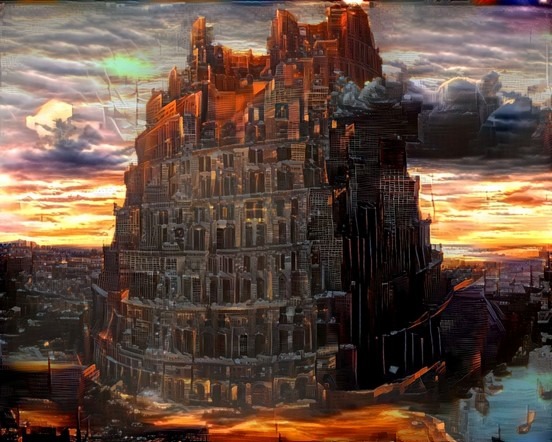
The first human attempt to breech God’s domain took place at Babe. The Bible records that residents of Mesopotamia constructed a giant tower whose purpose was to reach into heaven.
They said, “Come, let us build for ourselves a city, and a tower whose top will reach into heaven, and let us make for ourselves a name, otherwise we will be scattered abroad over the face of the whole earth.” Genesis 11:4 (NASB95)
According to Jewish tradition, Nimrod wanted to penetrate the barrier of the firmament in order to kill God with his bow and arrows.
This quest to breach the firmament was delayed but not stopped when God confused the builders’ languages and scattered them across the earth.
It seems that NASA has taken Nimrod’s place. This organization has assumed several nefarious purposes, one of which appears to be to test the strength and nature of the firmament and perhaps punch through it.
The Bible tells us that the solid firmament rises from the earth where it is securely anchored. I cover this in greater detail in another article entitled, “Introduction to the Firmament.” in this series. A 1958 version of The Encyclopedia Americana reported the presence of a dome. This was prior to the Antarctic Treaty and before censorship was established regarding that area of the world. The Bible teaches that we are “fenced in” (limited) by this structure. At this point, the general public does not know where the firmament connects to the earth, since that area of the world is now “off limits,” but possibly Admiral Richard E. Byrd found it, having made several expeditions to that region before and after WWII (1928-30, 1933-34, 1939-40, 1946-47, and 1955-56).
During and after Byrd completed his assignments there, several very interesting things took place.
- The United Nations was created in 1945.
- Walt Disney, who majored in fantasy, and Werner Von Braun of later NASA fame partnered to produce a documentary
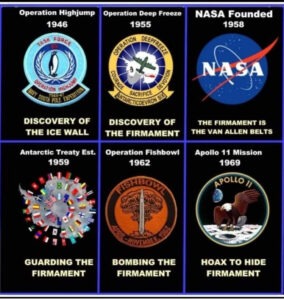 on outer space travel in 1955.
 - NASA was formed in 1958. Werner Von Braun, a former Nazi, brought to the US under the auspices of Operation Paperclip, became a main spokesman for our space program.
- The Antarctic Treaty was signed, cordoning off the area beyond the South 60th parallel, December 1, 1959. The signing nations were each assigned a segment to guard and protect against independent exploration. Interestingly, despite all our international conflicts since then, no one has violated this treaty. Why is it alone so valued? Another interesting fact is that each nation guards a section that corresponds to their proximity to the ice wall on the flat earth.
- Operation Fishbowl was part of a series of high altitude nuclear explosions conducted by the US and Russia. Operation Starfish supposedly exploded a 1.4 megaton bomb in 1962 at a reported altitude of 400 kilometers or 240 miles. One has to ask why?
 If the firmament exists, as the Bible says, outer space is a fantasy. We believe that the firmament cannot be penetrated, and that most everything NASA produces is part of a Disney-like production – cartoons for adults. Many believe that NASA primarily exists to maintain the illusion that we live on a globe while making ongoing efforts to break through the firmament. It also provides a way to launder about $70 million dollars per day.
Whatever is the actual case, no one will deny that a tremendous amount of people are genuinely obsessed with outer space and interplanetary travel. The idea of leaving the earth and exploring, and maybe even establishing colonies, beyond our assigned habitation of the earth has gripped the imaginations of millions. The popularity of movies devoted to space travel proves my point.
If the Bible is correct about the existence of a solid dome-like firmament, then the science fiction of outer space is tantamount to idolatry. It means that Satan has deceived us into joining him in the quest of trying to punch through the firmament into God’s private domain, which is an act of war against the Lord.
The “outer space” of heliocentric cosmology most likely corresponds to the Bible’s “outer darkness,” the abode of fallen angels, demons, and unrepentant humans who reject the gospel. Satan has fooled us into thinking that a journey into such darkness is to be highly desired.
And the angels who did not keep their proper domain, but left their own abode, He has reserved in everlasting chains under darkness for the judgment of the great day; Jude 6 (NKJV)

Then the king said to the servants, ‘Bind him hand and foot, take him away, and cast him into outer darkness; there will be weeping and gnashing of teeth.’ Matthew 22:13 (NKJV)
Hollywood, which often hides the truth in plain sight, has given us many clues regarding the firmament and humanity’s inborn desire to escape our assigned habitation. Here are a few examples.
- The Truman Show
- Under the Dome
- The Simpsons
- Fortnite Video Game
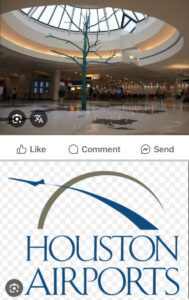
The Houston Airport is another example of hiding the truth in plain site. A flat-earth map has been placed under a dome. The powers that be love dangling the truth under our noses and laugh at our lack of discernment.
The Matrix movie describes a world where humans are enslaved by convincing them that the lie, with which they are all brainwashed, is reality. In order to break free from the lie, Neo was encouraged to take the “red pill” that would open his eyes to the truth and launch him on a dangerous pursuit of freedom.
Sinful rebellious humankind wants to escape the limitations of our God-imposed habitation. Satan and those working with and for him hide the true nature of our world from its inhabitants in order to enslave us under false pretenses. They tell us that the world in which we live is more or less doomed and that we need to find somewhere else for a habitation. All the while they hide from us how amazing and plentiful is God’s provision. Almost everything about our world as presented by our government is contrary to the truth.
Consider the following. We are told…
- We live on a “fragile” planet.
- We are in danger from climate change, asteroids, disease, aliens, and over crowding.
- Resources are limited and running out.
- World population needs to be reduced, resources rationed, and energy conserved.
But what does God say?
- We live on a firmly secured earth enclosed by a solid firmament.
- Climate change, aliens, and asteroids are not real. Demons and fallen angels, yes, but not space aliens.
- God created the earth with more than enough resources to support a massive population. Otherwise, God would not have commanded us to fill the earth.
- God said to be fruitful and multiply. Efforts to reduce the population through wars, starvation, abortion, vaccines, etc., like everything else Satan suggests and tries, are in direct violation of God’s commands.
If we would accept that the earth that God created is a perfectly designed habitation and seek to bring it more and more in line with our Lord’s original intention under his rule, we would see our lives prosper in a greater way.
Instead, inspired by Satan and our own rebelliousness, we refuse to tell the truth, listen to the truth, or accept our God-imposed limitations. Instead, we try to escape, not realizing that all the while Satan is working his plan to subjugate and destroy the inhabitants of the earth. Thankfully, we know from the Bible that God wins! Eventually the truth will be known. God will create a new heaven and earth in which only righteousness exists. Even now the Bible says that believers in Jesus are spiritually seated with him in heaven.
For he raised us from the dead along with Christ and seated us with him in the heavenly realms because we are united with Christ Jesus. Ephesians 2:6 (NLT)
In his marvelous generosity, God has given to us everything we and Satan tried to take illegitimately. What a God we serve!
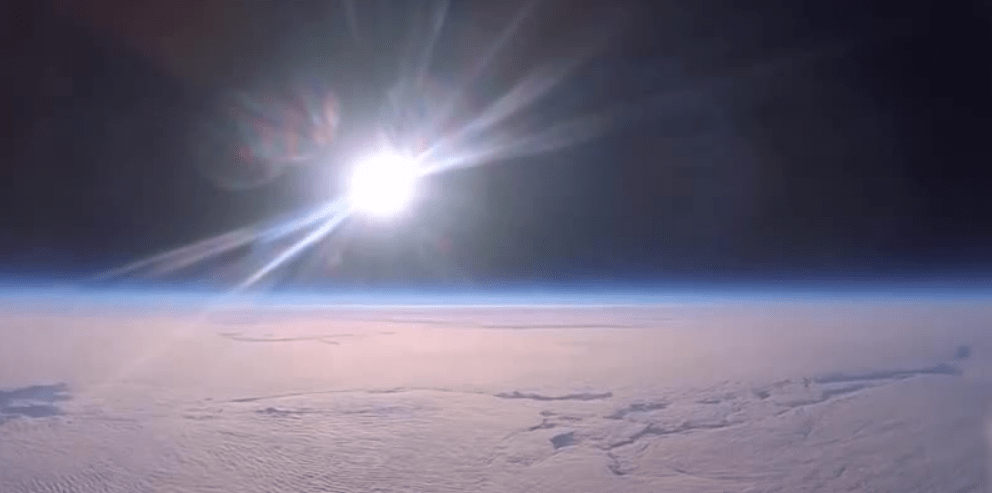
 The foundation of theoretical astrophysics is slowly eroding as more and more people are waking up to the truth about the earth’s design. The deceptions connected to the space program are unraveling before our eyes. The king has no clothes! Eventually the lies supporting this massive deception will be exposed. The house of cards built on the heliocentric lie is under God’s judgment. It is in danger of imminent collapse. Tension escalates as to the fate of those who are still inside. Will they get out before the whole thing comes crashing down?
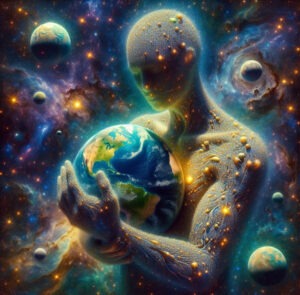 Although doing such a thing is quite impossible, we imagine we can do it. We dream about it. We fantasize for ourselves a fictional “universe” that we can explore using space ships. We use our amazing technologies of deception to implant the dream of space exploration in the hearts of the young and old alike.
 Our love for “outer space” is actually a form of rebellion against God in two ways. First of all, it does not even exist. Everything beyond the dome of the firmament is an unknown region, perhaps what the Bible calls the “third heaven,” where God’s throne is located, or perhaps it is the region Jesus called “outer darkness,” a place of judgment, sorrow, and regret. When we devote so much time, effort, focus, and money on an imaginary place, created by our own minds in opposition to what the Bible teaches, it is an escape from reality rooted in rebellion against the truth and God himself.
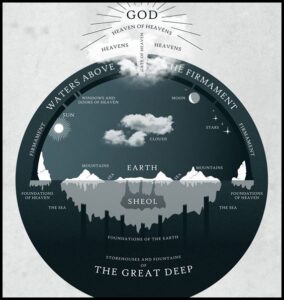 Christians up until the time of Copernicus had a geocentric view of the heavens and earth as described in Genesis Chapter One. Then came an astronomical upheaval.
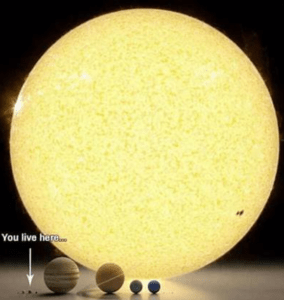 means that the sun runs a “circuit” around the earth (Psalm 19:6), rather than the earth revolving around the sun. Consequently, the sun is much smaller and much closer than we have been led to believe. The image on the left is a cartoon, not reality.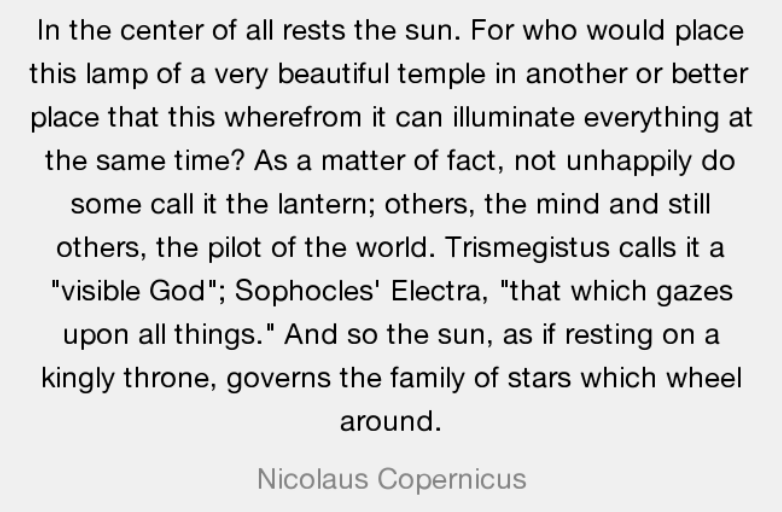
 The Genesis version of cosmology requires us to recognize the handiwork of God. There is no way that we live within the protection of the firmament unless God created it that way. It could never have happened via the chaos of an explosion. Just as surely as the turtle pictured on the left did not get on top of the fence post by himself, neither did the firmament create itself.