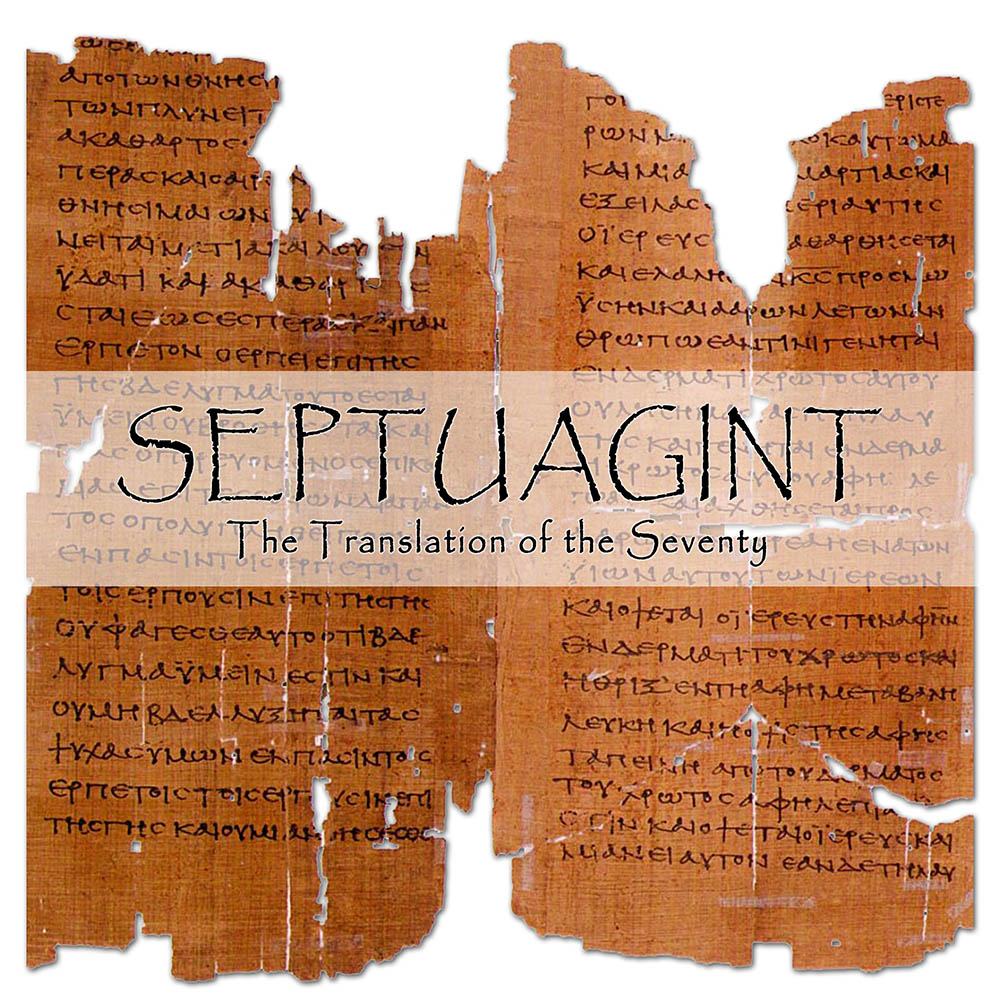
Here is a direct side-by-side comparison of the Masoretic Text with the LXX. I have concluded that the LXX is much to be preferred over the Masoretic Text, a position from which the Eastern Orthodox Church never deviated. Perhaps, if you take the time to read my comparisons and other articles, you will arrive at the same conclusion.
The Septuagint version I am using is the Lexham English Septuagint 2nd Edition, which is available in print or as part of Logos Bible Software. Occasionally I also use the Brenton translation of the LXX for insight into difficult passages.
If you want to know more, click on the following links.
- Why Christians Should Prefer the Septuagint over the Masoretic Text.
- Some Insights Gained through Comparing the Masoretic Text to the Septuagint
- More side by side comparisons of the Masoretic Text (MT) to the Septuagint (LXX).
| Masoretic Text | Septuagint | Significance |
|
1 Now it came about after the death of Moses the servant of the LORD, that the LORD spoke to Joshua the son of Nun, Moses’ servant, saying, 2 “Moses My servant is dead; now therefore arise, cross this Jordan, you and all this people, to the land which I am giving to them, to the sons of Israel. Joshua 1:1–2 (NASB95) |
1 And it happened after the death of Moses that the Lord spoke to Joshua son of Nun, the assistant of Moses, saying, 2 “Moses, my servant, has died. Now then, rise and cross over the Jordan, you and all these people, to the land that I am giving them. Joshua 1:1–2 (LES2) |
This is an historical book, but since it is connected with possessing the land, we can expect some alterations in the MT, such as in verse 2 where the MT adds “to the sons of Israel.” It also adds “the servant of the Lord” in verse 1. |
|
3 “Every place on which the sole of your foot treads, I have given it to you, just as I spoke to Moses. 4 “From the wilderness and this Lebanon, even as far as the great river, the river Euphrates, all the land of the Hittites, and as far as the Great Sea toward the setting of the sun will be your territory. Joshua 1:3–4 (NASB95) |
3 Every place you step with the soles of your feet I will give to you, the way I have said to Moses. 4 The wilderness and the Lebanon to the great river, the Euphrates River, and to the distant sea from the setting sun, these will be your borders. Joshua 1:3–4 (LES2) |
The significant difference here is that the MT uses the perfect tense in verse 3 – “have given;” whereas the LXX uses the future tense – “will give.” To be fair, the perfect tense can be translated as a prophetic future tense. However, I believe the Masoretes wished to convey the idea that the land is Israel’s permanent possession, a chief tenet of Zionism. Other than that the passage basically agrees. |
|
5 “No man will be able to stand before you all the days of your life. Just as I have been with Moses, I will be with you; I will not fail you or forsake you. 6 “Be strong and courageous, for you shall give this people possession of the land which I swore to their fathers to give them. 7 “Only be strong and very courageous; be careful to do according to all the law which Moses My servant commanded you; do not turn from it to the right or to the left, so that you may have success wherever you go. 8 “This book of the law shall not depart from your mouth, but you shall meditate on it day and night, so that you may be careful to do according to all that is written in it; for then you will make your way prosperous, and then you will have success. 9 “Have I not commanded you? Be strong and courageous! Do not tremble or be dismayed, for the LORD your God is with you wherever you go.” Joshua 1:5–9 (NASB95) |
5 No person will stand before you all the days of your life. Just as I was with Moses, in the same way I will also be with you. I will neither abandon you nor neglect you. 6 Be strong and manly! For you shall divide for this people the land that I promised to give to your ancestors. 7 Be strong, therefore, and manly, to protect and act as Moses my servant commanded you. You must not turn from the commands either to the right or to the left so that you might be together in everything that you do. 8 And the book of this law must not depart from your mouth. You should meditate on it day and night so that you will know how to do everything written in it. Then you will be prosperous, and he will make your ways prosperous, and then you will be perceptive. 9 Look, I have commanded you: be strong and manly. Do not be cowardly nor fear, because the Lord your God is with you everywhere you go.” Joshua 1:5–9 (LES2) |
In verse 5, the MT says that God will not “fail or forsake” Joshua. The LXX says that he will not “abandon or disregard” him. In verse 6, the MT says, “Be strong and courageous.” The LXX says, “Be strong and manly.” I think this is another case where the LXX is more literal. In verse 6, in typical fashion, the MT pushes Israel’s right of eternal possession of the land by using the word “possession.” The LXX simply says that God will give it to them. In verse 7, the MT commands Joshua to “be careful to do according to all the law which Moses my servant commanded you,” but the LXX says, “to protect and act as Moses my servant commanded you.” The MT says this is to “have success,” but the LXX says, “that you might be together in everything you do,” stressing the importance of unity. Verse 8 says for Joshua to meditate in the law so that, according to the MT, he can “do according to all that is written in it.” The LXX says that he may “know how to do.” Later in the verse, the MT says it is to make Joshua successful, but the LXX says it is to give him understanding. Verse 9 basically agrees. |
|
10 Then Joshua commanded the officers of the people, saying, 11 “Pass through the midst of the camp and command the people, saying, ‘Prepare provisions for yourselves, for within three days you are to cross this Jordan, to go in to possess the land which the LORD your God is giving you, to possess it.’ ” Joshua 1:10–11 (NASB95) |
10 And Joshua commanded the scribes of the people, saying, 11 “Go into the middle of the camp of the people and command the people, saying, ‘Prepare provisions because in three days you also will be crossing over this Jordan, entering to occupy the land that the Lord, the God of your fathers, is giving to you.’ ” Joshua 1:10–11 (LES2) |
In verse 10, the MT says “officers,” but the LXX says “scribes” or secretaries. The MT uses the Hebrew word yarash, which means to take possession, inherit, or dispossess. The LXX uses the Greek verb katecho, which means to hold fast. The LXX adds “of your fathers” to describe God, emphasizing that the promises were made to them. The MT inserts “to possess it” at the end of verse 11, apparently to reemphasize Israel’s right of possession. |
|
12 To the Reubenites and to the Gadites and to the half-tribe of Manasseh, Joshua said, 13 “Remember the word which Moses the servant of the LORD commanded you, saying, ‘The LORD your God gives you rest and will give you this land.’ 14 “Your wives, your little ones, and your cattle shall remain in the land which Moses gave you beyond the Jordan, but you shall cross before your brothers in battle array, all your valiant warriors, and shall help them, 15 until the LORD gives your brothers rest, as He gives you, and they also possess the land which the LORD your God is giving them. Then you shall return to your own land, and possess that which Moses the servant of the LORD gave you beyond the Jordan toward the sunrise.” Joshua 1:12–15 (NASB95) |
12 And to Reuben and Gad and the half-tribe of Manasseh, Joshua said, 13 “Remember the word that Moses the servant of the Lord commanded you, saying, ‘The Lord your God has given you rest, and he has given you this land. 14 Let your wives and your children and your livestock dwell in the land that he has given you. But you will cross over the river fully armed for your brothers, every strong man. And so you will be allies with them 15 until the Lord our God gives rest to your brothers as also to you and they also receive a share of the land that the Lord your God is giving to them. And then you will depart, each one to his inheritance that Moses has given you in the area beyond the Jordan at the east.’ ” Joshua 1:12–15 (LES2) |
There are some differences, but nothing significant, in my opinion. |
|
16 They answered Joshua, saying, “All that you have commanded us we will do, and wherever you send us we will go. 17 “Just as we obeyed Moses in all things, so we will obey you; only may the LORD your God be with you as He was with Moses. 18 “Anyone who rebels against your command and does not obey your words in all that you command him, shall be put to death; only be strong and courageous.” Joshua 1:16–18 (NASB95) |
16 And answering Joshua, they said, “Everything, as much as you command to us, we will do, and every place where you send us, we will go. 17 In everything, as much as we obeyed Moses, we will obey you; only may the Lord our God be with you in the way he was with Moses. 18 However, the person who should disobey you and whoever will not listen to your words as you might command him, he must die. But be strong and manly.” Joshua 1:16–18 (LES2) |
There are no significant difference in this passage. |
Summary: There are some difference here, but nothing like we see in the Psalms and Prophets.