Is it ever okay to splurge?

Splurge is an interesting word. It means to spend money freely or extravagantly. Is it ever okay for disciples of our Lord Jesus to do this? The basic premise of this series on how disciples should properly handle money is that we are accountable to God for what we do with the finances he puts into our hands. I have suggested that prioritizing how we spend our money is important. Being careful not to overspend, being generous, and tithing are all important principles. For those who tend toward strict discipline or even legalism, all of this lends itself to thinking that any sort of purchase that is in any way extravagant or not strictly needed would be at least suspect or might even be wasteful and wrong. But is this always the case?

Jesus’ parable of the prodigal son is a story of how a son wasted his inheritance in an immoral and unwise spending spree that left him impoverished. A revealing element of the story is the way his father welcomed him home. He basically threw out the “red carpet” and treated him as if he had never violated his family’s trust, welcoming him back from his long self-imposed absence with open arms. The son left without so much as a “thank you” and returned in disgrace, but his father held none of that against him. The prodigal son asked to be treated as a hired servant, but his father splurged on his son by throwing him a feast and restoring to him the rights and privileges of sonship. This act of merciful kindness irritated and offended the elder son, who did not understand what seemed to him to be a reward for unfaithfulness.

God is very much like the father in the parable. He splurged on us by sending his only begotten Son to die on behalf of his enemies.

God could not have given a more expensive gift to a more undeserving and ungrateful people! Paul wrote the following to let us know that God’s extravagance continues to this day and into eternity.

He who did not spare His own Son, but delivered Him over for us all, how will He not also with Him freely give us all things? Romans 8:32 (NASB95)

If he already gave us the very most expensive gift he has, why would we think he would be stingy with us going forward?

God’s nature is that it brings him joy to splurge on his loved ones when doing so will not somehow do harm to us.

Should we be surprised if God gave us something extravagant? Not I.

God wants us to keep the fires of extravagant giving alive in our hearts, because that is who he is. That is who he wants us to be, too. Some disciples live a very basic lifestyle, denying themselves so they can give extravagantly to others, especially to God’s ongoing work of worldwide kingdom expansion. This is a free choice, not a law.

And if the Lord wants to splurge on us, we should not be surprised, taken aback, or refuse the gift.

It is our Lord’s delight many times to give us the desire of our hearts and even beyond.

Such gifts may come through others, but sometimes he might prompt us to spend extravagantly on ourselves. It always comes down to what is in our hearts and God’s. We should be careful not to judge others in this matter.

How can we tell when splurging is simply wasteful and when it brings joy to God’s heart? It is impossible to establish a rule for this. The minute we try to do so, we have entered the dark and joyless world of legalism. The recipient of such a gift may understand that God is fulfilling some deep longing of the heart, but outsiders may think that it is wasteful. The prodigal son’s elder brother did not understand his father’s joyful extravagance when he splurged on his wayward son who had finally come home. He judged his father’s actions to be improper because he did not understand the nature of God heart and grace. We should be alert to avoid falling into the same trap.

If we routinely spend extravagantly or even wastefully, it is probable that we are not in line with God’s heart. However, if we rule out all expressions of “splurging,” we may miss out on some of God’s best gifts.

To access the entire series on the Disciple and Money, click here.

The Son of Man’s Authority to Judge

Jesus’ fourth ministry or role is the glorious Son of Man who will return to the earth to raise the dead and judge every person who ever lived.

This event was prophesied by our Lord himself and is found in the prophecies of Daniel. Christ’s first three roles – Lamb of God, Son of God, and Baptizer in the Holy Spirit – have already been fulfilled in history and are available to every person to experience, but our Lord’s last role still waits for its fulfillment in the future.

We can know him now as the Resurrection and the Life (John 14:6) and our justifier (Romans 5:1), both of which will be more fully revealed at the Second Coming.

Here are John the Baptist’s words.

“As for me, I baptize you with water for repentance, but He who is coming after me is mightier than I, and I am not fit to remove His sandals; He will baptize you with the Holy Spirit and fire. 12 “His winnowing fork is in His hand, and He will thoroughly clear His threshing floor; and He will gather His wheat into the barn, but He will burn up the chaff with unquenchable fire.” Matthew 3:11–12 (NASB95)

Even though John did not specifically call Jesus the “Son of Man,” the above passage fully describes his role as the Judge of all the earth.

Jesus’ death as God’s Lamb is fundamental to our salvation, and acknowledging his lordship is the gate Paul says we must pass through to obtain the benefits of that death and resurrection. (Romans 10:9-10)

When we confess that Jesus is Lord, we acknowledge and voluntarily choose to come under his rule, which is the fundamental act of repentance.

For the last two thousand years or so, we have been in the Great Commission phase of God’s plan, which the Bible calls the “last days.” During this time Jesus is functioning as Lord of the harvest and Baptizer in the Spirit. Eventually this time of mercy will end, followed by our Lord’s glorious appearance in the clouds of heaven as the Judge. 

When Jesus stood before the Sanhedrin the evening before his crucifixion, their purpose was the culmination of that nation’s rejection of their Messiah. They condemned him to death after he freely admitted that not only is he the Messiah but he will also come again in glory as the divine Son of Man prophesied by Daniel. 

But Jesus remained silent. Then the high priest said to him, “I demand in the name of the living God—tell us if you are the Messiah, the Son of God.” 64  Jesus replied, “You have said it. And in the future you will see the Son of Man seated in the place of power at God’s right hand and coming on the clouds of heaven.” Matthew 26:63-64 (NLT)  

Daniel’s prophecy described a glorious heavenly being who will judge everyone who ever lived.

I kept looking in the night visions, And behold, with the clouds of heaven One like a Son of Man was coming, And He came up to the Ancient of Days And was presented before Him. 14 “And to Him was given dominion, Glory and a kingdom, That all the peoples, nations and men of every language Might serve Him. His dominion is an everlasting dominion Which will not pass away; And His kingdom is one Which will not be destroyed. Daniel 7:13–14 (NASB95)

When the Sanhedrin heard our Lord apply these verses to himself, they accused him of blasphemy and condemned him to death.

At this point in time, Israel’s rejection of God’s rule was complete, fulfilling Christ’s own words. They would be given other chances to repent before their catastrophic destruction in 70 AD, when Jerusalem and the Temple were destroyed by Titus.

Jesus warned the Jewish leaders that their rejection of him was a rejection of God’s rule that would result in their utter destruction.

But his citizens hated him and sent a delegation after him, saying, ‘We do not want this man to reign over us'... 27 “But these enemies of mine, who did not want me to reign over them, bring them here and slay them in my presence.” Luke 19:14, 27 (NASB95)

Jesus taught that in his role as the Son of Man he has been given authority to judge. One day he will return to judge those who condemned him, unless, of course, at some point they repented and asked forgiveness for their treachery.

For just as the Father has life in Himself, even so He gave to the Son also to have life in Himself; 27 and He gave Him authority to execute judgment, because He is the Son of Man. 28 “Do not marvel at this; for an hour is coming, in which all who are in the tombs will hear His voice, 29 and will come forth; those who did the good deeds to a resurrection of life, those who committed the evil deeds to a resurrection of judgment. John 5:26–29 (NASB95)

Jesus was given authority to judge us since he also lived as a human, but without sin (Hebrews 4:15). For those who reject

Christ’s lordship, the last judgment will be terrifying, but for us who voluntarily bow the knee to him before his glorious return, it will be a triumphantly glorious conclusion to history.

Our Lord, the judge, will also act as our defense lawyer.

He who did not spare His own Son, but delivered Him over for us all, how will He not also with Him freely give us all things? 33 Who will bring a charge against God’s elect? God is the one who justifies; 34 who is the one who condemns? Christ Jesus is He who died, yes, rather who was raised, who is at the right hand of God, who also intercedes for us. Romans 8:32–34 (NASB95)

The one who will judge us has promised that we will never be condemned, if we put our trust in him.

Truly, truly, I say to you, he who hears My word, and believes Him who sent Me, has eternal life, and does not come into judgment, but has passed out of death into life. John 5:24 (NASB95)

According to the terrifying vision in Daniel 7:10, we will be judged according to record books God keeps.

A river of fire was flowing And coming out from before Him; Thousands upon thousands were attending Him, And myriads upon myriads were standing before Him; The court sat, And the books were opened. Daniel 7:10 (NASB95)

He keeps track of every word, thought, and deed. Nothing is hidden from him.

For the word of God is living and active and sharper than any two-edged sword, and piercing as far as the division of soul and spirit, of both joints and marrow, and able to judge the thoughts and intentions of the heart. 13 And there is no creature hidden from His sight, but all things are open and laid bare to the eyes of Him with whom we have to do. Hebrews 4:12–13 (NASB95)

If our performance in life were the only basis for judgment, every single person who ever lived would be consigned to the lake of fire.

as it is written, “THERE IS NONE RIGHTEOUS, NOT EVEN ONE; Romans 3:10 (NASB95)

Without Christ, no one is righteous in God’s sight. We have all sinned and fallen short of God’s glorious righteous standard.

for all have sinned and fall short of the glory of God, Romans 3:23 (NASB95)

We have earned the wage of death.

For the wages of sin is death, but the free gift of God is eternal life in Christ Jesus our Lord. Romans 6:23 (NASB95) 

However, there is another book called the Lamb’s Book of Life. If we are written in that book, our eternal destiny is secure.

And I saw the dead, the great and the small, standing before the throne, and books were opened; and another book was opened, which is the book of life; and the dead were judged from the things which were written in the books, according to their deeds. 13 And the sea gave up the dead which were in it, and death and Hades gave up the dead which were in them; and they were judged, every one of them according to their deeds. 14 Then death and Hades were thrown into the lake of fire. This is the second death, the lake of fire. 15 And if anyone’s name was not found written in the book of life, he was thrown into the lake of fire. Revelation 20:12–15 (NASB95)

Every person will be judged according to our deeds because what we do reflects what we believe more than our words do. (James 2:18)

However, for those of us who are written in the Lamb’s Book of Life, judgment will determine our eternal reward, not our eternal destiny.

Now he who plants and he who waters are one; but each will receive his own reward according to his own labor. 9 For we are God’s fellow workers; you are God’s field, God’s building. 10 According to the grace of God which was given to me, like a wise master builder I laid a foundation, and another is building on it. But each man must be careful how he builds on it. 11 For no man can lay a foundation other than the one which is laid, which is Jesus Christ. 12 Now if any man builds on the foundation with gold, silver, precious stones, wood, hay, straw, 13 each man’s work will become evident; for the day will show it because it is to be revealed with fire, and the fire itself will test the quality of each man’s work. 14 If any man’s work which he has built on it remains, he will receive a reward. 15 If any man’s work is burned up, he will suffer loss; but he himself will be saved, yet so as through fire. 1 Corinthians 3:8–15 (NASB95)

For those of us who have received and know the love God has for us, judgment holds no terror.

By this, love is perfected with us, so that we may have confidence in the day of judgment; because as He is, so also are we in this world. 18 There is no fear in love; but perfect love casts out fear, because fear involves punishment, and the one who fears is not perfected in love. 1 John 4:17–18 (NASB95)

We do fear God in a proper way, however. We do not take lightly his discipline, but as his children we do not fear being ultimately cast away into outer darkness.

And a slave does not abide in the house forever, but a son abides forever. John 8:35 (NKJV)

At the future point in history when our Lord returns, there will no longer be any doubt at all for anyone as to Jesus’ true identity.

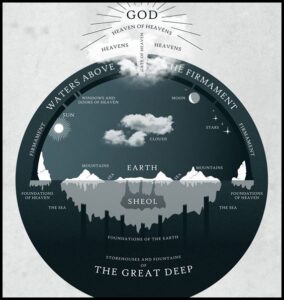
When God dissolves the firmament (2 Peter 3:10), revealing God’s glorious presence in heaven above us, naysayers will no longer be able to claim that our Lord was merely a prophet or a fine teacher. No longer will anyone be able to say that he was a mythical person. No one will claim that his resurrection was a fable concocted by his devious followers. At that point in history, everyone will see him in his undeniable glory.

Behold, he is coming with the clouds, and every eye will see him, even those who pierced him, and all tribes of the earth will wail on account of him. Even so. Amen. 8 “I am the Alpha and the Omega,” says the Lord God, “who is and who was and who is to come, the Almighty.” Revelation 1:7-8 (ESV)

Before his return, God is giving us the opportunity to hear the gospel’s call to bow the knee to Jesus, the Lord of Lords. What we do in response to this call will determine our eternal destiny.

On that glorious day when Jesus returns as the Son of Man, it will be too late. On that day, every knee will be forced to bow and every tongue confess who he is. No longer will there be an option.

Therefore, God elevated him to the place of highest honor and gave him the name above all other names, 10  that at the name of Jesus every knee should bow, in heaven and on earth and under the earth, 11  and every tongue confess that Jesus Christ is Lord, to the glory of God the Father. Philippians 2:9-11 (NLT)  

Although God the Father continues to mercifully delay the end, and Jesus continues to show mercy to those who ask him for forgiveness, we should not think for a moment that our Lord is too weak or kindly to enforce God’s justice and wrath when the proper time finally arrives. Though he is patient, God the Father does not wink at sin or coddle rebellion against his Son’s rule.

Now therefore, O kings, show discernment; Take warning, O judges of the earth. 11 Worship the LORD with reverence And rejoice with trembling. 12 Do homage to the Son, that He not become angry, and you perish in the way, For His wrath may soon be kindled. How blessed are all who take refuge in Him! Psalm 2:10–12 (NASB95)

Warning people to prepare for the coming judgment is an important part of the gospel message.

Those who do not drink from the river of God’s mercy by declaring allegiance to the risen Lord, the Lamb who was slain, will rue their grave mistake at the Second Coming when God’s judgment comes down like a hammer.

The Book of Revelation teaches us that we who believe will rejoice in God’s judgment of the wicked.

After this, I heard what sounded like a vast crowd in heaven shouting, “Praise the LORD! Salvation and glory and power belong to our God. 2  His judgments are true and just. He has punished the great prostitute who corrupted the earth with her immorality. He has avenged the murder of his servants.” 3  And again their voices rang out: “Praise the LORD! The smoke from that city ascends forever and ever!” 4  Then the twenty-four elders and the four living beings fell down and worshiped God, who was sitting on the throne. They cried out, “Amen! Praise the LORD!” 5  And from the throne came a voice that said, “Praise our God, all his servants, all who fear him, from the least to the greatest.” Revelation 19:1-5 (NLT) 

Until Christ returns, we preach a gospel of hope to those who are willing to repent and declare allegiance to the risen Lord Jesus, but that gospel contains the warning of impending judgment.

God’s mercy can only be properly understood against the backdrop of looming wrath.

Just as artists use darkness to contrast with light, the gospel uses the beauty of God’s mercy to contrast with the horrors of divine judgment. If God is simply a heavenly smiley face who never judges anyone, our gospel message is farcical. Why on earth would Jesus have to die, in that case? He would be a misguided tragic figure at best. But, in fact, our Lord absorbed the wrath of God on the cross on our behalf so that we will be able to escape God’s wrath at the Last Judgment.

For God has not destined us for wrath, but for obtaining salvation through our Lord Jesus Christ, 1 Thessalonians 5:9 (NASB95)

The gospel holds out to us the promise that all who call upon the Lord will be saved. This is the gospel that Peter preached.

And with many other words he solemnly testified and kept on exhorting them, saying, “Be saved from this perverse generation!” Acts 2:40 (NASB95)

Peter knew that judgment was coming to Jerusalem as our Lord prophesied. He warned his hearers to turn to Christ to escape that judgment and the final one at Christ’s return.

It is the gospel Paul preached.

“Therefore having overlooked the times of ignorance, God is now declaring to men that all people everywhere should repent, 31 because He has fixed a day in which He will judge the world in righteousness through a Man whom He has appointed, having furnished proof to all men by raising Him from the dead.” Acts 17:30–31 (NASB95)

It is the gospel John the Baptist preached.

“His winnowing fork is in His hand, and He will thoroughly clear His threshing floor; and He will gather His wheat into the barn, but He will burn up the chaff with unquenchable fire.” Matthew 3:12 (NASB95)

It is what Jesus preached.

All the nations will be gathered before Him; and He will separate them from one another, as the shepherd separates the sheep from the goats; Matthew 25:32 (NASB95) 

It is the gospel we should preach, too. How people respond to this good news will make all the difference for eternity.

Prayer

Jesus, I recognize that you are my Savior and Lord. I declare allegiance and submit my life to you. Help me to tell others about who you are and what you did for us so that they, too, may escape your wrath on the day of judgment. Thank you for your continued mercy. Amen.

Click here to see other articles in this series.

Baptizer in the Holy Spirit and Lord of the Harvest

This teaching focuses on Jesus’ third ministry or role that was prophesied by John the Baptist – the Baptizer in the Holy Spirit and Lord of the Harvest.

Everyone who is a Christ follower believes that Jesus is the Savior who died for our sins. Fewer, perhaps, realize that embracing his lordship over our lives is the gateway to salvation, according to Romans 10:9-10, the subject of my last teaching. Still fewer, it seems, understand the importance of his being the baptizer in the Holy Spirit and lord of the harvest. Perhaps even a smaller percentage receive this important gift from our Lord. This should not be!

John the Baptist said the following about Jesus and the baptism in the Spirit.

“I did not recognize Him [the Messiah], but He who sent me [God] to baptize in water said to me, ‘He upon whom you see the Spirit descending and remaining upon Him, this is the One who baptizes in the Holy Spirit.’ John 1:33 (NASB)

As the baptizer in the Holy Spirit, Jesus reigns as the Lord of the Harvest. The baptism in the Spirit is a gift he gives to his people to equip and empower us to be his witnesses. 

Jesus instructed his followers to wait in Jerusalem until this gift was poured out on the first New Covenant Pentecost, saying:

...“Do not leave Jerusalem until the Father sends you the gift he promised, as I told you before.5 John baptized with water, but in just a few days you will be baptized with the Holy Spirit.”...8 But you will receive power when the Holy Spirit comes upon you. And you will be my witnesses, telling people about me everywhere—in Jerusalem, throughout Judea, in Samaria, and to the ends of the earth.” Acts 1:4-8 (NLT) 

The baptism in the Spirit is so important that the first believers were commanded to refrain from announcing the Good News of Jesus’ resurrection and lordship until they first received it. In Acts Chapter 2 we have the account of when this happened, with the result that 3000 people surrendered their lives to Christ after hearing Peter’s inspired and empowered gospel message!

The power and presence of the Holy Spirit that was released in the disciples when they were baptized in the Spirit launched the church into fulfilling the Great Commission. God intended for this to be the model for all believers going forward.

Three Baptisms

The New Testament speaks of three distinct baptisms: into the body of Christ, into water, and into the Holy Spirit. Each of these baptisms has a different baptizer, a different medium, a different evidence, and a different result or purpose.

  • The baptism into the body of Christ takes place when we are born again. The Holy Spirit plunges us into Christ (1 Corinthians 12:13), and we become one with him (1 Corinthians 6:17). The evidence is a changed life. It can also be thought of as a sprinkling of Christ’s blood.
  • Baptism into water by immersion is what another believer does to us, giving us an opportunity to publicly proclaim and acknowledge what God has already done in the Spirit. It is our public declaration of allegiance to Jesus. We tell the world that our old way of life is dead. From now on we belong to Jesus and will live for him. The evidence of this baptism is simply that we get wet.
  • Jesus is the One who baptizes us into the Spirit to empower us to be bold witnesses. This baptism or outpouring may be likened to standing under a waterfall. We are effectively immersed, but its purpose is not identification or a declaration of allegiance. Instead, the Spirit is poured out upon us to empower us for ministry. The evidence of the baptism in the Spirit is speaking in tongues and prophecy. The Holy Spirit baptism is also God’s confirmation to the world that we are his children.

3baptisms

These three baptisms are separate, but occasionally the new birth and baptism in the Spirit happen concurrently, as with Cornelius (Acts 10:44). At other times, as in Ephesus (Acts 19:5-6) and Samaria (Acts 8:14-15), the baptism in the Spirit happens after the new birth. Water baptism should be performed very soon after conversion. (Acts 8:36-38)

The three baptisms also relate to the three major feasts of Israel.

Passover corresponds to the baptism into the body of Christ and the new birth, when we come to know Christ as Lamb of God and Savior and his blood is sprinkled upon us. The Feast of Pentecost corresponds to the outpouring and baptism of the Holy Spirit, which launched the church into the Great Commission. The last great feast is the Feast of Booths and Tabernacles, which takes place in the Fall of the year at harvest time. Many believe that this corresponds to Christ’s Second Coming as the glorious Son of Man, about which I will cover in the next lesson

The point I wish to make is that the Israelites were expected to attend all three feasts.

We, as New Covenant believers, are meant to experience Christ in all the ways I am covering in this series – as Lamb of God or Savior, Son of God or Lord, as Baptizer in the Holy Spirit or Lord of the harvest, and as the coming Son of Man who will raise us from the dead and has authority to judge the living and the dead.

When Jesus ascended into heaven, on the fiftieth day after his resurrection, he poured out the Spirit on the feast of Pentecost in Jerusalem. This outpouring proved his lordship and confirmed his role as Lord in charge of the harvest or Great Commission.

To be under Christ’s authority regarding the Great Commission, we must do as he said and receive the baptism in the Spirit.

God wants his children to receive the baptism in the Spirit by asking for and receiving it by faith. 

“If you then, being evil, know how to give good gifts to your children, how much more will your heavenly Father give the Holy Spirit to those who ask Him?” Luke 11:13 (NASB95)

This gift is available to all who put their faith and allegiance in Christ.

“For the promise is for you and your children and for all who are far off, as many as the Lord our God will call to Himself.” Acts 2:39 (NASB95)

The evidence of receiving this gift is speaking in tongues or prophesying. We speak in tongues by faith. We open our mouths and God gives us the words. (Psalm 81:10)

And they were all filled with the Holy Spirit and began to speak with other tongues, as the Spirit was giving them utterance. Acts 2:4 (NASB95)

The human intellect cannot comprehend the things of the Spirit. We cannot understand what the words mean when we speak in tongues, but the language is real. The Bible says we worship and pray according to God’s will.

For one who speaks in a tongue does not speak to men but to God; for no one understands, but in his spirit he speaks mysteries. 1 Corinthians 14:2 (NASB95)

For if I pray in a tongue, my spirit prays, but my mind is unfruitful. 1 Corinthians 14:14 (NASB95)

In the same way the Spirit also helps our weakness; for we do not know how to pray as we should, but the Spirit Himself intercedes for us with groanings too deep for words; 27 and He who searches the hearts knows what the mind of the Spirit is, because He intercedes for the saints according to the will of God. Romans 8:26–27 (NASB95)

God told the first disciples to receive this baptism in the Spirit to empower them for fruitful ministry.

Gathering them together, He commanded them not to leave Jerusalem, but to wait for what the Father had promised, “Which,” He said, “you heard of from Me; 5 for John baptized with water, but you will be baptized with the Holy Spirit not many days from now.” Acts 1:4–5 (NASB95)

but you will receive power when the Holy Spirit has come upon you; and you shall be My witnesses both in Jerusalem, and in all Judea and Samaria, and even to the remotest part of the earth.” Acts 1:8 (NASB95)

As is the case with the lordship of Christ, this aspect of Jesus’ ministry opposes modern-day consumerism. Unless we surrender to Christ’s lordship, embrace the call to obey the Great Commission, and receive the empowering of the Spirit, believing in the Lamb of God may become a self-centered pursuit of blessings.

Rather than allowing us to comfortably settle for being churchgoers, the Lord of the Harvest and Baptizer in the Spirit calls us to love and serve him through evangelism and making disciples.

It takes great courage to testify to the Lordship of the risen Jesus and to call people to repentance from a self-directed life. That is why we need to be empowered by the Spirit.

God intends for us to share the gospel in word and power.

and my message and my preaching were not in persuasive words of wisdom, but in demonstration of the Spirit and of power, 5 so that your faith would not rest on the wisdom of men, but on the power of God. 1 Corinthians 2:4–5 (NASB95)

God wishes to confirm the truth of his word by healing people, doing miracles, and delivering people from evil spirits. The nine gifts of the Spirit are available to us.

The baptism in the Spirit is the gateway into the armory of the Spirit. 

Speaking in tongues is not only the most common evidence of being baptized in the Spirit. It is also a tremendously important gift in its own right. When we pray in the Spirit (tongues) we pray in a real language known to God, but not us. Romans 8:26 tells us that when we pray in tongues we pray according to God’s will. I usually pray in tongues first when I pray over someone. Not only am I praying according to God’s will a perfect prayer, but I am also “tuning in” to God’s spiritual “frequency.” I find that as I pray in tongues, he often gives me scriptures, insight, revelation, visions, prophetic words, and faith for the person. Tongues is a type of gateway gift in that it requires us to stop relying on our human intellect (since it is “unfruitful” – 1 Corinthians 14:14) and trust in the Spirit’s leading. Learning to do this enables us more easily to operate in the other spiritual gifts.

But to each one is given the manifestation of the Spirit for the common good. 8 For to one is given the word of wisdom through the Spirit, and to another the word of knowledge according to the same Spirit; 9 to another faith by the same Spirit, and to another gifts of healing by the one Spirit, 10 and to another the effecting of miracles, and to another prophecy, and to another the distinguishing of spirits, to another various kinds of tongues, and to another the interpretation of tongues. 11 But one and the same Spirit works all these things, distributing to each one individually just as He wills. 1 Corinthians 12:7–11 (NASB95)

Prophecy, words of knowledge, and words of wisdom all are ways God communicates to us in the Spirit. When God gives us a “word” for someone, we need his wisdom to know what to do with it. Often God uses visionary means to communicate important truths or insights to us. Being able to interpret the vision is more important, because the interpretation is usually the part that is helpful. A message in tongues for the entire assembly also requires interpretation or it only benefits the speaker. If no one has the faith or ability to interpret, Paul tells us to pray in tongues silently to God. (1 Corinthians 14:27-28) We can pray any time we like in the Spirit because we are commanded to pray always in the Spirit. (Ephesians 6:18) It is the only gift under our direction, except in the case when it requires an interpretation. Then it is like the others which require a specific leading from the Holy Spirit. 

Faith, miracles, and healing are what some call the power gifts. The Lord can reveal to us whom he wants to heal via visions, words of knowledge, etc. We have to learn how the Spirit communicates to us. It takes practice, trial and error, and courage to operate in the gifts and become proficient at it.

The last gift in the above passage helps us to discern spirits, which is tremendously important. We want to know when we are encountering the Holy Spirit, angels of God, angels of darkness, and demons. Those who engage in evangelism will especially need this gift, as do all of us. Wisdom, faith, and an understanding of the authority we have in Christ are needed to properly handle any demons we may encounter. 

Wherever God’s kingdom is proclaimed, we should see evidence of God’s power.

And as you go, preach, saying, ‘The kingdom of heaven is at hand.’ 8 “Heal the sick, raise the dead, cleanse the lepers, cast out demons. Freely you received, freely give. Matthew 10:7–8 (NASB95)

When we share the gospel, we should challenge our hearers to receive the baptism in the Holy Spirit as part of the complete package. We do not want anyone to settle for less than God intends. The early Church expected new believers to receive the baptism in the Spirit.

Peter said to them, "Repent, and each of you be baptized in the name of Jesus Christ for the forgiveness of your sins; and you will receive the gift of the Holy Spirit. Acts 2:38 (NASB) 

They were committed to knowing Christ as Baptizer in the Spirit and to fulfilling the Great Commission. We should do no less.

Steps to Receive the Baptism in the Spirit

All that remains is for us to ask God for this gift that Jesus died to give us.

This is the only thing I want to find out from you: did you receive the Spirit by the works of the Law, or by hearing with faith? Galatians 3:2 (NASB95)

If we are submitted to the Lord of the Harvest who is seated at God’s right hand, from where he sent his Holy Spirit, we will ask for and receive this gift.

  1. Believe that God will do what he says.

If we grasp that God has provided all believers with the privilege of receiving the baptism of the Holy Spirit, the next step is for us to believe that God is always faithful to his promises.

God’s complete trustworthiness is the foundation of all faith.

This is a simple concept; yet many people get hung up at this point. They may think, maybe it is not for me? God will bless everyone else, but not me. Such thinking is sinful unbelief from which we must repent. Cast that lie away and start believing God.

God is not a man, that He should lie, Nor a son of man, that He should repent; Has He said, and will He not do it? Or has He spoken, and will He not make it good? Numbers 23:19 (NASB) 
  1. Ask and receive with simple faith as a child.
"For everyone who asks, receives; and he who seeks, finds; and to him who knocks, it will be opened. 11  "Now suppose one of you fathers is asked by his son for a fish; he will not give him a snake instead of a fish, will he? 12  "Or if he is asked for an egg, he will not give him a scorpion, will he? 13  "If you then, being evil, know how to give good gifts to your children, how much more will your heavenly Father give the Holy Spirit to those who ask Him?" Luke 11:10-13 (NASB) 

As a child, believe, ask, and receive.

If something in our minds whispers that this is not going to happen for me, repent of that unbelief.

...You do not have because you do not ask. James 4:2 (NASB) 

If I extend my hand to offer someone a hundred-dollar bill, what will that person need to do? Would it be enough to say thank you without making any effort to come forward to receive it? If we want the money, we will act. Similarly, we receive the baptism in the Spirit by asking the Lord to baptize us and then by actively receiving.

Faith receives before it sees any outward visible evidence. Faith depends on the promises and character of God alone. It knows that God will keep his word and that his promises are true.

Faith does not doubt. It does not struggle with wondering if God will keep his end of the deal. It receives and moves on, just as when the Roman Centurion believed Jesus healed his servant and returned home. (Luke 7:10)

  1. Give thanks.

After receiving a gift, grateful people say, “Thank you.” After we ask for and receive the baptism in the Spirit by faith, we should begin to thank and praise God.

Thanksgiving demonstrates faith.

The opposite is either silent passivity or doubtful complaining. Some people refuse to believe before seeing because they are afraid of getting their hopes up, only to be let down. Should we only praise God after he “comes through” for us or when we grasp that he is always faithful to his promises and will surely do what he said? Real faith acts before it ever sees the confirmation or fulfillment of what it believes because it is convinced that God is true.

The kind of praise and worship that gives God the most honor is what comes from people who exalt God’s faithfulness before they ever see the fulfillment of what was promised.

Faith knows and overflows. Only faith filled (faithful) people give thanks. Let’s show our faith by our praise.

  1. Speak in tongues.

Speaking in tongues is a supernatural overflow of the Spirit. Our mouths speak out of the abundance of the Spirit’s filling of our hearts. The sure evidence of the baptism in the Spirit is speaking in tongues. At this point the one wishing to experience this confirming gift should take a step of faith and begin speaking, trusting that the Holy Spirit will give the words.

Who Baptizes Us?

The Bible teaches us that baptizing people in the Holy Spirit is the personal ministry of Jesus. John the Baptist announced this ministry to the world.

As for me, I baptize you with water for repentance, but He who is coming after me is mightier than I, and I am not fit to remove His sandals; He will baptize you with the Holy Spirit and fire.  Matthew 3:11 (NASB95)

Our Lord often uses the agency of people laying hands on us to accomplish this baptism because Jesus desires for us to share in his ministry. The apostles often laid hands on individuals prior to their receiving this baptism.

Now when the apostles in Jerusalem heard that Samaria had received the word of God, they sent them Peter and John, 15 who came down and prayed for them that they might receive the Holy Spirit. 16 For He had not yet fallen upon any of them; they had simply been baptized in the name of the Lord Jesus. 17 Then they began laying their hands on them, and they were receiving the Holy Spirit.  Acts 8:14–17 (NASB95)

At other times, the Spirit fell upon people without human agency, such as at Pentecost and when Peter preached to Cornelius.

While Peter was still speaking these words, the Holy Spirit fell upon all those who were listening to the message. 45 All the circumcised believers who came with Peter were amazed, because the gift of the Holy Spirit had been poured out on the Gentiles also. 46 For they were hearing them speaking with tongues and exalting God. Then Peter answered,  Acts 10:44–46 (NASB95)
Prayer to Receive the Baptism in the Spirit

Jesus, I believe you died and rose again to save me and baptize me in the Spirit. You said that if we ask, you will certainly give us this wonderful promise. I ask you right now to baptize me in the Spirit and fill me to overflowing. I receive this promise by faith and give you thanks for your faithfulness to keep your promises. Holy Spirit, fill me up. Help me now to pray in tongues. I will open my mouth to speak with the expectation that you will give me the words. Amen.


Click here to see other articles in this series.


(If you wish to learn more about this amazing gift, you may wish to purchase my book, Promise of the Father, which is available on Amazon, and read my other articles on the subject.)

The Son of God Is Lord over All

Not only did John the Baptist announce that Jesus is God’s Lamb, the Savior, who has authority to forgive sins, he also proclaimed to the world that he is God’s Son, which is another way of saying that he is the Messianic King of Israel, the Christ, who, it turns out, as a consequence of his resurrection, is the Lord of Lords.

Jesus is the one chosen by God to restore the divine authority of God’s kingdom in the earth.

The Lord’s prayer captures this purpose.

Your kingdom come. Your will be done, On earth as it is in heaven. Matthew 6:10 (NASB95)

John uttered the following words about Jesus’ being the Son of God:

“This is He on behalf of whom I said, ‘After me comes a Man who has a higher rank than I, for He existed before me.’ 31 “I did not recognize Him, but so that He might be manifested to Israel, I came baptizing in water.” 32 John testified saying, “I have seen the Spirit descending as a dove out of heaven, and He remained upon Him. 33 “I did not recognize Him, but He who sent me to baptize in water said to me, ‘He upon whom you see the Spirit descending and remaining upon Him, this is the One who baptizes in the Holy Spirit.’ 34 “I myself have seen, and have testified that this is the Son of God.” John 1:30-34 (NASB)

Here John acknowledged that his cousin pre-existed. In natural physical life, John was older than Jesus.

John recognized that Jesus was and is the Great I Am!

Jesus later verified that this is true.

Jesus said to them, “Truly, truly, I say to you, before Abraham was born, I am.” John 8:58 (NASB95)

Therefore, Jesus possessed authority as the eternal Logos, the Creator and Sustainer of all things, even before he rose again.

Jesus’ resurrection as a man, the “last Adam,” reclaimed the authority that the first Adam gave away to Satan. Because Jesus shares that authority with those who put their faith and allegiance in him, his resurrection elevated man back to the original position God intended, plus so much more.

Now those of us who put our faith and allegiance in Christ are seated with him at God’s right hand.

and raised us up with Him, and seated us with Him in the heavenly places in Christ Jesus, Ephesians 2:6 (NASB95) 

This is a position of blessing and authority beyond anything Adam ever experienced!

Most Jewish people at that time probably understood the term “son of God” to mean the promised messianic king of Israel. They would have been familiar with scriptures such as Psalm 110:1, which Jesus quoted to confound those who persecuted him.

Then He [Jesus] said to them, “How is it that they say the Christ is David’s son? 42 “For David himself says in the book of Psalms, ‘THE LORD SAID TO MY LORD, “SIT AT MY RIGHT HAND, 43 UNTIL I MAKE YOUR ENEMIES A FOOTSTOOL FOR YOUR FEET.” ’ 44 “Therefore David calls Him ‘Lord,’ and how is He his son?” Luke 20:41–44 (NASB95) 

Jesus invited the Jewish leaders and us to consider this profound mystery: David’s biological descendant is his lord. We know now that this is because Jesus, the eternal logos become flesh, was born of the Spirit, by a virgin, having Abba for his Father. He is the perfect God-Man, as explained by the apostle Paul. 

concerning His Son, who was born of a descendant of David according to the flesh, 4 who was declared the Son of God with power by the resurrection from the dead, according to the Spirit of holiness, Jesus Christ our Lord, Romans 1:3–4 (NASB95)

Before his resurrection, Jesus claimed to be the Son of God, the Messiah. Some believed, such as Peter, because God opened their eyes to see this marvelous truth by faith.

He [Jesus] said to them, “But who do you say that I am?” 16 Simon Peter answered, “You are the Christ, the Son of the living God.” 17 And Jesus said to him, “Blessed are you, Simon Barjona, because flesh and blood did not reveal this to you, but My Father who is in heaven. Matthew 16:15–17 (NASB95)

Peter, James, and John glimpsed Jesus’ glory as the Lord at the mount of transfiguration, but it was not until after our Lord rose from the dead that his disciples more fully understood. However, they still did not grasp that he was lord of lords yet. They still thought his authority was limited to being king of Israel, the alleged crime for which he was crucified. But God always had bigger things in mind for his Son, as was revealed to the prophet Isaiah.

And now says the LORD, who formed Me from the womb to be His Servant, To bring Jacob back to Him, so that Israel might be gathered to Him (For I am honored in the sight of the LORD, And My God is My strength), 6 He says, “It is too small a thing that You should be My Servant To raise up the tribes of Jacob and to restore the preserved ones of Israel; I will also make You a light of the nations So that My salvation may reach to the end of the earth.” Isaiah 49:5–6 (NASB95)

Jesus was descended from David because God chose Israel to be the vehicle through which he would bring his Son into the world, but his divine lordship transcends the nation of Israel to include all the nations and peoples of the earth.

For God so loved the world, that He gave His only begotten Son, that whoever believes in Him shall not perish, but have eternal life. John 3:16 (NASB95)

The old covenant people were identified as Israel, whom God chose to provide the physical lineage of the Messiah and to be the receivers and preservers of God’s promises in the scriptures. The New Covenant people of God are those who are born again through faith in the One who rose from the dead – the church, the Israel of God. 

For you are all sons of God through faith in Christ Jesus. 27 For all of you who were baptized into Christ have clothed yourselves with Christ. 28 There is neither Jew nor Greek, there is neither slave nor free man, there is neither male nor female; for you are all one in Christ Jesus. 29 And if you belong to Christ, then you are Abraham’s descendants, heirs according to promise. Galatians 3:26–29 (NASB95)

The resurrection validated Christ’s perfect sacrifice for our sins as God’s Lamb and validated his claim to be the Son of God, who is Lord over all.

Just before ascending to the Father to be installed as the reigning Lord of the Harvest who baptizes his disciples in the Holy Spirit, Jesus told his disciples that all authority in heaven and earth belongs to him. He is far greater than the first Adam, who had authority only on earth. 

And Jesus came up and spoke to them, saying, “All authority has been given to Me in heaven and on earth. 19 “Go therefore and make disciples of all the nations, baptizing them in the name of the Father and the Son and the Holy Spirit, 20 teaching them to observe all that I commanded you; and lo, I am with you always, even to the end of the age.” Matthew 28:18–20 (NASB95)

This declaration makes Jesus the Lord of lords. No one outranks him.

Being found in appearance as a man, He humbled Himself by becoming obedient to the point of death, even death on a cross. 9 For this reason also, God highly exalted Him, and bestowed on Him the name which is above every name, 10 so that at the name of Jesus EVERY KNEE WILL BOW, of those who are in heaven and on earth and under the earth, 11 and that every tongue will confess that Jesus Christ is Lord, to the glory of God the Father. Philippians 2:8–11 (NASB95)

God reestablished his Lordship in every area where it was damaged by Adam’s betrayal, on the earth and in the heavens, by the resurrection of Jesus. 

Adam threw it all away by betraying his Creator and submitting to the prince of darkness. Jesus recovered it all and then some. This is why the most important part of our confession of faith is the acknowledgement of Jesus’ lordship. 

The confession that Jesus is Lord is what saves us because it reverses what Adam did and puts us back into right order with God as his obedient servants. 

If you openly declare that Jesus is Lord and believe in your heart that God raised him from the dead, you will be saved. 10 For it is by believing in your heart that you are made right with God, and it is by openly declaring your faith that you are saved. Romans 10:9–10 (NLT)

What Jesus did as Savior removed the judgment of death that our sin of rebellion earned. Being forgiven and declared righteous made it possible for us to resubmit ourselves to God’s rule, which we do by confessing that Jesus is Lord. The early Christians were not persecuted for claiming that Jesus was their Savior. They were put to death for fearlessly declaring that Jesus is Lord above all, including Caesar.

The gospel, therefore, it more about proclaiming Jesus’ lordship than anything else.

Delegated Authority

Jesus is Lord over everyone and everything that claim supremacy in our lives. Anything or anyone which tries to usurp Christ’s position as the Supreme King is a rebel, antichrist, and a betrayer. The prince of this world has been defeated and cast down by the Lord of lords.

And He said to them, “I was watching Satan fall from heaven like lightning. 19 “Behold, I have given you authority to tread on serpents and scorpions, and over all the power of the enemy, and nothing will injure you. Luke 10:18–19 (NASB95)

As Christ’s ambassadors, we have been given authority to represent him in the world. In the last teaching, I mentioned how the Lamb of God provided us with several key elements of salvation: forgiveness, justification, reconciliation, and sonship. The authority of Christ as Lord is mostly related to his role as the Redeemer. 

The redeem is to buy back from slavery and set free. Jesus purchased our freedom so that we can be delivered from all that previously enslaved us so that we can serve God with a whole heart.

Therefore let it be known to you, brethren, that through Him forgiveness of sins is proclaimed to you, 39 and through Him everyone who believes is freed from all things, from which you could not be freed through the Law of Moses. Acts 13:38–39 (NASB95)

Just as Christ has given us authority to preach the good news that we can be forgiven and reconciled to God, we have also been made representatives of the Redeemer. We are authorized to proclaim liberty to the captives, just as Jesus did when he walked this earth.

“THE SPIRIT OF THE LORD IS UPON ME, BECAUSE HE ANOINTED ME TO PREACH THE GOSPEL TO THE POOR. HE HAS SENT ME TO PROCLAIM RELEASE TO THE CAPTIVES, AND RECOVERY OF SIGHT TO THE BLIND, TO SET FREE THOSE WHO ARE OPPRESSED, 19 TO PROCLAIM THE FAVORABLE YEAR OF THE LORD.” Luke 4:18–19 (NASB95)

Heal the sick, raise the dead, cleanse the lepers, cast out demons. Freely you received, freely give. Matthew 10:8 (NASB95)

Behold, I have given you authority to tread on serpents and scorpions, and over all the power of the enemy, and nothing will injure you. Luke 10:19 (NASB95)

The authority of Christ extends through us via the words we speak in his name, which are backed up by the power of the Holy Spirit.

Truly I say to you, whatever you bind on earth shall have been bound in heaven; and whatever you loose on earth shall have been loosed in heaven. 19 “Again I say to you, that if two of you agree on earth about anything that they may ask, it shall be done for them by My Father who is in heaven. Matthew 18:18–19 (NASB95) 

In addition to having authority to proclaim the gospel and forgiveness of sins, we have delegated authority in the following areas.

  1. Authority to heal the sick.
  2. Authority to cast out demons.
  3. Authority to set the prisoners free from anything that would seek to enslave them, such as addictions, legalism, family problems passed down generationally, etc. 

Christ’s delegated authority gives us the right to proclaim freedom and God’s favor to those whose hearts are open to the gospel. When this proclamation is received by faith, it releases God’s power to set people free. 

It is very important for us to realize that we have been given the authority of Christ to proclaim liberty to the captives. The power rests with God in the person of the Holy Spirit.

He is God’s Enforcer of the words we speak. It is not up to us to make our words come true. That is God’s domain.

Since we have authority, we should use it. We do not ask demons to leave: we command them to go. When we do so, Christ’s authority is released through us. We depend on the Holy Spirit to enforce that authority.

But if I cast out demons by the Spirit of God, then the kingdom of God has come upon you. Matthew 12:28 (NASB95)

But if I cast out demons by the finger of God, then the kingdom of God has come upon you. 21 “When a strong man, fully armed, guards his own house, his possessions are undisturbed. 22 “But when someone stronger than he attacks him and overpowers him, he takes away from him all his armor on which he had relied and distributes his plunder. Luke 11:20–22 (NASB95)

Casting out a demon using Christ’s authority and the Holy Spirit’s power is as easy as thumping a fly with our finger. It is never a power issue for us. It is always an authority matter. If we know we have the authority, the power will be there. 

Similarly, we have authority to command healing. 

Now Jesus started on His way with them; and when He was not far from the house, the centurion sent friends, saying to Him, “Lord, do not trouble Yourself further, for I am not worthy for You to come under my roof; 7 for this reason I did not even consider myself worthy to come to You, but just say the word, and my servant will be healed. 8 “For I also am a man placed under authority, with soldiers under me; and I say to this one, ‘Go!’ and he goes, and to another, ‘Come!’ and he comes, and to my slave, ‘Do this!’ and he does it.” 9 Now when Jesus heard this, He marveled at him, and turned and said to the crowd that was following Him, “I say to you, not even in Israel have I found such great faith.” Luke 7:6–9 (NASB95)

Those who are under Christ’s authority know they have authority as his representatives. We use that authority when we command healing in his name. There is no need to plead or beg. We have authority.

Likewise, we can declare that through our Lord Jesus people are set free from generational judgments coming down through families, addictions, etc. By faith we proclaim Christ’s victory, using his authority, and the Holy Spirit makes it happen.

“The Spirit of the LORD is upon Me, Because He has anointed Me To preach the gospel to the poor; He has sent Me to heal the brokenhearted, To proclaim liberty to the captives And recovery of sight to the blind, To set at liberty those who are oppressed; 19 To proclaim the acceptable year of the LORD.” Luke 4:18–19 (NKJV)

So if the Son makes you free, you will be free indeed. John 8:36 (NASB95)
Water Baptism

Jesus died as God’s Lamb, doing for us what we could never do for ourselves. He paid the debt incurred by our sins, but he rose from the dead as the Lord of Lords, who deserves and expects our worship and obedience.

This means it is not enough simply to be forgiven. The gospel requires us to acknowledge Christ’s lordship.

Faith contains both the idea of belief of the truth and allegiance to the person of Christ. Water baptism is our public declaration of allegiance to our Lord Jesus. 

We believe in our hearts that God raised Jesus from the dead, but we must also confess our allegiance to him with our mouths. We must never reduce the gospel to merely receiving the benefits provided by the Lamb of God.

We receive God’s gift and give him ourselves in return.

Therefore I urge you, brethren, by the mercies of God, to present your bodies a living and holy sacrifice, acceptable to God, which is your spiritual service of worship. 2 And do not be conformed to this world, but be transformed by the renewing of your mind, so that you may prove what the will of God is, that which is good and acceptable and perfect. Romans 12:1–2 (NASB95)

Only the Holy Spirit is able to transform us on the inside. It is a work of grace from start to finish, but it begins with our surrender to Jesus the Lord and a turning away from our deeply ingrained determination to live independently from God.

Repentance, combined with the declaration that Jesus is Lord and a reliance upon God’s Spirit, is the antidote to the poison of self-centered living.

Prayer

Jesus, I understand now that you require me to abandon my quest to live independently from your lordship. I repent from my sinful determination to do as I please without regard for your will. I ask you to forgive me and set me free to live as your joyful servant. I acknowledge and confess that you are the risen Lord of Lords. Holy Spirit, help me to boldly tell others about Jesus. Use me to exercise the authority you have given me to set people free in your name. Amen.

Click here to see other articles in this series.

The Lamb of God’s Authority to Forgive Sins

The first announcement John the Baptist made concerning his cousin, Jesus, was that he is the Lamb of God who takes away or forgives the sin of the world. 

The next day he saw Jesus coming to him and said, “Behold, the Lamb of God who takes away the sin of the world! John 1:29 (NASB95)

Jesus came from the Jews, but his mission was to save the world. 

For God so loved the world that He gave His only begotten Son, that whoever believes in Him should not perish but have everlasting life. John 3:16 (NKJV) 

The New Covenant is superior to and grander than anything contained in the old. Not only did God enlarge the group who will be saved to include the nations, he also enlarged the promised land. God gave Abraham the area that came to be known as Israel, but Jesus promised that his disciples will inherit the earth.

Blessed are the meek, For they shall inherit the earth. Matthew 5:5 (NKJV)

The New Covenant is better than the old in every way (Hebrews 8:6) because it is a covenant in his blood (Luke 22:20) between the Father and the Son (Isaiah 42:6) in which we participate by faith.

But now He has obtained a more excellent ministry, by as much as He is also the mediator of a better covenant, which has been enacted on better promises. Hebrews 8:6 (NASB95)

And in the same way He took the cup after they had eaten, saying, “This cup which is poured out for you is the new covenant in My blood. Luke 22:20 (NASB95)

I am the LORD, I have called You in righteousness, I will also hold You by the hand and watch over You, And I will appoint You as a covenant to the people, As a light to the nations, Isaiah 42:6 (NASB95)

The Law is the measure of holiness by which all people will be judged. Through Christ’s perfect life and his sacrifice on the cross, he fulfilled the Law on our behalf in addition to paying the penalty for our transgressions of that same Law. His perfect standing with God is the incomprehensible gift provided to his children.

See how great a love the Father has bestowed on us, that we would be called children of God; and such we are. For this reason the world does not know us, because it did not know Him. 1 John 3:1 (NASB95)

Continual access to God’s presence is our amazing privilege.

for through Him we both have our access in one Spirit to the Father. Ephesians 2:18 (NASB95)

The promise of ruling with Christ is our glorious future.

And if you belong to Christ, then you are Abraham’s descendants, heirs according to promise. Galatians 3:29 (NASB95)

even when we were dead in our transgressions,[God] made us alive together with Christ (by grace you have been saved), 6 and raised us up with Him, and seated us with Him in the heavenly places in Christ Jesus, Ephesians 2:5–6 (NASB95)

Although John did not do any known miracles and only a few of his words are recorded in Scripture, Jesus declared that he was the greatest of the prophets (Matthew 11:11). John’s greatness is measured by the enormity of his calling, which was to identify and introduce Jesus to Israel and the world.

We too will be honored if we faithfully proclaim Jesus to the world

Our Lord promised:

And I say to you, everyone who confesses Me before men, the Son of Man [who has authority to judge] will confess him also before the angels of God; Luke 12:8 (NASB95)

John announced four important aspects of Jesus’ person and work, all of which are integral to the gospel.

  1. Jesus is the Lamb of God – He is the Savior who has authority to forgive sins.
  2. Jesus is the Son of God – He is the risen Lord, the “last Adam, in whom God has placed all authority in heaven and on earth.
  3. Jesus is the Baptizer in the Holy Spirit – He is Lord of the Harvest, and
  4. Jesus is the Son of Man – He has been given authority to judge the living and the dead.

Each of these titles or roles has tremendous significance and name an important aspect of our Lord’s person and work. God wants us to recognize each of these aspects of Christ’s ministry and authority and to personally experience him in each way, too – as Savior, Lord, Baptizer in the Spirit, and coming Judge.

When we proclaim the gospel, it includes the invitation for our hearers to know him in these same four ways.

The Lamb of God – Knowing Jesus as Savior
The next day he [John the Baptist] *saw Jesus coming to him and *said, “Behold, the Lamb of God who takes away the sin of the world! John 1:29 (NASB)

I imagine that John shocked his followers by telling them that Jesus was a sacrificial lamb. Our impression of a lamb is probably a cute, gentle, and cuddly animal. But for the Israelites, this designation brought to mind the bloody sacrifice of these innocent animals as an offering for sin. Those familiar with the prophet Isaiah may have recalled these words from the 53rd chapter.

He was oppressed and He was afflicted, Yet He opened not His mouth; He was led as a lamb to the slaughter, And as a sheep before its shearers is silent, So He opened not His mouth. Isaiah 53:7 (NKJV)

Did any of those who heard John realize that Jesus would be a human sacrifice for sin?

Not since the day when God told Abraham to offer his son Isaac as a sacrifice had such a thing been heard. Would God the Father actually go through with the sacrifice of his Son? Looking back from our present day, the answer, of course, is yes, but try to imagine yourself as one of those who heard John in that time before the crucifixion and resurrection. Would they have been able or even willing to grasp the import of John’s words? It is not likely.

Whereas God the Father relented and told Abraham to spare Isaac, Abba would require his own Son to die an excruciating death to expiate the sins of those who at that time were his enemies. 

For if when we were enemies we were reconciled to God through the death of His Son, much more, having been reconciled, we shall be saved by His life. 11 And not only that, but we also rejoice in God through our Lord Jesus Christ, through whom we have now received the reconciliation. Romans 5:10–11 (NKJV)

Amazing grace! Jesus did not die for humble, penitent people who were pleading for mercy. He died for his enemies, and such were we all.

Only by the shedding of his only Son Jesus’ blood on the cross could God the Father forgive our sins.

The just penalty for our transgressions against God’s justice had to be paid for God to retain his justice while at the same time becoming the justifier of his New Covenant people.

whom God displayed publicly as a propitiation in His blood through faith. This was to demonstrate His righteousness, because in the forbearance of God He passed over the sins previously committed; 26 for the demonstration, I say, of His righteousness at the present time, so that He would be just and the justifier of the one who has faith in Jesus. Romans 3:25–26 (NASB95)

Only by dying as God’s perfect Lamb would Jesus gain the authority to forgive sins. The perfect Lamb made the perfect sacrifice that inaugurated the perfect covenant.

Even though John prophesied these words about Jesus’ being the Lamb of God, he may not have fully understood them either. The disciples certainly did not before the resurrection. Jesus, however, completely grasped what being God’s Lamb would cost him. At the Last Supper, he made this announcement to his bewildered disciples. Taking the cup of wine, he told them:

“...This cup that is poured out for you is the new covenant in my blood. Luke 22:20 (ESV) 

Even before his crucifixion, Jesus told his followers that God had given him authority to forgive sins.

Which is easier, to say, ‘Your sins have been forgiven you,’ or to say, ‘Get up and walk’? 24 “But, so that you may know that the Son of Man has authority on earth to forgive sins,”—He said to the paralytic—“I say to you, get up, and pick up your stretcher and go home.” 25 Immediately he got up before them, and picked up what he had been lying on, and went home glorifying God. Luke 5:23–25 (NASB95)

Where did Jesus get this authority? Did God always have this ability to forgive our sins? If so, why would Jesus have to die for our sins? To properly answer this question, it is important for us to understand that God is not limited by time as we are. He created time but exists outside of it. He sees all time at once. He knows the end from the beginning. He can declare as done those things that have yet to happen in time. For him all things are in the present. 

The benefits of Christ’s death as God’s Lamb were able to be applied backward and forward through time.

Every time Jesus forgave someone before his death on the cross he made, so to speak, a draw against a future “paycheck,” his death as God’s Lamb.

By forgiving people before the crucifixion, God guaranteed that his only begotten Son would have to die as the only possible sacrifice for our sins.

When Jesus asked the Father in the Garden of Gethsemane if there were not some other way, he knew the answer was a “no.”

There was only one way for Jesus to have authority to forgive sins. He had to die in our place as God’s lamb and rise again. And that sacrifice reverberates through eternity providing forgiveness once and for all time.

Revelation 13:8 speaks of “the Lamb slain before the foundation of the word.” God saw it done and considered it to be already accomplished before it ever happened in time.

For by one offering He has perfected for all time those who are sanctified. Hebrews 10:14 (NASB95)

Ephesians tells us that God chose us to participate in the blessings won by Christ before he ever created the world.

Blessed be the God and Father of our Lord Jesus Christ, who has blessed us with every spiritual blessing in the heavenly places in Christ, 4 just as He chose us in Him before the foundation of the world, that we would be holy and blameless before Him. In love Ephesians 1:3–4 (NASB95)

God the Father could not have done this had not the benefits of his Son’s death on the cross already been reckoned as completed! How amazing is God’s grace!

Declaring the end from the beginning, And from ancient times things which have not been done, Saying, ‘My purpose will be established, And I will accomplish all My good pleasure’; Isaiah 46:10 (NASB95)
Knowing Jesus as the Lamb of God

Probably most people who call themselves Christians know Jesus primarily as the Lamb of God, the One who died for our sins. Another way of describing this role is to call him Savior.

Those of us who become followers of Christ must first know Jesus as Savior before we can go forward on our discipleship journey.

We must first of all be forgiven, which is called propitiation, the expiation of our sins and the satisfying of God’s just wrath.

and He Himself is the propitiation for our sins; and not for ours only, but also for those of the whole world. 1 John 2:2 (NASB95)

Once we are forgiven, it opens the door for God to declare us to be “not guilty,” which is justification.

For we maintain that a man is justified by faith apart from works of the Law. Romans 3:28 (NASB95)

This means that we are provided with our Lord Jesus’ perfect right standing with God, just as if we had never sinned and had been perfectly obedient to God all our lives. In addition, what Jesus accomplished as God’s Lamb opened the door to our being reconciled to God or given an intimate relationship with Abba Father.

Now all these things are from God, who reconciled us to Himself through Christ and gave us the ministry of reconciliation, 2 Corinthians 5:18 (NASB95)

Reconciliation includes becoming a child of God and heir through Christ. Instead of being imprisoned in the kingdom of darkness, when we place our faith and allegiance in God’s Lamb, our Savior, opens the door wide for us to become one of God’s born-again children, part of his eternal family.

But as many as received Him, to them He gave the right to become children of God, even to those who believe in His name, 13 who were born, not of blood nor of the will of the flesh nor of the will of man, but of God. John 1:12–13 (NASB95)

All of this is so magnificently wonderful that, unfortunately, many of those who experience Jesus as Savior may go little further in their understanding of who Jesus is.

The Spirit of God wants us to know Jesus in each way John identified him – Lamb, Lord, Baptizer in the Spirit, and the coming glorious Son of Man who will judge the living and the dead.

In our consumer culture, it is only natural that Jesus would be presented and received in terms of what he can do for us, but the full gospel is not consumer oriented.

Whenever the complete gospel is presented, the benefit of experiencing forgiveness through the sacrifice of the Lamb of God is always in the context of radical surrender to his Lordship.

Presenting forgiveness without the call to surrender all we are and have to God is a distortion that can influence people away from following the Lord in joyful obedience as a way of life. Jesus said that his disciples must enter through a narrow gate and walk a narrow path in order to follow him.

Enter through the narrow gate; for the gate is wide and the way is broad that leads to destruction, and there are many who enter through it. 14 “For the gate is small and the way is narrow that leads to life, and there are few who find it. Matthew 7:13–14 (NASB95)

Coming to God through the Lamb of God’s perfect sacrifice is the narrow gate. The narrow path is discipleship – knowing Jesus as Lord.

Preaching only forgiveness without Lordship, is much too wide a path and can hinder our development as  disciples. The Lordship of Christ will be the subject of the next message.

Our Authority to Proclaim the Forgiveness of Sins

It is absolutely proper and necessary for us to proclaim the forgiveness of sins through in Christ.

Jesus gave us the authority to announce that God forgives the sins of those who believe in the Lamb of God who rose from the dead.

Then He opened their minds to understand the Scriptures, 46 and He said to them, “Thus it is written, that the Christ would suffer and rise again from the dead the third day, 47 and that repentance for forgiveness of sins would be proclaimed in His name to all the nations, beginning from Jerusalem. Luke 24:45-47 (NASB)

What a tremendous privilege and responsibility we have been given! We are ambassadors of Christ proclaiming that men and women can be reconciled to God!

Now all these things are from God, who reconciled us to Himself through Christ and gave us the ministry of reconciliation, 19 namely, that God was in Christ reconciling the world to Himself, not counting their trespasses against them, and He has committed to us the word of reconciliation. 20 Therefore, we are ambassadors for Christ, as though God were making an appeal through us; we beg you on behalf of Christ, be reconciled to God. 21 He made Him who knew no sin to be sin on our behalf, so that we might become the righteousness of God in Him. 2 Corinthians 5:18–21 (NASB95)

Prayer

Jesus, thank you for dying for my sins as the perfect Lamb of God. I receive from you, my Savior, the forgiveness that I could never earn. Thank you, Father God, that you have declared me to be “not guilty” in your sight because of what your Son did on the cross by taking my sins upon himself. Thank you for raising him from the dead to be my Lord, too. Thank you for making me part of your forever family. Come, Holy Spirit, fill me to overflowing. Reveal more and more about what the Bible says about Jesus to me. Help me to live for Jesus from now on and tell others about him. Amen.

Click here to see other articles in this series.

The Gospel and the Authority of Christ – Introduction

The gospel message is the story of the promised coming of Jesus the Messiah, his itinerant ministry, his crucifixion, death, and resurrection, the announcement that God’s kingdom authority has been restored on the earth in his person as Lord of lords, his ascension into heaven after which he poured out the Holy Spirit, and his promised return as the glorious Son of Man, who will judge the living and the dead.

Where we begin a gospel presentation can vary depending on the understanding of our listeners and the leading of the Holy Spirit. We can go all the way back to the Garden of Eden. Or we can start before creation, as John’s gospel does.

In the beginning was the Word, and the Word was with God, and the Word was God. 2 He was in the beginning with God. 3 All things came into being through Him, and apart from Him nothing came into being that has come into being. 4 In Him was life, and the life was the Light of men. 5 The Light shines in the darkness, and the darkness did not comprehend it. John 1:1–5 (NASB95)

We probably should include some reference to how mankind got into the sin predicament we find ourselves by Adam’s disobeying God’s clear command and trying to live independently from him.

The LORD God commanded the man, saying, “From any tree of the garden you may eat freely; 17 but from the tree of the knowledge of good and evil you shall not eat, for in the day that you eat from it you will surely die.” Genesis 2:16–17 (NASB95)

We might mention how ever since sin has been passed down from generation to generation, leaving us in a hopeless predicament of being alienated from God and sentenced to death.

Therefore, just as through one man sin entered into the world, and death through sin, and so death spread to all men, because all sinned— Romans 5:12 (NASB95)

remember that you were at that time separate from Christ, excluded from the commonwealth of Israel, and strangers to the covenants of promise, having no hope and without God in the world. Ephesians 2:12 (NASB95)

We should tell people how God promised to send a Savior all the way back in the garden.

And I will put enmity Between you and the woman, And between your seed and her seed; He shall bruise you on the head, And you shall bruise him on the heel.” Genesis 3:15 (NASB95)

We can include his promise to Abraham that one of his descendants would be a blessing to the entire earth.

“In your seed all the nations of the earth shall be blessed, because you have obeyed My voice.” Genesis 22:18 (NASB95)

We might mention his promise to King David that one of his offspring would rule over God’s kingdom forever.

When your days are complete and you lie down with your fathers, I will raise up your descendant after you, who will come forth from you, and I will establish his kingdom. 13 “He shall build a house for My name, and I will establish the throne of his kingdom forever. 2 Samuel 7:12–13 (NASB95)

We could relate how Isaiah promised that a virgin would have a child upon whose shoulders the kingdom of God would rest.

For a child will be born to us, a son will be given to us; And the government will rest on His shoulders; And His name will be called Wonderful Counselor, Mighty God, Eternal Father, Prince of Peace. 7 There will be no end to the increase of His government or of peace, On the throne of David and over his kingdom, To establish it and to uphold it with justice and righteousness From then on and forevermore. The zeal of the LORD of hosts will accomplish this. Isaiah 9:6–7 (NASB95)

We might wish to include a reference to Isaiah 53 which describes what the Lamb of God would suffer for our sake.

But He was pierced through for our transgressions, He was crushed for our iniquities; The chastening for our well-being fell upon Him, And by His scourging we are healed. 6 All of us like sheep have gone astray, Each of us has turned to his own way; But the LORD has caused the iniquity of us all To fall on Him. Isaiah 53:5–6 (NASB95)

Then we come to that point in history when God fulfilled all those promises as recorded in the gospels of Matthew, Mark, Luke, and John. We can share how Jesus went about doing good and liberating all those held captive by the devil, fulfilling the messianic promise found in Isaiah 61 and quoted by our Lord in Luke 4:18.

“THE SPIRIT OF THE LORD IS UPON ME, BECAUSE HE ANOINTED ME TO PREACH THE GOSPEL TO THE POOR. HE HAS SENT ME TO PROCLAIM RELEASE TO THE CAPTIVES, AND RECOVERY OF SIGHT TO THE BLIND, TO SET FREE THOSE WHO ARE OPPRESSED, 19 TO PROCLAIM THE FAVORABLE YEAR OF THE LORD.” 20 And He closed the book, gave it back to the attendant and sat down; and the eyes of all in the synagogue were fixed on Him. 21 And He began to say to them, “Today this Scripture has been fulfilled in your hearing.” Luke 4:18–21 (NASB95) 

“You know of Jesus of Nazareth, how God anointed Him with the Holy Spirit and with power, and how He went about doing good and healing all who were oppressed by the devil, for God was with Him. Acts 10:38 (NASB95)

All this led up to his crucifixion, when he offered himself to God as the Lamb to take away our sins.

but He, having offered one sacrifice for sins for all time, SAT DOWN AT THE RIGHT HAND OF GOD, 13 waiting from that time onward UNTIL HIS ENEMIES BE MADE A FOOTSTOOL FOR HIS FEET. 14 For by one offering He has perfected for all time those who are sanctified. Hebrews 10:12–14 (NASB95)

Then came the resurrection whereby he was confirmed as the Lord of all.

Paul, a bond-servant of Christ Jesus, called as an apostle, set apart for the gospel of God, 2 which He promised beforehand through His prophets in the holy Scriptures, 3 concerning His Son, who was born of a descendant of David according to the flesh, 4 who was declared the Son of God with power by the resurrection from the dead, according to the Spirit of holiness, Jesus Christ our Lord, Romans 1:1–4 (NASB95) 

After that he ascended to heaven and poured out the Holy Spirit, thus fulfilling the feast of Pentecost and launching the church into the Great Commission.

“Therefore having been exalted to the right hand of God, and having received from the Father the promise of the Holy Spirit, He has poured forth this which you both see and hear. 34 “For it was not David who ascended into heaven, but he himself says: ‘THE LORD SAID TO MY LORD, “SIT AT MY RIGHT HAND, 35 UNTIL I MAKE YOUR ENEMIES A FOOTSTOOL FOR YOUR FEET.” ’ 36 “Therefore let all the house of Israel know for certain that God has made Him both Lord and Christ—this Jesus whom you crucified.” Acts 2:33–36 (NASB95)

We still wait for his Second Coming as the glorious son of man prophesied by Daniel.

For our citizenship is in heaven, from which also we eagerly wait for a Savior, the Lord Jesus Christ; 21 who will transform the body of our humble state into conformity with the body of His glory, by the exertion of the power that He has even to subject all things to Himself. Philippians 3:20–21 (NASB95)

In Jesus the Lord, the kingdom of God has taken root on the earth and is growing through the preaching of the gospel.

In the days of those kings the God of heaven will set up a kingdom which will never be destroyed, and that kingdom will not be left for another people; it will crush and put an end to all these kingdoms, but it will itself endure forever. Daniel 2:44 (NASB95)

Wherever God’s kingdom is established, people come under the authority and rule of the king, our Lord Jesus.

Eventually God’s kingdom will fill the entire earth with the glory of God.

but indeed, as I live, all the earth will be filled with the glory of the LORD. Numbers 14:21 (NASB95) 

When we voluntarily acknowledge the authority of our Lord Jesus, we share in that authority, which he vests in his church, his representatives on the earth.

“You have made them to be a kingdom and priests to our God; and they will reign upon the earth.” Revelation 5:10 (NASB95)

This series of teachings will show how the gospel message proclaims and calls people to surrender to our Lord’s authority in relationship to four of his titles or roles as prophesied by John the Baptist.

But first let us see why God’s authority had to be restored in the first place.

How We Lost the Authority God Gave to Us

When Adam sinned against God in the garden, at the most fundamental level it was a rejection of the authority and supremacy of God.

Satan convinced the first Adam and his wife Eve that God did not have their best interests in mind by forbidding them from partaking of the tree of the knowledge of good and evil. He tricked them into doubting the Creator’s love and appealed to their apparently innate desire to be like God. The first Adam decided to disobey God’s clear command in an attempt to liberate himself and Eve from the supposed confines of dependency upon a less than trustworthy God.

By trying to be independent from God, Adam opened the door to satanic rule over all creation.

God vested the first Adam with tremendous authority over the earth and its creatures. 

Then God said, “Let Us make man in Our image, according to Our likeness; and let them rule over the fish of the sea and over the birds of the sky and over the cattle and over all the earth, and over every creeping thing that creeps on the earth.” 27 God created man in His own image, in the image of God He created him; male and female He created them. 28 God blessed them; and God said to them, “Be fruitful and multiply, and fill the earth, and subdue it; and rule over the fish of the sea and over the birds of the sky and over every living thing that moves on the earth.” Genesis 1:26–28 (NASB95)

In Adam, God gave man authority over the earth but not the heavens. But almost from the beginning man has tried to leave our appointed habitation in an effort to be like God by penetrating and conquering the heavens. (e.g. the tower of Babel)

When Adam obeyed the serpent (Satan), he became a slave to the evil one and to sin, thus bringing everything over which Adam had been given authority under Satan’s dominion.

Do you not know that when you present yourselves to someone as slaves for obedience, you are slaves of the one whom you obey, either of sin resulting in death, or of obedience resulting in righteousness? 17 But thanks be to God that though you were slaves of sin, you became obedient from the heart to that form of teaching to which you were committed, 18 and having been freed from sin, you became slaves of righteousness. Romans 6:16–18 (NASB95)

I will not speak much more with you, for the ruler of the world is coming, and he has nothing in Me; John 14:30 (NASB95)

By obeying Satan, Adam and his descendants became slaves to the prince of darkness, but thanks be to God, he sent his Son, the “last Adam,” to rescue us!

For He rescued us from the domain of darkness, and transferred us to the kingdom of His beloved Son, 14 in whom we have redemption, the forgiveness of sins. Colossians 1:13–14 (NASB95)

Jesus informed the independent from God, self-righteous Pharisees that they were not only slaves to sin but were spiritually related to the evil one in a most significant way.

You are of your father the devil, and you want to do the desires of your father. He was a murderer from the beginning, and does not stand in the truth because there is no truth in him. Whenever he speaks a lie, he speaks from his own nature, for he is a liar and the father of lies. John 8:44 (NASB95)

Salvation through Christ, at its most basic level, it is mainly concerned with who is our father. 

Are we enslaved to the prince of darkness or have we been born again into God’s kingdom in which we are now his beloved sons (and daughters)?

Because you are sons, God has sent forth the Spirit of His Son into our hearts, crying, “Abba! Father!” 7 Therefore you are no longer a slave, but a son; and if a son, then an heir through God. Galatians 4:6–7 (NASB95)

There is a profound difference between the covenant of law and the new covenant of grace. Law evaluates and condemns us based on our performance. Under the new covenant we are justified based on the performance of the Righteous One, our Lord Jesus. We are credited with our Lord’s right standing before God.

In Christ, we are born again into God’s family in which we are blessed with every spiritual blessing in Christ.

Blessed be the God and Father of our Lord Jesus Christ, who has blessed us with every spiritual blessing in the heavenly places in Christ, 4 just as He chose us [election] in Him before the foundation of the world, that we would be holy and blameless [justification] before Him. In love 5 He predestined us to adoption as sons [sonship, reconciliation] through Jesus Christ to Himself, according to the kind intention of His will, 6 to the praise of the glory of His grace, which He freely bestowed on us in the Beloved. 7 In Him we have redemption through His blood, the forgivenes [propitiation] s of our trespasses, according to the riches of His grace 8 which He lavished on us. In all wisdom and insight Ephesians 1:3–8 (NASB95)

The biggest question every person will be asked is, “Who is your father?” For the believer, it is Abba, thanks to what Jesus accomplished on our behalf!

This is why Jesus said that we must be born again. There is no other way to enter the kingdom of God except through the new birth.

“Do not be amazed that I said to you, ‘You must be born again.’ John 3:7 (NASB95)

After he rose from the dead, he informed his disciples that his Abba Father had become their (and our) Abba Father! 

Jesus said to her [Mary], “Stop clinging to Me, for I have not yet ascended to the Father; but go to My brethren and say to them, ‘I ascend to My Father and your Father, and My God and your God.’ ” John 20:17 (NASB95)

The greatest blessings Jesus bestowed upon us come through being reconciled to Abba Father, being born into his family, and receiving the indwelling Holy Spirit, who now lives Christ’s life in and through us.

The gospel, then, is mostly concerned with announcing who Jesus is and what he accomplished on our and God’s behalf. The gospel invites our hearers to be reconciled to God, receive the Holy Spirit, and partake of all spiritual blessings in Christ, which includes reigning with him for eternity.

The gospel commands (invites?) our hearers to repent from our self-directed way of life and submit ourselves to God’s authority by acknowledging that Jesus is Lord, which opens the door for us to receive all God’s blessings in Christ.

We are told that if we confess Jesus is Lord and believe in our hearts that God raised him from the dead, we will be saved. (Romans 10:9-10)

Faith contains two main components: belief and allegiance. We believe the gospel message and we declare allegiance to our Lord Jesus.

These two things are two sides of what it means to be a disciple. Both are necessary. Belief without allegiance is mere lip service. Allegiance without belief is some kind of dutiful legalism. When the two work together it creates a dynamic faith that leads to our being obedient to God’s Spirit, thus bringing glory to God.

The gospel, therefore, commands us to come under Jesus’ authority prior to being given authority.

Satan tried to destroy mankind, but God’s heart is to redeem us and elevate us to rule and reign with him. Everything Satan tried to take illegitimately, God gives to his bride, the church. 

First, we receive authority to become children of God.

But as many as received Him, to them He gave the right [exousia - authority] to become children of God, even to those who believe in His name, 13 who were born, not of blood nor of the will of the flesh nor of the will of man, but of God. John 1:12–13 (NASB95)

As children of God and representatives of Christ, we are also given authority to preach the gospel and proclaim his name to the world. 

What an amazing thing that we are allowed to speak on God’s behalf!

In the following teachings, I will show how the gospel includes proclaiming Jesus’ authority in four main areas, which were mentioned by John the Baptist when he introduced Jesus to the Jews as their Messiah.

  1. Jesus has authority to forgive sins as the Lamb of God.
  2. Jesus has been given all authority in heaven and earth as the risen Son of God and Lord.
  3. Jesus is the Baptizer in the Holy Spirit and has been made Lord of the Great Commission harvest. 
  4. Jesus has authority to judge all people as the divine Son of Man.

All four of these aspects of Jesus’ authority are integral to the gospel.

God wants us to be “gospel fluent” and become familiar with each aspect of Christ’s authority and incorporate them into our gospel presentations. We do not have to mention all of them in every presentation, but we should be able to do so. The Holy Spirit custom tailors what we share with people based on what they need. Having the entirety of the gospel story at hand is very helpful and properly equips us to represent Christ well.

Click here to see other articles in this series.

Where does faith intersect with my budget?

Anyone who seeks to gain control over his or her spending usually tries to follow a budget of some sort, but how do we live by faith when using a budget? Budgets should be realistic, or they will be useless. They are designed to help us stay on track with what we decide are our spending priorities. Usually people who are self-disciplined do better with budgeting. Some of us can be very strict in setting spending boundaries and staying within them. Others may have more of a challenge with sticking to a budget and become frustrated. If we are not careful, we can fall into one of two traps. We can become so captive to our own self-imposed spending constraints that it hinders our having faith to be generous when appropriate. The other trap is to fail to bring our spending under some form of discipline, which can result in wasting money for things that don’t truly matter so that we do not have to ability to give to what does matter.

It is important for us to be disciplined with our finances while staying open to God’s leading to be generous beyond our budget. This means we have to learn to live in a dynamic tension between self-control and faith.

We must decide whether we will operate by faith or by human reasoning.

If we can deny ourselves while being generous to others, we probably have become true disciples in the area of money.

Those who believe that tithing (giving 10% to the church where they are committed) is a priority, build that into the budget. Most who successfully tithe make that their first priority and use the remaining 90% for their personal budget. As we covered in a previous installment of this series, the remaining 90% still belongs to the Lord, even though it is still in our hands. 

We are “stewards” or managers of God’s money and are to use it as he sees fit.

If we are going to learn to give generously, it is important to constantly remind ourselves of this fact. Otherwise, we start seeing our money as our own.

If the tithe belongs to the Lord (Lev. 27:30) and is a non-negotiable, offerings are made out of the generosity of our hearts on a free will basis.

There are no “rules” for being generous.

It is based upon our being free in our hearts to respond generously to to genuine needs as the Holy Spirit’s nudges us.

Spirit-directed giving is where love, faith, and good stewardship intersect.

Love and faith take us on a journey beyond the confines of what might be considered prudent budgeting into the seemingly risky realm of obedience to the Lord our Provider.

The Macedonians in Acts pleaded for the privilege of taking this journey. Consider what Paul wrote about the churches in Macedonia.

We want you to know, brothers, about the grace of God that has been given among the churches of Macedonia, 2 for in a severe test of affliction, their abundance of joy and their extreme poverty have overflowed in a wealth of generosity on their part. 3 For they gave according to their means, as I can testify, and beyond their means, of their own accord, 4 begging us earnestly for the favor of taking part in the relief of the saints— 5 and this, not as we expected, but they gave themselves first to the Lord and then by the will of God to us. 2 Corinthians 8:1-5 (ESV) 

It is important to note that their generosity was not prompted by wondering what to do with their excess finances. Quite the opposite, it sprouted in the soil of affliction and extreme poverty. These were people who were not restricted in their giving by their situation. Their faith, coupled with an earnest desire to help others, prompted their generosity, which, according to Paul, proved that they had surrendered everything to Jesus.

I am sure they were not able to give a lot of money, but they gave what they could and beyond. It was an example similar to Jesus’ reference to the “widow’s mite.” (Mark 12:41-44) I wonder how God supplied their need afterward. I cannot imagine that the story ended there. The Lord our Provider probably made some amazing provisions for them in response to their faith!

When we turn over our finances to the Lord, he may ask us to do some things that do not make sense to us and prove challenging, if we still tightly control the purse strings.

Yet we still must acknowledge that God wants us to be wise stewards, too; so, how do we maintain financial prudence while seeking to be led by God’s spirit into generous giving? How do we do both? Depending on our personality, one or the other likely will be more of a challenge to you. If we are more of the generous type, we might find it easy to give but difficult to otherwise restrain our spending. If we are naturally self-controlled, we might find it easier to reign in our spending, but difficult to let go of the money that God wants us to give.

We need God’s help to be faithful in both self-control and generosity.

A good first step is to pray and be open to God’s showing us the truth about our relationship with money. Are we hoarders, spendthrifts, wise managers, generous givers, or somewhere in the middle? We can ask God what steps we need to take to become a surrendered steward of the finances he has put in our hands. We may want others to take a look at our spending and savings in order to offer advice and insights that we might be missing. Unless our finances are in great disarray, (e.g. bankruptcy, huge credit card debt, upside down investments), it is likely we can sort things out ourselves. If we are in trouble, we may need outside help. Regardless, the first step is turning to God in prayer and doing what he shows us.

If we have never been a giver, we can ask the Holy Spirit to teach us.

We should listen to his promptings, without making a religion of rules out of it. Our giving should stay within the realm of our faith and be prompted by our love for God and others, or it will be worthless. (1 Corinthians 13:3) Giving should be freely and joyfully don and not become merely a religious duty.

Remember this—a farmer who plants only a few seeds will get a small crop. But the one who plants generously will get a generous crop. 7  You must each decide in your heart how much to give. And don’t give reluctantly or in response to pressure. “For God loves a person who gives cheerfully.” 8  And God will generously provide all you need. Then you will always have everything you need and plenty left over to share with others. 2 Corinthians 9:6-8 (NLT)

To access the entire series on the Disciple and Money, click here.

Where do I begin?

Here are some principles we can use to begin to make changes regarding how we spend money. We may have little or no “wiggle room” because of debt and and other previous commitments; so, we will need God’s wisdom to extract ourselves from a situation of our own making.

  1. Stop spending more than we make. That’s pretty simple, but not commonly practiced. Thanks to our profligate government’s example, the incessant pull of clever advertising, and because we tend to imitate others, many, if not most of us, spend too much. We cannot dig out of debt and practice godly principles of giving without doing something to cut down on what is going out. This usually means we must take a hard look at the things on which we spend our money. Look for luxuries (sand and water items) that may be consuming too much of our budget. Perhaps the first thing to go should be eating out. This is for you to decide, and it is not an easy task. Be courageous and ruthless. Your financial future could be at stake.
  2. Make a commitment to give to God. Most of us realize that we need God’s help to get out of the mess we created. What better way to demonstrate our faith in God’s ability to help us than to give to his kingdom work and to those in need? Giving does not depend on our having a lot. Jesus commended the widow who gave what little she had. (Mark 12:41-44) Paul commended the Macedonians who gave “out of their poverty.” (2 Corinthians 8:1-3) If we do not prioritize giving, we may not yet have surrendered our finances to God.
  3. Make a commitment to save. Everyone routinely faces big ticket expenses, whether they are medical costs, car repairs, appliance replacements, or home upkeep expenses, not to mention education expenses for our children. Unless we have set aside money to cover these things, every time these expenses arise, we will go further into debt to cover them. Start small if you have to, but over time try to set aside a greater percentage of your income for savings, long and short term. Who knows? You might even be able to take a vacation!
  4. Make a commitment to get out of debt. Now that’s a thought! Americans are taught to stay in debt in order to accumulate all the “stuff” they want. God desires for us to be out of debt, except perhaps for the most necessary items, such as homes, cars, and businesses. A college education that may equip a person to earn a good living might justify an accumulation of debt, as well, but too many graduates take with them massive indebtedness without gaining a marketable skill. This is to be avoided. In every case, however, we must carefully weigh the risks of indebtedness versus the benefits. Debt makes us a “slave” to the lender. It can rob us of having other options later. Unwise debt can lead to financial ruin. Getting out of debt will make a huge difference in our liquidity and financial freedom. By all means, the first debt that needs to go is credit card and other high interest debt. Once that is removed, start on whatever else on on the list. It is usually a good idea to eliminate the smaller debts first, which will give you more money later to tackle the larger ones. To get out of debt, we might have to eliminate some larger items from your jar. Maybe we can sell the house that is too big and expensive and acquire one that we can better afford. Perhaps we need to dispose of a car that costs more than we can afford and buy a more economical one. Getting out of debt is usually a long-term affair that requires sacrifice and commitment, but it will be well worth it.
  5. Live as simply as possible. This one will make you feel as if you are swimming against the tide of our consumerist culture. Simple living results from eliminating the things we don’t really need in order to free up more time and finances for the Lord. Simplicity comes from making a firm commitment to put God and his kingdom first. May God help us all to simplify! When we live this way, we will be able to reduce the number of things that fill our jar, making room for a big priority – the kingdom of God.

Well, there we have it. If we are discouraged by our current situation, whatever that may be, God is able to help us climb out of any financial pit we dug for ourselves! He is the forgiver of debts and our Provider.

The Lord is more than able to help us to become more than conquerors when it comes to financial freedom. But we have to begin somewhere.

To access the entire series on the Disciple and Money, click here.

Our Cosmology Affects Our Worldview

Our cosmology significantly affects our worldview. Many do not realize that believing in a false version of the heavens and earth from what is presented in the Bible will skew our interpretation of creation and our way of looking at life.

Our worldview influences how we view our origins, value, purpose, and destiny.

The biblical cosmology found in Genesis Chapter One and elsewhere in the Scripture reveals the truth about each of these things. The satanically inspired evolutionary Big Bang theory of the “universe” inspires us to believe lies about God, creation, ourselves, our origins, purpose, value, and destiny.

The Big Bang – Heliocentric worldview (BB-HWV) is god denying at its core. It states that the cosmos created itself from a pinpoint through an inexplicable explosion through which incomprehensible energy and matter were released, expanding outward from the blast site, producing everything in the heavens and the earth, including all life. God is not in the Big Bang picture, unless, as believers, we see him orchestrating this event and being the source of the energy and matter, for which atheists cannot account.

However, even if we try “Christianize” the Big Bang theory, it is an account of creation that is diametrically opposed to what the Bible tells us.

Below is a comparison of the effect our cosmology has on the main aspects of worldview: origins, purpose, values, and destiny.

Big Bang – Heliocentric World View
  • Origins – The chaos of an explosion produced order and complexity, which violates the law of entropy. There is nothing beyond material matter, which denies the spiritual side of things. Everything can be explained materialistically and “scientifically.” There is no room for God or the miraculous.
  • Value – Humans, being an accident of evolution, have no inherent value. What worth we might be assigned by other beings is measured by our productivity and contribution to the evolutionary process. If we negatively affect evolution or our “fragile ecosystem,” we become an unwanted problem, something to be eliminated. Human life can be snuffed out without concern. This thinking is behind abortion, euthanasia, genocide, etc.
  • Purpose – Humans exist only to experience a very brief physical life and to continue the species through reproduction. There is no reality beyond what we personally experience. This leads us to conclude that there is no such thing as “absolute truth.” Such phrases as “my truth” or “your truth” derive from this false belief. Consequently, the experience of being in power and having pleasure are life’s greatest rewards. This worldview produced such dismal “children” as Nazism and Stalinism.
  • Destiny – There is nothing after physical life; therefore, we have no eternal purpose and no destiny beyond the grave. Therefore, we should strive to experience pleasure, however we can get it, while we have the opportunity. There is no concern about facing any consequences for our actions when we stand in judgment before the Creator.

Denying that God is the Creator and refusing to glorify him is one of the worst sins possible.

And just as they did not see fit to acknowledge God any longer, God gave them over to a depraved mind, to do those things which are not proper, Romans 1:28 (NASB95)

When a people do this, it causes the entire society to descend into the chaos of lawlessness and rebellion.

Biblical Worldview

Biblical cosmology recognizes that everything around us, the heavens and earth and all forms of life, were created in six days by God. Order and beauty sprang from God’s creative genius.

  • Origins – God is the Creator. Everything begins with him. We see the complexity of our being and glorify God. (Psalm 139:14) God is a spirit. The spiritual world existed before the material creation.
  • Value – Everything has value because it was made by God. Being the Creator, he alone has the right to assign value. For humans, being created in God’s image gives us incredible intrinsic value. After mankind’s fall from grace, Jesus shed his precious blood for us, revealing what our value is in God’s sight. We have no right to wantonly destroy what God made.
  • Purpose – God made everything with a divine purpose. We humans were made to know, love, enjoy, and serve God for eternity, to love one another, and to care for his creation. Knowing God is the greatest blessing in life.
  • Destiny – God’s wants to share his life and rule with people. That is why he made us and why he sent his son to die for our sins and rise again. When we put our trust and allegiance in Christ, our destiny is to co-rule with him forever while we enjoy his glorious and loving presence.

The evolutionary BB-HWV dispenses with God and reduces humanity to a cosmic accident. Those who fully embrace it often become atheists, thus destroying their opportunity to share in God’s life and rule forever.

Those who embrace a biblical cosmology, recognize God’s handiwork in his creation and are led to seek and find him through Christ. They will more easily be able to glorify God as the Creator.

The heavens declare the glory of God; And the firmament shows His handiwork. Psalm 19:1 (NKJV)

Many Christians have adopted aspects of the Big Bang theory without realizing that it contradicts the clear teaching of Genesis and other passages of Scripture.

Any accommodation of a non-biblical explanation of the the cosmos hinders our ability to properly understand what God means for us to derive from viewing the heavens.

I have noticed that believers who ascribe to the modern astrophysics view of the “universe” conceive of heaven as being merely a “spiritual place somewhere out there,” rather than the physical location above the firmament which the Bible describes.

As they stood with wings lowered, a voice spoke from beyond the crystal surface above them. 26 Above this surface was something that looked like a throne made of blue lapis lazuli. And on this throne high above was a figure whose appearance resembled a man. Ezekiel 1:25–26 (NLT)

I wrote another article about this, if you are interested in learning more.

Modern astrophysics also introduces a slew of extra-biblical ideas to confuse the mind and induce unwarranted fear of aliens, asteroids, solar flares, climate change, etc., as we supposedly hurtle through “outer space” at incredible speeds that nevertheless cannot be perceived or measured. This leaves us feeling confused, small, and insignificant, having to comfort ourselves with the belief that despite the vastness of the cosmos and our relative insignificance, God still cares about us and is present with us.

Biblical cosmology gives us a proper worldview by teaching us that the earth is the center of God’s creation, protected by the firmament, and carefully watched over by the “Most High.”

It is He who sits above the circle of the earth, And its inhabitants are like grasshoppers, Who stretches out the heavens like a curtain, And spreads them out like a tent to dwell in. Isaiah 40:22 (NKJV)

Is Heaven a Real Place?

Is heaven a real physical place or merely a metaphysical or spiritual concept? What we think depends on which version of the cosmos we accept and whether we interpret God’s Word exegetically or eisegetically. Here are four important principles for interpreting the Bible.

  1. The Bible is the Word of God and does not merely contain the Word of God. Therefore, all the words in the Bible are true. God means what he says and says what he means.
  2. We should interpret texts in a literal sense unless it is clear from the context or from other verses that we should not.
  3. We should work hard to avoid reading into the text our preconceived notions (eisegesis), but allow the text to speak for itself (exegesis). We should never assume that scriptures do not mean what they clearly appear to mean just because they do not make sense to us or because the general public consensus is in opposition. We dare not make human reasoning the litmus test for truth.
  4. We should strive first to discover the author’s original intent and interpret the passage accordingly. Passages must at least mean what the author intended them to mean; although, they may have additional meanings as well, especially in the case of prophecy.

This means that we should accept the Genesis account of creation as the literal truth.

God nowhere gives us permission to interpret it otherwise. Jesus believed it is factually true, and so should we. Hebrew scholars agree that it was clearly the author’s intent that we should think it to be true. The only reason most Christians today interpret it metaphorically is because we think modern astrophysics is a higher standard of truth than the Bible. In so doing, we have made science an idol.

The Hebrew account of creation found in Genesis provides us with a literal, physical location for heaven.

 God created the heavens and earth as a unit. 

In the beginning God created the heavens and the earth. Genesis 1:1 (NKJV)

God is a spirit. He created a physical earth for us to inhabit. During the second day of creation he created a physical heaven atop the firmament, which is the location of God’s actual throne.

The Hebrews believed the earth was constructed exactly as described in Genesis. The following diagram is a depiction that scholars agree shows the Hebrew conception of the cosmos. This view of the heavens and earth held up for centuries until the introduction of the pagan heliocentric model. You can read what I wrote about the occult origins of heliocentrism by clicking here.

I think most would agree that all the Bible authors viewed creation in this manner. If we are to adhere to the basic hermeneutical principles outlined above, we must conclude that the Bible provides us with a true depiction of the heavens and earth.

If we reject Genesis Chapter One as being literally true, we find ourselves in the precarious position of saying we believe the Bible contains truth, but not every word is true.

If that is the case, when can we say the Bible becomes literally true? Chapter 2, 3, after chapter 11? I think we can all see that such a position is untenable and contradicts what Jesus taught. He believed all of it is true. So should we.

hebrew earthPaul wrote that there are three heavens.(2 Corinthians 12:2) He said that God took him to the third heaven, a place he called Paradise, but he was not sure if he went bodily or not. This supports the conclusion that heaven is a physical location which a body can visit. This conforms with the descriptions we have of Jesus sitting upon God’s throne in bodily form, his resurrected state. (Revelation 3:21) If heaven is not a physical reality, to where did his resurrected body ascend?

It is generally accepted that the first heaven is the air above us in which the birds fly. The second heaven is the firmament in which God placed the sun, moon, and stars, and is a physical barrier between the earth and its atmos and the third heaven where God dwells . I have written about the firmament in greater detail in the article linked here. The third heaven sits atop the firmament and is the location of God’s throne, upon which Jesus, in his resurrection bodily form, now sits as King of Kings, waiting for his enemies to be made his footstool. At his second coming, God will roll back the firmament, exposing the glories of heaven, from where Jesus will descend.

Genesis, Exodus, Ezekiel, Daniel, and Revelation provide descriptions of the third heaven located atop the firmament. In Exodus, Moses and the elders of Israel are taken there and enjoy a meal in God’s presence!

Then Moses went up, also Aaron, Nadab, and Abihu, and seventy of the elders of Israel, 10 and they saw the God of Israel. And there was under His feet as it were a paved work of sapphire stone, and it was like the very heavens in its clarity. 11 But on the nobles of the children of Israel He did not lay His hand. So they saw God, and they ate and drank. Exodus 24:9–11 (NKJV)

This mysterious passage conforms exactly to other descriptions of the physical heaven atop the firmament. Ezekiel was also taken there when God called him to prophetic ministry.

And above the firmament over their heads was the likeness of a throne, in appearance like a sapphire stone; on the likeness of the throne was a likeness with the appearance of a man high above it. 27 Also from the appearance of His waist and upward I saw, as it were, the color of amber with the appearance of fire all around within it; and from the appearance of His waist and downward I saw, as it were, the appearance of fire with brightness all around. 28 Like the appearance of a rainbow in a cloud on a rainy day, so was the appearance of the brightness all around it. This was the appearance of the likeness of the glory of the LORD. So when I saw it, I fell on my face, and I heard a voice of One speaking. Ezekiel 1:26–28 (NKJV)

The word appearance means that it was what Ezekiel saw. There is no indication that this vision was not real. The fact that the same vision was given several times to different people at different times confirms the reality of a physical heaven. (Deuteronomy 19:15)

Daniel also saw Christ, the Son of Man, enthroned in heaven.

I was watching in the night visions, And behold, One like the Son of Man, Coming with the clouds of heaven! He came to the Ancient of Days, And they brought Him near before Him. 14 Then to Him was given dominion and glory and a kingdom, That all peoples, nations, and languages should serve Him. His dominion is an everlasting dominion, Which shall not pass away, And His kingdom the one Which shall not be destroyed. Daniel 7:13–14 (NKJV)

Jesus applied this passage to himself during his mock trial before the Sanhedrin. (Matthew 26:64) Jesus will return in the clouds of heaven. Peter wrote about the future time when God will “roll back” or dissolve the firmament, revealing his glorious throne.

looking for and hastening the coming of the day of God, because of which the heavens will be dissolved, being on fire, and the elements will melt with fervent heat? 13 Nevertheless we, according to His promise, look for new heavens and a new earth in which righteousness dwells. 2 Peter 3:12–13 (NKJV)

God will not only recreate the earth, but also the firmament and heaven of heavens. It is all a unified piece. The firmament is anchored into the earth, according to the Bible.

The One who builds His upper chambers in the heavens And has founded His vaulted dome over [or "in"] the earth, He who calls for the waters of the sea And pours them out on the face of the earth, The LORD is His name. Amos 9:6 (NASB95)

He lays the beams of His upper chambers in the waters, Who makes the clouds His chariot, Who walks on the wings of the wind, Psalm 104:3 (NKJV)

The Book of Revelation also gives us a view into heaven.

Immediately I was in the Spirit; and behold, a throne set in heaven, and One sat on the throne. 3 And He who sat there was like a jasper and a sardius stone in appearance; and there was a rainbow around the throne, in appearance like an emerald. 4 Around the throne were twenty-four thrones, and on the thrones I saw twenty-four elders sitting, clothed in white robes; and they had crowns of gold on their heads. 5 And from the throne proceeded lightnings, thunderings, and voices. Seven lamps of fire were burning before the throne, which are the seven Spirits of God. 6 Before the throne there was a sea of glass, like crystal. And in the midst of the throne, and around the throne, were four living creatures full of eyes in front and in back. 7 The first living creature was like a lion, the second living creature like a calf, the third living creature had a face like a man, and the fourth living creature was like a flying eagle. 8 The four living creatures, each having six wings, were full of eyes around and within. And they do not rest day or night, saying: “Holy, holy, holy, Lord God Almighty, Who was and is and is to come!” Revelation 4:2–8 (NKJV)

If we do not accept the biblical model of the cosmos with its firmament, we may be tempted to reduce all of these revelations to mere visionary experiences that have no basis in any sort of concrete reality, which is what I formerly did before God opened my eyes to the truth.

If, on the other hand, we adhere to the Hebraic (biblical) model of the heavens and earth, we see clearly that heaven is very real and very near, sitting atop the firmament.

From his position above the vault of the firmament, God observes everything that happens on the earth.

Have you not known? Have you not heard? Has it not been told you from the beginning? Have you not understood from the foundations of the earth? 22 It is He who sits above the circle [a circular plane, not a ball - Isaiah 22:18] of the earth, And its inhabitants are like grasshoppers, Who stretches out the heavens like a curtain, And spreads them out like a tent to dwell in. Isaiah 40:21–22 (NKJV)

This makes God’s title of the Most High more meaningful.

Jesus told us that God prepared a place there for us who believe.

In My Father’s house are many dwelling places; if it were not so, I would have told you; for I go to prepare a place for you. 3 “If I go and prepare a place for you, I will come again and receive you to Myself, that where I am, there you may be also. John 14:2–3 (NASB95)

Heaven is where Jesus now dwells in bodily form. One day he will receive us into that glorious place, where we will be with him.

We should not allow a pagan conception of the universe rob us of the very real and near presence of heaven and God’s throne. All we have to do is look up.

Now when He had spoken these things, while they watched, He was taken up, and a cloud received Him out of their sight. 10 And while they looked steadfastly toward heaven as He went up, behold, two men stood by them in white apparel, 11 who also said, “Men of Galilee, why do you stand gazing up into heaven? This same Jesus, who was taken up from you into heaven, will so come in like manner as you saw Him go into heaven.” Acts 1:9–11 (NKJV)
Share this post...