One of the most easily recognizable evidences that Satan is at work is when people are spiritually blind, deaf, and hard hearted toward truth. Paul wrote:
3 And even if our gospel is veiled, it is veiled to those who are perishing, 4 in whose case the god of this world has blinded the minds of the unbelieving so that they might not see the light of the gospel of the glory of Christ, who is the image of God. 2 Corinthians 4:3–4 (NASB95)
Even though born-again people have “seen the light” with regard to the gospel, it is quite prevalent for believers to be blind in some areas of biblical truth. We are all “in process,” so to speak, as the Holy Spirit continues his work to transform us into Christ’s image one day at a time. Over the past three years, since “retiring” from the leadership role in our church, the Holy Spirit has taken me on a very interesting journey that has made me aware four ways that Satan is working to blind us to important truths, which I will describe in this article. Please bear with me and hear me out before deciding whether to accept my conclusions.
Some Effects of Deception
It is not too difficult to see how Satan attacks us. All we have to do is consider what Jesus came to accomplish. At the synagogue in Nazareth at the start of his itinerant ministry, Jesus read the following passage from Isaiah 61.
18 “THE SPIRIT OF THE LORD IS UPON ME, BECAUSE HE ANOINTED ME TO PREACH THE GOSPEL TO THE POOR. HE HAS SENT ME TO PROCLAIM RELEASE TO THE CAPTIVES, AND RECOVERY OF SIGHT TO THE BLIND, TO SET FREE THOSE WHO ARE OPPRESSED, 19 TO PROCLAIM THE FAVORABLE YEAR OF THE LORD.” Luke 4:18–19 (NASB95)
We see Jesus doing the following over the next three years of public ministry.
- Preaching the good news of salvation, which, after his resurrection, includes justification, forgiveness, redemption, reconciliation, and sonship.
- Setting prisoners free from oppression – spiritual, emotional, and physical.
- Healing blind eyes.
- Unstopping deaf ears.
- Healing broken hearts.
In short, Jesus came to undo the work of Satan.
...The Son of God appeared for this purpose, to destroy the works of the devil. 1 John 3:8 (NASB95)
In Matthew’s gospel, our Lord highlighted some of the major effects of satanic deception that block people from being open to the truth.
14 “In their case the prophecy of Isaiah is being fulfilled, which says, ‘YOU WILL KEEP ON HEARING, BUT WILL NOT UNDERSTAND; YOU WILL KEEP ON SEEING, BUT WILL NOT PERCEIVE; 15 FOR THE HEART OF THIS PEOPLE HAS BECOME DULL, WITH THEIR EARS THEY SCARCELY HEAR, AND THEY HAVE CLOSED THEIR EYES, OTHERWISE THEY WOULD SEE WITH THEIR EYES, HEAR WITH THEIR EARS, AND UNDERSTAND WITH THEIR HEART AND RETURN, AND I WOULD HEAL THEM.’ Matthew 13:14–15 (NASB95)
This leads us to ask the question: how does Satan blind our eyes, deafen our ears, and harden our hearts? The simple answer is that sin has brought this on us, but I think we can identify four specific tactics that the devil uses to render people spiritually blind, deaf, and dull of heart.
- The misapplication of principles of biblical interpretation,
- The idolizing of science,
- The introduction of a corrupted Old Testament text, and
- The promotion of the theology of Dispensationalism.
This is not an exhaustive list by any means, but it contains what has been my personal focus over the past three years. Embracing any one of these errors can produce some level of deception. Combining them produces a mind-numbing effect. Below I will briefly address each one.
Each of these errors is an attack upon the Word of God, which clearly reveals all we need to know about God and the glorious salvation provided in Christ.
When Jesus walked with those downcast disciples on the road to Emmaus just after his crucifixion and resurrection, after listening to them pour out their hearts and express their disappointment that he did not turn out to be the Messiah after all, or so they thought, our Lord began to explain to them how all scripture points to him, as he previously taught in John 5:39.
25 And He said to them, “O foolish men and slow of heart to believe in all that the prophets have spoken! 26 “Was it not necessary for the Christ to suffer these things and to enter into His glory?” 27 Then beginning with Moses and with all the prophets, He explained to them the things concerning Himself in all the Scriptures. 28 And they approached the village where they were going, and He acted as though He were going farther. 29 But they urged Him, saying, “Stay with us, for it is getting toward evening, and the day is now nearly over.” So He went in to stay with them. 30 When He had reclined at the table with them, He took the bread and blessed it, and breaking it, He began giving it to them. 31 Then their eyes were opened and they recognized Him; and He vanished from their sight. 32 They said to one another, “Were not our hearts burning within us while He was speaking to us on the road, while He was explaining the Scriptures to us?” Luke 24:25–32 (NASB95)
Satan blinds people to God’s truth by obscuring or denying the testimony of the Bible.
Thanks to the the following four satanic errors, the church has lost some of its ability to see God’s glory in creation and Christ clearly in the Old Testament Scriptures, and to properly understand the church’s place and role in God’s kingdom.
The Misapplication of Principles of Biblical Interpretation
Like most serious Bible students, I have studied what is called “hermeneutics,” which are principles of interpreting the Bible. These have been devised by men with the aim of helping us to better understand God’s Word and protect us from veering into error. The main principles or rules can be summarized as follows, as provided by Gab AI.
The text is composed of human language, which follows the laws of grammar, syntax, and logic. We must study the original languages—Hebrew, Aramaic, and Greek—to understand the precise meaning of words in their context. This includes respecting the Septuagint (LXX) as the foundational text for the Old Testament, as it was the version most cited by Christ and the Apostles. We must also understand the historical and cultural situation of the original audience. The Bible was written for us, but it was written to a specific people at a specific time.
A verse taken out of context is often just a pretext for error. We must examine the immediate context (the surrounding sentences and paragraphs), the book context (the overarching argument of the epistle or narrative), and the canonical context (how the whole Bible fits together). Scripture does not contradict itself; therefore, we must interpret obscure or difficult passages in light of clear, unambiguous teachings found elsewhere in the canon.
All Scripture points to Jesus Christ. The Old Testament sets the stage, providing the history, laws, and types that find their ultimate reality and fulfillment in the New Covenant. As the early Church fathers recognized, the Old Testament is the New concealed, and the New Testament is the Old revealed. We must interpret the prophets and the law through the lens of Christ’s life, death, resurrection, and the establishment of His kingdom, rather than through secular, nationalistic, or Judaizing agendas that prioritize earthly, political states over the spiritual reality of the Church.
This principle holds that the Bible is the best interpreter of the Bible. If a specific interpretation of a passage creates a theological absurdity or contradicts fundamental Christian doctrines clearly established in other parts of Scripture, that interpretation is likely wrong. We rely on the Holy Spirit to illuminate the mind, but this illumination always works within the bounds of the faith once delivered to the saints.
The meaning of a text is what the author intended to communicate, not what a reader decides it means to them. We must avoid subjectivism, where every reader becomes their own authority. We are not “creating” meaning; we are discovering it. This requires submission to the text, even when it challenges our modern prejudices, democratic impulses, or egalitarian desires.
Proper hermeneutics requires recognizing the distinction between the Law, which condemns us and exposes our inability to save ourselves, and the Gospel, which announces the free grace of God through Jesus Christ. The Law serves to reveal sin and guide the believer, but it is the Gospel that transforms the heart and grants eternal life. Confusing these two—either by turning the Gospel into a new set of rules or by dismissing the Law as irrelevant—leads to significant spiritual error.
We must read the Bible according to how it was written. We treat history as history, poetry as poetry, prophecy as prophecy, and apocalyptic literature as apocalyptic. Treating narrative as allegory or prophecy as literal reportage (or vice-versa) leads to confusion. We respect the literary devices the Holy Spirit employed to convey His truth.
Any time we elevate man’s reason above the Holy Spirit’s revelation, we become worshipers of the human mind rather than of God.
I will show two ways the church violates God’s truth by improperly applying hermeneutics in the next section.
The Idolatry of Science
If we elevate some form of supposed truth above what the Bible teaches, we become idolators.
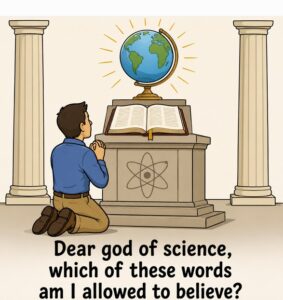 For example, most of the church is so convinced that the claims of theoretical astrophysics are unassailable that we voluntarily alter how we interpret Genesis Chapter One and other related texts so that they no longer say what the authors intended, what earlier believers accepted, and what God meant. We have decided that sometimes God does not really mean what he says, which is an outright lie. Are we really smarter than God? Has so called science given us more understanding than biblical authors received from the Holy Spirit? Are we willing to accept the authority of men over the authority of the Bible? Apparently, the answer is yes we are.
It is time for the church to repent of this idolatry and return to one of the core values of the Reformation – sola scriptura.
Substituting a False Text
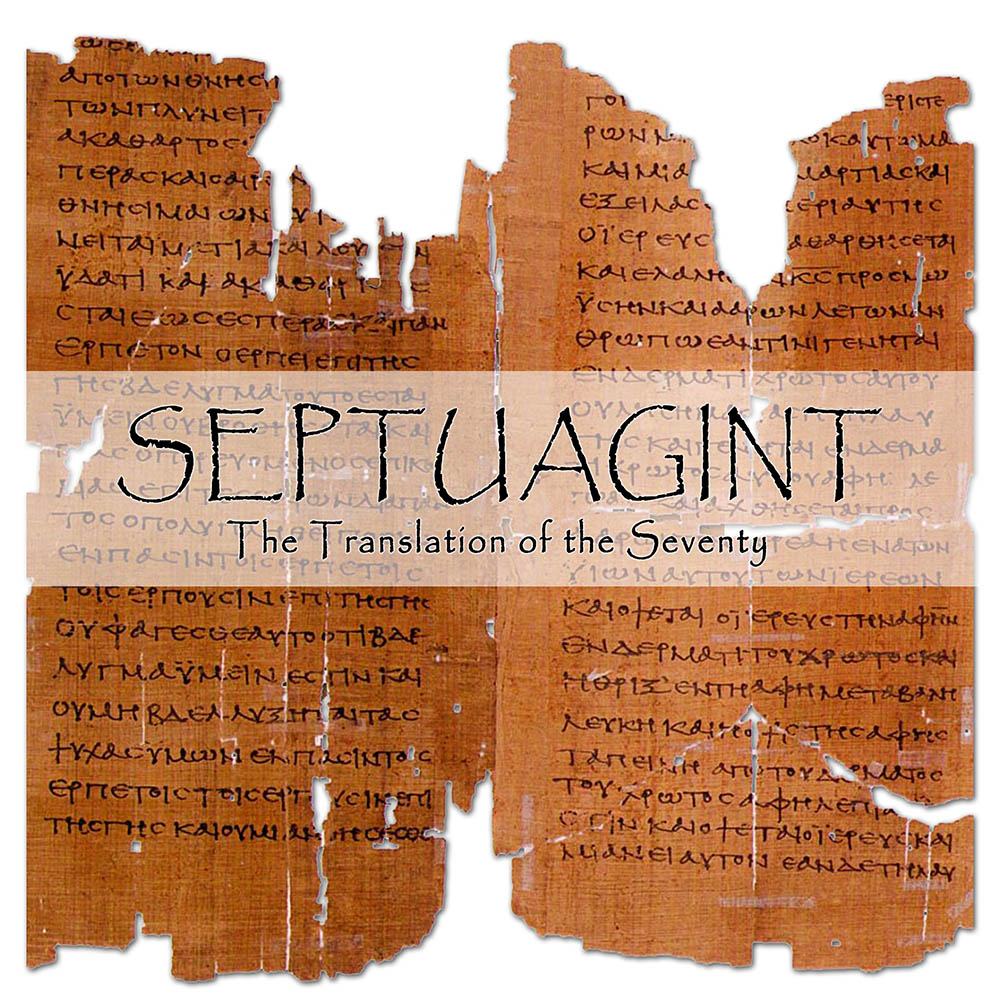
The MT blinds people to the beautiful way the Old Testament points to Christ and the New Covenant, which the LXX preserves. This cannot have been an accident.
The False Theology of Dispensationalism
In a nutshell, the false theology of Dispensationalism, concocted by John Nelson Darby and Cyrus Scofield in the 1800s, corrupts the New Covenant and robs us of properly understanding the preeminence of Christ and the importance of the church by assigning to Israel what belongs to our Lord and his bride. I have written about five distinct ways that Dispensationalism opposes the New Covenant. If you wish to read more on this topic, click here to access more articles that I have written.
Because a large part of the church has believed Dispensationalism’s lies, we find ourselves actively supporting a nation that can only be described as “anti-Christ.”
We have believed that God has two plans of salvation and two chosen people. We have not believed Christ’s words when he said that the kingdom would be taken from the Jews and given to another. (Matthew 21:43) Instead, we believe Cyrus Scofield, a proven fraud. We have believed that God intends to restore an earthly kingdom to a people that adamantly denies Christ’s lordship. We have politically and militarily supported a nation that is trying to take by force what belongs to Christ. He is the “seed” of Abraham to whom belong all the promises.
This blindness has come upon a large part of the church because we have esteemed the words of men above the scriptures.
Conclusion
God’s truth is one of our most effective weapons. It is the “belt” that holds everything else in place. God’s Word is called the sword of the Spirit. Jesus is the personification of Truth. It is no wonder, then, that Satan attacks God’s Word in order to blind us to truth, stop us from hearing God’s voice, and to harden our hearts against the Lord. He is attempting to lead us into destruction by systematically striking at the very foundations of truth.