Finding Significance

Most everyone has a deep longing to find significance in some way; yet, most of us live in relative obscurity and impact few people. Are we supposed to focus on being significant to a small group of people, such as our family and close friends, or should we hope for something more? 

If we were given the choice between preaching to a thousand people or making a disciple of one, which would we choose? Few of us would be comfortable being that preacher, but most of us who follow Christ, hopefully, can see ourselves taking on a single disciple. In the Book of Acts, the Holy Spirit recognized that Barnabas was significant enough to mention several times. His name means encourager, which was his main ministry. He came alongside two men in his his lifetime who were operating in relative obscurity. One was Paul and the other was John Mark. God used Barnabas to help lift those men into major ministries that eclipsed Barnabas’. Paul became perhaps the greatest of all the apostles and the author of much of the New Testament. John Mark wrote one of the gospels and became a faithful co-laborer with both Peter and Paul. We do not know much about anything else Barnabas did in his life. His reward and significance will be forever connected to those he encouraged.

Our own significance probably will be linked to those we help along the way, too.

Barnabas was able to encourage others because he was full of faith. (Acts 11:22-26) 

The ministry and art of encouragement hinges on our having faith and vision for people beyond what they currently have for themselves.

With God’s help, parents can see things in their children and help them develop. Husbands and wives can do the same for each other. This is also true for others whom God brings into our lives. If we can let go of our own quest for significance and focus on investing in others, our joy and significance can be increased. Seeing a disciple eclipse us can be viewed as our crowning achievement.

For the majority of us, personal significance will be derived from how well we love, encourage, and develop those around us.

Parents’ most important disciples are their children. The future of the kingdom of God somewhat rests on the shoulders of the upcoming generations. How well parents invest in their children will have a great impact. God blessed my wife and I with four amazing offspring. They have greatly expanded our impact in the world beyond anything we could have done personally. We fully expect their children and grandchildren to keep the chain going.

What if all of us decided to narrow our focus to disciple and encourage at least one person to fulfill his or her calling in God in the coming year? How would that impact the world? Perhaps, as did Barnabas, we can leave an indelible mark on the world through the people we mentor and encourage.

Click here to see other articles on Keys to a Happier Life.

Escaping the Trap of Caring Too Much about What Others Think

Solomon wrote that the fear of man is a snare (Proverbs 29:25) because caring too much about what others think can trap us into disobeying God and keep us from experiencing everything God wants for us. A wise friend of mine once told me that what others think of him is none of his business. That is easier said than done. Most of us want approval from other people, especially those we consider significant or influential. Most of us dislike receiving their censure. Some of this is healthy, but, on the down side, we can be manipulated if we care too much about what others think. How can we have a proper regard for others without being trapped or limited by their expectations?

Since Jesus said that we should treat others as we wish to be treated, I will focus now on how we can be those who refuse to bind others by placing any ungodly expectations on them. Paul the apostle wrote that he formerly evaluated people based on human judgment, but now he made it his goal to see people from God’s perspective.

So we have stopped evaluating others from a human point of view. At one time we thought of Christ merely from a human point of view. How differently we know him now! 17  This means that anyone who belongs to Christ has become a new person. The old life is gone; a new life has begun! 2 Corinthians 5:16-17 (NLT) 

When we evaluate people improperly we can err in two ways. On one hand, we may be impressed, based on outward appearances or first impressions, regard them in a better light than is warranted. Conversely, if we become too focused on their faults and shortcomings, we may miss their hidden potential from God. We are all under construction, and what God is working in a person is not always readily apparent.

If we want to escape being limited by the expectations of others, we should make it our goal to see and evaluate others from God’s perspective so that we can encourage them to fulfill his expectations for them. 

For example, parents may have high expectations for their children and unintentionally communicate something less than delight when they do not live up to them. Instead of seeing and acknowledging the good God has put in them or wants to develop in them, we may focus on their faults and shortcoming in a way that is devastating. This can be especially challenging if our children or friends are very much unlike us personality wise. 

None of us can be what we are not, and we may never flower into who God made us to be without the proper encouragement and love from significant others in our lives.

It is pointless and self-defeating for us to try to live up to other people’s expectations. Ultimately, the only one person we need to please is the Lord, and he delights in us based on what Jesus did for us.

The only safe way for us to view ourselves is through the lens of who we are in Christ.

If God is pleased with us, nothing else really matters.

Jesus was able to endure the hostility of the Jewish leaders and Roman authorities because he was firmly convinced that his Father loved and delighted in him. He knew this because the Father told him so.

He was still speaking when, behold, a bright cloud overshadowed them, and a voice from the cloud said, “This is my beloved Son, with whom I am well pleased; listen to him.” Matthew 17:5 (ESV) 

Get ready! The next paragraph can change your life.

What was and is true about Jesus is now true about us.

The Father delights in us as much as in Jesus because we are now one with our Lord. We have been given Christ’s right standing with the Father. This is called justification. When we come before Father God, we come clothed in Christ’s righteousness. We are fully accepted in the beloved Son.

All praise to God, the Father of our Lord Jesus Christ, who has blessed us with every spiritual blessing in the heavenly realms because we are united with Christ. 4  Even before he made the world, God loved us and chose us in Christ to be holy and without fault in his eyes. Ephesians 1:3-4 (NLT) 

We cannot afford to allow anyone else but God to define who we are.

None of us are perfect. Most of us have significant weaknesses, but God is still fully pleased with us in Christ. The Holy Spirit is transforming us on a daily basis, but he does so in light of our being already fully acceptable to him because of Christ.

God wants us to do the same for others. Most of us can see pretty well where we and others fall short, and, if we cannot, the Accuser of the Brethren, the devil, constantly reminds us.

The Holy Spirit can help us see ourselves and others through the eyes of faith and God’s love for them.

It is important for us to communicate in words, attitude, and demeanor that we love, appreciate, and delight in who others are in Christ, instead of judging them for what currently falls short. We are called to do this even when we must administer correction and discipline. The choice is ours. Will we revel in God’s delight in us in Christ or be brought down by the disappointment that we have in ourselves or that may be communicated by others? Will we choose to communicate love, acceptance, and delight in our brothers and sisters in the Lord and our natural children, or will we judge them as not measuring up to our standard or expectation?

Until we escape the trap of caring too much about what others think, we will not be free or much help to those we love.

Click here to see other articles on Keys to a Happier Life.

Escape from Religion

If we are not atheists, why would we want to escape from religion? The English word religion derives from Latin religare, which means to bind. Religion binds us to rites and rules in a vain attempt to attain and maintain a right relationship with God. Whether we participate in one of the major religions or are a devotee of materialistic evolution, we are all inherently religious in the sense that we must accept some things as being true without being able to prove them. Whether we believe in God and eternity or that there is no god and we cease to exist when we take our last breath, we must assume what we cannot prove.

The first step to walking free from religion is to understand that God created us to relate to him by faith.

We are not supposed to know everything, but God wants us to know him. He wants us to trust him rather than a religious system.

If you ask the average person how to get into heaven, he or she will likely say that we need to live a good life and try not to hurt anybody. This is a simple form or religion. It accepts by faith that God exists and that he accepts us based on our adhering to a certain set of requirements. In this case, the bar is set pretty low, low enough for most of us to easily get over it.

Religion attempts to give us some standard for measuring the quality of our standing with God.

If we set the standard, we will probably set it low enough for us to meet it. If God sets the standard, as he did with the Law of Moses, the standard is so high that we cannot possibly attain it. This is why God established the New Covenant with his Son. He was the only person able to keep the Law. By doing so, he earned all the blessings that come from doing that. He made it possible for us to relate to God through placing our faith and allegiance in him and his finished work. True Christianity is a faith relationship with God via Christ’s perfection and life. We no longer have to be religious because everything religion tries to accomplish Christ already did for us.

Sadly, Christianity often becomes distorted by legalism. People who do not understand the nature of the New Covenant try to impose keeping the Law on the New Covenant, changing it into something alien and false.

Legalistic Christians communicate the bad news that Jesus’ death and resurrection do not really save us at all. Our Lord only made it possible for us to save ourselves by keeping the rules.

Legalistic Christians either have never been born again, or, if they have, have never understood the New Covenant. Paul wrote that anyone who attempts to overlay the gospel with legalism loses the benefits of the gospel.

And I testify again to every man who receives circumcision, that he is under obligation to keep the whole Law. 4 You have been severed from Christ, you who are seeking to be justified by law; you have fallen from grace. Galatians 5:3–4 (NASB95)

We can try to relate to God through our own efforts to be good enough, or we can believe the good news that Jesus was “good enough” for us.

What Religion Promises to Do for Us

It takes something extremely powerful to break the average person free from the pull of their chosen religion. So, what is it about religion that makes it so attractive?

  • Religion offers to provide a way for us to be “right” with God. Religion supposedly offers a way to make that happen, which seems to be within the grasp of the ordinary person. The older the religious tradition, the greater the authority it may claim to have.
  • Religion offers a way to measure where we stand with God and how we are progressing spiritually.  Religion provides a system of rules and regulations, which give us some feedback. If we keep the rules, we receive positive feedback. We also know where we stand when we break the rules.
  • Religion offers an effective way to connect with God. Churches that are more liturgical offer an ambience, sacraments, and ritual to produce a “holy” atmosphere. Often the more liturgical the setting, the greater the desire of the attendee to have someone else, a priest perhaps, draw near to God for them. Hence, the clergy has a more noticeable and sometimes exalted role as a mediator between the average person and God.

Interestingly, some people use “going to church” as a way to shield themselves from the need to have a personal connection with God.

If they are asked about their faith, they may say, “I go to church,” as a way to deflect. In fact, they have no personal connection with God. It is all done for them by the clergy. Non-liturgical religions have their own versions of what it means to “experience” God, which is usually more subjective and personal. Personal religious experience can also fall under all kinds of rules. Many feel that being quiet in “God’s house” is a rule that must not be broken. Others have certain ways of preaching and acting out what it means when God’s Spirit “falls” on them. For others, dressing in one’s best clothes for meetings is a necessary way to show reverence and holiness. For a great many, the stage must be properly set by a time of praise and worship, in which the “anointing” is felt. Many depend on the feeling they have when “the presence of God” is there. The list goes on. All this is done to try to reach God or to measure how well we have connected with God.

  • Religion offers to be an “authority,” to tell us if we are on the right track or not. The more liturgical churches have all sorts of traditions and hierarchy that provide this service. When the “powers that be” say we are “okay,” it is supposed to give us some confidence. Even non-liturgical churches often embrace strong authority figures, who tell them what to do and not do. For evangelicals, the Bible is the highest authority,  but we often depend on other authorities to tell us how to properly interpret and apply Scripture. Many people like this sort of “fence” around their lives to keep evil out and to keep them from straying outside accepted boundaries.
  • Religion offers stability and structure to give us peace in a very precarious and confusing world. Religion offers some version of this. Old line churches, brimming with history and tradition, offer something historically stable in a world where religious fashions come and go. More recent forms, traditions, denominations, or non-denominations of church offer their own versions of stability and structure, perhaps in the form of size, popularity, old hymns, old translations of the Bible, and that “old time religion.” Some fashionable churches today provide stability to modernists by being relevant and up to date with methodology, technology, fashions, music, and phrasing. Everyone gravitates to his or her own personal “comfort zone.”

Why Religion Failslegalism

Those of us who have seriously pursued a religious way of trying to be right with God have found that it is extremely frustrating and discouraging. The one thing we learn is that we are far more seriously affected by sin than people who are not religious know.

We have to try to be good to find out how bad we are at a very deep level.

It is important for us to understand the reasons why religion can never give us a right relationship with God.

  • Since we are flawed at the core of our being, any system that relies on our performance will fail.
I do not treat the grace of God as meaningless. For if keeping the law could make us right with God, then there was no need for Christ to die. Galatians 2:21 (NLT) 

According to the Bible, there is only one way to be in right standing with God – by fully trusting in Jesus the Messiah and what he accomplished for us on the cross and by his resurrection. Jesus had to die for us because no one is able to keep the requirements of religion, in this case the Law of Moses and all its derivatives.

Rules and regulations only point out to us how unable we are to be good enough.

...For if a law had been given that could give life, then righteousness would indeed be by the law. 22  But the Scripture imprisoned everything under sin, so that the promise by faith in Jesus Christ might be given to those who believe. Galatians 3:21-22 (ESV)  
  • Religion only gives us false readings when it offers to measure how we are progressing in our relationship with God.

If a religion makes its rules too difficult, people will give up, which, by the way, is what we are supposed to do. (Galatians 3:23-24) It is only when we give up on trying to be right with God in our own strength that we can come to Jesus as spiritual paupers (Matthew 5:3) and receive what he offers freely. On the other hand, if religion makes its rules easy enough for most of us to keep them, it gives us a false sense of security. God’s Law is impossible to keep because we are so sinful at the core of our beings.

I think it is important for us to define sin in a very general way at this point, since many might object my previous statement. The Bible indicates that sin, at its root, is a defiance and betrayal of God, our Creator, coupled with a determination to live on our own terms, without reference to God or his commandments.

Simply put, sin is living independently from God.

Using this definition, even the most high minded and noble among us will be classified as sinners, which is the actual way God views us. As the prophet and apostle said, “There is none righteous, no not one.” (Romans 3:10)

Religion is our attempt to recreate Adam’s sin in the garden, when he decided he had to know for himself all about good and evil. Religion tries to create a framework in which we can know if we are good or bad, right with God or not, going to heaven or destined to hell. True Christianity, not the man-made religious variant, is God’s way to restore us to his original intent. He wants us to trust in him alone. That is why Jesus had to die.

When we relate to God by faith in Christ, there are no outward measurements by which we can confirm our right standing with God. The only anchor to which we can hold is the promise of God, and that is enough.

God wants us to be satisfied in Christ’s offering, the eternal Word of God, and in the Holy Spirit’s indwelling presence. That is all we need.

The apostle Paul firmly resisted any and every effort to introduce an outward measurement of righteousness. He knew this door leads down to a deadly legalistic path away from relying upon and experiencing the true grace of God.

For freedom Christ has set us free; stand firm therefore, and do not submit again to a yoke of slavery. 2  Look: I, Paul, say to you that if you accept circumcision, Christ will be of no advantage to you. 3  I testify again to every man who accepts circumcision that he is obligated to keep the whole law. 4  You are severed from Christ, you who would be justified by the law; you have fallen away from grace. 5  For through the Spirit, by faith, we ourselves eagerly wait for the hope of righteousness. 6  For in Christ Jesus neither circumcision nor uncircumcision counts for anything, but only faith working through love. Galatians 5:1-6 (ESV)  
  • Instead of giving us access to God’s presence, religion actually blocks the way.

The New Covenant gives us only one way to connect with God by faith, through his Son, Jesus the Messiah. He is the Way, the Truth, and the Life. No one can come to the Father, except through him. (John 14:6) The vehicle (actually, the Person) through whom this connection is made is the Holy Spirit. The door is wide open to those who thus approach him.

Jesus said:

Woe to you lawyers! For you have taken away the key of knowledge. You did not enter yourselves, and you hindered those who were entering.” Luke 11:52 (ESV)  

The reason many people resort to religion as a means to experience God’s presence is because they have never experienced the reality of the indwelling Holy Spirit.

Once we experience God in this way, it becomes crystal clear that religion has nothing to do with it.

  • Religious authorities almost always will let us down. 

By nature, all man-centered authority, religious or otherwise, tends toward establishing and maintaining power for itself. The religious authorities of Jesus’ day were the chief architects of his crucifixion. Despite their knowledge of the scriptures, their desire to preserve their own position and privilege pushed them to deny Jesus’ claim that he was and is God’s promised Messiah. Because they prioritized maintaining their own authority, they refused to submit to God’s. This leads us to the inescapable conclusion, which was confirmed by Christ himself, that any religious leader that accrues power and prestige to himself or herself should be avoided.

Religious authorities which do not bow the knee to Christ become architects of legalism and propagators of death.

A dispute also arose among them, as to which of them was to be regarded as the greatest. 25  And he said to them, “The kings of the Gentiles exercise lordship over them, and those in authority over them are called benefactors. 26  But not so with you. Rather, let the greatest among you become as the youngest, and the leader as one who serves. Luke 22:24-26 (ESV)  
  • Religion cannot provide the peace and security that only comes directly from God.

Religion will always fail in this regard because religious rules and laws work exactly opposite to their desired intent. Instead of helping us, they excite rebellion in us.

Well then, am I suggesting that the law of God is sinful? Of course not! In fact, it was the law that showed me my sin. I would never have known that coveting is wrong if the law had not said, “You must not covet.” 8  But sin used this command to arouse all kinds of covetous desires within me! If there were no law, sin would not have that power. 9  At one time I lived without understanding the law. But when I learned the command not to covet, for instance, the power of sin came to life, 10  and I died. So I discovered that the law’s commands, which were supposed to bring life, brought spiritual death instead. 11  Sin took advantage of those commands and deceived me; it used the commands to kill me. 12  But still, the law itself is holy, and its commands are holy and right and good. 13  But how can that be? Did the law, which is good, cause my death? Of course not! Sin used what was good to bring about my condemnation to death. So we can see how terrible sin really is. It uses God’s good commands for its own evil purposes. Romans 7:7-13 (NLT)  

Self-effort is always a frustrating exercise in futility.

Those with the strongest wills are the last to be convinced. They may rise to the top of the religious establishment and end up being harsh taskmasters, venting their frustration on others who fail to measure up to the level they have attained.

Faith alone connects us to Jesus, the Prince of Peace, the only One who was able to live in perfect obedience to God. Unless we come to him, we will never know the meaning of true security, peace, and rest. Jesus told his listeners that he would give them rest, if they would come to him. The offer still stands. The rest he spoke of comes from faith in his what he accomplished on the cross. We rest because Jesus already won our salvation. He lived the perfect life, so that we do not have to try and fail.

So there is a special rest still waiting for the people of God. 10  For all who have entered into God’s rest have rested from their labors, just as God did after creating the world. Hebrews 4:9-10 (NLT) 

Escape from Religion

Jesus came to offer something very different. One day he invited his listeners to make their escape from the tyranny of religion by coming to him.

Come to me, all who labor and are heavy laden, and I will give you rest. 29  Take my yoke upon you, and learn from me, for I am gentle and lowly in heart, and you will find rest for your souls. 30  For my yoke is easy, and my burden is light.” Matthew 11:28-30 (ESV)

How does a person leave religion and “come” to Christ in order to find rest? What does it mean to rest in the way Jesus meant it?
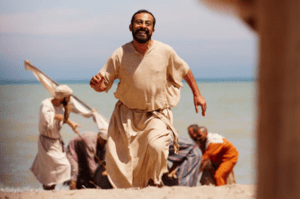
running to Jesus

Faith opens the door into a divinely orchestrated relationship with God. Religion kills, but the Spirit gives life. (2 Cor. 3:6) Religion puts people in bondage, but following Christ sets people free. (Gal.5:1) Being a follower of Christ means we are experiencing a relationship with a real, living person. His indwelling Spirit transforms us internally and helps us to live according to our Lord’s teachings. Jesus invites people to run from religion into the glorious freedom and responsibility of being his followers. (Romans 8:1-2)

Following Christ allows a person to pass through the door of faith into an amazing new world of freedom in the Spirit.

This happens when we are “born again” or “born from above.” Until the Spirit does this in us, we will be merely religious people, who are on the outside looking in, having little or no understanding of the spiritual dynamic of true Christianity.

In this new experience called following Christ, we learn to accept that Christ did for us what we could never do for ourselves.

He paid off our enormous debt to God (because of sin), and gave us a free gift of being in a right relationship with his heavenly Father. We don’t have to earn it or be good enough to maintain it. All Jesus expects us to do is believe in his promises and follow the lead of the Holy Spirit, who internally motivates and empowers us, something totally foreign to religious people.

When we fail, and we surely will, we will not be condemned. (John 5:24 and Romans 8:1) Instead the Spirit helps us to our feet again and encourages us to keep going.

In this brave new world of faith, we have no external measurements of our religious performance because they are no longer needed.

We do not measure ourselves or our progress, since Christ totally fulfilled the righteous requirements of the Law of God for us. (Romans 10:4) Instead we fix our gaze upon the Perfect One and trust him to transform us more and more into his glorious image. Trying to “be good” drops off our radar screen.

Focusing on Jesus changes us from the inside out, often without our even being aware. Relationship replaces religion. We make our escape.

Accepting Responsibilityfaith race

For those of us who have grown weary of the religious treadmill, it’s time to make a break. If we are tired of feeling frustrated, it’s time to jettison false religious hopes and come to the Author of hope, the Messiah, Jesus the Lord. If we want security and peace, we must approach the One who promises that he will give us rest. If we need a permanent break from unforgiving rules and harsh rulers, we are invited to come to the Shepherd who is gentle and lowly of heart and gave his life for us. If we want to be able to enjoy God’s life-giving presence, we can receive the One called “the Resurrection and the Life.” We have the opportunity to invite God’s life-giving Spirit to take charge of our lives. If we do these things, we will end up being happy, fulfilled, and passionate for God, something religion can never give us.

But Christ’s victory on the cross does not end with our escape. Rather, Jesus sets us free so we can fulfill our destiny. Our greatest privilege as born again followers of Christ is to partner with God in the great adventure of being Great Co-Missionaries.

God wants his mission to become our overwhelming purpose in life. Freedom is not for its own sake. It is so we can join God in his glorious enterprise.

Jesus was the Sent One. He sends us as his representatives to a frustrated religious world. We have the message of freedom, the gospel.

Jesus said to them again, “Peace be with you. As the Father has sent me, even so I am sending you.” John 20:21 (ESV) 

Prayer

Jesus, I am weary of religion and I want You. I turn myself over to you. I repent for attempting to earn my way to God, instead of relying on what you did for me. I accept that you died and rose again so that I don’t have to struggle with trying to be “good enough.” Holy Spirit, I ask you to come into my life. Empower me to live for Jesus. Teach me your truth. Make me a loving servant to others and a passionate witness for Jesus. Give me peace and joy. Father God, thank you for accepting me as your child and loving me past comprehension. Amen.

Click here to see more articles like this.

Encountering God’s Kindness

Does the average person have an expectation of encountering God’s kindness? If we believe there is a holy God who will judge everyone’s actions, thoughts, and words, as the Bible teaches, then we realize that we are sinners and should expect to encounter judgment. Often religious people use the fear of punishment to motivate people to walk the “straight and narrow.” Many try to gain or maintain a right relationship with God by striving to be good enough to get a pass at the judgment seat. As a result of such teaching, many see God as a stern disciplinarian who is just waiting for us to do something wrong.

The Bible tells us that the wages of sin is death (Romans 6:23). So, we are not wrong to expect judgment. But the same verse also tells us that the gift of God is eternal life. This sounds like the exact opposite of judgment.

...the wages of sin is death, but the free gift of God is eternal life through Christ Jesus our Lord. Romans 6:23 (NLT) 

Jesus promised his followers that when we put our faith in him, we will never be condemned in judgment.

Truly, truly, I say to you, he who hears My word, and believes Him who sent Me, has eternal life, and does not come into judgment, but has passed out of death into life. John 5:24 (NASB95)

The gospel is an encounter with God’s kindness which depends on Jesus’ having absorbed God’s wrath against sin on our behalf.

For everyone has sinned; we all fall short of God’s glorious standard. 24  Yet God, with undeserved kindness, declares that we are righteous. He did this through Christ Jesus when he freed us from the penalty for our sins. 25  For God presented Jesus as the sacrifice for sin. People are made right with God when they believe that Jesus sacrificed his life, shedding his blood. This sacrifice shows that God was being fair when he held back and did not punish those who sinned in times past, Romans 3:23-25 (NLT) 

Since God is not bound by time but exists outside of it, he sees the entire panorama of history – past present, and future – all at once. It is all the same to him.

What Christ accomplished on the cross happened at a certain point in history but its effect is eternal and covers all of time.

The benefits of his death and resurrection go backward in time to cover those who lived and trusted God before Christ and forward to cover all those who would be born and believe the gospel after him. His sacrifice was accomplished once for all time.

And just as each person is destined to die once and after that comes judgment, 28  so also Christ died once for all time as a sacrifice to take away the sins of many people. He will come again, not to deal with our sins, but to bring salvation to all who are eagerly waiting for him. Hebrews 9:27-28 (NLT) 

This means that even though we deserve an awful encounter with God’s wrath, we now can look forward to a face-to-face meeting with the kindest Person we will ever know who delights to show us mercy.

But God, being rich in mercy, because of His great love with which He loved us, 5 even when we were dead in our transgressions, made us alive together with Christ (by grace you have been saved), 6 and raised us up with Him, and seated us with Him in the heavenly places in Christ Jesus, 7 so that in the ages to come He might show the surpassing riches of His grace in kindness toward us in Christ Jesus. Ephesians 2:4–7 (NASB95)

In John chapter 8, the woman caught in the act of adultery was hauled before our Lord expecting to be stoned to death as required in the Law of Moses. Taking an advance draw from what he would soon accomplish on the cross, he extended mercy to this woman and set her free. When all her accusers departed, Jesus’ words have gone down in history. Then Jesus stood up again and said to the woman, “Where are your accusers? Didn’t even one of them condemn you?” 11  “No, Lord,” she said. And Jesus said, “Neither do I. Go and sin no more.” John 8:10-11 (NLT) This woman expected to encounter God’s wrath at the hands of men but instead encountered his kindness and mercy.

Every single one of us is just like that woman. We have all sinned and deserve to experience God’s wrath. No one is righteous before God outside of Christ. (Romans 3:10) We all have a “fearful expectation of judgment.” (Hebrews 10:27)

In his mercy and kindness, God sent his Son to encounter his holy wrath against sin on our behalf so that we might come face-to-face with God’s smile.

The only way for us to avoid our appointment with judgment and death is to accept God’s generous offer to be reconciled to him by placing our faith and allegiance in Christ. It’s our choice – judgment or kindness. What will it be for you?

Prayer

Heavenly Father, Creator of the universe, I stand before you now well aware that I deserve to encounter your judgment and wrath against my sin. Thank you for sending your Son to die in my place so that I might be forgiven and reconciled to you. Jesus, I receive that amazing gift right now and give my heart and life to you. I acknowledge, Lord, that you died and rose again. I recognize that you are the risen Lord of Lords. Holy Spirit, fill me up and transform me on the inside. Help me to live the rest of my life for Jesus. Thank you for being so kind. Amen.

Click here to see more articles like this.

Dealing with Disappointment

How we deal with disappointment when it comes our way is important. We can let it crush or demoralize us or we can learn from it and use it to motivate us. When we set our hearts on something, and it fails to materialize in the time we expected, it impacts our hearts, where faith lives.

Hope deferred makes the heart sick, But desire fulfilled is a tree of life. Proverbs 13:12 (NASB) 

The New Testament defines hope as the confident expectation that God will keep his promises.

When our expectations are not fulfilled, it is either because we had a false hope that was not based in God or because it is not time for God’s promise to be fulfilled.

The higher our expectations, the greater the possibility of disappointment. Some try to avoid disappointment by lowering expectations. This is not a good idea because our God is the God of hope. (Romans 15:13)

Hope is a sort of stretched out faith. It gives us the ability to maintain the expectation that God will fulfill his promises, no matter how long it may take.

Sometimes we think we have faith because we have pushed the fulfillment of God’s promise into the indefinite future. “Future” faith believes that “one day” God will keep his promises, but not right now. This is the kind of faith Martha had when her brother Lazarus died. When Jesus said her brother will rise again, her faith was limited to the distant unforeseeable future. (John 11:23-27) Little did she realize that her great disappointment was about to evaporate when Jesus brought Lazarus back from the dead! Restricting the fulfillment of God’s promises to the distant future relieves us of exercising faith in the present.

Faith receives “right now” the promises of God, even if the fulfillment is yet to come. Hope cannot exist without the presence of “now” faith.

“Now” faith knows that God has already answered our prayer, and hope is willing to wait for the manifestation of that answer, no matter now long it takes.

Hope maintains an attitude of expectancy during the waiting period. If we have no sense of expectancy, we probably lack faith.

An important way to ward off the debilitating effect of disappointment is to submit our expectations to God.

My soul, wait in silence for God only, For my hope is from Him. 6  He only is my rock and my salvation, My stronghold; I shall not be shaken. 7  On God my salvation and my glory rest; The rock of my strength, my refuge is in God. Psalm 62:5-7 (NASB) 

King David wrote this when he patiently waited for God to keep the promise to make him king. Saul was trying to kill him. Things looked bleak, but David refused to succumb to unbelief and hopelessness or grow hard and bitter. If we place our hopes and dreams in God’s hands, waiting patiently for him to fulfill his promises, we will be able to guard our hearts against the toxic effects of disappointment.

The life of Joseph provides us with one of the best biblical examples of properly handling disappointment. He began life with many advantages. His father loved him, and God favored him. He received a couple of amazing dreams that fueled an expectation of coming greatness. But his brothers’ jealous hatred caused his life to take a sharp turn into crushing disappointment. He was betrayed, sold as a slave, falsely accused, imprisoned, passed over, and forgotten for years. In the midst of those disappointments, he kept his faith in God and refused to throw away his faith in God or to embrace hopelessness, self-pity, or bitterness. Eventually, after much waiting and suffering, God fulfilled those dreams, and Joseph was elevated to the second most powerful position in Egypt’s government and later was restored to his family.

The Psalms provide an interesting insight into his experience.

Until the time came to fulfill his dreams, the LORD tested Joseph’s character. Psalm 105:19 (NLT) 

God allows us to encounter disappointments to test and develop our character.

We can rejoice, too, when we run into problems and trials, for we know that they help us develop endurance. 4  And endurance develops strength of character, and character strengthens our confident hope of salvation. 5  And this hope will not lead to disappointment. For we know how dearly God loves us, because he has given us the Holy Spirit to fill our hearts with his love. Romans 5:3-5 (NLT)  

If we rely on God during difficulties, the Bible says we will not be disappointed. That is good news.

Our disappointments can become appointments with God. If we turn to God in the midst of them, we will discover that his grace will carry us.

God will help us refashion our expectations without sacrificing our faith. Then our expectations will match his plan for our lives. He will use our disappointments to develop Christ-like character in us. We can learn to glorify God in the midst of difficulties rather than slide into unbelief, self-pity, or bitterness. The choice is ours.

Prayer

And this hope will not lead to disappointment. For we know how dearly God loves us, because he has given us the Holy Spirit to fill our hearts with his love. Romans 5:5 (NLT) 

Lord God, please forgive me for becoming disheartened and disappointed when my expectations are unmet. Help me instead to keep my eyes upon you. You promise us that if we trust in you we will never be disappointed. Help me, Holy Spirit, to live by faith in your faithfulness, no matter how things turn out in the short run. Amen.

Click here to see more articles like this.

Are These the Days of Elijah?

A popular Christian song a few years ago was titled “Days of Elijah.” It focused on the coming of the Lord, a worthy and relevant topic. However, if these are indeed the days of Elijah, God is calling us to do what Elijah did – to boldly confront idolatry and challenge people to choose between serving God and the devil.

Baal worship was prevalent in Elijah’s day and still exists, but an even bigger and more ubiquitous idol confronting the church in our time is the false god of science.

In Daniel’s day, king Nebuchadnezzar erected a giant image of himself and commanded all his idol of nebuchadnezzarsubjects to worship it in a grand display of devotion, unity, pomp, and ceremony. Any who refused was condemned to death. We know the story of three brave young men who chose to endure the king’s wrath rather than betray the one true God. Shadrach, Meshach, and Abednego courageously stood against enormous peer pressure and the threat of imminent death.

We are faced with a similar situation today, but now the golden idol is called science. Let us consider how we Christians have prostrated ourselves to this idol, perhaps unwittingly.

I think most of my Christian readers will agree that God’s Word in the Bible is true. If we are evangelicals, Sola Scriptura is a motto from the Reformation with which we are familiar. We believe that the scriptures are infallibly accurate and true as found in the original autographs and are authoritative regarding faith and practice. Jesus taught that God’s Word cannot be broken. (John 10:35)

What the Bible says should not be contradicted or changed. It stands against all competitors claiming to be the truth. 

Jesus condemned the Pharisees for altering the Word of God to suit their purposes.

He was also saying to them, “You are experts at setting aside the commandment of God in order to keep your tradition. Mark 7:9 (NASB95)

Altering the clear meaning of God’s Word to make it compatible with an external version of truth is a favorite trick of religious people who do not take God’s words seriously. Here Jesus made it plain that changing the meaning of a text is the equivalent of invalidating or rejecting it. 

Whenever we reinterpret God’s Word to make it conform to a tradition or some other standard of truth, even if it is “scientific,” we are in error.

We now call the time when the Old and New Testaments were written as pre-scientific. Science emerged as a false god in the Renaissance when man determined that he is the measure of all things, not God and certainly not the Bible.

Highly esteemed scientists embarked on the scintillating quest of discovering the truths of the universe without being limited by what the Bible says.

This may have seemed like a new idea, but it is as old as humanity. This quest is the same one that Adam and Eve set out on in the garden. They likewise did not want to rely on God for information. They wanted to figure out things for themselves. This desire to gain knowledge without God’s help is rooted in pride and extremely appealing to us. It is the lure of Satan that has taken down multitudes and still deceives the nations, even those who proclaim allegiance to Jesus.

Any time we choose to dismiss the obvious meaning of Scripture in order to accommodate it to the claims of science, we have bowed the knee to a false god.

Here is a relevant example. Genesis Chapter One gives us God’s explanation of how he created the heavens and earth. In this section of the Bible we are told the sequence of creation and how long it took. The authors of the Bible believed this to be literally true, and God’s people thought the same for millennia. But when Renaissance scientists proclaimed that the Bible is not true after all, a gradual transition began to occur. Heliocentrism met with strong resistance at first from such notables as Luther and Calvin, but over time, as these defenders of orthodoxy died out and as the new theories were taught to the young, this new way of viewing the universe ascended to being considered true, not just a theory. This put the church into a crisis of faith.

Would God’s people hold to the traditional and obvious meaning of Genesis Chapter One, or would we reinterpret those verses to accommodate to a new standard of truth called science. I think you know the answer.

For the last five hundred years or so the Word of God regarding the creation and shape of the earth and heavens has been held captive by the false god of science. In a cunning stroke of evil genius, Satan attacked the foundation of truth, the Scriptures, by undermining our faith in the very first chapter.

It is no wonder that so many have chosen to reject God altogether because he cannot be found in the Big Bang universe. Only the true version of things gives glory to God.

The heavens declare the glory of God; And the firmament shows His handiwork. Psalm 19:1 (NKJV)

Today God is peeling back layers of deception and restoring people’s confidence that Genesis Chapter One is literally true and accurate.

Today people are standing up to the monolithic giant in the land called science, just as Elijah stood against the prophets of Baal.

It takes courage to make a stand for God’s truth just as it did for Shadrach, Meshach, and Abednego. May God make us bold to proclaim our loyalty both to Jesus and his words, which includes Genesis Chapter One!

For whoever is ashamed of Me and My words, the Son of Man will be ashamed of him when He comes in His glory, and the glory of the Father and of the holy angels. Luke 9:26 (NASB95)

Can I Know If I Am Doing Enough for God?

Can we know if we are going enough to please God? An earmark of legalism is judging others by some internal or external standard. All of us are prone to judge others and ourselves. It’s part of the human condition to imagine we are capable of doing this.

One of the secrets of true Christianity is that our Lord liberated us from being subject to judgments coming from anyone but him, and he promised never to condemn us. (John 5:24)

Here is what Paul wrote.

Who are you to condemn someone else’s servants? They are responsible to the Lord, so let him judge whether they are right or wrong. And with the Lord’s help, they will do what is right and will receive his approval. Romans 14:4 (NLT)

Paul said in another place that he did not even judge himself. He left all judgment to the Lord, the only one who sees perfectly into people’s hearts and motivations. (1 Corinthians 4:3)

At times we may get the idea that other people must measure up to the standard we set for them.

One definition of a legalist is someone who demands everyone else come up to the level of righteous behavior he thinks he has attained. We like to do that to others, but hate it when it is done to us. Hypocritically, we tend to judge ourselves by our good intentions and others by their words and actions. The problem with doing this is that it causes judgment to rebound to us. We reap what we sow.

Therefore you have no excuse, everyone of you who passes judgment, for in that which you judge another, you condemn yourself; for you who judge practice the same things. Romans 2:1 (NASB95)

Leaders may be especially prone to judging those they oversee. Even a leader as great as Moses failed in this area. Let’s not forget how reluctant he was to take on the leadership of Israel to guide them out of Egypt. He came up with all kinds of excuses, but finally he agreed. He should have been merciful to his people’s reluctance to follow God, but he became very critical of them toward the end of their desert wanderings, which cost him the privilege of being able to lead them into the promised land. (Numbers 20:10-13)

When leaders judge the the people under their care, they stop properly representing God and start speak for the accuser of the brethren. 

Is it even possible to measure our own or others’ devotion to Christ? What standard should we use? A great diagnostic question I sometimes ask is, “Are you doing enough for the Lord?” The answer will tell a lot about how someone understands what Christ has done for them. A friend of mine recently told me that he believed he had done enough that day. Naturally I asked him how did he know? He gave the perfect answer: he felt he had done what the Holy Spirit showed him to do that day.

The Bible says that Jesus fulfilled all the requirements of the Law on our behalf. (Romans 10:4)

He measured up perfectly to God’s holy standard so that we do not have to do so. Therefore, we begin each day with an A+ on our spiritual report card. Now all that remains is for us to follow the leading of the Spirit, not somehow to measure up, but simply for the joy of it.

Have you ever noticed that people who really enjoy their work usually go above and beyond what is required or expected? I have a friend who loves woodworking. He builds furniture for people and charges far less than what one would expect considering his labor. He does it because he loves his work. He refuses to cut corners even though he isn’t getting a proper return on his investment of time and effort. He produces a very fine product because he loves and is good at what he does.

I spend quite of bit of time writing. For some people, writing is difficult and unpleasant; so, they avoid it. For me writing comes naturally and is satisfying, even though it is a lot of work. For that reason, I am happy to spend whatever time it takes to write and rewrite an article like this one because it brings me satisfaction and joy and hopefully will help someone and glorify the Lord.

Paul wrote that his labor in the gospel was done because of love.

For Christ's love compels us, because we are convinced that one died for all, and therefore all died. 15  And he died for all, that those who live should no longer live for themselves but for him who died for them and was raised again. 2 Corinthians 5:14-15 (NIV) 

Certainly not everything Paul did was fun, but he loved what he did because he loved his Lord and deeply appreciated all that Jesus did for him. Paul said that he worked harder than his contemporaries, but gave all the credit to God.

But whatever I am now, it is all because God poured out his special favor on me—and not without results. For I have worked harder than any of the other apostles; yet it was not I but God who was working through me by his grace. 1 Corinthians 15:10 (NLT) 

Jesus also did his work for the joy of it. The author of the Letter to the Hebrews wrote:

We do this by keeping our eyes on Jesus, the champion who initiates and perfects our faith. Because of the joy awaiting him, he endured the cross, disregarding its shame. Now he is seated in the place of honor beside God’s throne. Hebrews 12:2 (NLT) 

Someone once said that, if you do what you love, you will never work a day in your life. Paul and Jesus worked very hard doing what they loved.

Love compels or motivates us to expend themselves for God’s sake and the benefit of others.

I have never met a missionary who did not love missions.

God seldom calls us to go against the grain of how he made us; although, we all have to learn to die to self will.

Some women are tremendous mothers because they absolutely love being a mom. It is certainly not easy work, but love motivates them to be excellent. They take joy in their calling. Some fathers do a great job being a dad because they love their kids and greatly value having that role.

Those who resent what they do rarely go the “extra mile,” and they will certainly not inspire others. However, when someone loves what he does and goes above and beyond what is expected or required, his enthusiasm becomes contagious.

The elder brother of the prodigal son faithfully served his father, but not for the joy of it. His resentment bubbled up when his father blessed his repentant younger brother.

Many of us Christians, sadly, are like the elder brother. We resent those in the church who do not seem to work as hard as we think we do because we are serving for the wrong reason.

When love motivates us, we will joyfully serve whether anyone else does. We realize that we too are by nature reluctant to obey God at times; so, we extend mercy to others who have yet to “see the light.” People generally respond to our tone as much as they do to our words.

If we are joyful in our service, we will more be more likely to inspire others. No one likes to be “guilted” into obedience. God loves a cheerful giver, not someone who obeys merely because they are under duress. (2 Corinthians 9:7)

Expect the best from God and the worst from people, and you will never be disappointed.

Can we know if we are doing enough for the Lord? By now I hope you see that this is the wrong question. First of all, Jesus has done it all for us already. Secondly, how can we even measure our devotion and performance, since only God can see into the heart? We are not even adequate to judge ourselves. Thirdly, what right do we have to make that judgment? Only the Accuser of the Brethren (Revelation 12:10) enjoys pointing out our deficiencies. God reserves to himself that responsibility, and the Bible says he is our advocate, not someone who condemns us. (Romans 8:33-34)

Perhaps a better question might be what is it that we truly love to do, and how can we translate that into blessing others and glorifying the Lord?

Do we love talking to people? How then can the Holy Spirit help us to nudge conversations toward the Lord? Do we love to be hospitable? How can that be used to make people feel welcome and loved? Do we love to fix things? How can we serve our neighbor in that way? Do we love to cook? How can we bless people with that gift and skill? Do we love to play golf? How can we use that sport to talk to people about Christ? Do we love to work with wood? How can we use that skill  to make connections with people and bless them? Do we love to kayak, camp, hunt, fish, sew, clean, do yard work… The list can go on and on.

If we can serve others doing what we love to do, we will never resent or avoid it.

I knew someone years ago who regularly boldly shared the gospel in a public setting, who told me that seeing results was not his concern, only being obedient. His stern demeanor did not communicate love. In other words, all he seemed to care about was his own obedience to God, not the eternal state of those to whom he preached. I am fairly certain that he saw little fruit because people quickly pick up on whether or not we love them. If we don’t care if someone comes to the Lord, why on earth should we bother except for the fear that God may judge us for our inactivity? How can we properly represent Christ who laid down his life for his enemies, if we share the gospel merely out of a sense of duty? Our attitude and demeanor are an advertisement for what we say. We should never share the good news about Jesus merely to check off another task in the hope of eventually “doing enough.” We should share because we are excited about the Lord and want more people to know and love him as we do.

People will likely be more open to our message when they observe compassion and enthusiasm in us.

Some of us pray only because we hope to get something from God for our efforts, and the Lord understands that. Sometimes our aspirations are quite noble and sometimes selfish. Some devote themselves to prayer in the hope that God will pour out revival because we earned it. But shouldn’t our motivation be something even higher? What if we prayed simply because we love to be in God’s presence and talk to him? How would we like it if our spouse or child only came to us when they wanted ask us for something, but did not care to spend time with us otherwise? Isn’t that how many of us treat prayer?

It all boils down to our motivation, which only God can judge, by the way.

God’s motivation in all of this is crystal clear. He loves us past comprehension, wants to be with us, and wants the absolute best for us. King David discovered the joy of being in God’s presence. Here is a psalm he wrote, perhaps as a young man.

You make known to me the path of life; in your presence there is fullness of joy; at your right hand are pleasures forevermore. Psalm 16:11 (ESV) 

These are not the words of a resentful, dutiful servant. David did not worship God when he tended sheep in the wilderness because someone made him do it. He did it for the sheer joy of being with God. Worshiping and spending time with God seemed to be one of his chief desires, at least when he was at his best. His love for God propelled him into worship, psalm writing, fighting God’s enemies, and, later, government service. David was exceptional at most everything he did because, I believe, his love for God motivated him to give his best. As was the case with Paul, he no longer lived for himself, but for God, except for a few terrible lapses. No one is perfect, not even the most dutiful legalist, and certainly not worshipers of God. We all need mercy every day.

We should not beat ourselves up when we fail. Since Jesus has already made us measure up, that is not a concern. The only thing we really should focus on is growing in our love for God and others. When love motivates us, we just naturally go the extra mile.

So instead of asking, “are we doing enough,” perhaps we should first thank Jesus for doing enough on our behalf and then ask him to work in us so that we love him and other people more.

Perhaps we should follow David’s example and spend quality time with the Lord in the Word, worship, and prayer. Then perhaps we will find ourselves expending ourselves out of love for God and others, and no one will be able to rate our performance, because our love cannot be measured, except by God, the one whom we serve and who loves us past comprehension.

Click here to see more articles like this.

Can We Know if We Are Going to Heaven?

Over the years I have asked many people this important question: “If you were to die today, would you go to heaven?” The usual answers are: “I hope so,” “No,” and “Yes.” My follow-up question is, “Why do you think that?” Some believe they will go to heaven because they think that they are basically good people. Others say that they will get to heaven because they go to church or try not to hurt anyone. Those who have heard the gospel and understand it reply that they have put their faith in Jesus to save them. Some of those who say that they have believed in Jesus are not sure whether they will go to heaven. An entirely different group is convinced they are going to hell and do not seem to care.

Does God want us to be sure of our eternal destiny in heaven, or does he choose hold us in suspense until we die in order to motivate us to stay on the “straight and narrow?”

This prompts another question: “Can we be truly saved and then lose that salvation, or are we permanently saved once we are born again?” If the former is true, then we cannot know for sure if we are going to heaven until our last breath is exhaled, even if we are believers. If the latter is correct, then perhaps our eternal destiny can be known while we still live and breathe here on earth. 

In his first letter,  the apostle John wrote that we can know for sure.

I have written this to you who believe in the name of the Son of God, so that you may know you have eternal life. 1 John 5:13 (NLT) 

This verse hinges on the meaning of two words: believe and eternal.

Faith consists of at least four components: revelation, trust, allegiance, and obedience.

It is not mere mental assent to a set of doctrinal facts, as some suppose. James wrote that even demons believe in Jesus, but they have never trusted him, declared allegiance to him as Lord, or obeyed him. (James 2:19)

Faith is the result of an interaction in our hearts between the Word of God and the Holy Spirit that ignites revelation.

The words of God carry within them an explosive capability to release revelation and faith. The Spirit of God takes the Word of God and “sparks” a divine internal “combustion,” which results in our being able to “hear” or truly understand, receive, believe, and respond to what God says or what is written in the Bible. Some people call this revelation the “rhema” or personal word of God, as differentiated from the eternal, written or logos word of God. Please understand that people can read or hear what is written in the Bible without any attendant revelation or faith.

Unless the Spirit of God is at work in a heart that is open and receptive, God’s words fall on deaf ears.

For the hearts of these people are hardened, and their ears cannot hear, and they have closed their eyes— so their eyes cannot see, and their ears cannot hear, and their hearts cannot understand, and they cannot turn to me and let me heal them.’ Matthew 13:15 (NLT) 

When an open heart truly hears and believes God’s Word, a trust in God forms. This is because we begin to see or understand who God really is and what he has done for us and will do. Love for and loyalty to God follows, along with a desire to obey and please him.

Real faith always produces obedience, even if it takes a while to develop.

Faith without loyalty and obedience to God is not real. Probably it is mere mental assent or an emotional response without any root. Jesus spoke of this in his parable of the sower and the seed.

The seeds on the rocky soil represent those who hear the message and receive it with joy. But since they don’t have deep roots, they believe for a while, then they fall away when they face temptation. Luke 8:13 (NLT) 

Faith comes from or results in our knowing God, the source of life.

This is eternal life, that they may know You, the only true God, and Jesus Christ whom You have sent. John 17:3 (NASB) 

It is one thing to know about God and quite another to truly know him.

It is akin to how a married couple comes to know one another after making their vows. Sex in marriage results in a deeper “knowing” that establishes a strong emotional and spiritual bond and, when everything is working properly, produces children or “fruit.” Our knowing God is in the spirit as a result of our spirits and God’s becoming one (1Cor. 6:17).

Knowing God produces what is called the fruit of the spirit, God’s character reflected in our lives. New people will be birthed into the kingdom of God as a result of our testimony, which is another type of fruit.

Likewise, my brothers, you also have died to the law through the body of Christ, so that you may belong to another, to him who has been raised from the dead, in order that we may bear fruit for God. Romans 7:4 (ESV) 

When the Holy Spirit comes into our lives when we believe, he bears witness with our spirits that we are God’s children. 

For you did not receive the spirit of slavery to fall back into fear, but you have received the Spirit of adoption as sons, by whom we cry, “Abba! Father!” 16  The Spirit himself bears witness with our spirit that we are children of God, Romans 8:15-16 (ESV)

The result of the Holy Spirit’s internal witness is that we know we belong to God and are his beloved children.

Now that we have explored the meaning of “believe,” let’s think about the word “eternal”. Its meaning is clear based on other teachings of Jesus. On many occasions, he taught his followers that those who believe in him will never die.

Truly, truly, I say to you, he who hears My word, and believes Him who sent Me, has eternal life, and does not come into judgment, but has passed out of death into life. John 5:24 (NASB) 

Simply put, having eternal life means we will never die because we already have passed from death to life.

Those who truly believe in Jesus will never be condemned for our sins because he already took our condemnation upon himself at the cross. A debt never has to be paid twice. As a result, the sentence of death against us because of our sin has been paid, allowing us to cross over from the realm of death into eternal life.

Those who truly believe in Jesus already have eternal life and will never die.

Jesus told her, “I am the resurrection and the life. Anyone who believes in me will live, even after dying. 26  Everyone who lives in me and believes in me will never ever die. Do you believe this, Martha?” John 11:25-26 (NLT) 

Even though our pre-resurrection bodies will eventually cease to function, since they are still part of the old order of things because of Adam’s sin, the spirit within us, the new creation (2 Cor. 5:17) which has already been born into God’s kingdom, will never die. It cannot because it is united with God’s Spirit. (1 Corinthians 6:17) It has passed from death to life and from the kingdom of darkness into the kingdom of God’s Son. (Colossians 1:13) We are now seated with Christ at God’s right hand. (Colossians 3:1-4) He is in us, and we are in him. (John 14:20) As children of God, we are part of the family of God forever. (John 8:35)

The Holy Spirit is God’s seal of ownership that he puts on all who belong to him.

And now you Gentiles have also heard the truth, the Good News that God saves you. And when you believed in Christ, he identified you as his own by giving you the Holy Spirit, whom he promised long ago. 14  The Spirit is God’s guarantee that he will give us the inheritance he promised and that he has purchased us to be his own people. He did this so we would praise and glorify him. Ephesians 1:13-14 (NLT) 

God knows those who belong to him.

My sheep listen to my voice; I know them, and they follow me. 28  I give them eternal life, and they will never perish. No one can snatch them away from me, 29  for my Father has given them to me, and he is more powerful than anyone else. No one can snatch them from the Father’s hand. 30  The Father and I are one.” John 10:27-30 (NLT) 

So do the angels and the demons.

Not only does the Spirit mark or seal us as God’s own possession, he is a type of down payment or earnest money guaranteeing that God will finish what he began in our lives.

And I am certain that God, who began the good work within you, will continue his work until it is finally finished on the day when Christ Jesus returns. Philippians 1:6 (NLT) 

When people back out of a contract, any earnest money is forfeited. Would God forfeit his Holy Spirit by backing out of his promise to complete the salvation in us that he began? Of course not! Neither would God renege on his promise, period.

In the same way God, desiring even more to show to the heirs of the promise the unchangeableness of His purpose, interposed with an oath, 18 so that by two unchangeable things in which it is impossible for God to lie, we who have taken refuge would have strong encouragement to take hold of the hope set before us. 19 This hope we have as an anchor of the soul, a hope both sure and steadfast and one which enters within the veil, 20 where Jesus has entered as a forerunner for us, having become a high priest forever according to the order of Melchizedek. Hebrews 6:17–20 (NASB95)

When we are born again, we receive the first installment of our “great salvation.” This part of our salvation is called justification and is based on Christ’s already completed work on the cross. After being born again, we begin a daily process of being transformed so that our thoughts, words, and actions come into greater conformity with what is already true in our spirits. Some call this sanctification. This process requires our drawing upon fresh grace or help from God moment to moment. The last installment of our salvation will take place at the resurrection, when our Adamic bodies will be transformed into new spiritual bodies that will never die.

The Scriptures tell us, “The first man, Adam, became a living person.” But the last Adam—that is, Christ—is a life-giving Spirit. 46  What comes first is the natural body, then the spiritual body comes later. 47  Adam, the first man, was made from the dust of the earth, while Christ, the second man, came from heaven. 48  Earthly people are like the earthly man, and heavenly people are like the heavenly man. 49  Just as we are now like the earthly man, we will someday be like the heavenly man. 1 Corinthians 15:45-49 (NLT) 

Ephesians 1:14 tells us that the Holy Spirit is given as a pledge to those who were purchased by God and who now belong to him to give us strong assurance of our eternal destiny in heaven.

God purchased us by using the precious blood of his Son. We no longer belong to ourselves.

Don’t you realize that your body is the temple of the Holy Spirit, who lives in you and was given to you by God? You do not belong to yourself, 20 for God bought you with a high price. So you must honor God with your body. 1 Corinthians 6:19-20 (NLT) 

To conclude, our wonderful salvation consists of three parts that work together to convince us that we indeed have been forgiven, saved, given eternal life, and belong to God.

For there are three that testify: 8  the Spirit and the water and the blood; and these three agree... 10  Whoever believes in the Son of God has the testimony in himself... 1 John 5:7,10 (ESV)

God the Father chose us from before the foundation of the world to be his children. (Ephesians 1:4-5) He sent his Son Jesus to die for our sins, shedding his precious blood in the process, which was the price paid to satisfy the wrath of God against our sins, provide forgiveness, allow Christ’s righteousness to be given to us in a great exchange, reconcile us to himself, give us eternal life, and make us his children.

The water refers to our declaration of faith and allegiance to Jesus our Lord which takes place at water baptism. God declared his love for us by sending his Son. (John 3:16) We declare our love for him by confessing him before men. This confession agrees with what God did for us through the blood of his Son.

The Spirit is God’s seal of ownership in our lives which inwardly testifies that we belong to him.

He is the source of life and all blessings we have in Christ. He lives Christ’s life through us, something we could never accomplish on our own.

When we put our faith in Christ and his finished work, confess him before men, and receive the Spirit, these three things work together to convince us that we belong to God, have eternal life, and that God will indeed raise us from the dead as he promised.

All praise to God, the Father of our Lord Jesus Christ. It is by his great mercy that we have been born again, because God raised Jesus Christ from the dead. Now we live with great expectation, 4  and we have a priceless inheritance—an inheritance that is kept in heaven for you, pure and undefiled, beyond the reach of change and decay. 5  And through your faith, God is protecting you by his power until you receive this salvation, which is ready to be revealed on the last day for all to see. 1 Peter 1:3-5 (NLT) 

Yes, we indeed can know that we are going to heaven.

Click here to see more articles like this.

An Unexpected Key to Joy

This article is about an unexpected key to the joy that God desires to share with us. He designed creation to maximize his and our joy while simultaneously bringing honor to him.

Our experience of God’s joy depends to a great extent on how well we participate in a process the Bible calls transformation.

Paul encourages us to allow the Spirit to transform us by changing how we think and allowing him to renew our minds, instead of allowing the world system to conform us to its deadly pattern.

And do not be conformed to this world, but be transformed by the renewing of your mind, so that you may prove what the will of God is, that which is good and acceptable and perfect. Romans 12:2 (NASB95)

The etymological definition of repentance (Greek: metanoeo) is to change our minds or how we think about things.

The devil’s chief weapon against us is deception. When Adam and Eve believed his lie in the garden, their disloyalty to God plunged humanity into darkness and the death that comes from separation from God. The first lie they believed was that God is not good or trustworthy and we are better off going it alone. Every deception since then is built on this foundation.

Everyone is born into this world with a default proclivity to think sinfully and want to live independently from God.

The part of us derived from Adam is called the “flesh” and habitually takes us down thought roads that lead to sin and death.

For the mind set on the flesh is death, but the mind set on the Spirit is life and peace, 7 because the mind set on the flesh is hostile toward God; for it does not subject itself to the law of God, for it is not even able to do so, 8 and those who are in the flesh cannot please God. Romans 8:6–8 (NASB95)

Satan promises great things, but it all a lie. All he has to give are the temporary pleasures that sometimes accompany our selfish pursuits, but always end in death.

There is only one way to escape the deception death trap. It’s called the new birth.

The corrupted part of us,called the “old man,” has to die, through being crucified with Christ, so that the “new man” can be resurrected in Christ. (Romans 6:5-9)

Since you have heard about Jesus and have learned the truth that comes from him, 22 throw off your old sinful nature and your former way of life, which is corrupted by lust and deception. 23 Instead, let the Spirit renew your thoughts and attitudes. 24 Put on your new nature, created to be like God—truly righteous and holy. Ephesians 4:21–24 (NLT)

The decision Adam and Eve made to believe Satan’s lie and suppress God’s truth impacted everything, including our thinking ability. Since then, apart from the intervention of God’s Spirit, we are unable to think correctly and adequately discern truth.

It takes a supernatural breakthrough of revelation of the truth about God and his Word to create faith in the human heart.

And He was saying, “For this reason I have said to you, that no one can come to Me unless it has been granted him from the Father.” John 6:65 (NASB95)

When we first begin to grasp who Jesus is and what he did for us, we are able to trust in him and are born again. This new birth causes the spirit to come alive again as we are united with God’s Spirit. His life invades us giving us the ability to think again according to truth.

But a natural man does not accept the things of the Spirit of God, for they are foolishness to him; and he cannot understand them, because they are spiritually appraised. 15 But he who is spiritual appraises all things, yet he himself is appraised by no one. 16 For WHO HAS KNOWN THE MIND OF THE LORD, THAT HE WILL INSTRUCT HIM? But we have the mind of Christ. 1 Corinthians 2:14–16 (NASB95)

This is when our participation in the process of transformation begins. We have been given the responsibility to renew our minds according to God’s truth.

The Bible says we are spiritual beings who have bodies. God breathed his spirit into the body he formed from the dust of the earth and Adam came alive. The combination of spirit and body gave rise to the soul, our mind, will, and emotions.(Genesis 2:7) The mind, therefore, can exist outside the body, which is what happens after death before the resurrection.

Yes, only God knows whether I was in my body or outside my body. But I do know 4 that I was caught up to paradise and heard things so astounding that they cannot be expressed in words, things no human is allowed to tell. 2 Corinthians 12:3–4 (NLT)

The mind has a spiritual component and is not limited to the physical brain; although there is a connection. The brain, therefore, is servant to the mind.

God made the human brain with an amazing capacity to renew itself.

As we think, our neurons weave themselves together in new pathways. If we habitually think a certain way, those thoughts become physically ingrained in our neurons. How we think will impact our lives going forward. We can think upon that which is from God and renew our minds for good, or we can give ourselves over to thinking on what is sinful and end up with what the Bible calls a reprobate mind, a very dangerous condition.

Since they thought it foolish to acknowledge God, he abandoned them to their foolish thinking and let them do things that should never be done. 29 Their lives became full of every kind of wickedness, sin, greed, hate, envy, murder, quarreling, deception, malicious behavior, and gossip. 30 They are backstabbers, haters of God, insolent, proud, and boastful. They invent new ways of sinning, and they disobey their parents. 31 They refuse to understand, break their promises, are heartless, and have no mercy. 32 They know God’s justice requires that those who do these things deserve to die, yet they do them anyway. Worse yet, they encourage others to do them, too. Romans 1:28–32 (NLT)

As believers, we can choose to take advantage of our God-given ability to renew our minds and increase our joy by engaging in simple life-giving spiritual habits: worship, prayer (especially in tongues), and reading and meditating on God’s Word.

Be anxious for nothing, but in everything by prayer and supplication with thanksgiving let your requests be made known to God. 7 And the peace of God, which surpasses all comprehension, will guard your hearts and your minds in Christ Jesus. 8 Finally, brethren, whatever is true, whatever is honorable, whatever is right, whatever is pure, whatever is lovely, whatever is of good repute, if there is any excellence and if anything worthy of praise, dwell on these things. 9 The things you have learned and received and heard and seen in me, practice these things, and the God of peace will be with you. Philippians 4:6–9 (NASB95)

As we regularly set aside time to engage in these godly pursuits, we actively renew our minds by training our brains to think in godly patterns.This is not the power of positive thinking, as if we changed ourselves. As we focus on the Lord in worship, prayer, and meditation on the Scriptures, the Holy Spirit works within us. We are never left to our own devices. We do our part, and he does his. Otherwise, it would be just one more religious activity. 

We should sense God’s pleasure and joy as we learn to spend more and more time in his presence where there is fullness of joy.

King David wrote these amazing words.

You will make known to me the path of life; In Your presence is fullness of joy; In Your right hand there are pleasures forever. Psalm 16:11 (NASB95)

According to Dr. Caroline Leaf’s research, it takes three sets of 21 days (63 days in a row) to thoroughly ingrain a new habit and renew the mind. After that, it is a daily exercise of keeping our focus on God.

Satan has a mammoth operation to saturate our minds with his lies using all sorts of media and government-run schools. Children especially are bombarded with everything from evolution to pornography to transgenderism, in an attempt to produce in them a godless and perverted worldview. The power of brainwashing is real. Those who have submitted to the world’s molding process often cannot recognize truth when they stare it in the face.

Those who cooperate with the Spirit in the transformation process will experience amazing freedom.

They will begin to think more in line with God’s truth. The Spirit will reveal more and more truth about our amazing God, his love, faithfulness, and the creation. As our minds and hearts gain greater understanding of God’s amazing love, our faith in him will enlarge and our joy will overflow.

When I think of all this, I fall to my knees and pray to the Father, 15 the Creator of everything in heaven and on earth. 16 I pray that from his glorious, unlimited resources he will empower you with inner strength through his Spirit. 17 Then Christ will make his home in your hearts as you trust in him. Your roots will grow down into God’s love and keep you strong. 18 And may you have the power to understand, as all God’s people should, how wide, how long, how high, and how deep his love is. 19 May you experience the love of Christ, though it is too great to understand fully. Then you will be made complete with all the fullness of life and power that comes from God. Ephesians 3:14–19 (NLT)

The renewing of the mind is a huge and perhaps unexpected key to experiencing ever increasing joy. Try it. Give it a good try. I think that you will like it.

Click here to see more articles like this.

Why I Am No Longer a Roman Catholic: Part 12 – Conclusion

My conclusion of this series on why I am no longer a Roman Catholic will attempt to summarize the key points. My motivation for writing is witnessing of late some people I know expressing interest in the teachings of the Roman Catholic Church. Understanding the errors of RCC theology, I find this to be puzzling and disturbing.

I can only conclude that some who grew up in the evangelical church do not understand how far the RCC has digressed from biblical truth.

My purpose in writing this series is to make plain these errors and compare them to what the Bible actually teaches. The more I wrote, the more I realized needed to be addressed. The twelve articles in this series certainly do not cover everything, but they do address what I consider to be the core issues.

I began this series with my own testimony, describing how God pursued and revealed Christ to me in a way that transformed me from being a skeptic to a believer. My spiritual rebirth changed everything in my life. From that time forward, my focus was on serving the Lord. My wife Martha and I have been in some form of ministry for most of our adult lives.

When all this took place on the Duke University campus in 1971, I realized that it had absolutely nothing to do with the RCC or any other church organization. I was told the real gospel for the first time by my wife-to-be, decided Jesus was worth a try, and invited him, if he were real, to come into my life and reveal himself to me. When our Lord actually did this a short time later, it was the most amazing, joyful, and transformative thing that ever happened to me. The RCC never even told me that I could know God in this way or have any assurance at all of salvation. They only focused on my relationship with God through the church, not one-on-one.

Instead of preaching the gospel, the RCC puts itself forward as the means to be saved.

My second article illustrates that the RCC is a legalistic treadmill of false doctrine and rules that must be kept in order to work towards heaven, without any real assurance of arriving one day.

The true grace of God provides eternal salvation as a gift purchased by our Lord Jesus when he died on the cross and rose again.

Paul warned us that anyone who preaches anything other than the true gospel will be accursed and under God’s judgment.

The third article addressed the RCC’s departure from sticking to the Bible as its source of truth in favor of church tradition and the “magisterium,” or official pronouncements of the Pope when he writes or speaks “ex cathedra,” or “from the chair” of papal authority. Isaiah wrote that unless we follow God’s truth in the Bible, we descend into darkness.

Any person or group who rejects the absolute authority of God’s written word will always veer into error, which is exactly what happened with the RCC.

My fourth article addressed the abominable heresy that Christ is re-sacrificed each time the Mass is offered. This doctrine is opposed to the Bible’s clear teaching that our Lord died “once for all.” This is a clear example of syncretism, the practice of blending two or more religions together, in this case the Old Covenant with the New, producing a hybrid that is not faithful to either. This supposed re-sacrifice of Christ is overseen by a new class of priests not authorized by God. The only person sufficient to conduct the sacrifice of God’s only Son was the Son himself, who is the apostle and high priest of the New Covenant (Hebrews 3:1).

The Mass denigrates Christ’s sacrifice and elevates the church to the sacrilegious position of overseeing Christ’s re-crucifixion.

The fifth article addressed the sinful exaltation and veneration that is given to Mary, Jesus’ mother. The Bible never encourages us to venerate anyone, something that can easily slide into adoration among ignorant people. The false doctrines associated with Mary position her as “Mother of God” and “Queen of Heaven,” which are both non-biblical. In fact, queen of heaven is a title of several pagan goddesses. Shrines have been erected in her honor, and the church is encouraged to pray to her, teaching that she is a mediator between them and Jesus, which is also false.

There is only one mediator, our Lord Jesus, who taught us to pray directly to the Father.

My sixth article addresses the RCC doctrines regarding the saints. Before a person is recognized as a saint, miracles must be proven to come from praying to these persons after they are dead. Nowhere in the Bible are we ever encouraged to pray to the dead. Neither are we supposed to turn to anyone else to mediate on our behalf with God.

The Bible teaches that all believers are saints, the word meaning set apart unto God.

The seventh article examines the RCC priesthood in light of the Scriptures.

The priesthood is another syncretistic blending of the Old and New Covenants.

God did away with the Old Covenant sacrificial system after our Lord offered himself as the Lamb of God at Calvary. Those Old Covenant sacrifices foreshadowed Christ’s once for all giving of himself on our behalf. Once the reality came, the shadow disappeared. All believers are now priests unto God, but we offer spiritual sacrifices that are enumerated in the Bible – ourselves, giving, hospitality, and praise. The RCC’s new order of non-biblical priests is heretical.

The eighth article is about the papacy, which is an outgrowth of the error associated with the priesthood that there is a divide between common people (the laity) and a clerical order of priests, bishops, and the Pope. The Pope’s words are supposed to be infallible when he speaks officially or “ex cathedra.” Many ex cathedra pronouncements have been heretical because the diverge from biblical truth. He is supposed to be Christ’s representative on earth, the Vicar of Christ, but the Bible teaches that we are all Christ’s ambassadors or representatives. The Bible also teaches that authority in the local church is vested in a presbytery or eldership. Usually one of the elders in a local assembly has a leadership gift and is part of the five-fold ministry mentioned in Ephesians 4:11 – apostle, prophet, evangelist, pastor, or teacher.

Nowhere in the Bible is any one man or woman given supreme authority over the entire church except for Christ himself.

This heresy arose after Constantine made Christianity the official religion of the empire, and the church began to fashion itself more like an earthly kingdom, complete with a king or Pope.

The ninth article shows how the non-biblical and false doctrine of Purgatory detracts from the finished work of Christ by claiming we must expiate our own sins by suffering prior to being pure enough to enter heaven.

The biblical doctrine of justification shows how God gives to us Christ’s perfect righteousness and relationship with God. He became sin so that we are now endowed with God’s own righteousness. (2 Corinthians 5:21)

The tenth article addresses the error behind indulgences which are supposed to remove the need to suffer in Purgatory either in part or completely. The Pope is supposed to control what is called the treasury of merit by which he can commute suffering in Purgatory. At the time of the Reformation, indulgences were being sold to ignorant people who believed their offering could free a loved one from suffering. This was one of the errors addressed by Martin Luther. Christ’s once for all sacrifice provided complete forgiveness, justification, and reconciliation to God. Nothing more can be added to it.

The only treasury of merit comes from Christ’s shed blood, which is freely bestowed on those who believe.

The eleventh article examines the RCC doctrine concerning water baptism which conflates justification with water baptism, which is our public proclamation of allegiance to Christ.

Only the blood of Christ can purify a soul and wash away our sins, not H20. 

In this article I outlined the three baptisms listed in the New Testament: baptism into the body of Christ by the Holy Spirit which takes place at the new birth, baptism in water when we publicly identify with Christ, and the baptism in the Holy Spirit which equips and empowers us to be witnesses for Christ. I show that water baptism should follow conversion, not be done prior as with infant baptism. Infant baptism is a syncretistic blending of Old Covenant circumcision with New Covenant believer’s baptism, resulting in error.

The last article examines the RCC’s non-biblical elevation of the Lord’s Supper into something that closely resembles, or perhaps is, idolatry.

Their doctrine of transubstantiation claims that the bread and wine become the actual body and blood of Christ. People are supposed to regard a piece of bread as if it were God himself, a very strange misconstruing of Jesus’ use of the metaphor of bread and wine to illustrate partaking of him and the benefits of his sacrificial death by faith. It is sad that in the one instance in which the RCC chooses to take Jesus’ words literally, they should be understood metaphorically.

The Roman Catholic Church has not slightly veered off course. It actually teaches a different gospel, which is not good news at all.

I am amazed that you are so quickly deserting Him who called you by the grace of Christ, for a different gospel; 7 which is really not another; only there are some who are disturbing you and want to distort the gospel of Christ. 8 But even if we, or an angel from heaven, should preach to you a gospel contrary to what we have preached to you, he is to be accursed! Galatians 1:6–8 (NASB95)

Those who read their Bibles will understand how the RCC is incompatible with the scriptures in many areas.

Even though there are genuine followers of Christ in the RCC, their presence is not grounds for overlooking the church’s egregious departure from truth or make it alright to be a Catholic. Instead it is somewhat of an enigma how Bible believing disciples can remain in a church that teaches and practices so much error. I do not believe it is a good idea to remain in it in an attempt to reform it from within. It did not work for Martin Luther, and it will not work for us. My conclusion is that we should pray that God will turn more and more Catholics to the truth, but those Catholics who know the truth already should seriously consider if God wants them to be part of something that is under his judgment for preaching another gospel.

Share this post...