Gaining a better understanding of the firmament can help us move forward in our quest to develop a biblical cosmology. God designed the heavens and earth to communicate to us an idea of his character and power.
The heavens declare the glory of God; And the firmament shows His handiwork. Psalm 19:1 (NKJV)

For since the creation of the world His invisible attributes are clearly seen, being understood by the things that are made, even His eternal power and Godhead, so that they are without excuse, Romans 1:20 (NKJV)
An accurate understanding of his creation will foster a better understanding of God; whereas, a faulty or false model will misrepresent him.
The cosmological model that most people believe teaches us that God is far away, if present at all. The cosmology of the Bible shows us a God enthroned above the firmament, who is very near at hand watching over his creation.
The word translated as “firmament” in the KJV and NKJV is the Hebrew word raqia, which is rather vaguely rendered as “sky” or “expanse” in most other versions. This way of translating raqia is used to accommodate the generally accepted heliocentric model. This is called eisegesis, reading into God’s Word what we want it to say. We want avoid doing that and instead allow the Bible to say what God intended.
The word “firmament” better communicates something of its true nature. The Bible depicts it as an immense and strong vaulted dome-like structure made of something like crystal (Ezekiel 1:22), molten metal (Job 37:18), or glass (Revelation 4:6).
In Genesis 1:8, God called the firmament (raqia) heaven (shamayim). God used the firmament to separate the waters (mayim) below from those located above it.
Thus God made the firmament, and divided the waters which were under the firmament from the waters which were above the firmament; and it was so. Genesis 1:7 (NKJV)
So above the firmament there was and currently is (Psalm 148:4) water. The shamayim (heavens) contain mayim (waters). The waters above did not disappear after the flood, as some expositors claim. This probably accounts for the shimmering appearance of stars.
Therefore, the firmament is hard and strong enough to support the enormous weight of untold amounts of water which are above it, some of which apparently were released upon the earth in judgment during the great flood. (Genesis 7:11-12)
There is no reason to suppose that those waters were not replaced. In fact, there may be a giant system of water above and below the earth, which ancient Hebrews believed looked something like 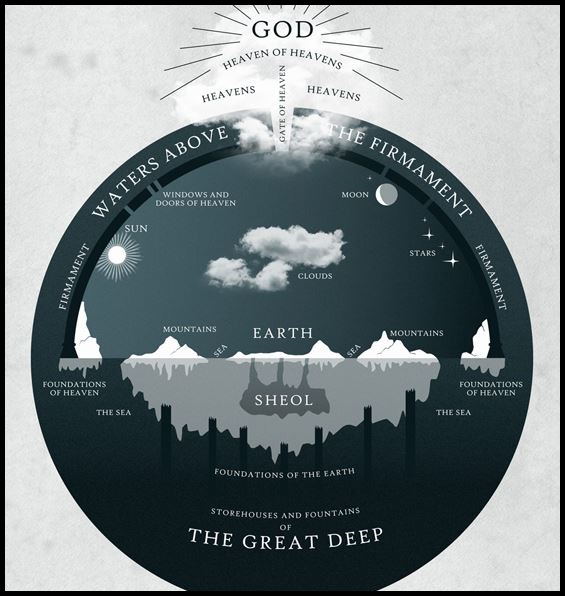 the image on the right. Sadly, the translators of the New Living Translation took the liberty to translate mayim as “water vapor.” Often they do a good job of translating idea for idea, especially when it comes to helping us understand theological terms such as justification, but, in this case, they did us a great disservice. Mayim means waters or a flood, not vapor. (This is why I advise people to read dynamic equivalency translations such as the NLT alongside a version that gives a more literal rendering, such as the NKJV, NASB, or ESV.)
Almost all translators choose English words for raqia (firmament) that are more palatable to our modern “scientific” heliocentric worldview. Check it out for yourselves. The NASB, ESV, and NET, my usual “go to” versions for a literal rendering of the Bible, all use the word “expanse,” which communicates absolutely nothing of the hard and strong nature of the firmament, but provides the heliocentrist with complete liberty to superimpose that unscriptural view, complete with unlimited expanses of “outer space,” upon the Bible. The KJV and NKJV are faithful to the Hebrew language and use the word “firmament” to communicate its solidity and strength.
Can you, with Him, spread out the skies, Strong as a molten mirror? Job 37:18 (NASB95)
So a proper biblical understanding of the heavens must include the presence of a super-strong solid firmament separating waters from waters, in which God placed the sun, moon, and stars.
The Bible says that God placed the sun, moon, and stars in the firmament on Day Four of creation.
Then God said, “Let there be lights in the firmament of the heavens to divide the day from the night; and let them be for signs and seasons, and for days and years; 15 and let them be for lights in the firmament of the heavens to give light on the earth”; and it was so. 16 Then God made two great lights: the greater light to rule the day, and the lesser light to rule the night. He made the stars also. 17 God set them in the firmament of the heavens to give light on the earth, 18 and to rule over the day and over the night, and to divide the light from the darkness. And God saw that it was good. 19 So the evening and the morning were the fourth day. Genesis 1:14–19 (NKJV)
This passage shows why it is impossible to uphold the accuracy of the Bible while believing in the heliocentric model, which derives from pagan philosophy and gave birth to the evolutionary Big Bang theory of the formation of the “ever expanding” universe.
The Bible tells us that the earth and seas were created on day one, over which God erected the vaulted dome (Amos 9:6) of the firmament on day two, in which he placed the heavenly luminaries on day four. The sun follows a circuit over the stationary circular plane of the earth. (Psalm 19:6) Both the sun and moon are lights or luminaries, according to the Bible. The stars are luminaries in the firmament, not distant suns. Planets are “wandering stars,” not earthlike spheroid worlds.
Words are important for those who take the Bible seriously.
God wants us to “tremble” at his Word (Isaiah 66:2). Since it is God’s glory to conceal things in his Word (Proverbs 25:2), it is our honor to search the scriptures to discover more about God and his creation (Acts 17:11). It is wrong for us to casually dismiss what it says because we believe we now know better. For example, Job 26:11 tells us that the heavens (the firmament) has pillars. If we dismiss this as pre-scientific ignorance, we are not trembling at his Word. We are arrogantly dismissing it.
It is also important for us to stick to biblical terms.
The Bible never uses the words “planet” or “globe” as synonyms for the earth. Those terms come from astrophysicists who reject the biblical testimony.
Sadly, most Christians have swallowed the satanic lie and use those words continually, thus contradicting the Bible on a daily basis, much to the devil’s delight. Once our ears are attuned to the frequent use of these words, we see how complete is the devil’s victory in this area. Worse yet, the word planet means “wandering” in Greek and is used to describe stars that left their assigned paths. In addition, the word is used to describe evil people and angels (Jude 6, 12-13, 1 Enoch 1:9) When we describe the earth as a planet, we unwittingly declare that we think the earth is wandering from its assigned place, instead of having a God-given fixed position. Furthermore, to call the earth a planet and part of the heliocentric system, we declare that we are held in the grip of Helios (Satan), along with the other “planets” that are all named after false gods. This glorifies the prince of darkness.
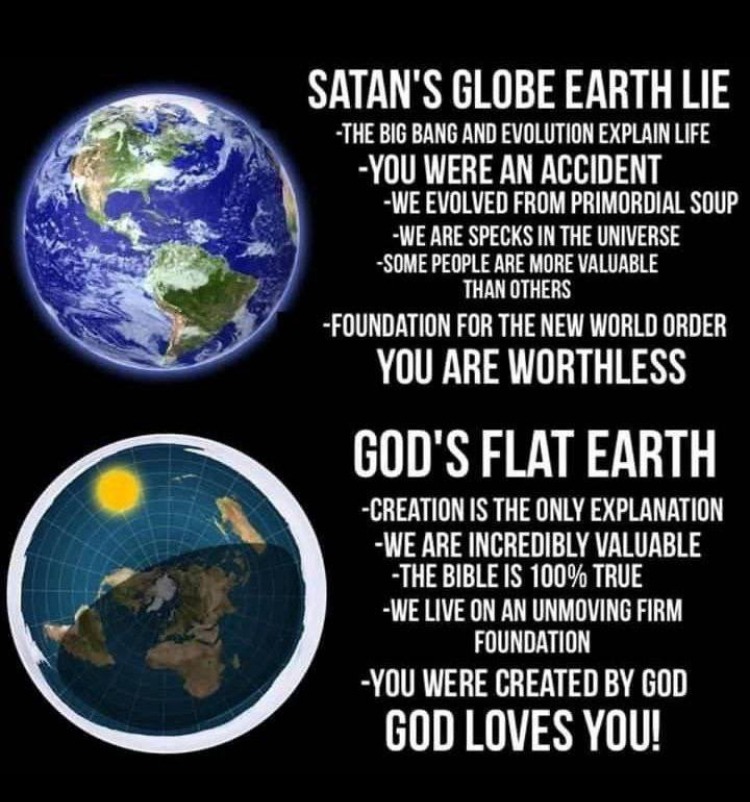
The Bible does not acknowledge the existence of solid spherical objects orbiting the sun. Instead it only gives us the sun, moon, and stars in the firmament following their course or path over the earth.
This puts those who claim to believe the Bible in a spiritual crisis. Both models cannot be true. We cannot say we believe the Bible is true while denying its cosmology.
We cannot have it both ways by claiming the Bible is only true regarding spiritual matters but not concerning the physical creation.
God created the heaven and earth as one unit.
The foundations of the firmament, which is the floor of heaven, are on the earth.
He has inscribed a circle on the surface of the waters At the boundary of light and darkness. 11 “The pillars of heaven tremble And are amazed at His rebuke. Job 26:10–11 (NASB95)
Those who insist that the earth is a globe sometimes refer to Isaiah 40:22 as a “proof text.”
It is He who sits above the circle (not sphere or ball) of the earth, And its inhabitants are like grasshoppers, Who stretches out the heavens like a curtain And spreads them out like a tent to dwell in. 23 He it is who reduces rulers to nothing, Who makes the judges of the earth meaningless. Isaiah 40:22–23 (NASB95)
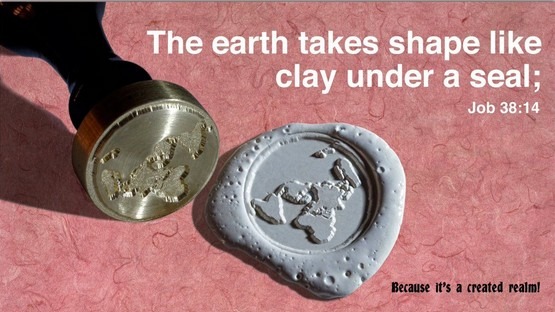
The 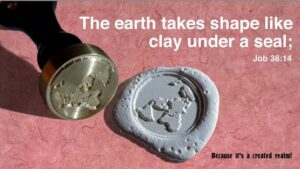 word translated “circle” means drawn as a circle, as one would by using a compass. The word “ball” is used in Isaiah 22:18; so, the prophet knew the difference between a circle and a ball. The image to the right could be thought us as a circle with edges as would be formed by pressing a circular seal into wax, which was a word picture used in Job 38:14, when God himself is talking about his creation.
It is changed like clay under a seal... Job 38:14a (LEB)
Going back to the verse from Isaiah above, the heavens (which was a name given to the firmament) are stretched out like a curtain and spread out like a tent. The most likely kind of tent would be a 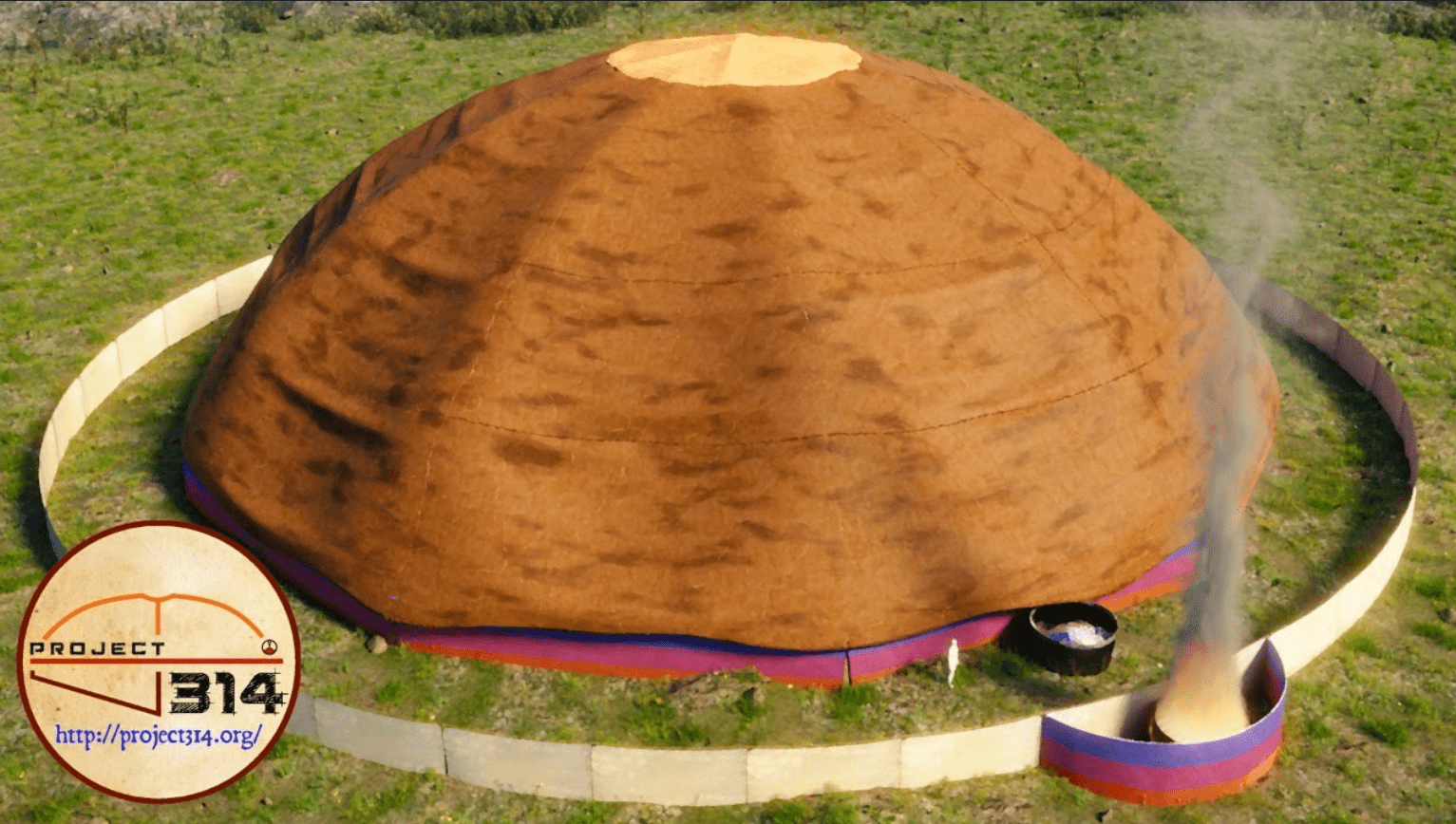 circular dome-like tent, similar to a yurt.
Amos 9:6 in the NASB provides us with wonderful picture of the firmament.
The One who builds His upper chambers in the heavens And has founded His vaulted dome over the earth, He who calls for the waters of the sea And pours them out on the face of the earth, The LORD is His name. Amos 9:6 (NASB95)
God placed his throne and “upper chambers” above the firmament. I will look at this in another article entitled “The Firmament, the Throne, and the Apocalypse,” where I show that unless we accept the biblical depiction of the earth, we cannot understand where is God’s throne and how Jesus will return.
The Hebrew word for “vaulted dome” is aguddah, which means “bands fitted together.” For some reason, the NASB translators are the only ones that chose to translate aguddah to describe the firmament as a vaulted dome above the earth, but I am glad they did. On the positive side, the other versions make the connection that the upper “strata” (NKJV) is attached to the earth. Putting it together, we understand the vaulted dome of the firmament is made of some sort of strata or “bands” attached firmly to the earth.
The firmament is the most immense structure in creation, as far as we can tell. No wonder it took all of day two to create it.
Bless the LORD, O my soul! O LORD my God, You are very great: You are clothed with honor and majesty, 2 Who cover Yourself with light as with a garment, Who stretch out the heavens like a curtain. 3 He lays the beams of His upper chambers in the waters, Who makes the clouds His chariot, Who walks on the wings of the wind, 4 Who makes His angels spirits, His ministers a flame of fire. 5 You who laid the foundations of the earth, So that it should not be moved forever, Psalm 104:1–5 (NKJV)
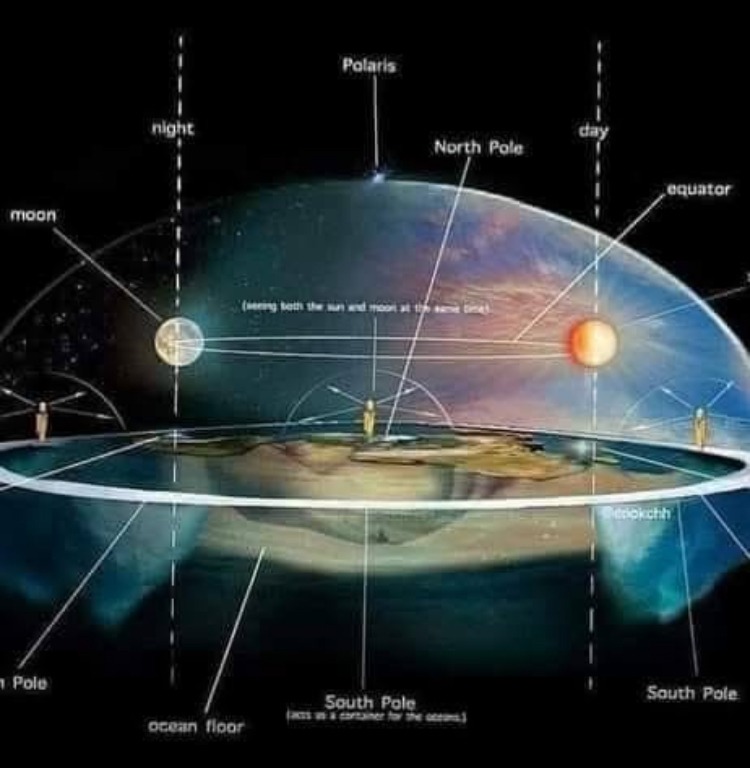 Those who hold that the earth is a stationary plane believe the firmament extends beyond the ring of ice that contains the oceans, which is falsely depicted as the continent of Antarctica on the globe. Interestingly, a page from the Encyclopedia Americana (1958 edition) references the existence of the firmament in that area of the earth. Click here to see a video on YouTube.
The firmament is an extremely vast structure that extends over an currently unknown area of the plane earth up to an unknown altitude.
As the heavens for height and the earth for depth, So the heart of kings is unsearchable. Proverbs 25:3 (NKJV)
The Hebrews who gave us the Old Testament by revelation from the Holy Spirit, understood the earth to be an enclosed circular plane. The earth has foundations and sits still in place, just as our senses confirm.
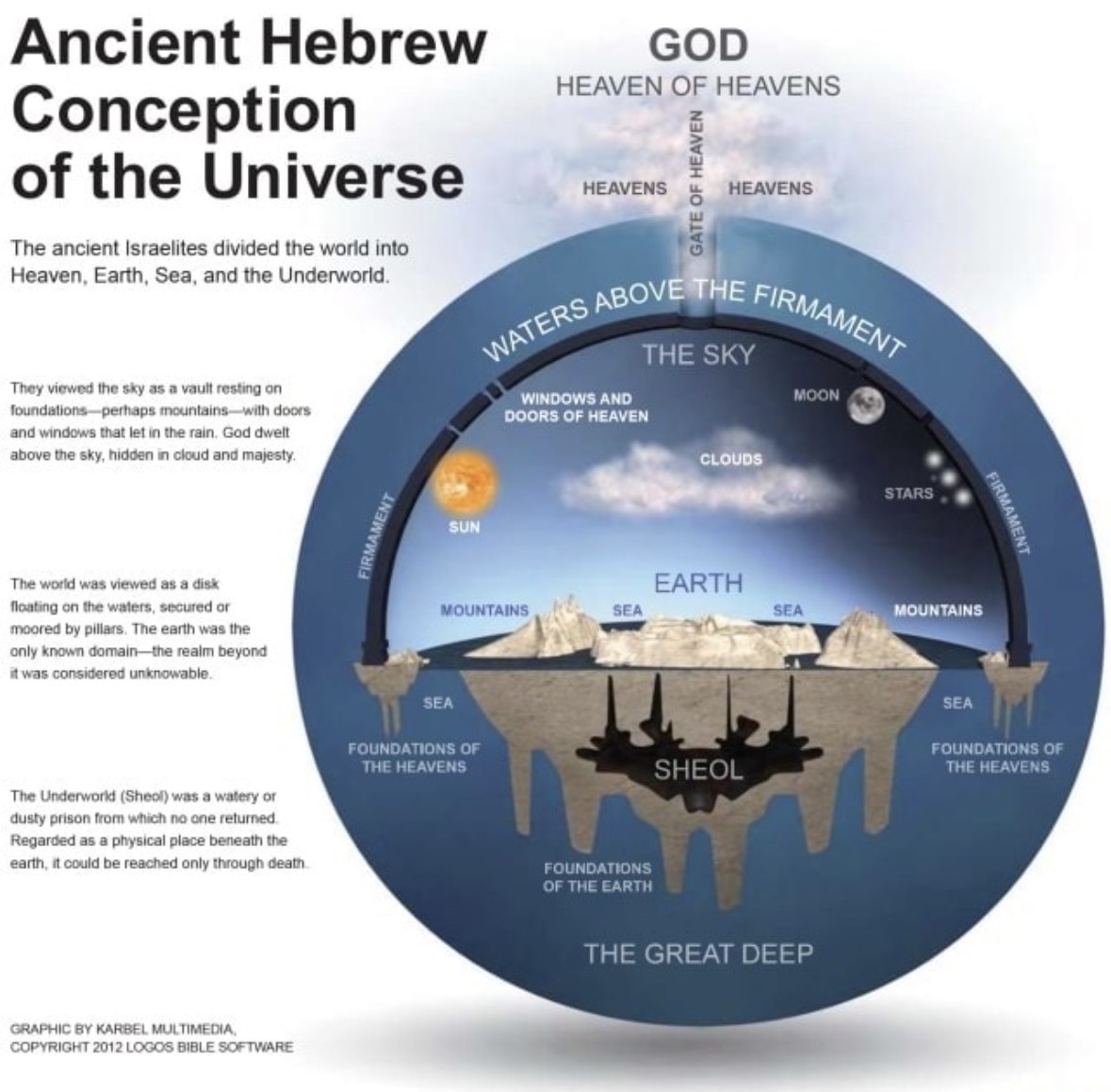
When the earth shakes, so does heaven because they are connected. (Hebrews 12:26), Isaiah 13:13, Haggai 2:6)
The solid crystalline-like firmament, which declares God’s glory, is a dome that can only exist as the Bible describes it, over a stationary plane earth. Such a dome cannot work with a spherical base.
Anti-god forces tell us that the earth is a sphere surrounded by a thin, fragile atmosphere held in place by gravity, which somehow keeps the imaginary vacuum of “outer space” from sucking it away, which violates the physical law that pressurized gases require a container. Instead of declaring God’s glory, as does the biblical heaven-earth complex, the globe model declares that we are hurtling at over a million miles per hour through “outer space,” unprotected from its perils of comets, asteroids, sun flares, and aliens. It is interesting that Jesus never talked of “outer space,” only outer darkness, the abode of cursed individuals.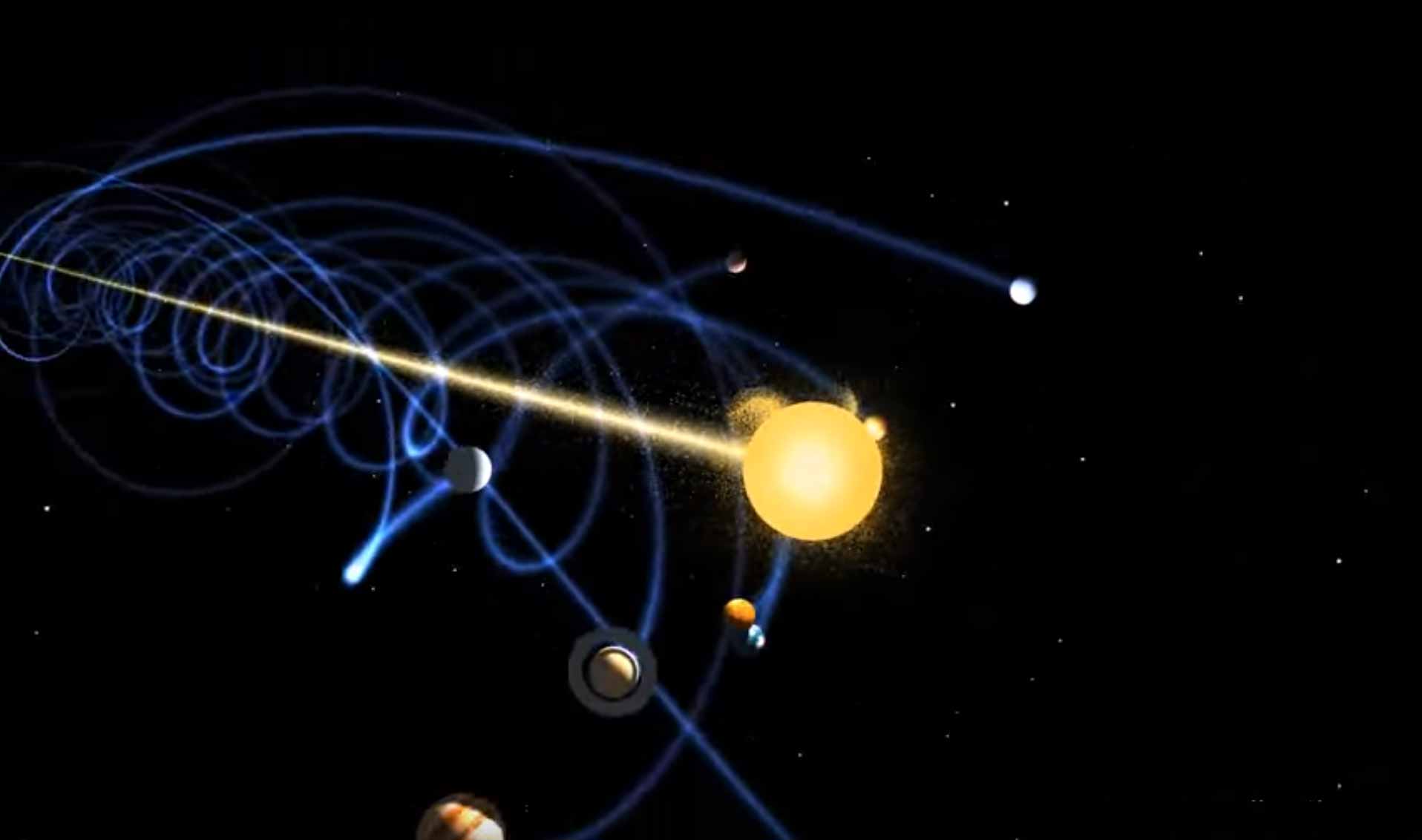
Could it be that Satan has put it in man’s heart to leave the earth, our proper abode that God made for us, to explore the habitation of fallen angels?
Those who promote the anti-biblical cosmology do not want us to know that we are safely enclosed in the solid dome called the firmament and watched over by our Creator.
If you have followed my argument thus far, I feel sure you are wondering about the false cosmology presented by NASA and other space agencies. That is another topic altogether, but, for now, let me say that we are being deceived on a huge scale. I have gathered a large number of videos to show that space is fake. Click here to view.
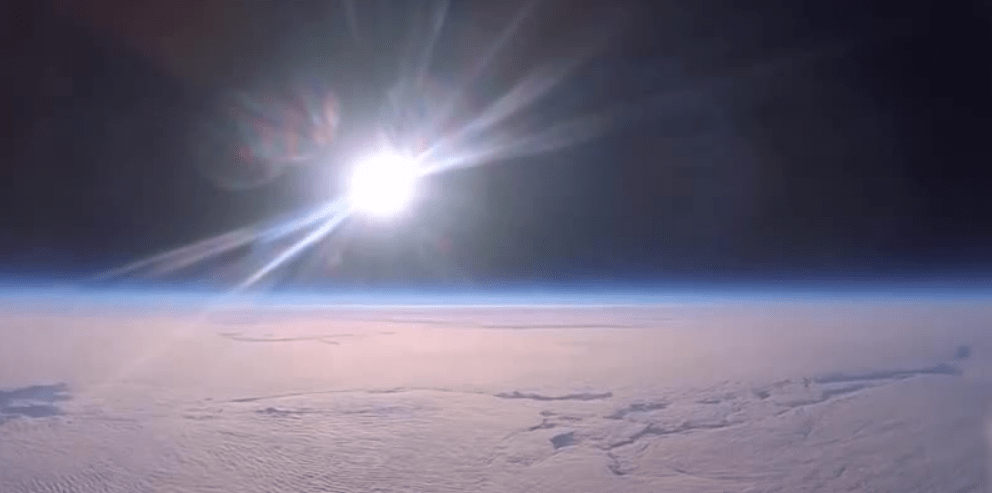
No one as yet knows much about the firmament. Some tests indicate that rockets encounter something at about 72 miles.
Some think this could be a bottom layer of the firmament. The following video shows lightning sprites at about that altitude illuminating what appears to be the firmament above them. Such evidence is not a “proof,” however. The “proof” is God’s Word.
Perhaps we were never intended to know all about the firmament, but let us make sure that what we claim to know agrees with Scripture.
When we stand before God one day, let us give our Lord no reason to question why we doubted or altered his words.
Jesus replied, “Your mistake is that you don’t know the Scriptures, and you don’t know the power of God. Matthew 22:29 (NLT)
If we accept the reality of the biblical firmament over the false cosmology that contradicts God’s Word, it will arm us against falling for further deception. Belief in the literal firmament is a huge key to properly understanding the world in which we live.
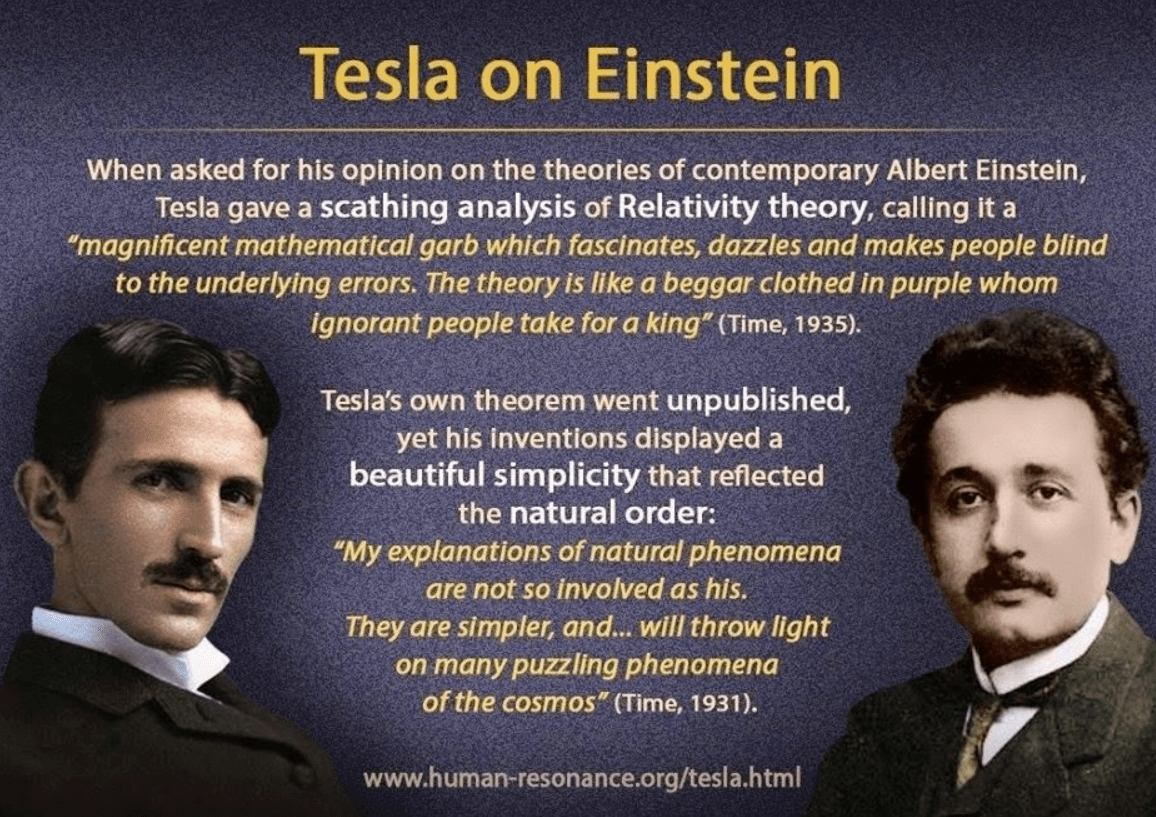
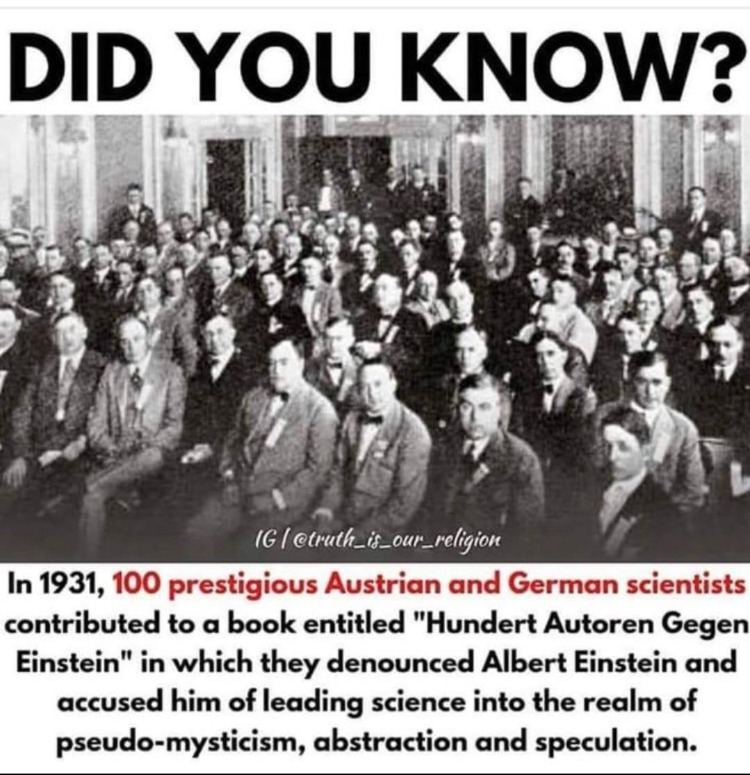 Michelson physically demonstrated that the earth is motionless, but Einstein countered by saying that it is impossible to observe or prove the earth’s motion or lack thereof. For a theory to be proved, it must be observable, testable, repeatable, and falsifiable. Einstein’s theory falls short in every area.
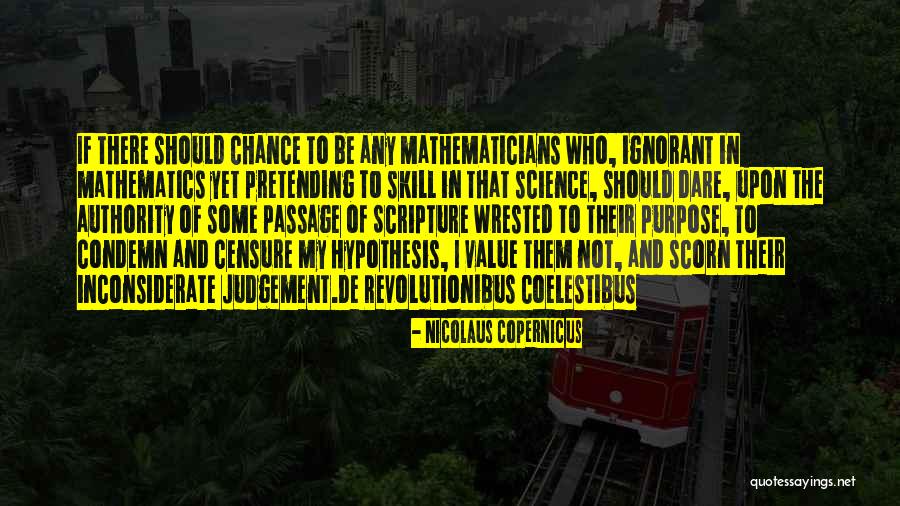
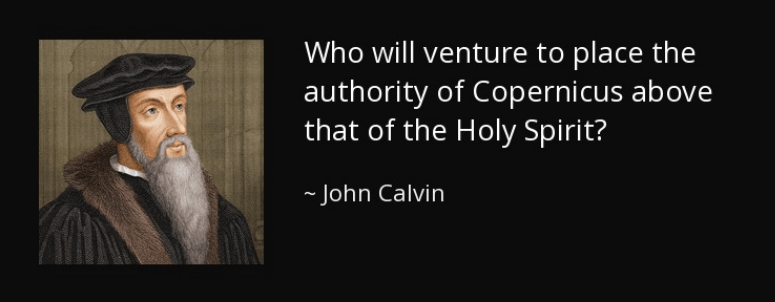
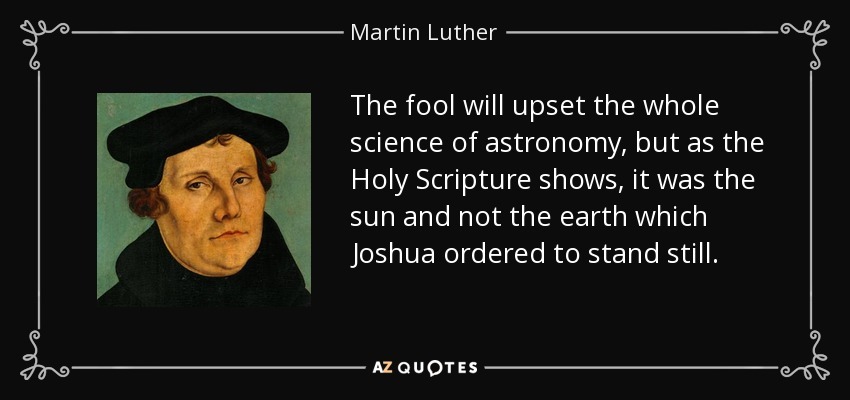 John Calvin, another contemporary of Copernicus, challenged that man’s authority to negate the scriptures.

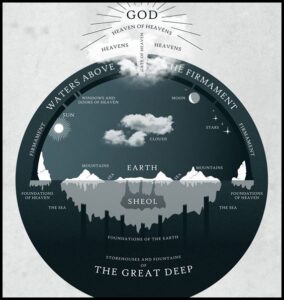 Paul wrote that there are three heavens.(2 Corinthians 12:2) He said that God took him to the third heaven, a place he called Paradise, but he was not sure if he went bodily or not. This supports the conclusion that heaven is a physical location which a body can visit. This conforms with the descriptions we have of Jesus sitting upon God’s throne in bodily form, his resurrected state. (Revelation 3:21) If heaven is not a physical reality, to where did his resurrected body ascend?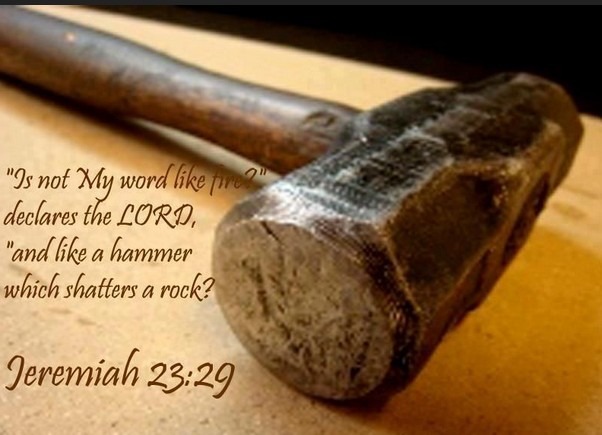
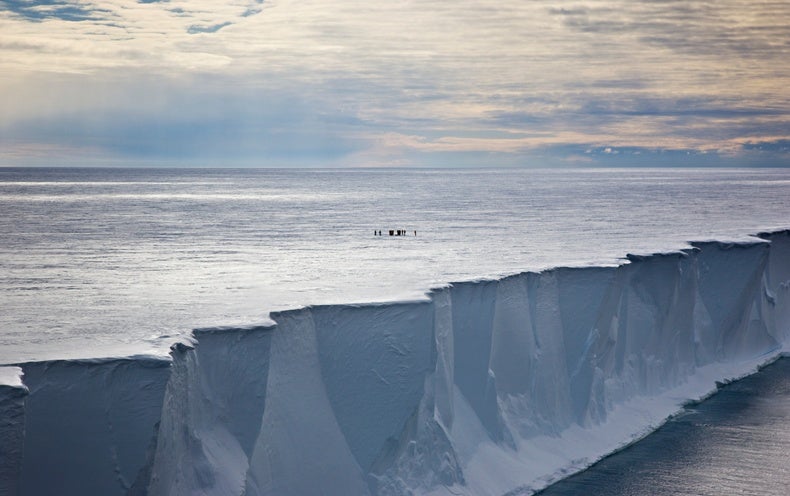 created a boundary for the sea, which we now understand is a giant ring of ice, a wall, that surrounds the earth. Globe supporters contest that Antarctica is a continent at the “bottom” of the globe, but the Bible indicates the earth has a boundary, and early explorers, such as Cook and Ross, discovered it is the ice wall, which they spent years exploring its limits, both of whom traveled over 60,000 miles.The Bible refers to this wall as the “ends of the earth.”