
The introduction of heliocentric cosmology by Copernicus and others was a counterattack against the Protestant Reformation and a rebellion against God and the Bible’s authority. The following documentary provides an historical background and analysis of this counterattack upon God’s Word. If you have never watched it, please consider doing so. A lot of research and effort went into its production.
A long overdue counter revolution by those who are trying to be loyal to God’s Word is now in motion. The Protestant Reformation was led by faithful men and women who valued God’s Word above their own reputations, possessions, and lives. They spoke out and stood strong when it was unpopular and costly to them personally. We are faced with similar, perhaps, challenge today regarding biblical cosmology. Publicly maintaining this position may cost us credibility or reputation in the eyes of others, relationships with family, loved ones, friends, and colleagues, and might even affect us financially or ministry-wise, as it already has for others.
It takes courage to stand up for God’s Word when the world system and part of the church hates us for doing so.
We have been taught or “programmed” from early childhood to believe that the earth is a spinning globe hurtling through space at about a million miles per hour, locked into a mathematically impossible elliptical orbit around the sun, going in twelve different directions and velocities, which are ever changing. This indoctrination continues on a daily basis, reinforced by the institutions connected with education, the media, science, and the government. Its effect is similar to a phenomenon called “mass formation,” about which Belgian psychologist Mattias Desmet has spoken and written a great deal.
In summary, three things can be observed in any society in which mass formation through propaganda has taken place.
- The loss of capacity to take a critical distance from what the group believes,
- The willingness to make extreme sacrifices, and
- Radical intolerance of dissonant voices, potentially leading to committing atrocities against them.
When this happens two groups will emerge: the pros and the cons. During the corona crisis, examples of those two groups were the maskers vs the non-maskers and the vaccinated vs. the non-vaccinated. The “nons” came under intense criticism and sometimes lost friends and employment as a consequence of making a conscientious stand.
The “pros” had the loud voice of the establishment on their side; so, it took a lot of courage to be an outspoken “non.”
Applying this to our subject, the cosmos, heliocentrists have long been the dominant voice who are reinforced by the word system. Of late, we have seen the emergence of the strengthening dissonant voice of biblical cosmology, which, not surprisingly, is resisted, criticized, and even mildly persecuted at times by the dominant side. Some Christians even have been willing to sacrifice their professed devotion to God’s Word in order to attack proponents of biblical cosmology.
Heliocentrism is an outright contradiction of what the Bible teaches in Genesis Chapter One and throughout the rest of its pages.
As we have covered in previous articles, over time, since the advent of heliocentrism, the church in general transitioned from resisting this anti-biblical position to fully embracing it.
Some on the “anti” side ask why is this issue important? Does it really make any practical difference in our daily lives? After all, no matter what we believe regarding this issue, we still have to do the same things as usual each day. Below are some reasons why I think people question the relevance and importance of biblical cosmology.
- We believe what is called ‘biblical cosmology” is false, and we are unwilling to identify ourselves with it lest it be personally embarrassing and defamatory to the church and the gospel.
- We believe it may indeed be true, but is not relevant to every day life and is a distraction from and erects unnecessary roadblocks to the gospel message.
- We believe the truth about this issue is ultimately unknowable; so, any debate will be unproductive.
Regarding the first point, if heliocentrism is true, it undermines the entire Bible, not just Genesis Chapter One, and thereby undermines the credibility of the gospel message. Surely calling the church to repent for believing what contradicts the Bible is important!
Regarding the second point, should we be willing to compromise the truth of God’s Word in order to make it easier for a person to accept Christ? Do we think that the only truth that matters is “gospel” truth? Are we saying that God does not care if we are deceived in other areas? Surely not! Another name for Jesus is The Truth; (John 14:6) therefore, all truth matters. Deception in any form is always evil.
Therefore, it is important for us to know and believe the truth about something so fundamental as the nature of the world in which we live.
What we believe about biblical cosmology is not essential to salvation, but it is not inconsequential to the gospel. To be saved, we are required to believe that Christ rose from the dead and confess that he is the Lord. (Romans 10:9-10) The gospel reestablishes Christ’s lordship over all things.
Are we afraid our listeners will reject Christ because they will refuse to believe what the Bible says about cosmology? Perhaps this is just the sort of test we need to see if people are serious about following the Lord. Would we not commit the same error as “seeker sensitive” churches that refuse to address controversial topics, such as abortion? Will not this “consumerist” approach to the gospel likely fill our churches with people who have never been challenged to surrender everything to Christ the Lord? Is our goal to make disciples or converts? Perhaps our reluctance to challenge others regarding God’s truth about cosmology is because we ourselves refuse to submit this area to the Lord.
Therefore, I believe that we need not shy away from the challenge of bringing our cosmology under Christ’s and the Word’s authority.
God takes us as we are, but works to transform us into Christ’s image by changing how we think.
And do not be conformed to this world, but be transformed by the renewing of your mind, so that you may prove what the will of God is, that which is good and acceptable and perfect. Romans 12:2 (NASB95)
The literal meaning of the Greek word metanoeo, which is translated “to repent” in English, is “to change the mind.” As we grow in our knowledge of God’s Word, he expects us to alter how we think about all sorts of things and to bring our ideas into alignment with God’s truth, including our cosmology.
Therefore, I conclude that, while embracing a biblical cosmology is not essential to initial salvation, it may become important on our discipleship journey.
 Regarding whether biblical cosmology is relevant to everyday life, I think that uncovering one of the greatest lies ever told is highly important and changes how we look at the world. Spiritually speaking, ever since coming to the realization that the firmament is real and God’s throne is right above us, it changed how I and many others look at the world in which we live. We cannot but be awed by a Creator who benevolently observes his creation from on high. Here is a link to some personal testimonies of people who have come to faith after accepting the truth of biblical cosmology.
Regarding the third point, whether the design of the heavens and earth is truly knowable, this is where faith comes to the forefront. I 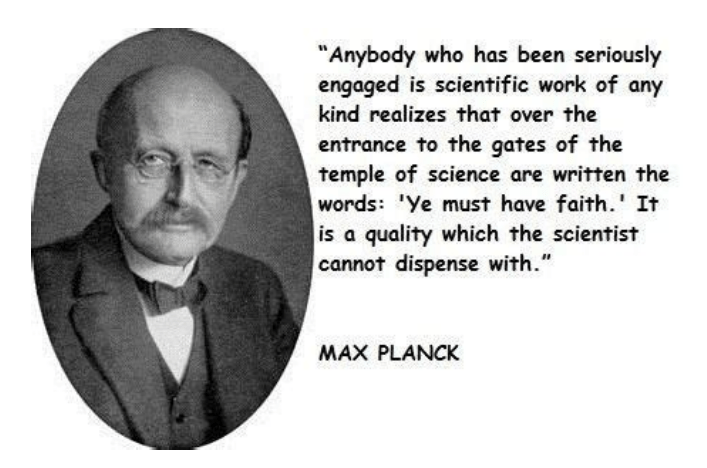 have been told that my belief in biblical cosmology is a religious belief, rather than a rational or scientific one. I do not think the person who said that realized the irony of his words. All of life is somewhat mysterious and requires us to approach it by faith. That is why God said that without faith it is impossible to please him. (Hebrews 11:6) Even atheistic astrophysicists acknowledge that what is called “science” requires that we employ faith. The big question is faith in what or whom?
So, yes, biblical cosmology is a matter of faith in God’s Word, but it also agrees with observation and common sense; whereas, many of the claims of “science” in relationship to heliocentrism require us to abandon common sense and accept the words of so-called experts.
Whether you agree with me or any other person about biblical cosmology is not really important, but whether we agree with the Bible is.
Ultimately, this is an issue that requires each of us to stand individually before God and answer a huge question. Do I believe what the Bible teaches about cosmology or not? I believe that God is calling us, the church, to repent for participating in the satanic heliocentric rebellion.
Even though most of us got caught up in this lie unwittingly, once we see the truth, we have a responsibility to become active in the counter revolution.
The aforementioned Mattias Desmet concluded that the only way a society that is gripped by mass formation and propaganda can avoid descending into totalitarianism is for dissenting voices to continue to speak out. Regarding biblical cosmology, I hope that you and I will be part of that dissenting voice for truth.
I have come to the conclusion that we do not really find truth. It finds us. Jesus said the we do not choose him. He chose us. (John 15:16) But when truth comes knocking, it is our privilege and responsibility to open the door.
20 Behold, I stand at the door and knock. If anyone hears My voice and opens the door, I will come in to him and dine with him, and he with Me. Revelation 3:20 (NKJV)
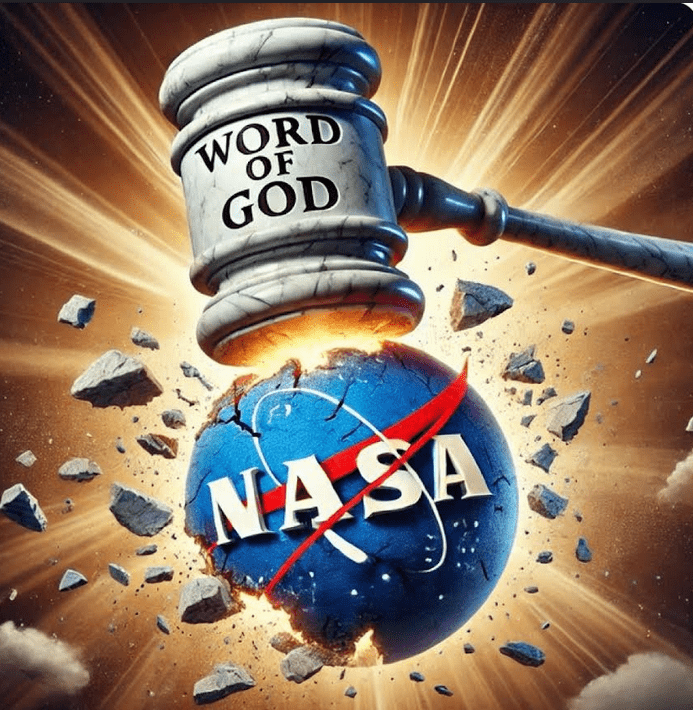
Now, let me conclude with a little humor.
 perhaps it will help to open people’s eyes to the reality of biblical cosmology. This topic is so immense that it is impossible to adequately cover it in one article. Therefore, I have embedded numerous videos for you to view when you have the time, if you are so inclined. I will do my best to summarize some of the main arguments. Let’s get started.
 But let’s go back in time a bit. Admiral Richard E. Byrd made several expeditions to Antarctica before and after WWII (1928-30, 1933-34, 1939-40, 1946-47, and 1955-56). During and after Byrd completed his assignments there, several very interesting events took place.
 space travel” in 1955. The continual barrage of cartoons, documentaries, and movies about space travel has created a love for and fascination with going beyond the limitations of earth.
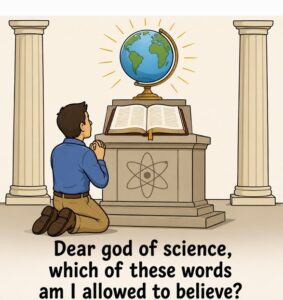 make Christians seem ridiculous and hinder people’s ability to accept the gospel’s claims.
 claim that all of God’s Word is absolutely true, not just the parts approved by so-called science or which agree with what is currently socially acceptable in the world.
 For the sake of us Christians who live post-Enlightenment, should not the Holy Spirit have inspired Moses to write something more scientifically accurate in Genesis that would agree with modern astrophysics? Or could it be that God wrote exactly what he meant for us to know and believe because it is the truth?
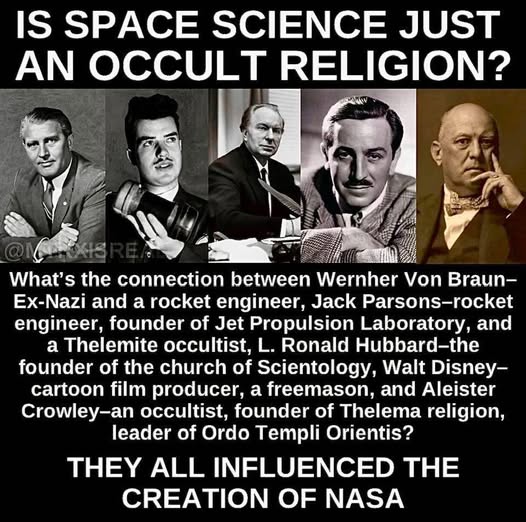 But God…. God is restoring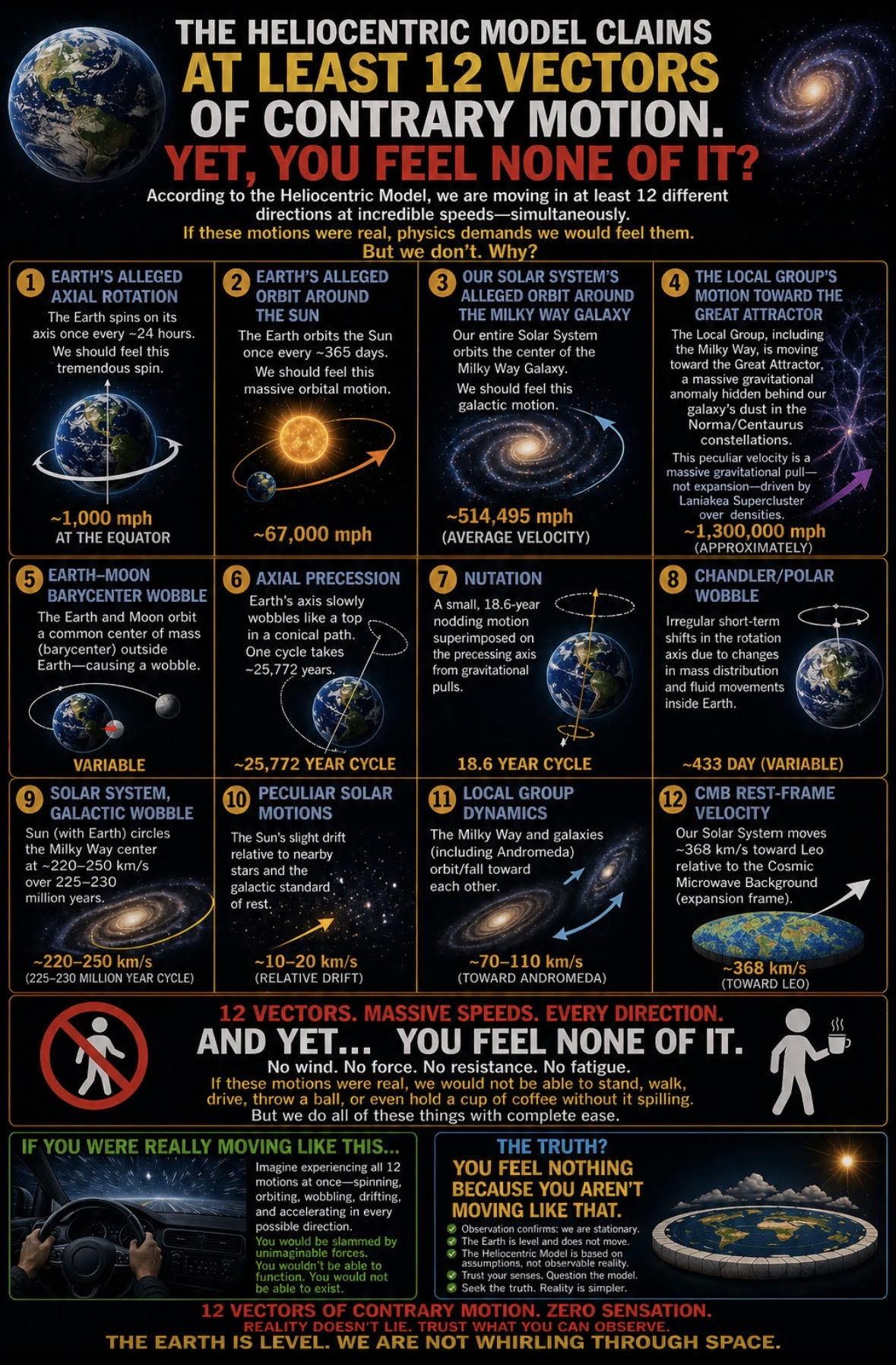
 Recently I have seen some Facebook ads promoting Steven Spielberg’s new movie, Disclosure Day.
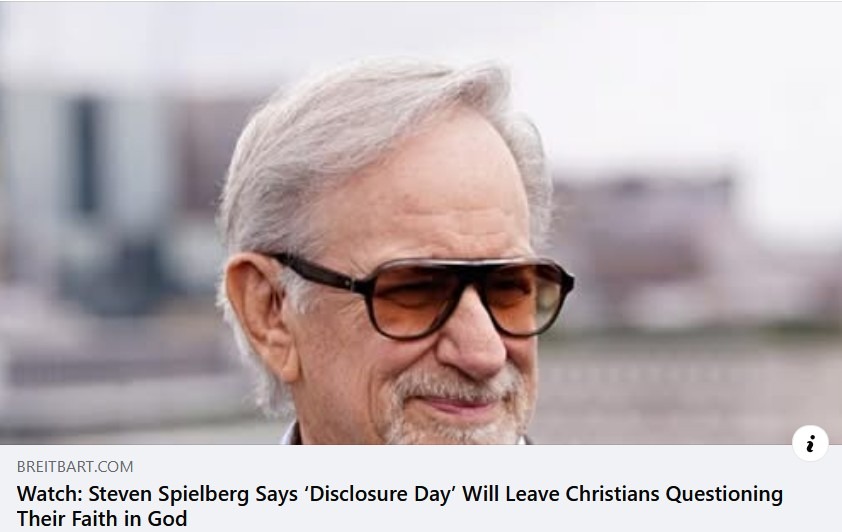 We are told that after watching this production, Christians will question their faith in God. Why is it that followers of Christ are particularly targeted? Could it be that the Bible is true, and Jesus is really Lord of lords and King of kings? Could it be that the Jews’ and the world’s hatred of Jesus continues to this day, spilling over against his present followers? The answer to these questions is a resounding, “Yes!”
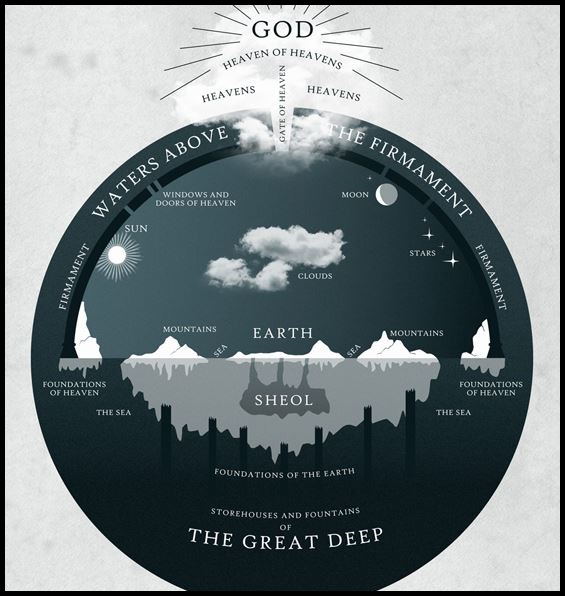 Those who know that the heavens and earth are exactly as the Bible describes understand that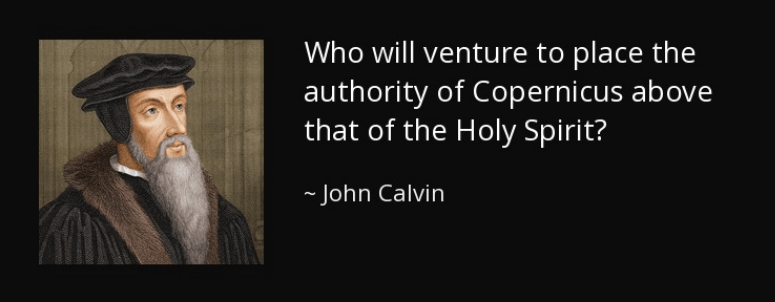
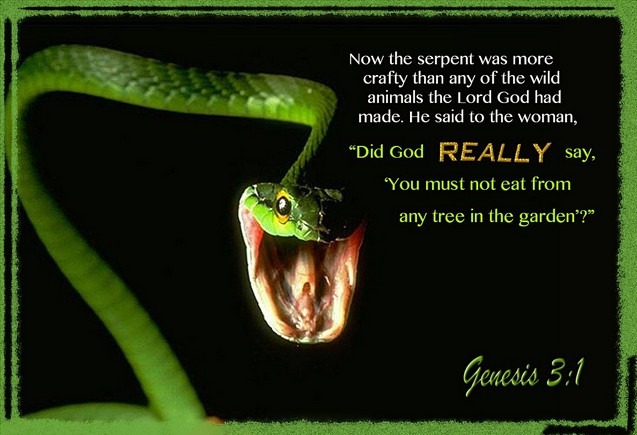 Do we really think that God cannot be trusted to speak in a straightforward way about something so fundamentally important as his creation? Do we believe that the biblical authors were ignorant of modern science; so, God accommodated their ignorance by giving them a false account of how he made the heavens and the earth? Can we not see that we are publicly denying our Lord by being ashamed of his Word?
  Believing Satan’s first lie opened a flood gate of all manner of deception that seems to grow more pervasive by the day. We are drowning is a cesspool of lies and
 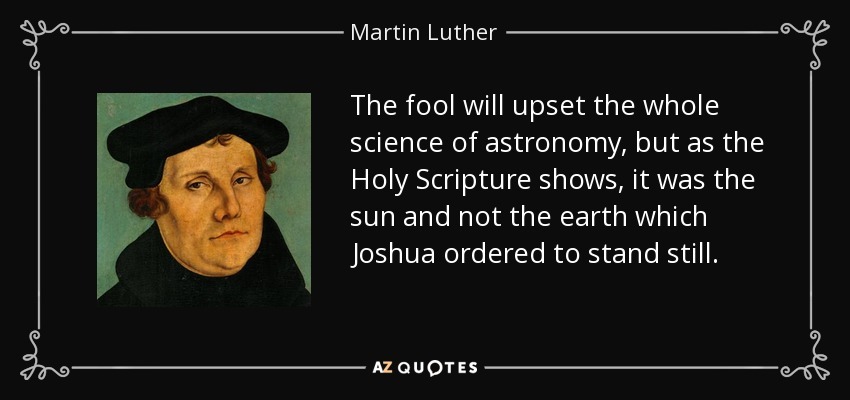 They refuse to grapple with the simple logic of Luther’s argument. Either the sun and moon stood still or the Bible is not true. If, as my heliocentric friends insist, the earth stopped rotating, that might account for the sun’s lack of motion in the sky, but not the moon’s. It would have kept revolving around the earth. So the Christian heliocentrist resorts to refusing to “go there.” Nothing to see here. Let’s move on and not get bogged down in distractions from our main job, which is to preach the gospel and make disciples. Such an “end run” may succeed in avoiding the issue, but it does not satisfy at all.
  I, as did everyone else around me, simply believed what we had been told since childhood about astrophysics. Granted, I did not understand how Genesis Chapter One could possibly fit into the “science” of heliocentrism, but I simply shrugged my shoulders, thinking that it was just one of those things outside of my need to know.
 The Pharisees pretended ignorance, but our Lord knew that they were dissimulating. Their agnosticism regarding the matter was a product of their refusal to face the consequences of publicly stating their position. When we remain non-committal and silent on important issues, it can reveal indecision or perhaps even the fear of man. It is a scary thing to go on record to support God’s truth about cosmology against the combined opposition of the entire system – government, education, media, science, and deceived defenders of the lie. The world already thinks Christians are crazy to believe in biological creation, the flood, the virgin birth, and Christ’s resurrection. Why are we so afraid to make a stand regarding cosmology? Could it be that it is a crucial strand in the
 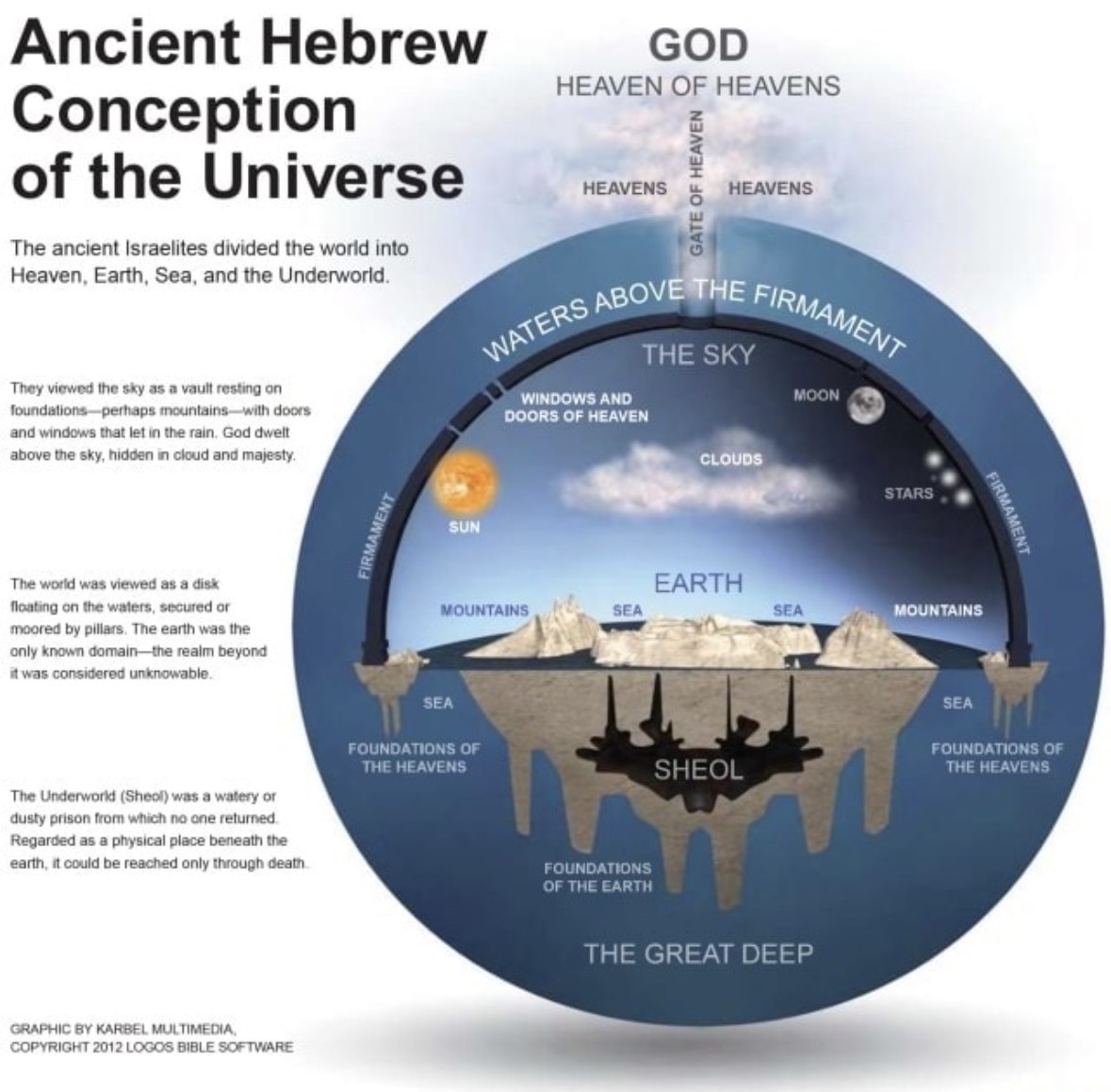 This physical reality is first presented in Genesis Chapter One and continues throughout the Bible all the way to Revelation. Rejecting biblical cosmology is not simply a matter of reinterpreting Genesis Chapter One as a poetic metaphor. Doing so requires us to render the theology of up and down as an outdated and incorrect way of looking at some very fundamental things that are essential to the gospel.