The early church was familiar with the suffering and reproach connected with firmly declaring allegiance to Christ and his Word. The apostle Peter wrote the following encouragement.
Beloved, do not think it strange concerning the fiery trial which is to try you, as though some strange thing happened to you; 13 but rejoice to the extent that you partake of Christ’s sufferings, that when His glory is revealed, you may also be glad with exceeding joy. 14 If you are reproached for the name of Christ, blessed are you, for the Spirit of glory and of God rests upon you. On their part He is blasphemed, but on your part He is glorified. 1 Peter 4:12–14 (NKJV)
Today in America we do not experience a great deal of overt persecution, but that could change any time.
There is, however, a form of suffering which intimidates many of us into silence. It is the reproach that often visits those who boldly testify that the Bible is the inerrant Word of God.
One of the West’s most dominant idols is science, which is considered by many to be the height of modern man’s achievements. What many now call science has degenerated into a form of humanistic materialism which asserts that the physical world is the only real one and belittles any attempt to introduce spiritual reality and truth into a conversation. Anyone who affirms an absolute trust in the Bible and believes in the supernatural opens himself up to ridicule and rejection. In such an environment, it often seems prudent to keep our thoughts to ourselves in order to avoid persecution. This seems to agree with Jesus’ admonition not to throw our pearls before pigs, since they may trample them in the mire and then attack us.
But is it not part of our calling as disciples to proclaim God’s truth, whatever the cost?
As Mattias Desmet points out so elegantly in “The Psychology of Totalitarianism,” one of the only ways to stop encroaching tyranny is to speak out courageously against its lies. Affirming the absolute truth of the Bible, therefore, is a chief duty of disciples and all who love freedom.
Sadly, however, even some who call ourselves Evangelicals have abandoned our faith in the inerrancy of scripture by altering God’s Word to make it agree with anti-biblical forms of “science,” such as the Big Bang theory and evolution.
Many of us no longer believe that anything that contradicts scripture is false by definition.
Long ago the prophet Isaiah warned:
Look to God’s instructions and teachings! People who contradict his word are completely in the dark. Isaiah 8:20 (NLT)
The Bible is self-authenticating, since there is no higher standard of truth. Paul wrote:
All Scripture is given by inspiration of God, and is profitable for doctrine, for reproof, for correction, for instruction in righteousness, 17 that the man of God may be complete, thoroughly equipped for every good work. 2 Timothy 3:16–17 (NKJV)
Jesus also affirmed the absolute truth of God’s words.
Sanctify them in the truth; Your word is truth. John 17:17 (NASB95)
The Bible also tells us that God always tells the truth because it is part of his nature. He says what he means and means what he says. God never plays with words in order to obfuscate truth, as the devil does.
God is not a man, so he does not lie. He is not human, so he does not change his mind. Has he ever spoken and failed to act? Has he ever promised and not carried it through? Numbers 23:19 (NLT)
In addition, we are not permitted to “privately interpret” scripture to make it agree with our preferred outcome or doctrine, which is called eisegesis.
But know this first of all, that no prophecy of Scripture is a matter of one’s own interpretation, 21 for no prophecy was ever made by an act of human will, but men moved by the Holy Spirit spoke from God. 2 Peter 1:20–21 (NASB95)
This means that every word of the Bible was inspired by the Holy Spirit and is completely true and trustworthy. There is no indication ever that God accommodates our ignorance, unbelief, or sin by toning down his words or saying something false or misleading.
Some mainline Protestant denominations have abandoned their allegiance to the Bible, choosing to align with the world system rather than with God’s truth. This is exactly what the Jewish leaders had done in Christ’s day, for which he rebuked them.
And He said to them, “Rightly did Isaiah prophesy of you hypocrites, as it is written: ‘THIS PEOPLE HONORS ME WITH THEIR LIPS, BUT THEIR HEART IS FAR AWAY FROM ME. 7 ‘BUT IN VAIN DO THEY WORSHIP ME, TEACHING AS DOCTRINES THE PRECEPTS OF MEN.’ 8 “Neglecting the commandment of God, you hold to the tradition of men.” Mark 7:6–8 (NASB95)
The Roman Catholic Church also abandoned the Bible as ultimate truth centuries ago by elevating church tradition, man-made extra-biblical theology, and papal pronouncements to be above or at least on a par with the Bible. Just a few centuries back, that church’s hierarchy was in mortal fear of the common people ever finding out what the Bible actually says. The Roman Catholic Church kept God’s Word hidden behind the veils of Latin and ignorance.
The fire of the Protestant Reformation was fueled by the common people’s obtaining the scriptures in their own languages.
Courageous men and women were willing to sacrifice their lives to make the Bible available to the masses. The ownership of Bibles became widespread thanks to the invention of the printing press.
Below is a short list of some of these champions of the Word.
- The Waldensians (12th and 13th centuries) were subjected to mass burnings for using Bibles in their own languages (instead of Latin). The Roman Catholics banned the lay ownership of the Bible in general and Bibles in the vernacular at the Council of Toulouse in 1229.
- John Wycliffe (c.1320-1384) was an English theologian and Oxford scholar who translated the Latin Vulgate into English. He was posthumously declared a heretic. His body was exhumed, burned, and the ashes scattered on the River Swift by order of the Council of Constance. He was accused of promoting errors because he put the Bible into the hands of the people.
Any time we fearlessly hold to God’s Word as it is written, we will likely incur the wrath of the establishment that bends its knee to the satanic world system.
- Jan Hus (1369-1415) was a Czech reformer who translated part of the Bible into his native language and encouraged preaching in the vernacular of the people. For this extraordinary heresy he was burned at the stake after being condemned at the same Council of Constance.
- William Tyndale (1494-1536) translated the New Testament and parts of the Old into English directly from the original languages. He was strangled and burned at the stake near Brussels, Belgium. His translation’s wording makes up over 80% of the King James Bible, which was published in 1611.
- Patrick Hamilton (1504-1528) was burned at the stake in St. Andrews for translating Luther’s works and encouraging lay Bible reading in Scotland.
- Myles Coverdale (1488-1569) completed Tyndale’s work and published the first English Bible in 1535. He escaped death by fleeing to the continent, but some of his associates were martyred.
- Martin Luther (1483-1546) nailed his 95 Theses to the church door in Wittenburg, Germany and took a stand against the abuses of the Roman Catholic Church.
Luther could have kept quiet about his newly found understanding of justification by faith in order to avoid persecution, but he chose to speak up, and so should we.
At his trial, the Roman Catholic Church demanded that he recant his teachings at the Diet of Worms on April 18, 1521 and reaffirm his submission to the supreme authority of the church. It was at this time that he delivered his famous response.
Unless I am convinced by the testimony of the Scriptures or by clear reason (for I do not trust either in the pope or in councils alone, since it is well known that they have often erred and contradicted themselves), I am bound by the Scriptures I have quoted and my conscience is captive to the Word of God. I cannot and I will not recant anything, since it is neither safe nor right to go against conscience. Here I stand. I can do no other. May God help me. Amen.
Luther and those other courageous men and women made the choice to endure reproach, persecution, and sometimes death rather than be disloyal to God and his Word. I am quite sure that God’s Spirit of glory rested upon them, just as Peter wrote.
If you are reproached for the name of Christ, blessed are you, for the Spirit of glory and of God rests upon you. On their part He is blasphemed, but on your part He is glorified. 1 Peter 4:14 (NKJV)
Moses also made a similar choice, as recorded by the author of the Letter to the Hebrews.
By faith Moses, when he had grown up, refused to be called the son of Pharaoh’s daughter, 25 choosing rather to endure ill-treatment with the people of God than to enjoy the passing pleasures of sin, 26 considering the reproach of Christ greater riches than the treasures of Egypt; for he was looking to the reward. Hebrews 11:24–26 (NASB95)
Today, we Evangelicals feel good about ourselves for being self-proclaimed people of the Word, but it might unnerve us a bit to consider that so were the Pharisees of Jesus’ day. The stumbling stone for the Pharisees can trip us up, too, if we are not vigilant. They were committed to the words of God but not to God himself.
Our lack of surrender to the God of Bible can lead to our artfully twisting the scriptures so that our disloyalty remains hidden.
The Jews elevated their traditions above God’s Word.
We Evangelicals are sometimes guilty of elevating reason above revelation and, in so doing, participate in a kind of idolatry of the human mind.
We have developed nuanced interpretations of the Bible that change God’s words into something that God did not say that we find to be palatable to our firmly held beliefs, preferences, and preconceptions.
Here is an example of what I mean. We evangelicals profess that every word of God is true, but anyone who publicly affirms that the Genesis account of creation is the literal truth will likely encounter criticism, mockery, dismissal, and other forms of reproach and rejection from both unbelievers and Christians.
Have we drunk so deeply from the well of modern biology, geology, and cosmology that the words of the Bible seem completely foolish and unreasonable?
Rather than say outright that the Bible is not true, we make a clever “end run” by claiming that part of scripture in Genesis is poetry and not intended to convey any practical form of truth. We nuance our interpretation so that we are able to affirm that spiritual truth is conveyed in the midst of a false claim. But my question is, doesn’t that make God a liar and us smarter than the people who wrote the Bible under the inspiration of the Holy Spirit? And where did God give us permission to so interpret his words of truth? Doesn’t this challenge to what God said, come from somewhere else, the same one who challenged Eve in the garden? “Did God really say?”
We inadvertently fall into the trap of agreeing with those enemies of God’s truth who claim that the Bible contains truth, but is not inerrant or factually correct.
Jesus was a literalist.
And you know that the Scriptures cannot be altered (literally: be broken). So if those people who received God’s message were called ‘gods,’ 36 why do you call it blasphemy when I say, ‘I am the Son of God’? After all, the Father set me apart and sent me into the world. John 10:35–36 (NLT)
Our Lord believed in the literal creation narrative of Genesis, Adam and Eve, Abel, Jonah, Noah, and the flood. Do we dare say that we are smarter than Jesus, the Creator and eternal Logos become flesh?
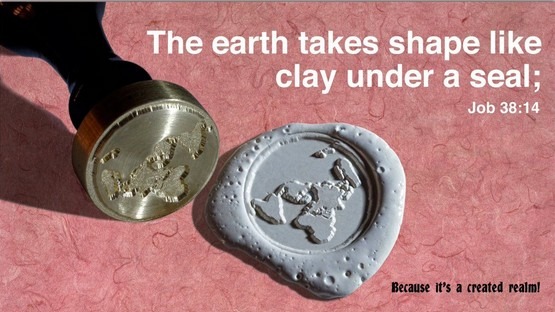
The same evangelicals who deny that Genesis is historically and scientifically accurate maintain that Jesus’ resurrection is an historical and scientific fact. I am sorry, but if Genesis is not true, how can we honestly claim any of the Bible should be considered to be true? If the first chapter is unreliable, than let’s throw it all out, which many an atheist had done. Satan knows that once a witness’ credibility is destroyed, it undermines all of his or her testimony. That is why the devil has worked so hard to convince us to trash the Genesis creation account and all its cosmological implications. Oh, he lets us keep the literal creation of Adam and Eve intact while we deny the existence of the firmament. He laughs at us when we do that, and so do the atheists. We fall into the trap of trying to make the Word of God palatable to unbelievers. The world thinks that we are self-deceived fools. We cannot make them think well of us.
If we believe the bodily resurrection of Christ is true, which the world says is ridiculous and “unscientific,” why not stand up for everything else the Bible teaches?
Why are we so disingenuous? Is it our hope that the world will think well of us? I have news for you. They laugh at us when we deny the truthfulness of Genesis. They know that such thinking undercuts the integrity of the whole Bible.
We should instead resolutely trash everything in our world view and cosmology that disagrees with the Bible.
That is what Paul did.
But what things were gain to me, these I have counted loss for Christ. 8 Yet indeed I also count all things loss for the excellence of the knowledge of Christ Jesus my Lord, for whom I have suffered the loss of all things, and count them as rubbish, that I may gain Christ 9 and be found in Him, not having my own righteousness, which is from the law, but that which is through faith in Christ, the righteousness which is from God by faith; Philippians 3:7–9 (NKJV)
Let us cast aside any embarrassment we feel by believing the words of the Bible.
It is time for the church to be more concerned with being loyal to God that in looking intelligent in the world’s eyes.
We cannot afford to esteem the praise from men over God’s approval.
Many people did believe in him, however, including some of the Jewish leaders. But they wouldn’t admit it for fear that the Pharisees would expel them from the synagogue. 43 For they loved human praise more than the praise of God. John 12:42–43 (NLT)
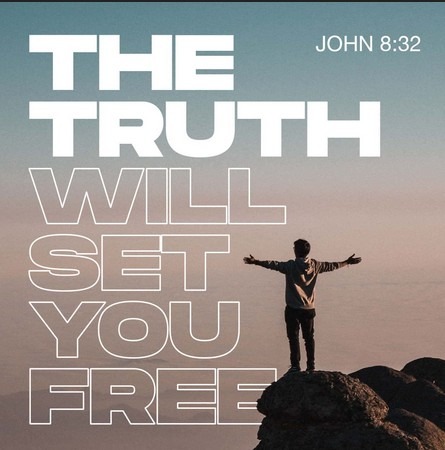
The devil hates God’s Word because he knows it is the truth that sets people free.
So Jesus was saying to those Jews who had believed Him, “If you continue in My word, then you are truly disciples of Mine; 32 and you will know the truth, and the truth will make you free." John 8:31–32 (NASB95)
God will reward those who publicly identify with the Lord and are willing to endure reproach for his sake and the Word’s. We must make a choice between being praised or reproached by men or by God. .
For whoever is ashamed of Me and My words, the Son of Man will be ashamed of him when He comes in His glory, and the glory of the Father and of the holy angels. Luke 9:26 (NASB95)
There is no shame in being reproached by those who think they are smarter than God.